
Executive Summary:
- The One Big Beautiful Bill Act (OBBBA) significantly changed the rules for the 2026 tax year, raising the State and Local Tax (SALT) deduction cap to $40,400 for most filers.
- Taxpayers must itemize their deductions on Schedule A to claim any property tax deduction.
- High-income earners face a new phaseout rule in 2026, which reduces the $40,400 cap by 30 cents for every dollar of Modified Adjusted Gross Income (MAGI) over $505,000.
- The standard deduction for 2026 is $32,200 for married couples filing jointly and $16,100 for single filers. Your total itemized deductions must exceed these numbers to benefit from writing off property taxes.
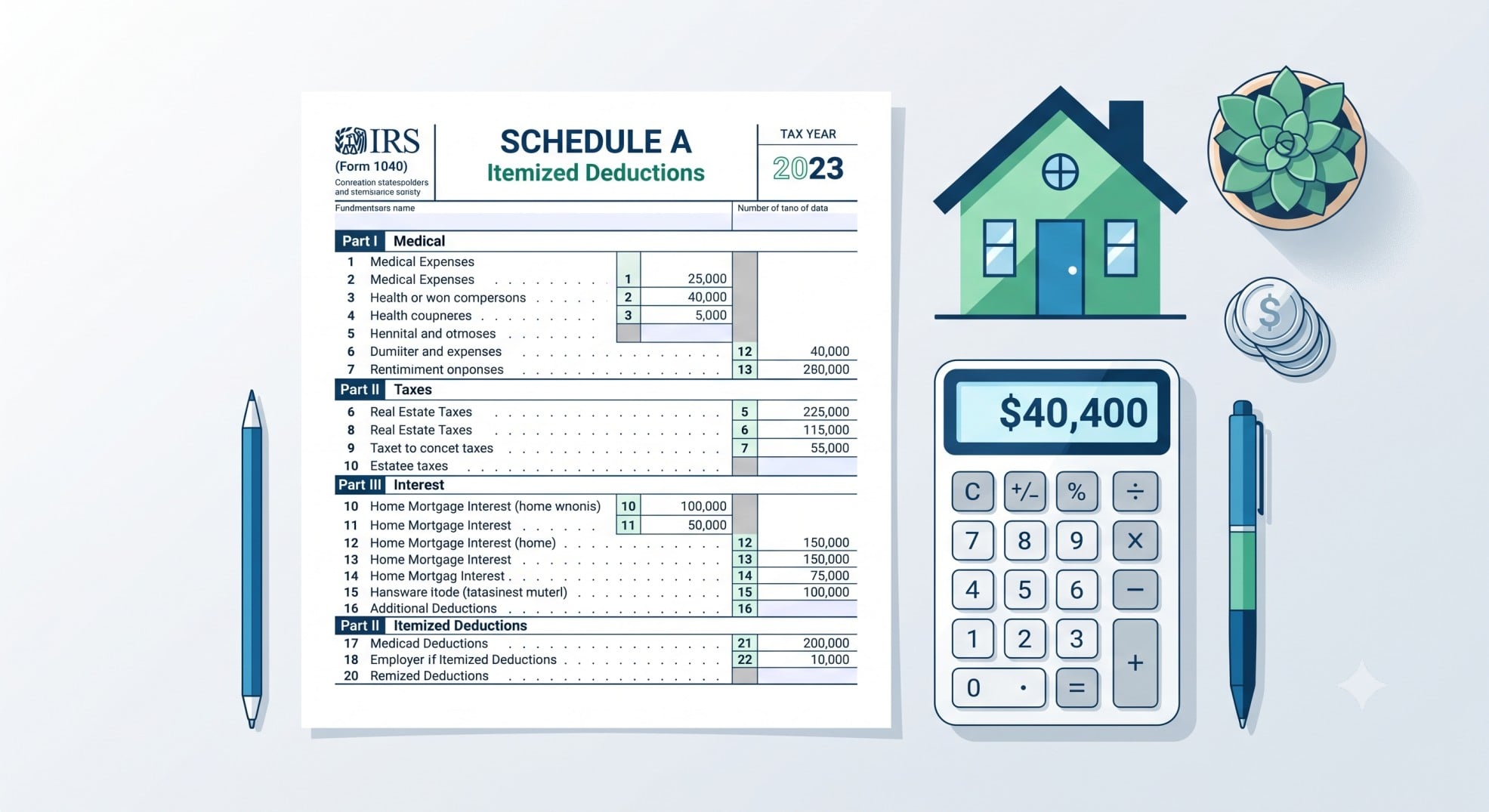
Homeowners across the United States pay thousands of dollars annually to their local municipalities. When tax season arrives, the most common question we hear is simply: are property taxes deductible? The short answer is yes. The exact amount you can deduct depends entirely on your filing status, your total state taxes, and the sweeping legislative changes that took effect for the 2026 tax year.
For years, taxpayers were restricted by a strict $10,000 limit on state and local tax deductions. That limit has been replaced. The passage of the One Big Beautiful Bill Act (OBBBA) in 2025 completely restructured the federal tax code regarding local assessments. Taxpayers now have access to a much larger property tax deduction, provided they understand the new math, the phaseout thresholds, and the strict rules surrounding itemization.
This guide breaks down exactly how the federal government treats your local tax assessments in 2026. We cover the new limits, provide step-by-step calculation examples, and explain exactly how to report these figures to the IRS.
Table of Contents
- Are Property Taxes Deductible in 2026?
- The New SALT Cap 2026: What Changed Under OBBBA?
- Standard Deduction vs. Itemizing (Schedule A) in 2026
- Are Real Estate Taxes the Same as Property Taxes?
- How to Calculate Your Property Tax Deduction (Real-World Scenarios)
- How to Claim Your Property Taxes on Your Tax Return
- Handling Property Taxes Paid Through Your Escrow Account
- State vs. Federal Tax Treatment
- Frequently Asked Questions About Property Tax Deductions
Are Property Taxes Deductible in 2026?
Yes, are property taxes deductible on your federal return? Absolutely. The IRS allows taxpayers to deduct taxes paid to state and local governments, including taxes assessed on real estate and personal property. You claim this benefit under the State and Local Tax (SALT) deduction.
You cannot simply subtract your property tax bill from your income. The IRS requires you to meet specific criteria. The property must be owned by you, the tax must be based on the assessed value of the property, and the tax must be charged uniformly against all property under the jurisdiction of the taxing authority.
You must also choose to itemize your deductions. If you take the standard deduction, you forfeit the ability to deduct your property taxes separately. The federal government essentially bundles a presumed amount of deductions into the standard deduction. You only benefit from the property tax deduction if your total itemizable expenses—which include SALT, mortgage interest, and charitable contributions—exceed your standard deduction amount.
The New SALT Cap 2026: What Changed Under OBBBA?
The rules governing deductions for property taxes changed dramatically with the One Big Beautiful Bill Act (OBBBA). From 2018 through 2024, the Tax Cuts and Jobs Act (TCJA) capped the SALT deduction at a rigid $10,000. This severely penalized homeowners in high-tax states like New Jersey, California, and New York.
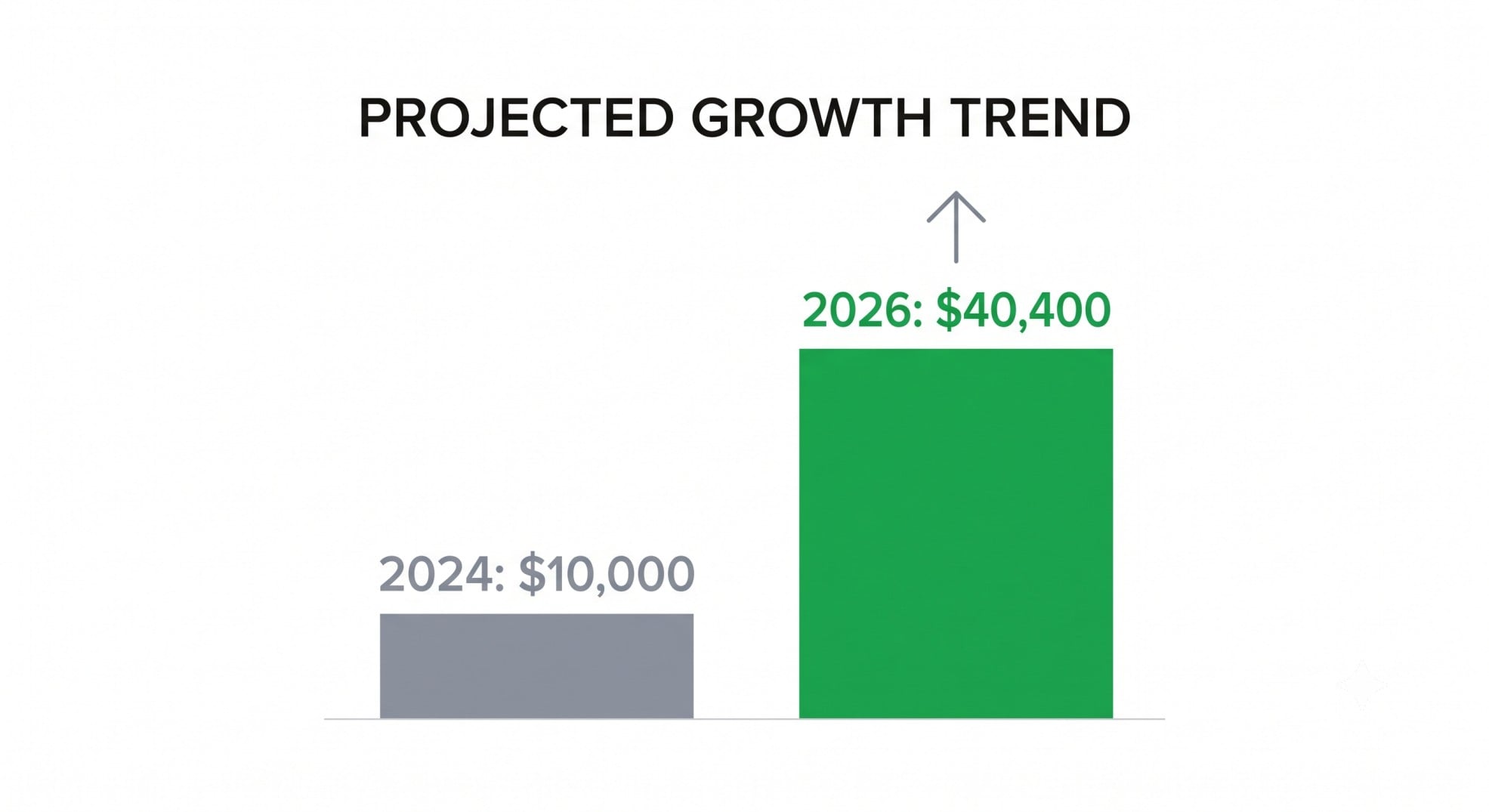
The OBBBA replaced that old limit. For the 2026 tax year, the SALT cap is set at $40,400 for single filers, heads of household, and married couples filing jointly. Married individuals filing separately face a cap of $20,200.
The High-Earner Phaseout Rule
The new $40,400 limit is not available to everyone. The legislation introduced a strict phaseout mechanism targeting high-income earners. If your Modified Adjusted Gross Income (MAGI) exceeds certain thresholds, your maximum allowable SALT deduction shrinks.
For 2026, the phaseout begins when your MAGI surpasses $505,000 ($252,500 for married filing separately). For every dollar you earn above that threshold, your SALT cap is reduced by 30 cents. The cap will continue to decrease as your income rises, but it will never drop below the original $10,000 floor ($5,000 for MFS).
This means a taxpayer with a MAGI of $600,000 will see their SALT cap reduced significantly, while a taxpayer earning $150,000 can utilize the full $40,400 limit. We will break down the exact math of this phaseout in the scenario section below.
Standard Deduction vs. Itemizing (Schedule A) in 2026
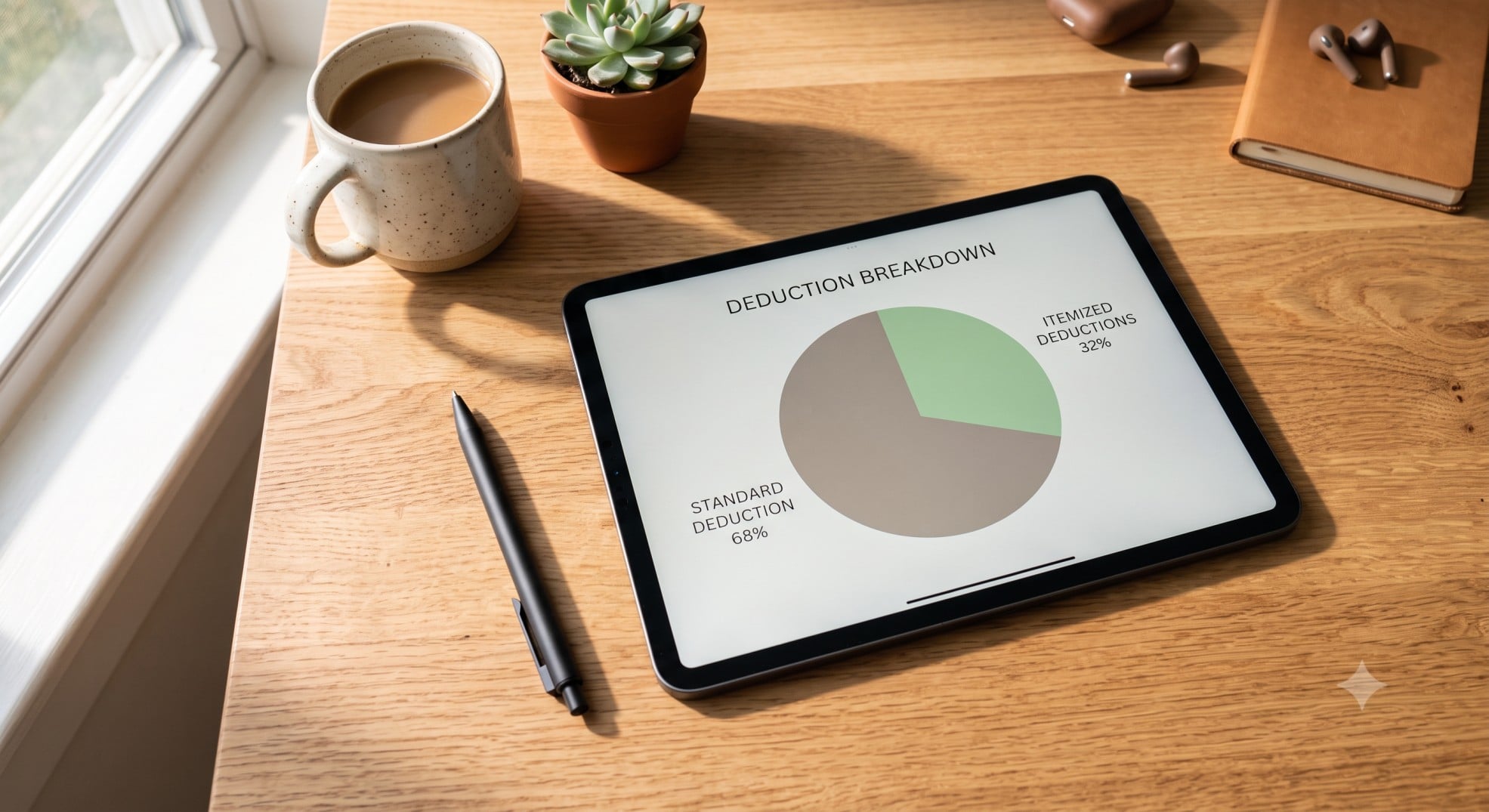
Knowing the SALT cap 2026 rules is only half the battle. You must clear the standard deduction hurdle to actually use the write-off. The IRS adjusts the standard deduction annually for inflation.
For the 2026 tax year, the standard deduction amounts are:
- Married Filing Jointly: $32,200
- Single Filers & Married Filing Separately: $16,100
- Head of Household: $24,150
To make itemizing worthwhile, your combined deductible expenses must be higher than your standard deduction. You add your allowable SALT (up to $40,400), your deductible mortgage interest, your qualifying charitable donations, and any deductible medical expenses that exceed 7.5% of your Adjusted Gross Income (AGI).
If that total is $35,000 and you are married filing jointly, you should itemize. You get a $35,000 reduction in taxable income instead of the $32,200 standard deduction. If your total itemized expenses only equal $28,000, you should take the standard deduction. In that second scenario, your property taxes do not provide any additional federal tax relief.
Are Real Estate Taxes the Same as Property Taxes?
Taxpayers frequently use these terms interchangeably. Are real estate taxes the same as property taxes in the eyes of the IRS? Mostly yes, but there is a technical distinction you need to understand when filling out your forms.
Real estate taxes apply specifically to immovable property. This includes land, houses, buildings, and permanent structures. When you pay your county tax assessor for the home you live in, you are paying real estate taxes.
Property taxes is a broader category. It includes real estate taxes, but it also encompasses personal property taxes. Personal property taxes are assessed on movable assets. The most common example is the annual tax or registration fee you pay on your vehicle, provided the fee is based on the vehicle’s value rather than its weight or a flat rate.
Both types of taxes fall under the SALT deduction umbrella. You combine your real estate taxes and your qualifying personal property taxes, add your state income taxes (or state sales taxes), and apply that total against the $40,400 cap. For a deeper dive into the exact definitions, read our complete guide on the difference between real estate and property taxes.
How to Calculate Your Property Tax Deduction (Real-World Scenarios)
The interaction between state income tax, property tax, the new SALT cap, and the standard deduction requires precise math. Let’s look at three distinct 2026 scenarios to see how much of your property taxes are tax deductible in practice.
Scenario 1: The Middle-Income Homeowner
Mark and Sarah are married filing jointly. Their 2026 MAGI is $180,000. They live in a state with moderate income taxes and high property taxes.
- State Income Tax Paid: $9,000
- Real Estate Taxes Paid: $14,000
- Personal Property Tax (Car): $500
- Total SALT Paid: $23,500
Their total SALT is $23,500. This is well below the 2026 cap of $40,400. They can claim the entire $23,500 on Schedule A. They also paid $15,000 in mortgage interest and gave $2,000 to charity. Their total itemized deductions equal $40,500. Because $40,500 is higher than the $32,200 standard deduction, they will itemize. They successfully deduct all their property taxes.
Scenario 2: The High-Earner Phaseout
David is a single filer living in a high-tax state. His 2026 MAGI is $580,000. He owns an expensive home and pays significant state income tax.
- State Income Tax Paid: $45,000
- Real Estate Taxes Paid: $25,000
- Total SALT Paid: $70,000
David’s SALT far exceeds the $40,400 base cap. But David also triggers the high-earner phaseout. The phaseout begins at $505,000.
- Excess MAGI: $580,000 – $505,000 = $75,000
- Phaseout Reduction: $75,000 x 0.30 = $22,500
- David’s Adjusted SALT Cap: $40,400 – $22,500 = $17,900
Even though David paid $70,000 in state and local taxes, his deduction is strictly limited to $17,900. He will combine that $17,900 with his other itemized deductions to see if he clears his $16,100 standard deduction.
Scenario 3: The Standard Deduction Winner
Elena is a single filer with a MAGI of $90,000. She recently bought a modest condo.
- State Income Tax Paid: $4,000
- Real Estate Taxes Paid: $3,500
- Total SALT Paid: $7,500
Elena paid $6,000 in mortgage interest and has no other deductions. Her total itemized deductions equal $13,500 ($7,500 SALT + $6,000 interest). Her standard deduction for 2026 is $16,100. Elena should take the standard deduction. Her property taxes do not provide any extra federal tax benefit because her total expenses fall short of the standard deduction threshold.
How to Claim Your Property Taxes on Your Tax Return
If the math works in your favor, you need to report these figures correctly to the IRS. You cannot write off property taxes on Form 1040 alone. You must use Schedule A (Itemized Deductions).
Here is the step-by-step process for 2026:
- Gather Your Documents: Locate your Form 1098 from your mortgage lender. If you pay taxes directly to the county, find your property tax receipts or canceled checks.
- Calculate State Income vs. Sales Tax: You must choose between deducting your state/local income taxes OR your state/local general sales taxes. You cannot deduct both. Choose the larger number.
- Fill Out Schedule A, Line 5:
- Line 5a: Enter your state and local income taxes (or sales taxes).
- Line 5b: Enter your state and local real estate taxes.
- Line 5c: Enter your state and local personal property taxes.
- Apply the Cap: Add lines 5a, 5b, and 5c. Enter the total on line 5d. On line 5e, you will enter your specific SALT cap limit (up to $40,400, adjusted for any phaseouts). You enter the smaller of line 5d or line 5e on line 5f.
- Transfer to Form 1040: Total all your Schedule A deductions and transfer that final number to line 12 of your Form 1040.
Failing to keep accurate records can trigger an IRS audit. Always retain your property tax bills and proof of payment for at least three years. For a more detailed walkthrough of the forms, review our guide on how to claim your property taxes on your tax return.
Handling Property Taxes Paid Through Your Escrow Account
Millions of homeowners do not write a direct check to their county tax assessor. Instead, they pay a portion of their property taxes every month as part of their mortgage payment. The lender holds these funds in an escrow account and pays the county on the homeowner’s behalf when the bill is due.
You can only deduct property taxes in the year they are actually paid to the taxing authority. You cannot deduct the monthly escrow deposits.
If you deposit $500 a month into escrow from January through December, you have put $6,000 into the account. If the lender only pays a $5,500 tax bill to the county in November, your deduction is strictly limited to $5,500. The remaining $500 sitting in the escrow account is not deductible until the lender uses it to pay a future tax bill.
Your lender will send you Form 1098 at the beginning of the year. Box 10 of this form will show the exact amount of real estate taxes paid from your escrow account to the municipality during the previous tax year. Always use the figure in Box 10, not your monthly mortgage statements. Learn more about the mechanics of property taxes paid through your escrow account.
State vs. Federal Tax Treatment
The rules we have discussed apply strictly to your federal income tax return. State tax laws operate independently. Never assume that a federal deduction automatically translates to a state deduction.
Some states do not allow you to deduct property taxes on your state income tax return at all. Other states provide specific property tax credits rather than deductions. A credit reduces your tax bill dollar-for-dollar, whereas a deduction only reduces your taxable income.
For example, New Jersey offers a property tax deduction or credit for eligible homeowners and tenants, completely separate from the federal Schedule A rules. California does not allow a deduction for property taxes on the state return, even though Californians pay some of the highest property taxes in the nation.
Always prepare your federal return first, as many state returns use your federal Adjusted Gross Income (AGI) as a starting point. Then, apply your specific state’s modifications, additions, and subtractions.
Frequently Asked Questions About Property Tax Deductions
What is the property tax deduction limit for 2026?
The property tax deduction limit for 2026 is bundled into the overall SALT cap. For single filers, heads of household, and married couples filing jointly, the maximum combined deduction for state and local taxes (including property taxes) is $40,400. For married filing separately, the limit is $20,200. This cap phases down for taxpayers with a MAGI over $505,000.
Do you have to itemize to deduct property taxes?
Yes. You must itemize your deductions on Schedule A to claim any property taxes. If you choose to take the standard deduction ($32,200 for joint filers in 2026), you cannot write off your property taxes separately.
How much of your property taxes are tax deductible in 2026?
You can deduct 100% of your property taxes up to the $40,400 SALT cap, provided you itemize. You must combine your property taxes with your state income taxes. If that total exceeds $40,400, any amount over the cap is not deductible.
Are real estate taxes tax deductible if I own a second home?
Yes. The IRS allows you to deduct real estate taxes paid on your primary residence, a vacation home, or land you own. All of these taxes are combined and subjected to the same $40,400 SALT cap 2026 limit.
Can you write off property taxes on rental property?
Yes, but the rules are entirely different. Property taxes paid on rental real estate are deducted on Schedule E (Supplemental Income and Loss), not Schedule A. Rental property taxes are considered a business expense and are not subject to the $40,400 SALT cap.
What happens to the SALT cap after 2029?
Under the current OBBBA legislation, the expanded SALT cap is temporary. It will increase by 1% annually from 2026 through 2029. In 2030, the cap is scheduled to revert to the original $10,000 limit established by the TCJA, unless Congress passes new legislation.
Can I deduct special assessments for local improvements?
No. The IRS does not allow deductions for property taxes that fund local benefits tending to increase the value of your property. This includes assessments for new sidewalks, water mains, or sewer lines. These costs are added to the cost basis of your property instead.
Are property taxes deductible if I pay them with a credit card?
Yes. The IRS considers the tax paid on the day the credit card transaction is authorized, regardless of when you actually pay off the credit card balance. Keep in mind that third-party processors usually charge a convenience fee for credit card payments. That convenience fee is not tax-deductible.
Does the Alternative Minimum Tax (AMT) affect my property tax deduction?
Historically, the AMT disallowed the SALT deduction entirely. The OBBBA changed the AMT landscape. Because of the new phaseout rules capping deductions for high earners, the interaction between SALT and the AMT is limited in 2026. Taxpayers subject to the AMT should consult a tax professional to run the specific calculations.
Disclaimer: The information provided in this article is for educational and informational purposes only and does not constitute financial, legal, or tax advice. Tax laws change frequently, and individual circumstances vary widely. Always consult with a qualified CPA or tax professional before making any decisions based on this content.
