
⚡ Executive Summary: 2026 State Tax Baselines
- Your state income tax return operates under completely different rules than your federal return.
- The standard deduction for New York remains at $8,000 for single filers and $16,050 for joint filers.
- California offers a baseline of $5,706 for singles, prompting many residents to itemize their state returns.
- Massachusetts uses a personal exemption system instead of a traditional deduction, offering $4,400 for single taxpayers.
Table of Contents
- Why State Taxes Differ From Federal Taxes
- New York: The NYS Standard Deduction for 2026
- California: The 2026 CA Standard Deduction
- Massachusetts: How the MA Standard Deduction for 2026 Works
- North Carolina: The NC 2026 Standard Deduction
- Oregon: The Standard Deduction Oregon Filers Need to Know
- Real-World Scenarios: Calculating Standard Deduction for State Taxes
- Step-by-Step: How to Claim Your State Tax Write-Offs
- Frequently Asked Questions About State Taxes
Filing your annual tax return actually involves completing two completely separate mathematical equations. You calculate your federal liability for the IRS, and then you calculate your state liability for your local department of revenue. Many taxpayers mistakenly assume that their federal write-offs automatically apply to their state returns. This assumption leads to massive financial surprises every spring.
The baseline amount you subtract from your income at the federal level rarely matches the standard deduction for state taxes. State legislatures write their own tax codes. They set their own brackets, determine their own inflation adjustments, and establish their own baseline write-offs. We will break down exactly how the rules work for the highest-population states in the country so you can accurately project your 2026 tax liability.
Why State Taxes Differ From Federal Taxes
To understand your local tax bill, you must understand the concept of “conformity.” When Congress passes new federal tax laws, state governments must decide whether to conform to those new rules or decouple from them. When the federal government drastically increased the baseline write-offs a few years ago, many states chose to decouple to protect their own tax revenues.
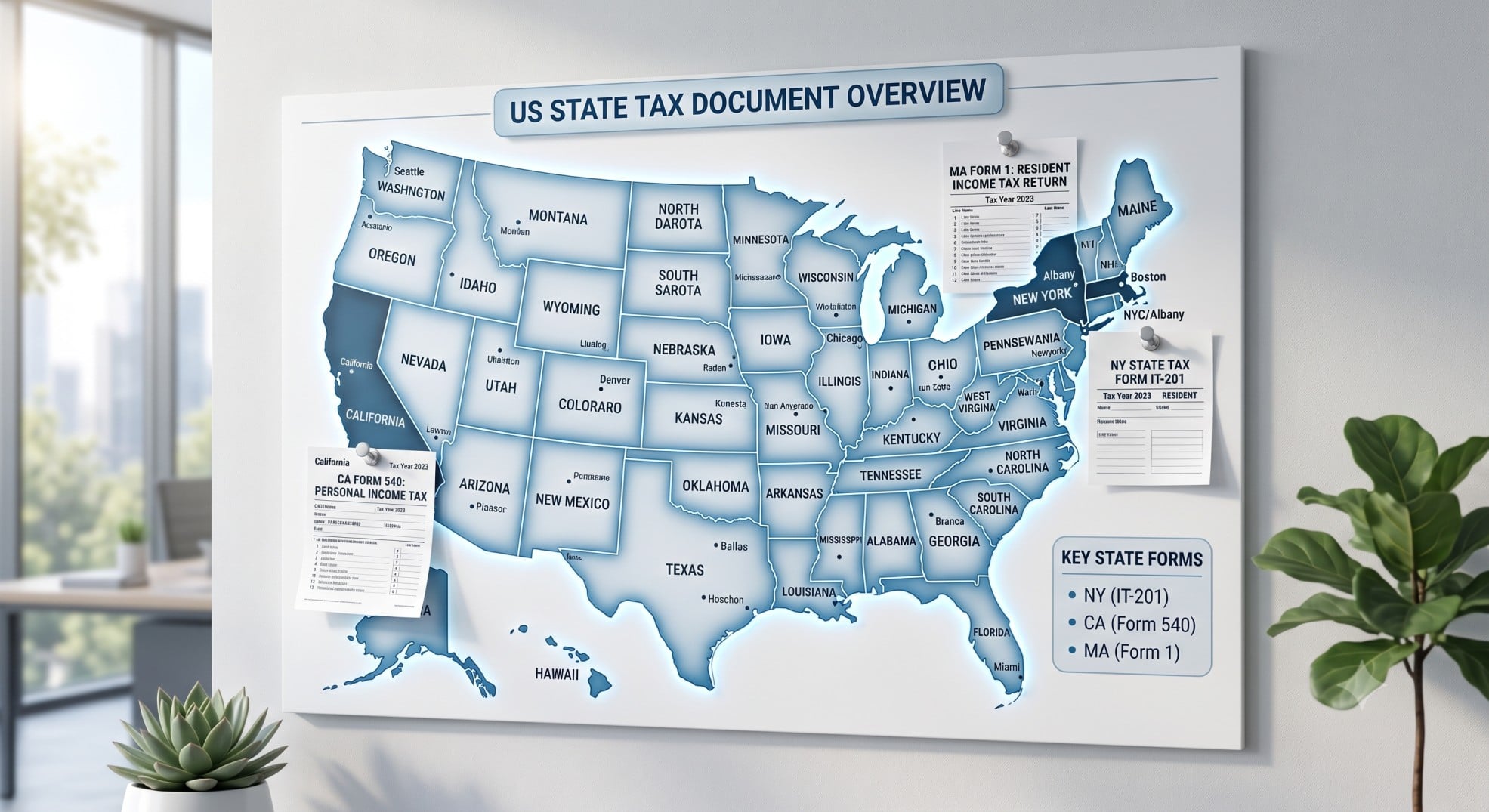
If you look at the federal standard deduction for 2026, you will see a massive $16,100 baseline for single filers. Almost no state in the country matches this figure. States like New York and California maintain much lower baselines. This means you could easily owe zero federal income tax but still owe thousands of dollars to your state.
Because the standard deduction for state taxes is generally much lower than the federal equivalent, the math regarding itemized receipts changes drastically. You might take the flat rate on your federal return but find that itemizing deductions on your state return yields a much better financial result.
New York: The NYS Standard Deduction for 2026
New York operates one of the most progressive state income tax systems in the country, with nine distinct brackets ranging from 4% to 10.9%. Before applying those rates, taxpayers get to subtract a fixed baseline amount from their earnings.
The standard deduction for New York is $8,000 for single filers and $16,050 for married couples filing jointly. Head of household filers receive an $11,200 baseline. Unlike the IRS, the New York State legislature does not automatically index these figures for inflation every year. The NYS standard deduction for 2026 remains exactly the same as it was in previous years, meaning inflation slowly erodes the purchasing power of this write-off over time.
If you live within the five boroughs, you face an additional layer of taxation. New York City levies its own local income tax on residents. Fortunately, the NYC standard deduction for 2026 uses the exact same baseline figures as the state. You subtract your $8,000 or $16,050 from your Adjusted Gross Income once, and that reduced number serves as the taxable base for both your state and city tax calculations.
You are legally permitted to itemize your deductions on your New York return even if you took the flat rate on your federal return. If your state income taxes, mortgage interest, and charitable gifts exceed the new york state standard deduction 2026 amount, you should file Form IT-196 to claim your itemized expenses.
California: The 2026 CA Standard Deduction
California taxes income across nine brackets, maxing out at a staggering 13.3% for the state’s highest earners. The Franchise Tax Board (FTB) sets its own baseline write-offs entirely independent of federal law.

The 2026 CA standard deduction is $5,706 for single filers and $11,412 for married couples filing jointly. The FTB adjusts these numbers annually for inflation, providing a slight increase over the previous tax year. However, this baseline remains incredibly low compared to the federal figures.
Because the flat rate is so low, California is unique. Millions of residents benefit from claiming California tax itemized deductions. If you own a home in California, your mortgage interest and property taxes will almost certainly exceed the $11,412 joint baseline. You can take the $32,200 flat rate on your federal return for simplicity, and then itemize your specific expenses on your state return to maximize your tax savings.
California also handles senior and dependent benefits differently. Instead of increasing your baseline deduction, the state offers flat exemption credits that directly reduce your final tax bill. For 2026, the personal exemption credit is $153 for single filers and $306 for joint filers.
Massachusetts: How the MA Standard Deduction for 2026 Works
Taxpayers moving to New England often search for the MA standard deduction for 2026, only to find that the state tax code does not use that specific terminology. Massachusetts operates on a flat 5% income tax rate for most earnings, and it uses a personal exemption system instead of a traditional deduction.
The Massachusetts personal exemption functions identically to a standard deduction. For 2026, single filers receive a $4,400 exemption, and married couples filing jointly receive an $8,800 exemption. You subtract this amount from your gross income before applying the flat 5% tax rate.
Massachusetts does not allow you to itemize deductions in the traditional sense. You cannot write off your mortgage interest or charitable donations to lower your state tax bill. However, the state does offer a few specific above-the-line deductions, such as a rental deduction that allows you to write off 50% of the rent you paid during the year (capped at $3,000).
North Carolina: The NC 2026 Standard Deduction
North Carolina simplified its tax code significantly over the last decade, moving away from progressive brackets to a flat income tax rate. For 2026, the state applies a flat 4.5% tax rate to all taxable income.
The NC 2026 standard deduction is $12,750 for single filers and $25,500 for married couples filing jointly. This is one of the more generous state baselines in the country, though it still falls short of the federal amounts. North Carolina decoupled its standard deduction from the federal code, meaning the state legislature sets these specific figures manually.
If you choose to itemize in North Carolina, you face strict limits. You can deduct charitable contributions and mortgage interest, but your combined deduction for mortgage interest and property taxes cannot exceed $20,000. Because the flat baseline of $25,500 for joint filers is higher than this $20,000 cap, most married homeowners in North Carolina find that taking the flat rate yields a better result than itemizing.
Oregon: The Standard Deduction Oregon Filers Need to Know
Oregon features some of the highest income tax rates in the nation, peaking at 9.9%, but it offsets this burden by charging zero state sales tax. The state tax code is highly progressive and relies on a very low baseline write-off.
The standard deduction Oregon provides is $2,745 for single filers and $5,495 for married couples filing jointly (adjusted annually for inflation). Because this baseline is so small, almost all of a resident’s income is subject to state taxation.
To provide relief, Oregon offers a unique provision: the federal tax subtraction. Oregon allows you to deduct a portion of the federal income taxes you actually paid during the year from your state taxable income. For 2026, single filers can subtract up to $7,050 in federal taxes paid, and joint filers can subtract up to $14,100. This subtraction acts as a powerful secondary deduction that significantly lowers your effective state tax rate.
Real-World Scenarios: Calculating Standard Deduction for State Taxes
Reading the rules only gets you so far. Looking at how these numbers apply to real taxpayers clarifies exactly how the standard deduction for state taxes impacts a household budget. Let’s examine four distinct scenarios.
Scenario 1: The Manhattan Renter
David is single, rents an apartment in New York City, and earns $85,000 a year. He has no mortgage interest and no major medical expenses.
- Federal Return: He takes the $16,100 federal baseline.
- State Return: He takes the standard deduction for New York, which is $8,000.
- City Return: He uses the NYC standard deduction for 2026, which is also $8,000.
David’s federal taxable income is $68,900. But his state and city taxable income is $77,000. He pays state and local taxes on $8,100 of income that the federal government considers entirely tax-free.
Scenario 2: The Los Angeles Homeowners
Sarah and Mark are married, file jointly, and live in California. They earn $150,000 combined. They paid $18,000 in mortgage interest and $10,000 in property taxes.
- Federal Return: Their $28,000 in itemized expenses is less than the $32,200 federal baseline. They take the federal flat rate.
- State Return: The 2026 CA standard deduction is only $11,412.
Sarah and Mark will claim California tax itemized deductions. They write off their $28,000 in specific expenses on their state return, shielding vastly more income than the $11,412 state baseline would allow.
Scenario 3: The Boston Professional
Emma is single, earns $70,000, and lives in Massachusetts. She pays $2,000 a month in rent.
- State Return: She claims the MA standard deduction for 2026 (the $4,400 personal exemption).
- Rental Deduction: She can deduct 50% of her rent, capped at $3,000.
Emma subtracts $7,400 ($4,400 + $3,000) from her $70,000 income. She pays the flat 5% Massachusetts tax rate on her remaining $62,600.
Scenario 4: The Charlotte Couple
James and Linda are married and live in North Carolina. They earn $110,000 and paid $15,000 in mortgage interest.
- State Return: The NC 2026 standard deduction is $25,500.
Because their $15,000 in itemized expenses falls well below the $25,500 state baseline, they take the flat rate. They pay the 4.5% flat tax on their remaining $84,500 of income.
Step-by-Step: How to Claim Your State Tax Write-Offs
Filing your state return requires transferring data from your federal paperwork. The process is straightforward if you follow the correct sequence of operations.
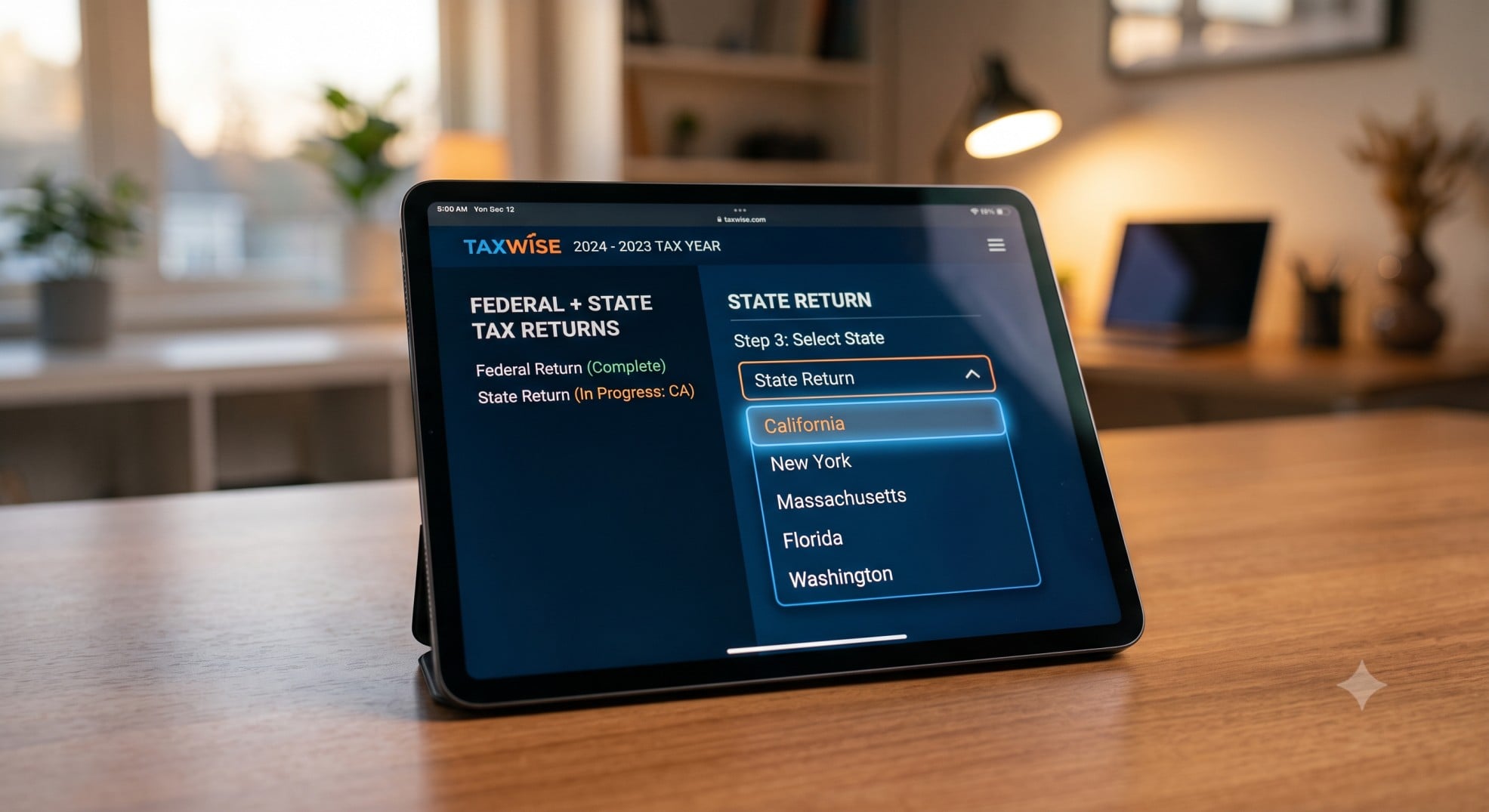
Step 1: Finalize Your Federal Return First
Almost every state tax return begins with your Federal Adjusted Gross Income (AGI). You must calculate your federal income, above-the-line adjustments, and federal tax liability before you even open your state tax forms.
Step 2: Check Your State’s Conformity Rules
Determine if your state requires you to use the same deduction method you used federally. States like New York and California allow you to mix and match (standard federal, itemized state). Other states force you to use the same method for both.
Step 3: Compare Standard vs Itemized for Your State
Look up the exact standard deduction for state taxes in your specific location. Compare that flat number against your state-allowed itemized expenses (mortgage interest, property taxes, charity). Choose the option that yields the highest total write-off.
Step 4: Apply State-Specific Additions and Subtractions
States often tax things the federal government ignores, and vice versa. For example, you might need to add municipal bond interest from other states back into your income, or subtract federal pension income that your state exempts.
Step 5: File Your State Return
Enter your final state taxable income into the state tax brackets (or apply the flat rate) to determine your final liability. If you use digital tax software, the program handles the transition from federal to state math automatically.
Frequently Asked Questions About State Taxes
Do all states offer standard deduction for state taxes?
No. While most states offer a flat baseline write-off, some states like Massachusetts use a personal exemption system instead. Furthermore, nine states (like Texas, Florida, and Nevada) do not levy a state income tax at all, making deductions irrelevant.
What is the NYS standard deduction for 2026 for single filers?
The baseline amount for single filers in New York is $8,000. This amount is not automatically indexed for inflation and has remained flat for several years.
How does the NYC standard deduction for 2026 work?
New York City residents pay a local income tax on top of their state tax. The city uses the exact same baseline amounts as the state ($8,000 single, $16,050 joint) to calculate your taxable city income.
What is the standard deduction for New York if I am married?
Married couples filing jointly in New York receive a flat baseline write-off of $16,050. If your combined itemized expenses exceed this number, you should itemize on your state return.
Does the MA standard deduction for 2026 exist?
Not by that exact name. Massachusetts uses a personal exemption of $4,400 for single filers and $8,800 for joint filers, which functions identically to a standard deduction by lowering your taxable income before the 5% flat rate is applied.
Can I claim California tax itemized deductions if I took the federal flat rate?
Yes. California law allows you to itemize your state deductions even if you claimed the standard deduction on your federal return. Because the CA baseline is so low, this is a very common strategy for homeowners.
What is the 2026 CA standard deduction amount?
The Franchise Tax Board set the baseline at $5,706 for single filers and $11,412 for married couples filing jointly. These amounts are adjusted annually for inflation.
How much is the NC 2026 standard deduction?
North Carolina offers $12,750 for single filers and $25,500 for married couples filing jointly. After subtracting this amount, the state applies a flat 4.5% income tax rate to the remainder.
What is the standard deduction Oregon provides?
Oregon provides a baseline of $2,745 for single filers and $5,495 for joint filers. However, the state also allows residents to subtract a portion of their federal taxes paid from their state taxable income.
Why is the standard deduction for state taxes usually lower than the federal amount?
When the federal government doubled the baseline write-offs in 2018, most states chose to decouple their tax codes from the federal rules. States kept their baselines lower to prevent a massive loss in state tax revenue.
Disclaimer: This content provides general information for educational purposes only. Tax laws are complex and change often. It is not professional tax, legal, or financial advice. Always consult a qualified tax professional for personalized guidance regarding your specific situation. Ourtaxpartner.com is not responsible for any actions taken based on the information provided herein.
