
Executive Summary:
- Taxpayers frequently ask: is real estate taxes the same as property taxes? The answer is no. Real estate tax is a specific subset of the broader property tax category.
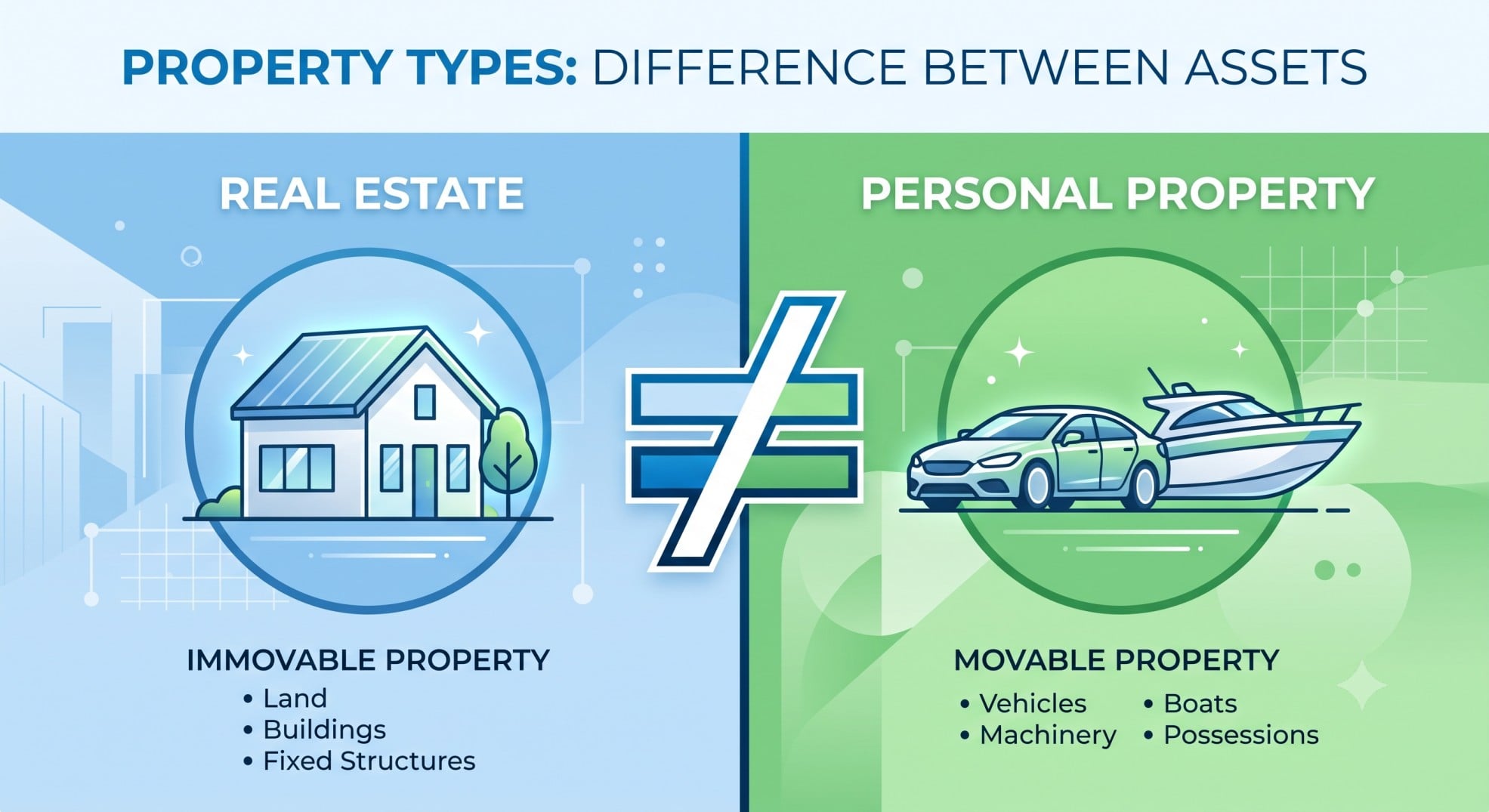
- Real estate taxes apply exclusively to immovable property, such as land and permanent structures (houses, commercial buildings).
- Personal property taxes apply to movable assets, such as vehicles, boats, and RVs, provided the tax is based on the item’s value and assessed annually.
- Both types of taxes are deductible on Schedule A, subject to the 2026 State and Local Tax (SALT) cap of $40,400.
- Form 1098 only reports real estate taxes paid through an escrow account. It does not include personal property taxes.
Homeowners and vehicle owners receive multiple tax bills from their local municipalities every year. These bills fund local schools, road maintenance, and emergency services. When preparing federal tax returns, taxpayers often combine these bills into one mental category. This creates confusion, especially when determining exactly are property taxes deductible and how to report them correctly to the IRS.
The terminology used by local governments does not always match the strict definitions used by the Internal Revenue Service. You might receive a bill labeled “Property Tax Assessment” for your home, and another bill labeled “Motor Vehicle Excise Tax” for your car. To maximize your federal deductions under the 2026 tax code, you must understand exactly how the IRS categorizes these payments.
This guide breaks down the exact legal and tax distinctions between these assessments. We will define the terms, explain the 2026 deduction rules, and provide step-by-step instructions for reporting these taxes on your Schedule A.
Table of Contents
- Is Real Estate Taxes the Same as Property Taxes?
- What Are Real Estate Taxes?
- What is Real Estate Property Tax Used For?
- Personal Property Tax vs Real Estate Tax: The Core Differences
- How the IRS Treats Both Under the 2026 SALT Cap
- Real-World Scenarios: Calculating Your Deductions
- Step-by-Step: Reporting These Taxes on Your Return
- The Difference Between Real Estate Tax and Property Tax on 1098
- Frequently Asked Questions About Property Taxes
Is Real Estate Taxes the Same as Property Taxes?
We must address the most common point of confusion immediately: is real estate taxes the same as property taxes? The short answer is no, they are not identical terms, though they are heavily related.
Property tax is an umbrella term. It encompasses taxes levied on virtually any type of property an individual or business can own. Real estate tax is a specific, narrower category that falls under that umbrella. All real estate taxes are property taxes, but not all property taxes are real estate taxes.
When you ask a CPA, “is real estate taxes the same as property taxes,” they will point you to the IRS tax code. The IRS explicitly separates taxes levied on land and buildings from taxes levied on movable items like cars and boats. Mixing these two up on your tax forms can lead to inaccurate reporting and potential IRS correspondence.
What Are Real Estate Taxes?
To understand the distinction, we must define the specific categories. What are real estate taxes? Real estate taxes are assessments levied by local or state governments strictly on “real property.”
Real property is defined as land and anything permanently attached to that land. This includes single-family homes, condominiums, apartment buildings, commercial factories, and vacant lots. If you cannot pick the asset up and move it to another state, it is generally classified as real property.
Local tax assessors determine the value of this real property on a regular basis—often annually or bi-annually. They apply a specific millage rate (the tax rate) to that assessed value to generate your tax bill. What are real estate taxes based on? They are based entirely on the ad valorem (according to value) assessment of the immovable physical property.
What is Real Estate Property Tax Used For?
Taxpayers write massive checks to their local counties every year, prompting the question: what is real estate property tax actually funding? Unlike federal income taxes, which go into a massive national treasury, real estate taxes are highly localized.
What is real estate property tax primarily used for? It funds the immediate infrastructure of your daily life. The largest percentage usually goes directly to local public school districts. Even if you do not have children, your real estate taxes fund the schools in your jurisdiction.
Beyond schools, these funds pay for municipal services. This includes police departments, fire departments, public libraries, road paving, snow removal, and local park maintenance. When you review your annual tax assessment notice, the county usually provides a pie chart showing exactly what is real estate property tax funding in your specific zip code.
Personal Property Tax vs Real Estate Tax: The Core Differences
The easiest way to understand the umbrella term is to compare the two main subcategories: personal property tax vs real estate tax.
While real estate tax applies to immovable land and structures, personal property tax applies to movable assets. The most common examples of personal property subject to taxation are vehicles, motorcycles, boats, recreational vehicles (RVs), and aircraft. In some jurisdictions, business equipment and machinery are also taxed as personal property.
When analyzing personal property tax vs real estate tax, the IRS has very strict rules about what makes personal property tax deductible. For a personal property tax to be deductible on your federal return, it must meet three specific criteria:
- It must be based on value: The tax must be an ad valorem tax. If your state charges a flat $50 registration fee for all vehicles regardless of make or model, that fee is not deductible. If your state charges a fee based on the Kelley Blue Book value of your specific car, it is deductible.
- It must be assessed annually: The tax must be charged on a yearly basis, even if the municipality collects it in multiple installments.
- It must be assessed on personal property: It cannot be a tax on real estate or a general sales tax.
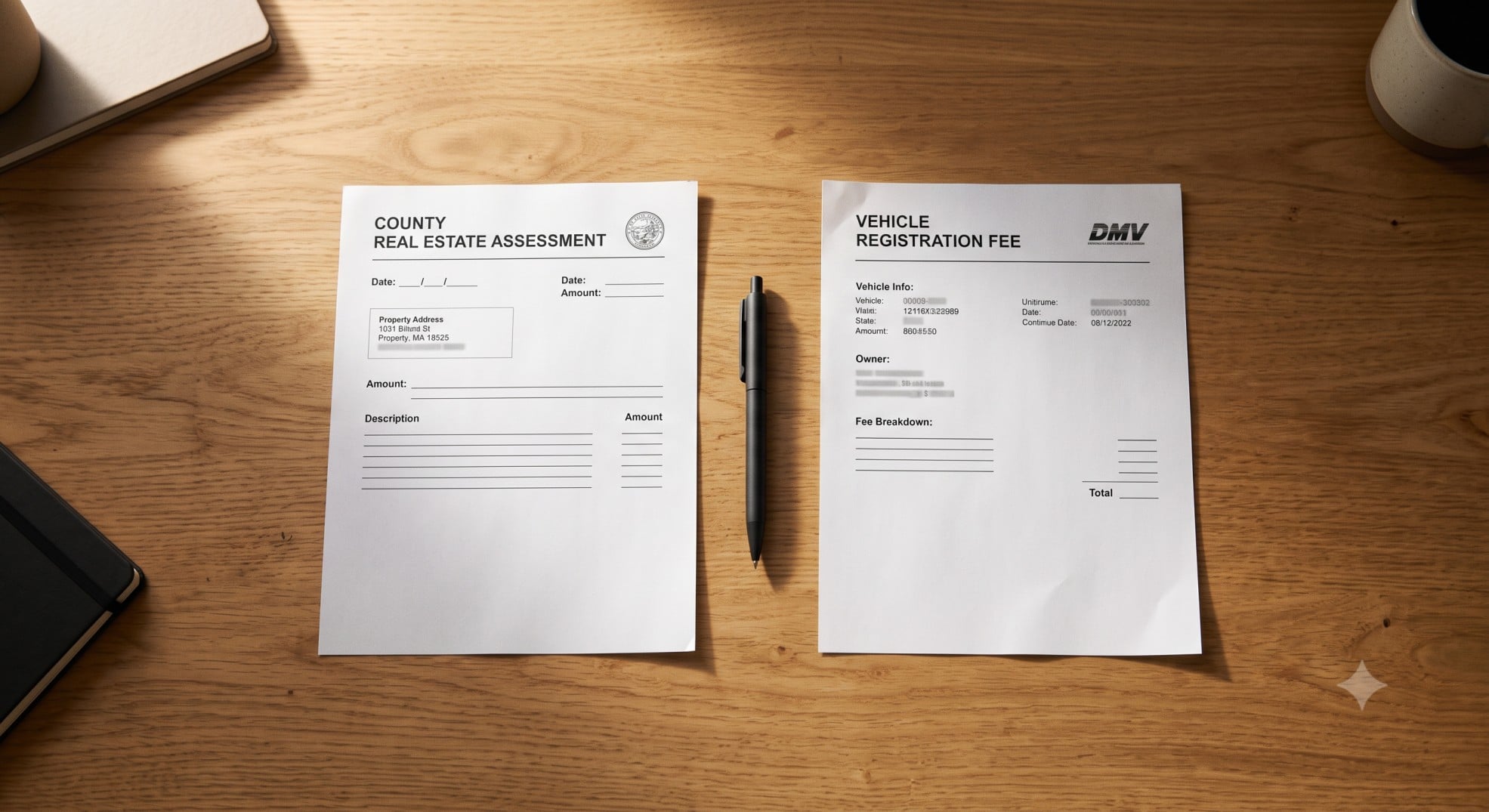
| Feature | Real Estate Tax | Personal Property Tax |
|---|---|---|
| Asset Type | Immovable (Land, Houses, Buildings) | Movable (Cars, Boats, RVs) |
| IRS Form Location | Schedule A, Line 5b | Schedule A, Line 5c |
| Deductibility Requirement | Must be assessed uniformly on all real property in the jurisdiction. | Must be based strictly on the value of the asset and assessed annually. |
| Escrow Payment | Commonly paid via mortgage escrow. | Rarely paid via escrow; paid directly to the DMV or county. |
How the IRS Treats Both Under the 2026 SALT Cap
Understanding the difference between personal property tax vs real estate tax is critical because both feed into the same federal deduction limit. The IRS groups both of these taxes, along with your state income taxes, into the State and Local Tax (SALT) deduction.
For the 2026 tax year, the One Big Beautiful Bill Act (OBBBA) set the SALT deduction cap at $40,400 for single filers and married couples filing jointly. This is a massive increase from the old $10,000 limit that existed from 2018 to 2024.
You must add your real estate taxes, your qualifying personal property taxes, and your state income taxes together. If that combined number is $35,000, you can deduct the entire amount on Schedule A. If that combined number is $50,000, you can only deduct $40,400. High-income earners (MAGI over $505,000) will see this $40,400 cap reduced further due to 2026 phaseout rules.
Real-World Scenarios: Calculating Your Deductions
To fully grasp how these definitions impact your tax return, let’s run the math on three distinct 2026 scenarios. These examples highlight why asking “is real estate taxes the same as property taxes” is so important for accurate filing.
Scenario 1: The Value-Based Vehicle Registration
Marcus lives in a state that charges an annual vehicle registration fee. The state charges a flat $75 administrative fee, plus a 1% tax on the assessed value of the vehicle. Marcus owns a truck valued at $40,000. He also owns a home and pays $6,000 in real estate taxes.
- Real Estate Tax: $6,000 (Fully deductible on Line 5b)
- Vehicle Flat Fee: $75 (Not deductible, based on weight/admin)
- Vehicle Value Tax: $400 (Fully deductible on Line 5c as personal property tax)
Marcus will report $6,000 as real estate tax and $400 as personal property tax. His total property tax deduction is $6,400.
Scenario 2: The Weight-Based Registration Trap
Sarah lives in a state that bases vehicle registration entirely on the weight of the vehicle. She pays $300 a year to register her heavy SUV. She also pays $12,000 in taxes on her primary residence.
- Real Estate Tax: $12,000 (Fully deductible on Line 5b)
- Vehicle Weight Tax: $300 (Not deductible)
Because Sarah’s vehicle tax is based on weight, not value, it fails the IRS test for personal property taxes. She can only deduct her $12,000 real estate tax.
Scenario 3: Hitting the 2026 SALT Cap
David and Lisa are married filing jointly. They own a large home, two expensive cars, and a boat. They live in a state with high income taxes.
- State Income Tax: $20,000
- Real Estate Tax: $18,000
- Personal Property Tax (Cars & Boat): $5,000
- Total SALT Paid: $43,000
David and Lisa have correctly separated their real estate and personal property taxes. Their total state and local taxes equal $43,000. Because the 2026 SALT cap is $40,400, they will lose $2,600 in deductions. They will report the maximum $40,400 on their Schedule A.
Step-by-Step: Reporting These Taxes on Your Return
You cannot claim these deductions if you take the standard deduction. You must itemize using Schedule A (Form 1040). Here is exactly how to report both types of taxes for the 2026 tax year.
- Locate Schedule A: Open your tax software or print a physical copy of Schedule A. Navigate to the “Taxes You Paid” section.
- Report State Income Tax: On Line 5a, enter your state and local income taxes paid during the year.
- Report Real Estate Taxes: On Line 5b, enter the taxes paid on your physical land and home. You will find this number on your Form 1098 (Box 10) or your direct county tax receipts.
- Report Personal Property Taxes: On Line 5c, enter the value-based taxes paid on your vehicles, boats, or RVs. You will find this number on your DMV registration receipts.
- Calculate the Total: Add lines 5a, 5b, and 5c. Enter the total on line 5d.
- Apply the 2026 Cap: On line 5e, enter your maximum allowable SALT cap ($40,400 for most filers). Enter the smaller of line 5d or line 5e on line 5f. This is your final deductible amount.
The Difference Between Real Estate Tax and Property Tax on 1098
One of the biggest sources of filing errors involves mortgage documents. Taxpayers often ask about the difference between real estate tax and property tax on 1098 forms. The answer is simple: Form 1098 only deals with real estate.
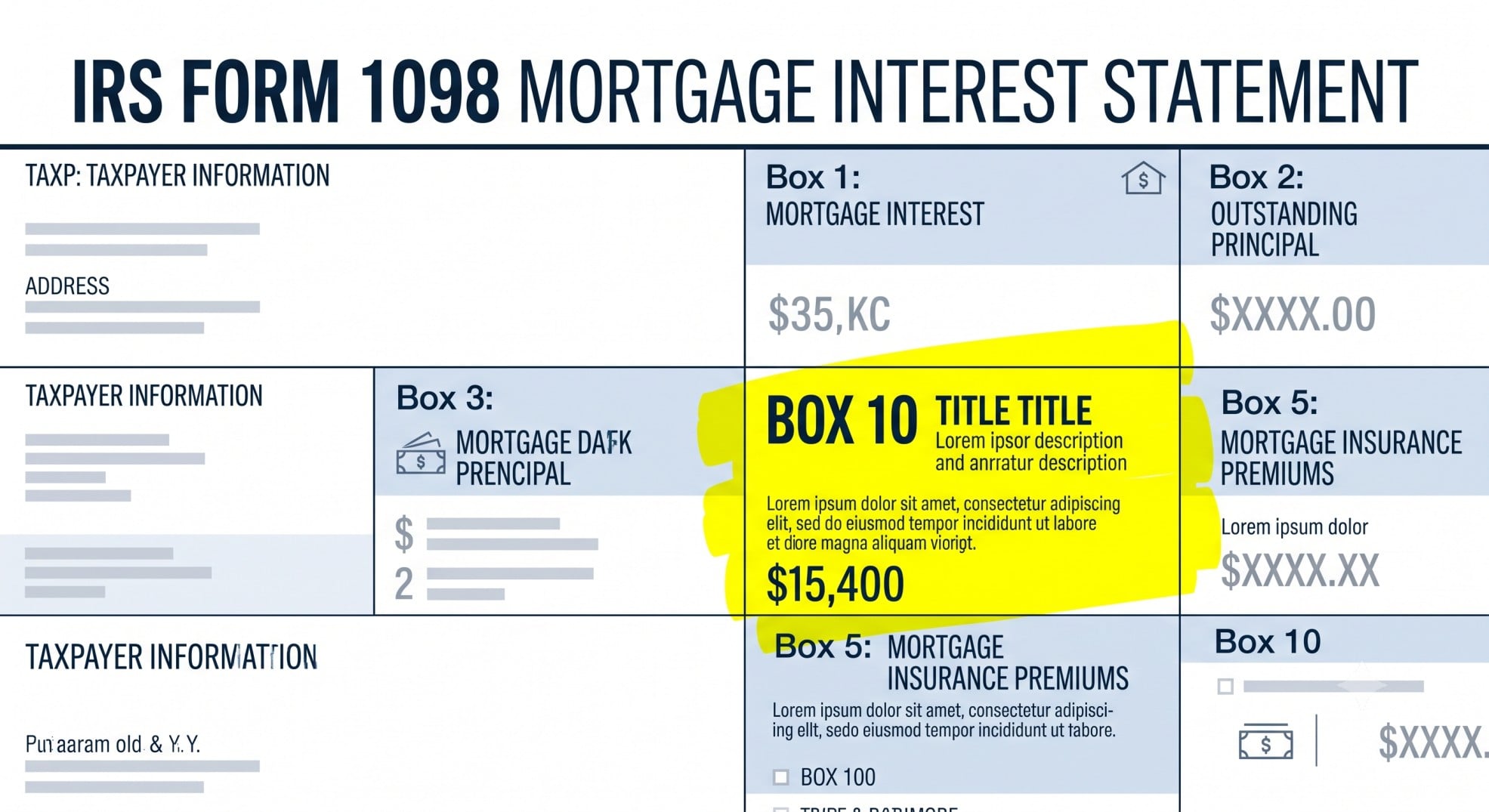
If you pay your home taxes through an escrow account, your mortgage lender will send you Form 1098 (Mortgage Interest Statement) at the end of the year. Box 10 of this form is labeled “Real estate taxes paid.”
This box only includes the money your lender sent to the county assessor for your physical home and land. It will never include your personal property taxes. Your lender does not pay your vehicle registration fees. If you want to deduct your car taxes, you must find those receipts yourself and add them to Line 5c on Schedule A. Do not assume Box 10 represents your total allowable property tax deduction.
Furthermore, Box 10 only shows the amount actually paid to the municipality during the calendar year. It does not show the total amount you deposited into your escrow account. The IRS only allows you to deduct the taxes actually paid to the government, not the funds sitting in escrow waiting for the next billing cycle.
Frequently Asked Questions About Property Taxes
Is real estate taxes the same as property taxes?
No. Property tax is a broad category that includes taxes on many types of assets. Real estate tax is a specific type of property tax levied only on immovable land and permanent structures. All real estate taxes are property taxes, but personal property taxes (like car taxes) are not real estate taxes.
What are the three types of property that are taxed?
Tax jurisdictions generally recognize three types of taxable property: real property (land and buildings), personal property (movable assets like vehicles and equipment), and intangible property (stocks, bonds, patents). Intangible property is rarely taxed at the individual level for local municipal funding, making real and personal property the primary concerns for Schedule A deductions.
What are real estate taxes based on?
Real estate taxes are based on the assessed value of your home and land. Local government assessors evaluate your property periodically. They multiply that assessed value by the local tax rate (often called a millage rate) to determine your final bill.
Are personal property taxes deductible?
Yes, personal property taxes are deductible on Schedule A, but only if they meet strict IRS criteria. The tax must be assessed annually, and it must be based strictly on the value of the personal property. Flat fees or weight-based registration fees are not deductible.
What is real estate property tax used to fund?
Local governments use real estate property tax to fund municipal services. The largest portion typically goes to public school districts. The remainder funds police and fire departments, road maintenance, public libraries, parks, and local government administration.
What is a real property tax credit?
A real property tax credit is a state-level tax benefit designed to provide relief to homeowners and renters whose property taxes represent a disproportionately high percentage of their household income. New York, for example, offers a Real Property Tax Credit for qualifying residents. This is a state credit, not a federal deduction, and operates completely outside the federal SALT cap rules.
What is the difference between real estate tax and property tax on 1098?
Form 1098 only reports real estate taxes. Box 10 shows the exact amount of money your mortgage lender paid to the local tax authority from your escrow account for your home and land. It does not include personal property taxes, which you must track and report separately.
Can I deduct property taxes on a car I use for business?
If you use a vehicle strictly for business, you deduct the taxes and registration fees on Schedule C (Profit or Loss From Business) as a business expense, not on Schedule A. If you use the car for both personal and business reasons, you must split the deduction based on the percentage of business use.
Do I have to itemize to claim personal property taxes?
Yes. Both real estate taxes and personal property taxes fall under the State and Local Tax (SALT) deduction. You can only claim the SALT deduction if you itemize your deductions on Schedule A. If you take the standard deduction, you cannot write off these taxes.
Disclaimer: The information provided in this article is for educational and informational purposes only and does not constitute financial, legal, or tax advice. Tax laws change frequently, and individual circumstances vary widely. Always consult with a qualified CPA or tax professional before making any decisions based on this content.
