
Executive Summary
- The 2026 SALT Cap: The One Big Beautiful Bill Act (OBBBA) increased the State and Local Tax (SALT) deduction limit to $40,400 for single and joint filers in 2026.
- Form 1098: If you have a mortgage with an escrow account, your lender will report your paid property taxes in Box 10 of Form 1098.
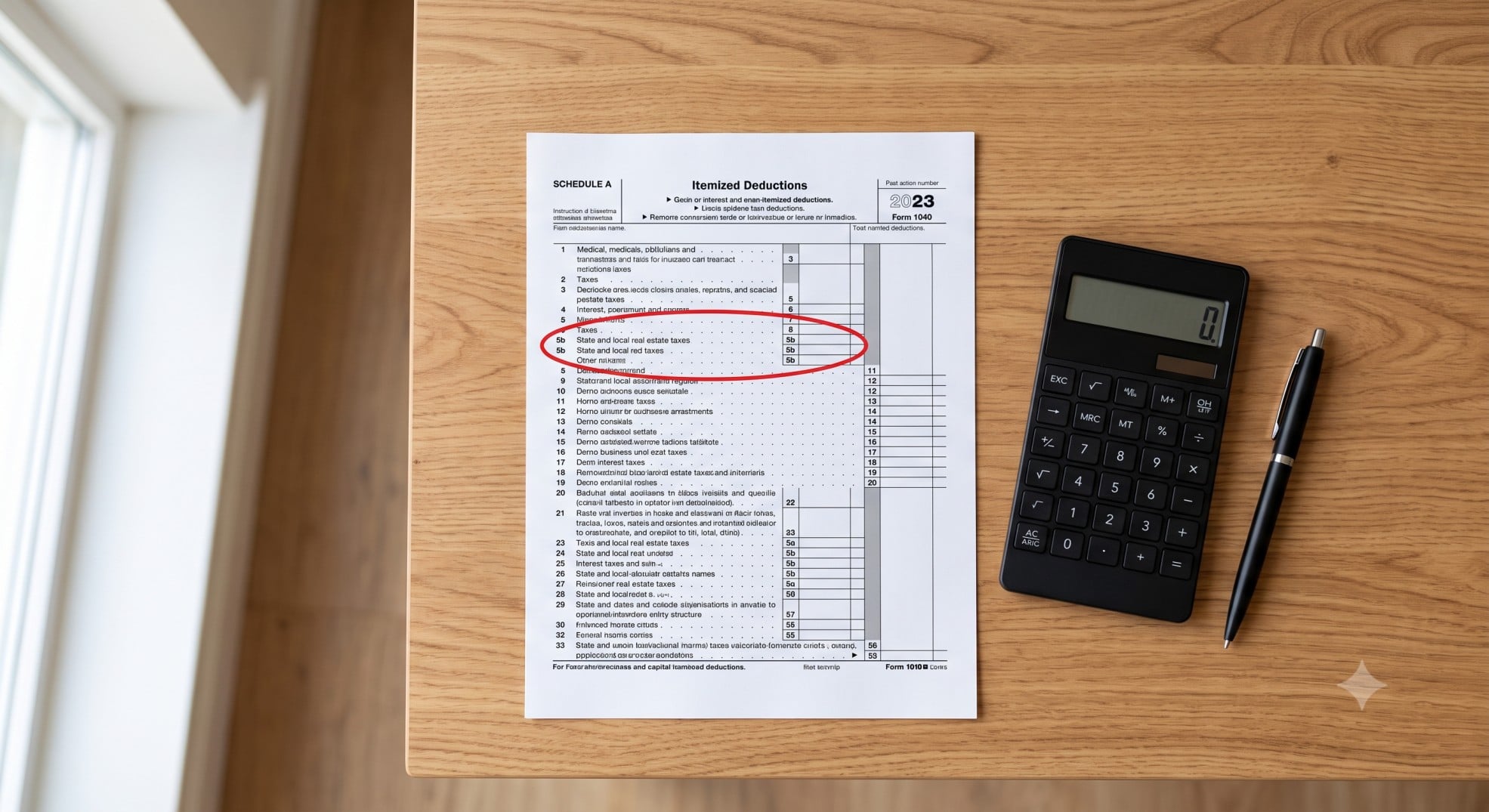
- Schedule A: You must itemize your deductions to claim this benefit. Property taxes are entered on Line 5b of IRS Schedule A (Form 1040).
- Standard Deduction Benchmark: To benefit from itemizing in 2026, your total deductions must exceed $16,100 (Single) or $32,200 (Married Filing Jointly).
Understanding exactly how to claim property taxes on tax return filings can save homeowners thousands of dollars. The tax code allows you to deduct the taxes you pay to your local municipality based on the assessed value of your real estate. You must itemize your deductions to take advantage of this specific property tax deduction. The rules governing this process have shifted significantly for the 2026 tax year.
The previous $10,000 cap on State and Local Taxes (SALT) has been replaced. Under the One Big Beautiful Bill Act (OBBBA), the SALT cap for 2026 is now $40,400 for single filers and married couples filing jointly, and $20,200 for married individuals filing separately. This expanded limit means more homeowners will benefit from tracking down their tax records and itemizing their deductions.
This guide provides a systematic breakdown of where to find your payment records, how to calculate your eligible deduction, and the exact steps required to report these figures to the IRS.
Table of Contents
- How Do You Know If You Paid Property Taxes?
- Where to Find Property Tax Paid (Step-by-Step)
- Where to Find Real Estate Taxes Paid on 1098
- How to Find Property Taxes Paid Last Year Online
- How to Claim Property Taxes on Tax Return: The Math & Logic
- Where Do I Enter Property Tax on My Tax Return?
- Real-World Scenarios & Calculations
- Frequently Asked Questions
How Do You Know If You Paid Property Taxes?
How do you know if you paid property taxes during the calendar year? You pay property taxes if you own real estate and your local county or municipality assesses a tax based on the property’s value. The method of payment dictates how you track the expense.
Homeowners generally pay these taxes in one of two ways. The first is through an escrow account managed by a mortgage lender. You pay a portion of your annual tax bill every month as part of your regular mortgage payment. The lender holds this money in escrow and pays the county tax bill on your behalf when it comes due. The second method is direct payment. Homeowners without a mortgage, or those who opted out of escrow, receive a bill directly from the local tax assessor and pay it themselves, usually in one or two annual installments.
You can only deduct property taxes that were actually paid to the taxing authority during the calendar year. Money sitting in an escrow account that has not yet been disbursed to the county does not count as a paid tax for IRS purposes.
Where to Find Property Tax Paid (Step-by-Step)
Locating your exact payment figures requires checking the right financial documents. If you are wondering where to find property tax paid, you need to follow a specific paper trail based on how you manage your home finances.
Many taxpayers ask, “how do i find property taxes paid if I lost my receipts?” The IRS does not require you to submit receipts with your tax return, but you must have accurate records on file in case of an audit. Follow these steps to locate your verified payment amounts.
Step 1: Check Your Year-End Mortgage Documents
If you have a mortgage, your lender is legally required to send you a year-end statement detailing the interest and taxes paid on your behalf. This document is usually mailed or made available in your online portal by January 31st. This is the fastest way to verify your payments.
Step 2: Review Your Bank Statements
If you pay your taxes directly to the county, pull your bank statements from the months your tax installments are due. Look for cleared checks or electronic ACH transfers made out to your county tax collector, treasurer, or assessor’s office. Tally the exact amounts that cleared your account between January 1 and December 31 of the tax year.
Step 3: Locate Your Closing Disclosure (If You Bought or Sold)
If you purchased or sold a home during the year, the property taxes are prorated between the buyer and the seller at closing. You will find this breakdown on your Closing Disclosure (often called a HUD-1 settlement statement). You can deduct the portion of the taxes that you were responsible for paying, regardless of who physically handed the check to the county.
Where to Find Real Estate Taxes Paid on 1098
For the vast majority of homeowners with a mortgage, Form 1098 is the definitive document for tax preparation. Knowing exactly where to find real estate taxes paid on 1098 statements eliminates guesswork.
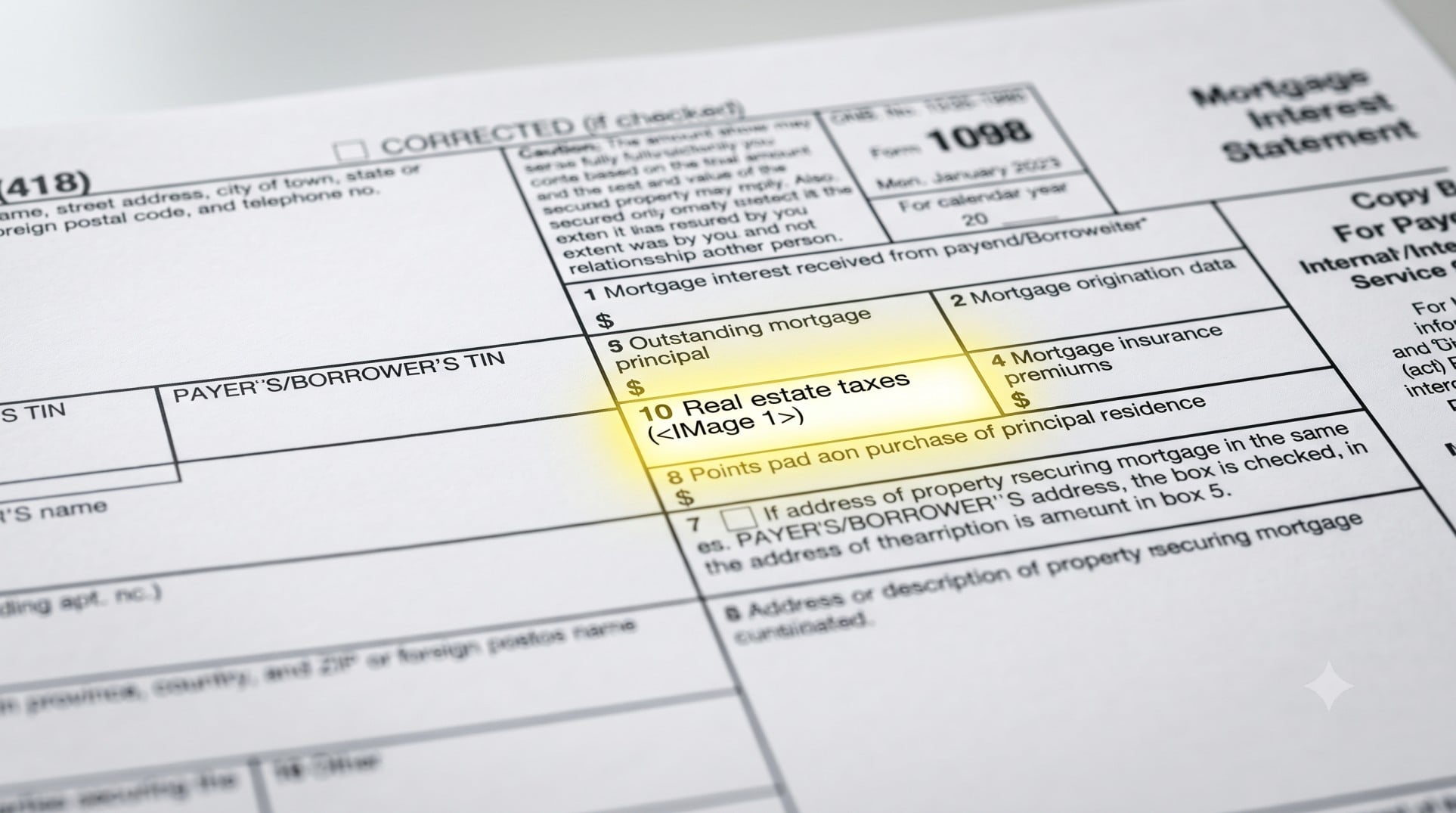
Form 1098 is titled “Mortgage Interest Statement.” While its primary purpose is to report the mortgage interest you paid to the bank, it also includes escrow disbursements. Look directly at Box 10. This box is specifically designated for “Real estate taxes.”
The figure in Box 10 represents the exact dollar amount your lender transferred from your escrow account to the local tax authority during the calendar year. This is the number you will use when figuring out how to claim property taxes on tax return filings.
If Box 10 is blank, it means one of two things. Either your lender does not manage an escrow account for your property taxes, or they did not make a disbursement to the county during that specific calendar year. If you know you have an escrow account but Box 10 is empty, contact your loan servicer immediately to verify the disbursement dates.
How to Find Property Taxes Paid Last Year Online
If you pay your taxes directly, or if you simply want to verify the numbers your lender reported, you can access public records. Learning how to find property taxes paid last year online is a straightforward process that utilizes local government databases.
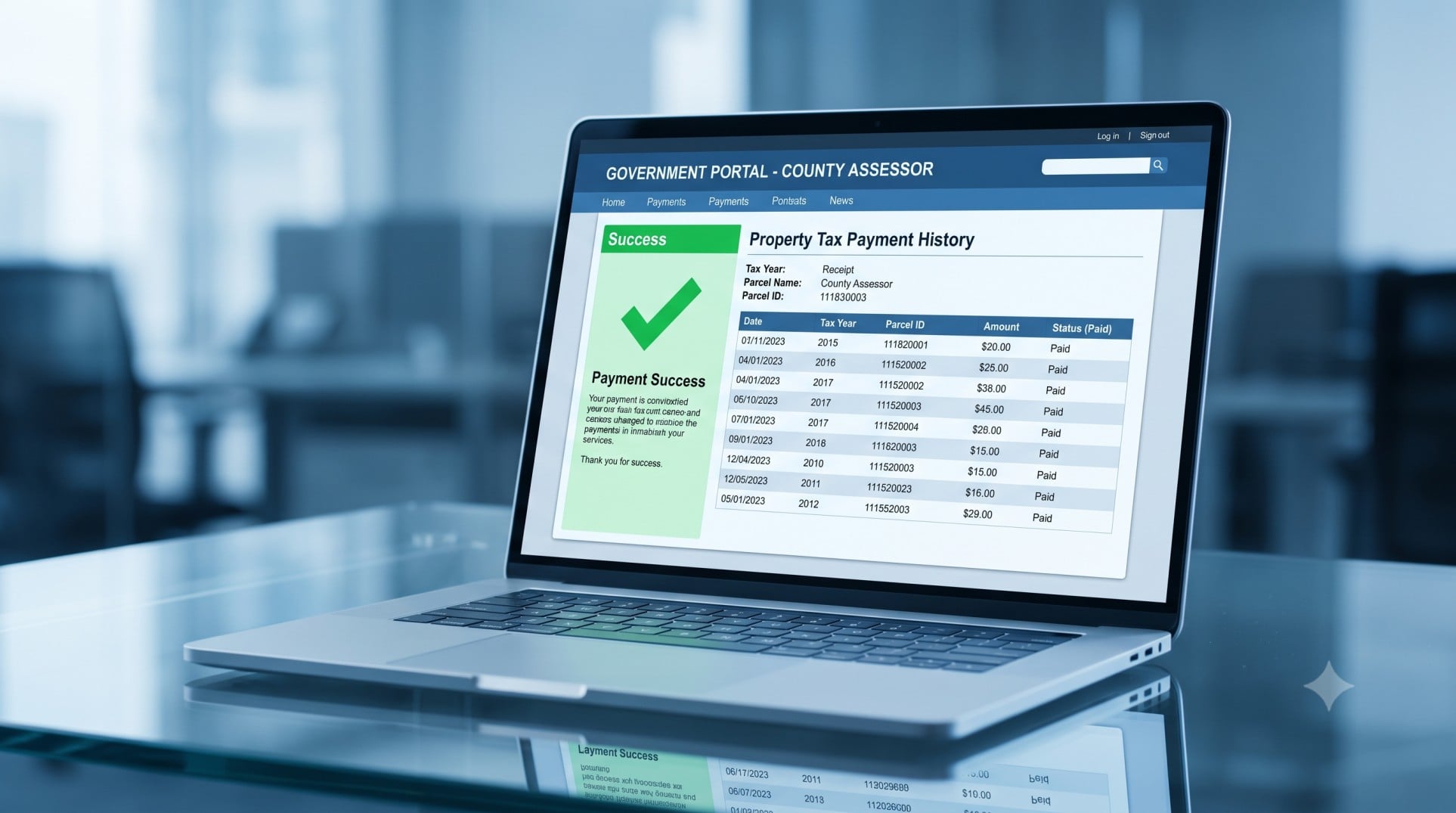
Property tax records are public information. Almost every county tax assessor or treasurer maintains an online portal. You can search for your property using your address, owner name, or Assessor’s Parcel Number (APN).
Navigate to your county’s official government website and look for the “Property Tax Search” or “Pay Property Taxes” portal. Once you locate your property profile, look for a tab labeled “Payment History,” “Tax Bills,” or “Receipts.” This section will display the exact dates and amounts of every tax payment credited to your parcel. You can print this ledger and keep it with your tax files as official documentation of the taxes you paid.
How to Claim Property Taxes on Tax Return: The Math & Logic
Gathering your documents is only the first phase. The next phase involves understanding the mechanics of the tax code. To know how to claim property taxes on tax return documents, you must understand how the SALT cap and the standard deduction interact.
The IRS allows you to deduct State and Local Taxes (SALT). This category includes your local property taxes combined with either your state income taxes or your state sales taxes. You cannot deduct both state income and state sales taxes; you must choose one to combine with your property taxes.
For the 2026 tax year, the OBBBA legislation caps the total allowable SALT deduction at $40,400 for single filers and married couples filing jointly. If your combined property and state income taxes equal $50,000, you can only deduct $40,400. High earners face an additional limitation. If your Modified Adjusted Gross Income (MAGI) exceeds $505,000 in 2026, the $40,400 cap phases down, reducing your allowable deduction by 30 cents for every dollar over the threshold, though it will not drop below $10,000.
You must then compare your total itemized deductions (SALT, mortgage interest, charitable contributions, etc.) against the 2026 standard deduction. The standard deduction for 2026 is $16,100 for single filers and $32,200 for married couples filing jointly. You only claim the property tax deduction if your total itemized deductions exceed your standard deduction.
Where Do I Enter Property Tax on My Tax Return?
Where do I enter property tax on my tax return once the math is complete? You report this figure on IRS Schedule A (Form 1040), which is the form used for Itemized Deductions.
Navigate to the section titled “Taxes You Paid.” You will see a specific line item for this exact expense. The property tax deduction on 1040 schedule A goes on Line 5b, labeled “State and local real estate taxes.”
You will enter your state income taxes (or sales taxes) on Line 5a. You add Lines 5a, 5b, and 5c (personal property taxes, like car registrations) together on Line 5d. On Line 5e, you enter the smaller of Line 5d or the $40,400 SALT cap. This final figure on Line 5e represents your total allowable State and Local Tax deduction.
Do I need my property tax statement to file taxes? You do not need to attach the physical statement or Form 1098 to your tax return when you file. You simply enter the numbers on Schedule A. You must retain the documents in your personal files for at least three years in case the IRS requests proof of the deduction.
Real-World Scenarios & Calculations
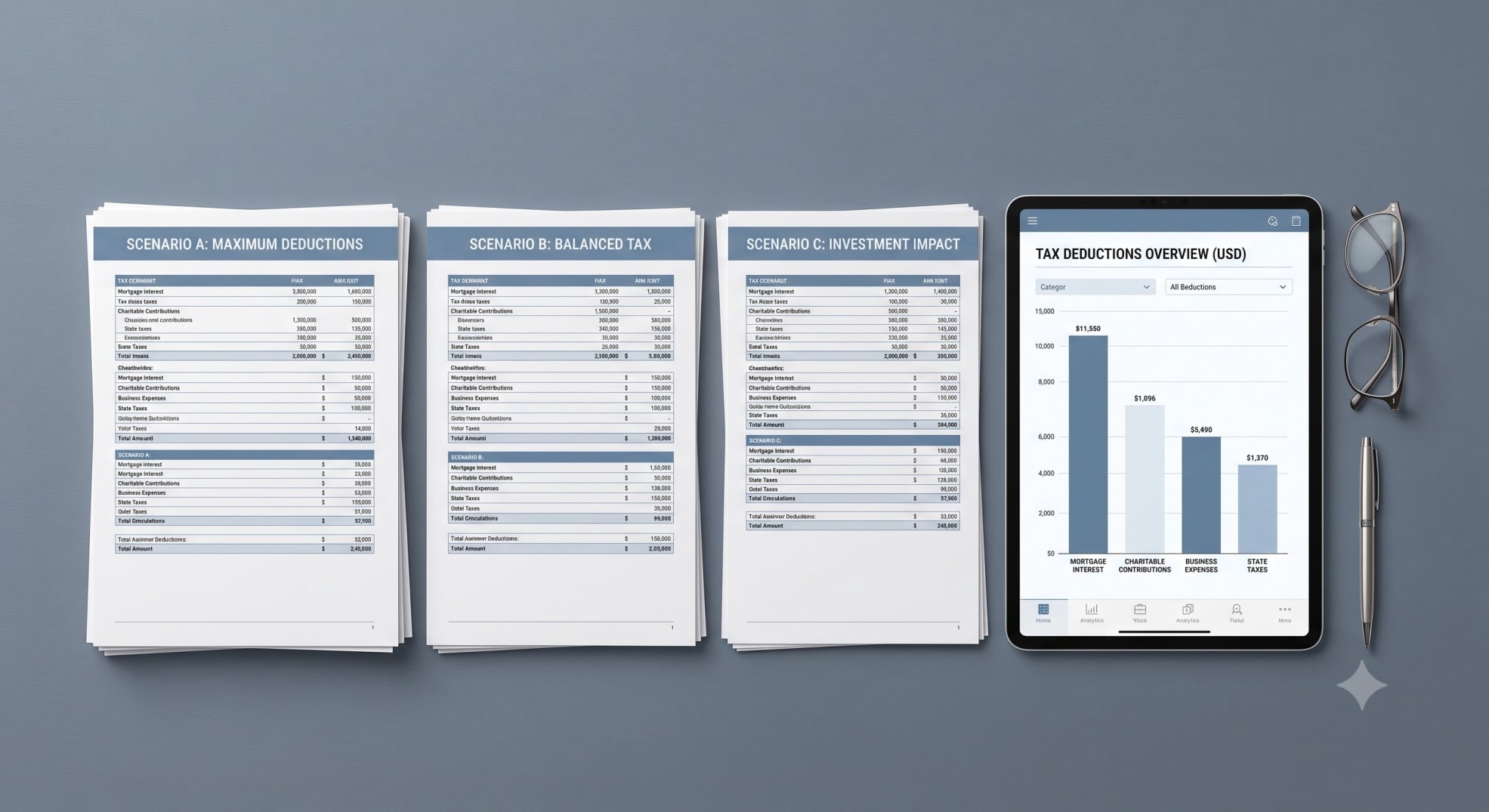
To fully grasp how to claim property taxes on tax return filings, we must look at how the rules apply in practice. These hypothetical scenarios demonstrate the interaction between property taxes, the SALT cap, and the standard deduction for the 2026 tax year.
Scenario 1: The Single Filer Below the Standard Deduction
David is a single filer in Ohio. He reviews his Form 1098 and sees $4,500 in Box 10. He knows where to find real estate taxes paid on 1098, so he records this figure. He also paid $3,000 in state income taxes. His total SALT amount is $7,500. He paid $6,000 in mortgage interest and made $1,000 in charitable contributions.
- Total Property Taxes: $4,500
- Total SALT: $7,500 (Well under the $40,400 cap)
- Total Itemized Deductions: $14,500 ($7,500 + $6,000 + $1,000)
- 2026 Single Standard Deduction: $16,100
The Logic: David’s total itemized deductions ($14,500) are less than the standard deduction ($16,100). David will take the standard deduction. He does not need to file Schedule A, and he will not directly deduct his property taxes, because the standard deduction provides a larger tax benefit.
Scenario 2: The Married Couple Maximizing the SALT Cap
Sarah and Mark are married filing jointly in New Jersey. They do not have an escrow account. They log into their county portal because they know how do i find property taxes paid online. They verify they paid $22,000 in property taxes directly to the county. They also paid $25,000 in state income taxes. They paid $15,000 in mortgage interest.
- Total Property Taxes: $22,000
- Total State Income Tax: $25,000
- Total SALT Paid: $47,000
- Allowable SALT Deduction (2026 Cap): $40,400
- Total Itemized Deductions: $55,400 ($40,400 SALT + $15,000 Interest)
- 2026 MFJ Standard Deduction: $32,200
The Logic: Sarah and Mark paid $47,000 in state and local taxes, but they are limited by the $40,400 OBBBA cap. They will enter $22,000 on Schedule A Line 5b, and $25,000 on Line 5a. On Line 5e, they will enter the capped amount of $40,400. Because their total itemized deductions ($55,400) far exceed the standard deduction ($32,200), they will itemize and successfully claim the maximum property tax benefit.
Scenario 3: The High Earner Phase-Down
Elena is a single filer in California with a highly successful business. Her Modified Adjusted Gross Income (MAGI) for 2026 is $605,000. She paid $30,000 in property taxes and $40,000 in state income taxes. She knows where to find property tax paid by checking her bank statements.
- Total SALT Paid: $70,000
- Base SALT Cap: $40,400
- MAGI: $605,000 ($100,000 over the $505,000 phase-down threshold)
The Logic: Because Elena’s MAGI exceeds $505,000, her SALT cap is reduced. The rules state she loses 30 cents of her SALT ceiling for every dollar over the threshold. She is $100,000 over the limit. $100,000 x 0.30 = $30,000 reduction. Her cap drops from $40,400 down to $10,400. She will only be able to claim $10,400 in state and local taxes on her Schedule A.
Scenario 4: The Mid-Year Home Buyer
James bought a house in Texas on July 1, 2026. The total annual property tax bill for the home was $10,000. The seller paid the first half of the year ($5,000) before closing. At closing, James paid the remaining $5,000 for the second half of the year, which was documented on his Closing Disclosure. He does not have a Form 1098 yet because his first mortgage payment wasn’t due until August.
- Total Property Taxes Paid by James: $5,000
- Total State Income Tax: $0 (Texas has no state income tax)
- Total State Sales Tax claimed: $1,500
The Logic: James can deduct the $5,000 he paid at closing. He will use his Closing Disclosure as proof of payment, rather than a Form 1098. He will combine this with his state sales tax deduction on Schedule A, provided his total itemized deductions exceed his standard deduction.
Frequently Asked Questions
Taxpayers frequently encounter specific edge cases when figuring out how to claim property taxes on tax return documents. This section addresses the most common technical questions regarding real estate tax deductions.
Can I deduct property taxes on a rental property?
Yes, but not on Schedule A. Property taxes paid on a rental property are considered a business expense. You deduct them on Schedule E (Supplemental Income and Loss) as an expense against your rental income. Rental property taxes are not subject to the SALT cap.
Are special assessments deductible as property taxes?
Generally, no. If your local government assesses a specific charge for a local benefit that increases the value of your property—such as installing new sidewalks, paving a dirt road, or connecting water lines—you cannot deduct that charge as a property tax. You add the cost of the assessment to the cost basis of your home. You can only deduct assessments if they are strictly for maintenance, repair, or interest charges related to existing infrastructure.
What if I pay my property taxes with a credit card?
You can deduct property taxes paid with a credit card in the year the charge is made, regardless of when you actually pay off the credit card balance. If you charge your county tax bill to your card on December 28, 2026, it counts as a 2026 deduction, even if you pay the credit card bill in January 2027. Note that convenience fees charged by the payment processor are not deductible.
Can I deduct property taxes paid on a second home?
Yes. You can deduct property taxes paid on your primary residence, a vacation home, land you own, or even a boat or RV, provided the tax is assessed yearly and is based on the value of the property. All of these taxes are combined and subject to the overall $40,400 SALT cap for 2026.
What happens if my escrow account pays the wrong amount?
You can only deduct the amount actually disbursed by your lender to the tax authority. If your lender underpays your taxes, you can only deduct the underpaid amount in that calendar year. If you write a personal check to the county to cover the shortage, you can deduct that additional amount. Always verify the figures in Box 10 of your Form 1098 against your actual county tax bill.
Where to find property tax paid if my mortgage was sold to a new lender?
If your mortgage was sold during the year, you will likely receive two separate Form 1098s—one from your old servicer and one from your new servicer. You must check Box 10 on both forms. Add the amounts together to determine your total property taxes paid from escrow for the year.
Can I deduct delinquent property taxes from a previous year?
Yes. The IRS operates on a cash basis for individual taxpayers. You deduct property taxes in the year they are actually paid, regardless of the year they were assessed. If you paid 2024 and 2025 back taxes in 2026, you claim the entire payment on your 2026 tax return, subject to the 2026 SALT cap.
How do i find property taxes paid if I bought a newly constructed home?
For new construction, the property taxes for the first year are often based on the value of the unimproved land, not the finished house. Your builder or title company will prorate these taxes at closing. Check your Closing Disclosure for the exact amount you paid. Your lender may not have an accurate escrow history until the county reassesses the property the following year.
