
⚡ Executive Summary: 2026 Tax Year Updates
- The baseline deduction increased to $16,100 for single filers and $32,200 for joint filers.
- The One Big Beautiful Bill Act (OBBBA) made the TCJA tax brackets permanent, preventing a scheduled 2026 expiration.
- Seniors aged 65 and older receive a new $6,000 bonus deduction, subject to specific income phase-outs.
- The State and Local Tax (SALT) deduction cap increased from $10,000 to $40,400, drastically changing the math for itemizers.
Table of Contents
- The Legislative Shift: From TCJA to the OBBBA
- What is Standard Deduction for 2026? A Post-TCJA Reality
- The Official Standard Deduction Table 2026
- Additional Tax Deductions for 2026: Seniors and the Blind
- How the Standard Deduction Works for Dependents in 2026
- Standard vs Itemized Deductions 2026: Which Should You Choose?
- How State Taxes Interact with the Federal Deduction
- Real-World Scenarios: Calculating Your Standard Deduction in 2026
- Step-by-Step: How to Claim Your 2026 Tax Year Standard Deduction
- Frequently Asked Questions About the Standard Deduction in 2026
The Legislative Shift: From TCJA to the OBBBA
To fully grasp the standard deduction in 2026, you must understand the legislative history that brought us to this exact moment. Back in 2017, the Tax Cuts and Jobs Act (TCJA) nearly doubled the baseline deduction amounts while simultaneously eliminating personal exemptions. Those specific TCJA provisions were written with a strict sunset clause, meaning they were legally scheduled to expire at the end of 2025.
If Congress had done nothing, the federal tax code would have automatically reverted to pre-2018 rules. The baseline write-offs would have plummeted by roughly half, and personal exemptions would have returned. Millions of American households faced a steep tax hike.
The passage of the One Big Beautiful Bill Act (OBBBA) in July 2025 prevented the expiration of the TCJA individual tax cuts, cementing the higher deduction thresholds into permanent law.
This sweeping legislation made the elevated brackets permanent. It also introduced several new features, such as a generous senior bonus and a much higher SALT cap, fundamentally altering how Americans will file their returns in early 2027.
What is Standard Deduction for 2026? A Post-TCJA Reality
The standard deduction in 2026 represents a flat dollar amount that directly reduces your taxable income. You get to subtract this specific figure from your Adjusted Gross Income (AGI) before the IRS applies your marginal tax rates.
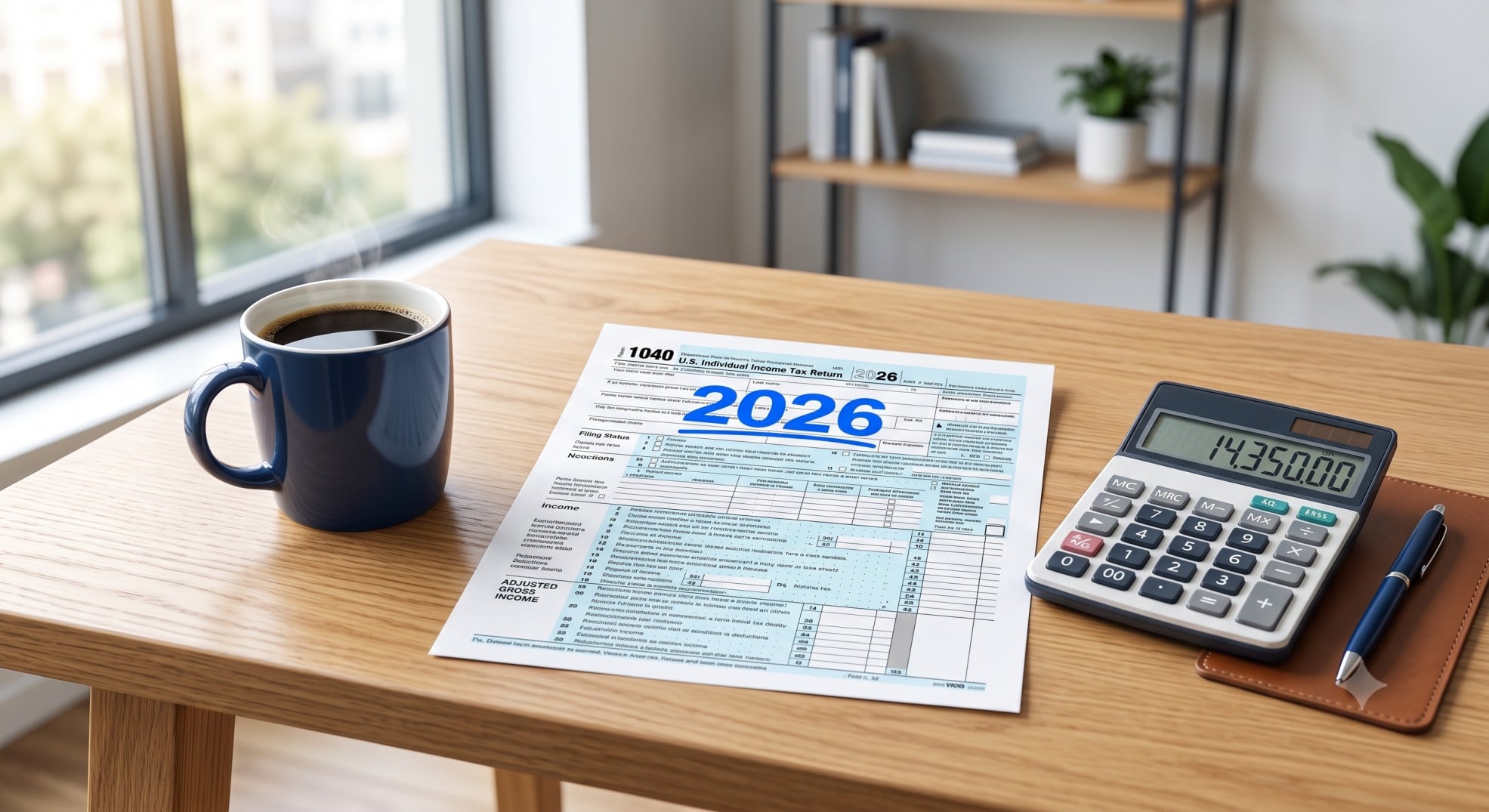
Many taxpayers ask, what is the current standard deduction for federal taxes? For the upcoming filing season, the baseline amount has increased to $16,100 for single filers and $32,200 for married couples filing jointly. This flat reduction means you pay taxes on a significantly smaller portion of your annual earnings.
Understanding what a standard tax deduction means requires looking at how it simplifies the filing process. You take this guaranteed reduction instead of meticulously tracking individual expenses like medical bills, charitable gifts, or mortgage interest throughout the year.
The Official Standard Deduction Table 2026
Finding your exact baseline requires looking at the standard deduction table 2026 provided by the IRS. The agency adjusts these figures annually using the Chained Consumer Price Index (C-CPI) to ensure the amounts keep pace with inflation.
Here is the complete standard deduction chart 2026 for all primary filing statuses:
| Filing Status | 2026 Base Amount | Increase from 2025 |
|---|---|---|
| Single | $16,100 | +$350 |
| Married Filing Jointly | $32,200 | +$700 |
| Head of Household | $24,150 | +$525 |
| Married Filing Separately | $16,100 | +$350 |
| Qualifying Surviving Spouse | $32,200 | +$700 |
Your specific household situation dictates your baseline write-off. We have a complete breakdown of the 2026 standard deduction by filing status if you need help determining which exact category applies to your family.
The 2026 standard deduction amount of $32,200 for joint filers keeps a massive portion of household income entirely shielded from federal taxation.
Additional Tax Deductions for 2026: Seniors and the Blind
Older adults and visually impaired taxpayers receive higher baseline write-offs. You can add an extra amount to your base standard deduction tax year 2026 if you meet these criteria.
If you are 65 or older, or legally blind, the IRS grants an additional bump. Single or head of household filers add $2,050. Married taxpayers or qualifying surviving spouses add $1,650 per qualifying person. Couples where both spouses are 65+ and blind can quadruple that extra amount.
The biggest change for the 2026 standard deduction involves a brand-new $6,000 “bonus deduction” specifically for seniors. Created by the OBBBA, this is available to taxpayers age 65 and older, completely separate from the traditional age-based add-on. It begins to phase out for single filers earning over $75,000 and joint filers earning over $150,000. You can read our deep dive into the 2026 standard deduction for seniors to see exactly how this phase-out math works.
How the Standard Deduction Works for Dependents in 2026
Children and other dependents who work part-time jobs or have investment income face a different set of rules. A dependent cannot simply claim the full $16,100 single baseline.
For this tax cycle, a dependent’s write-off is limited to the greater of two amounts: $1,350, or their earned income plus $450 (not to exceed the regular single limit of $16,100). Earned income includes wages from a W-2 job or self-employment income. Unearned income includes dividends, interest, and capital gains.
If a teenager earns $4,000 working as a barista over the summer, their deduction would be $4,450 ($4,000 earned income + $450). Because their deduction completely covers their income, they would owe zero federal income tax. But if that same teenager had $5,000 in unearned income from a trust fund, they would only get the flat $1,350 deduction against that unearned income, exposing the rest to the “Kiddie Tax” rules.
Standard vs Itemized Deductions 2026: Which Should You Choose?
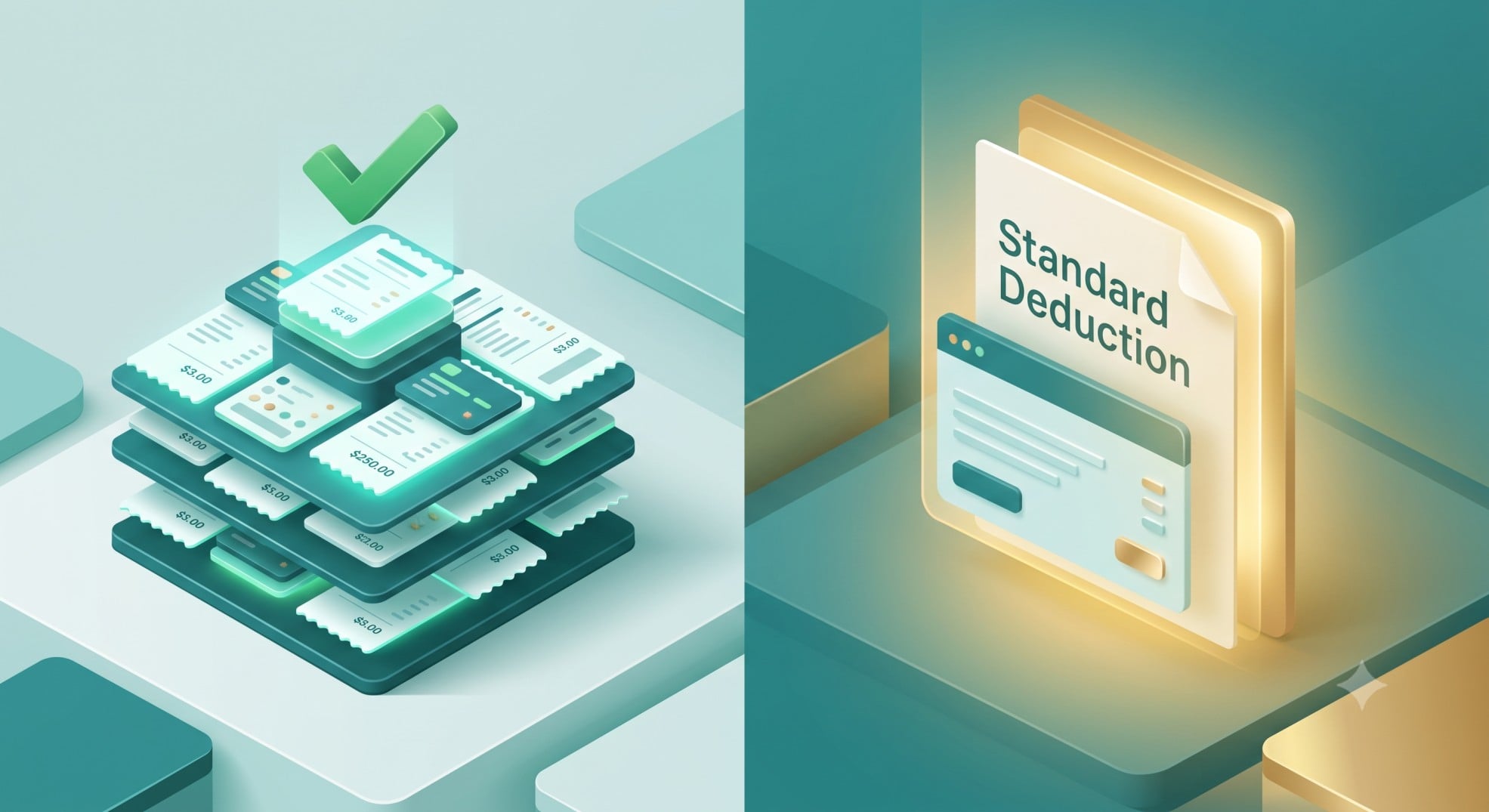
Deciding between the standard deduction in 2026 and itemizing requires basic math. You should always claim whichever option lowers your taxable income the most.
Comparing the standard deduction vs itemized deductions looks very different this year due to two major legislative updates. First, the State and Local Tax (SALT) deduction cap jumped from $10,000 to $40,400 for 2026. This higher cap makes itemizing far more attractive for homeowners living in high-tax states.
Second, the IRS now allows an “above-the-line” charitable contribution deduction for non-itemizers. You can deduct up to $1,000 in cash contributions ($2,000 for joint filers) even if you take the standard deduction tax year 2026. This gives you the best of both worlds if you make modest charitable gifts.
When evaluating tax deductions for 2026, run the numbers both ways. Add up your mortgage interest, property taxes (up to $40,400), and medical expenses exceeding 7.5% of your AGI. If that total beats your baseline amount, you should itemize.
How State Taxes Interact with the Federal Deduction
Federal tax rules do not automatically dictate your state tax return. The standard deduction taxes 2026 rules vary wildly depending on where you live.
Some states require you to use the exact same deduction method you chose on your federal return. If you take the federal standard deduction in 2026, you must take the state equivalent. Other states allow you to itemize on your state return even if you took the standard route federally.
You must check your local department of revenue guidelines regarding standard deduction state taxes. States like California and New York have their own specific deduction amounts that differ entirely from the federal figures.
Real-World Scenarios: Calculating Your Standard Deduction in 2026
Applying these rules to real life makes the math much easier to digest. Let’s look at four hypothetical examples to see how the 2026 tax year standard deduction works in practice.
Scenario 1: The Single Renter
David is a 28-year-old single renter living in Texas with an AGI of $65,000 from his W-2 job and a small freelance side hustle. He has no mortgage interest, pays no state income tax, and donated $500 to a local animal shelter.
- Itemized Deductions: $0
- Baseline Deduction: $16,100
- Charitable Bonus: $500 (above-the-line deduction)
- Total Write-off: $16,600
David will easily choose the standard deduction in 2026. His taxable income drops to $48,400, keeping him firmly in the 12% marginal tax bracket.
Scenario 2: The Married Homeowners
Sarah and Mark are married, file jointly, and live in New Jersey. They are both 45 years old with a combined AGI of $140,000. They paid $22,000 in mortgage interest and $18,000 in property taxes.
- Itemized Deductions: $22,000 (mortgage) + $18,000 (SALT) = $40,000. (The new SALT cap is $40,400, so they can claim the full $18,000).
- Baseline Deduction: $32,200
Because their itemized expenses of $40,000 exceed the $32,200 baseline, they will itemize. The new SALT cap makes itemizing the clear winner for them in the 2026 tax year standard deduction environment.
Scenario 3: The Qualifying Senior
Linda is 68, single, and legally blind. Her AGI is $50,000, consisting mostly of Social Security and pension income. She wants to know what is standard deduction for 2026 in her specific case.
- Base Deduction: $16,100
- Age 65+ Add-on: $2,050
- Blindness Add-on: $2,050
- OBBBA Senior Bonus: $6,000 (Her income is well under the $75,000 phase-out limit).
- Total Write-off: $26,200
Linda’s age and visual impairment drastically increase her tax-free income threshold, wiping out federal tax liability on more than half of her income.
Scenario 4: The High-Income Retirees
Robert and Susan are both 70 years old, married filing jointly, with an AGI of $160,000 driven by large Required Minimum Distributions (RMDs). They want to claim the new $6,000 senior bonus deduction.
- Base Deduction: $32,200
- Age 65+ Add-ons: $1,650 x 2 = $3,300
- OBBBA Senior Bonus: The $6,000 bonus phases out at a 6% rate for joint income over $150,000. They are $10,000 over the limit. $10,000 x 0.06 = $600 reduction. Their bonus is reduced to $5,400.
- Total Write-off: $32,200 + $3,300 + $5,400 = $40,900.
Even with the phase-out, their 2026 standard deduction remains incredibly powerful.
Step-by-Step: How to Claim Your 2026 Tax Year Standard Deduction
Claiming this tax benefit requires no special forms or complicated schedules. The IRS designed the process to be as frictionless as possible directly on Form 1040.

- Step 1: Determine Your Filing Status
Your status on December 31, 2026, dictates your category for the entire year. If you get married on New Year’s Eve, the IRS considers you married for the whole year. - Step 2: Calculate Your Adjusted Gross Income (AGI)
Tally all your income sources (W-2 wages, 1099 freelance work, investments) and subtract above-the-line adjustments like student loan interest or traditional IRA contributions. - Step 3: Check the Age and Blindness Boxes
Look at the top of Form 1040. There are specific checkboxes asking if you or your spouse were born before January 2, 1962, or are blind. Checking these boxes automatically increases your standard deduction for 2026. - Step 4: Enter the Amount on Line 12
Locate Line 12 on your Form 1040. Enter your standard deduction in 2026 here. If you use tax software, the program will automatically populate this line based on your birthdate and filing status. - Step 5: Claim the Above-the-Line Charitable Deduction
If you opted for the flat deduction, do not forget to claim the new non-itemizer charitable deduction. You can deduct up to $1,000 (single) or $2,000 (joint) for cash contributions made to qualifying 501(c)(3) organizations on Schedule 1. - Step 6: Subtract from AGI
Subtract the amount on Line 12 from your AGI on Line 11. The resulting number is your taxable income. This is the figure the IRS uses to calculate your actual tax bill against the federal brackets.
Frequently Asked Questions About the Standard Deduction in 2026
What is standard deduction for 2026 if I am single?
The baseline amount for single filers is $16,100. If you are 65 or older, you get an additional $2,050, plus a potential $6,000 bonus deduction depending on your income level.
Did the TCJA tax cuts expire in 2026?
No. The One Big Beautiful Bill Act (OBBBA) passed in 2025 made the TCJA individual tax brackets and higher baseline deductions permanent, preventing the scheduled expiration.
Can I claim the standard deduction and deduct charitable gifts?
Yes. Starting in 2026, non-itemizers can deduct up to $1,000 in cash contributions to qualifying charities ($2,000 for married couples filing jointly) on top of their flat deduction.
How much is the 2026 standard deduction for a head of household?
Head of household filers can claim $24,150. This status is generally reserved for unmarried individuals who pay more than half the cost of keeping up a home for a qualifying person.
What is the new $6,000 senior bonus deduction?
The OBBBA introduced a new $6,000 deduction for taxpayers aged 65 and older. It phases out for single earners making over $75,000 and joint filers making over $150,000.
Can my dependent child claim the 2026 standard deduction?
Yes, but the amount is limited. A dependent’s deduction cannot exceed the greater of $1,350 or the sum of $450 plus the individual’s earned income (up to the $16,100 single limit).
Does the standard deduction reduce my self-employment tax?
No. This deduction only reduces your income tax liability. Self-employment taxes (Medicare and Social Security) are calculated on your net business income before this deduction is applied.
What happens to the SALT deduction in 2026?
The State and Local Tax (SALT) deduction cap increased significantly to $40,400. However, you can only claim SALT taxes if you choose to itemize instead of taking the flat deduction.
Do I have to show proof to claim the standard deduction?
No receipts or documentation are required to claim the baseline amount. You simply enter the correct figure for your filing status directly on your tax return.
Can I claim the standard deduction tax year 2026 if I am married filing separately?
Yes, the amount is $16,100. However, if your spouse chooses to itemize their deductions, you are legally required to itemize as well. You cannot mix and match methods.
Disclaimer: This content provides general information for educational purposes only. Tax laws are complex and change often. It is not professional tax, legal, or financial advice. Always consult a qualified tax professional for personalized guidance regarding your specific situation. Ourtaxpartner.com is not responsible for any actions taken based on the information provided herein.
