
⚡ Executive Summary: 2026 Filing Status Updates
- Single filers and those married filing separately receive a flat $16,100 deduction.
- Married couples filing jointly see their baseline deduction rise to $32,200.
- Head of Household filers claim a $24,150 deduction, provided they meet strict dependency and household maintenance rules.
- The One Big Beautiful Bill Act (OBBBA) made these elevated deduction thresholds permanent, avoiding the scheduled TCJA expiration.
Understanding How Filing Status Dictates Your Write-Off
Your family dynamics on the very last day of the calendar year determine how the IRS treats your income. The federal government uses five distinct filing statuses to categorize taxpayers, and each category comes with its own specific set of rules, tax brackets, and baseline write-offs. Getting this classification right is the absolute foundation of an accurate tax return.
The passage of the One Big Beautiful Bill Act (OBBBA) in 2025 permanently altered the landscape of federal taxation. Instead of allowing the old TCJA rules to expire, Congress cemented the higher baseline thresholds into law. You can review the complete history and the exact 2026 standard deduction amounts to see how inflation adjustments pushed these figures higher this year.
Choosing the correct category directly impacts how much of your income escapes federal taxation. A person claiming the single file tax deductions will shield a vastly different amount of money than a married couple filing together. We will break down exactly how each status functions for the current filing season.
The Baseline: Single File Tax Deductions in 2026
Unmarried individuals without qualifying dependents fall into the single filing category. This is the default status for millions of young professionals, renters, and divorced taxpayers across the country.
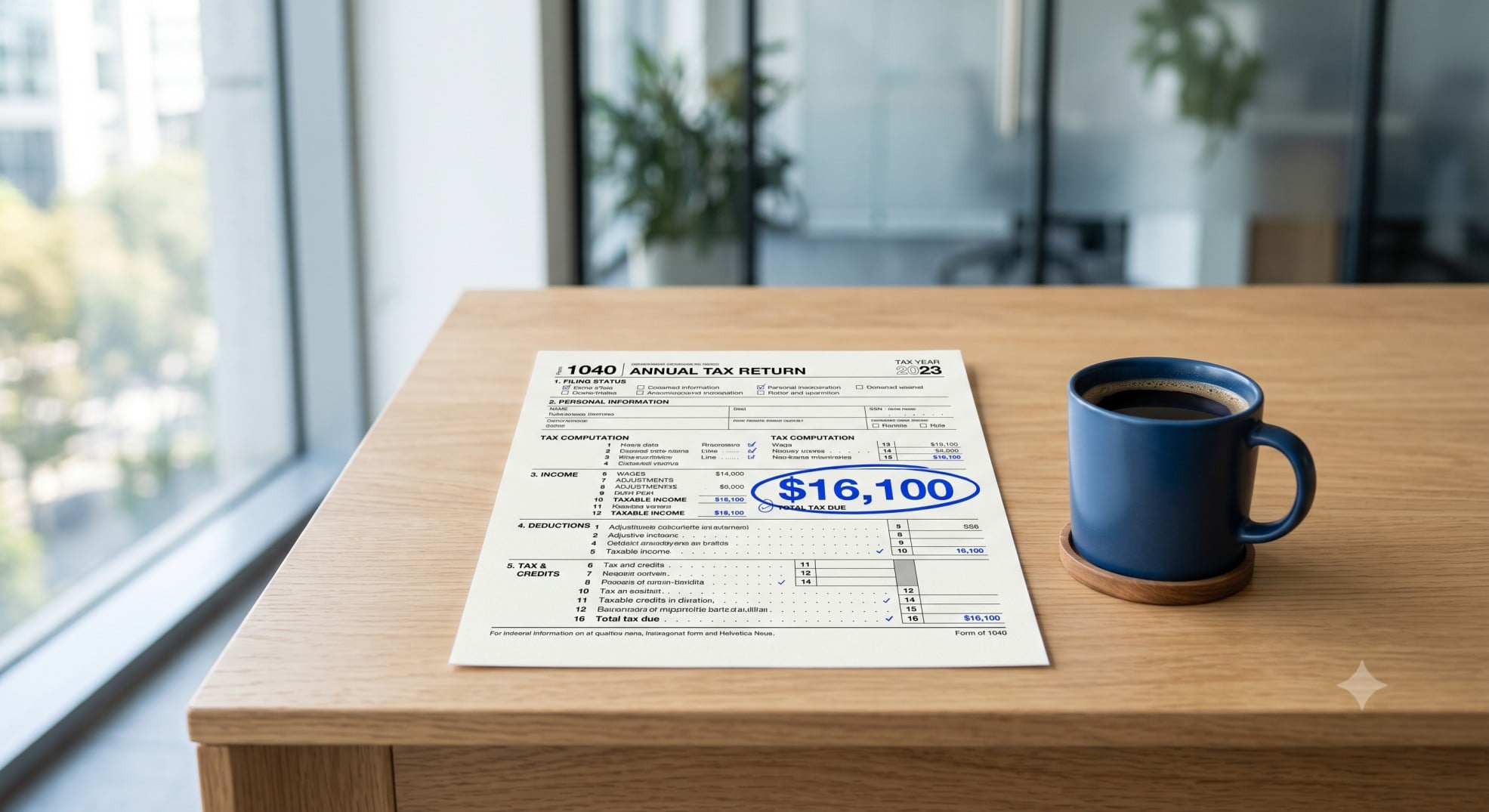
The 2026 standard deduction for single filers sits at exactly $16,100. You get to subtract this flat dollar amount directly from your Adjusted Gross Income (AGI) before calculating your final tax bill. If you earn $60,000 at your W-2 job, this write-off immediately drops your taxable income down to $43,900.
Many taxpayers wonder if the single standard deduction 2026 is enough to prevent them from itemizing. For the vast majority of renters and young adults without heavy medical debt or mortgage interest, this flat $16,100 reduction provides a much larger tax benefit than tracking individual receipts. The standard deduction single 2026 amount keeps tax preparation incredibly simple.
The Power of the Married Filing Jointly Standard Deduction 2026
Couples who are legally married on December 31, 2026, unlock the most powerful baseline write-off in the federal tax code. Filing a joint return combines both spouses’ incomes, but it also doubles the tax-free threshold.
The married filing jointly standard deduction 2026 is $32,200. This massive figure shields a significant portion of a household’s earnings from the IRS entirely. Even if only one spouse works, the couple still gets to claim the full $32,200 reduction.
When evaluating the standard deduction married filing jointly 2026, you must compare it against your combined itemized expenses. The OBBBA raised the State and Local Tax (SALT) deduction cap to $40,400 this year. Couples living in high-tax states with large property tax bills might find that itemizing finally beats the flat $32,200 baseline. You must run the math both ways to ensure you claim the standard deductions 2026 married jointly only if it yields the lowest possible tax bill.
Qualifying for the Head of Household Deduction 2026
Single parents and unmarried individuals supporting family members often qualify for a highly advantageous middle ground. The head of household status offers a larger write-off and more favorable tax brackets than filing as a single individual.
The standard deduction hoh 2026 is $24,150. Claiming this elevated amount requires meeting three strict IRS tests. First, you must be considered unmarried on the last day of the year. Second, you must pay more than half the cost of keeping up a home for the year (rent, mortgage, utilities, groceries). Third, you must have a qualifying child or dependent who lived with you for more than half the year.

Claiming the head of household deduction 2026 provides an extra $8,050 in tax-free income compared to the basic single status. This status is heavily scrutinized by the IRS, so you must keep accurate records proving you paid the majority of the household expenses.
Married Filing Separately: The Strict Rules
Married couples do not have to file a joint return. You have the legal right to file separately, splitting your incomes and deductions onto two distinct tax returns. The baseline deduction for this status is $16,100, exactly matching the single file tax deductions.
Choosing this route comes with a severe restriction. If one spouse chooses to itemize their deductions, the other spouse is legally forced to itemize as well, even if their individual itemized expenses are zero. You cannot have one spouse take the flat $16,100 while the other writes off a massive medical bill.
Couples typically only choose this status to separate tax liabilities, protect one spouse from the other’s back taxes, or maximize income-driven student loan repayment plans. For general tax savings, the joint filing status almost always wins.
Age and Blindness: Stacking Extra Deductions
Older adults and visually impaired taxpayers receive additional financial relief on top of their base filing status amounts. The IRS provides specific add-ons that stack directly onto your baseline write-off.
If you are 65 or older, or legally blind, you receive a fixed dollar increase. Single or head of household filers add $2,050. Married taxpayers add $1,650 per qualifying person. You can read our detailed breakdown of the extra deductions for seniors over 65 to see how these add-ons interact with the new $6,000 OBBBA senior bonus.
A 68-year-old unmarried retiree would take the 2026 standard deduction for single filers ($16,100) and add the age bonus ($2,050) and the potential OBBBA bonus ($6,000). Their final single standard deduction 2026 could reach $24,150, wiping out a massive portion of their taxable pension income.
Real-World Scenarios: Calculating Deductions by Family Dynamics
Reading tax definitions only gets you so far. Looking at practical math helps clarify exactly how these different filing statuses operate in the real world. Let’s examine four distinct household situations.
Scenario 1: The Young Professional
Emma is 26, unmarried, and rents an apartment in Chicago. She earns $75,000 a year as a marketing manager. She has no dependents and no major medical expenses.
- Filing Status: Single
- Itemized Expenses: $0
- Baseline Write-off: $16,100
Emma will claim the single file tax deductions. She subtracts $16,100 from her $75,000 AGI, leaving her with a taxable income of $58,900. The standard deduction for 2026 single filers makes her tax preparation incredibly fast and straightforward.
Scenario 2: The Working Couple
James and Olivia are married and own a home in Ohio. They earn a combined AGI of $130,000. They paid $12,000 in mortgage interest and $8,000 in property taxes this year.
- Filing Status: Married Filing Jointly
- Itemized Expenses: $20,000
- Baseline Write-off: $32,200
Even though they own a home, their $20,000 in itemized expenses falls far short of the married filing jointly standard deduction 2026. They will take the flat $32,200 reduction, lowering their taxable income to $97,800.
Scenario 3: The Single Father
Marcus is divorced and has primary custody of his 8-year-old daughter. He pays all the rent and utilities for their apartment. He earns $65,000 a year.
- Filing Status: Head of Household
- Baseline Write-off: $24,150
Because Marcus supports a qualifying dependent and pays more than half the household costs, he avoids the lower single file tax deductions. He claims the $24,150 HoH amount, dropping his taxable income to just $40,850.
Scenario 4: The Senior Couple
Robert (70) and Susan (68) are married and living entirely on investments and Social Security, with an AGI of $90,000.
- Filing Status: Married Filing Jointly
- Baseline Write-off: $32,200
- Age Add-ons: $1,650 x 2 = $3,300
- OBBBA Senior Bonus: $12,000 (They are under the phase-out limit).
Their total 2026 standard deduction married filing jointly reaches an incredible $47,500. They shield more than half their income from federal taxes without needing to track a single receipt.
Step-by-Step: How to Claim Your Deduction Based on Status
The IRS integrated the deduction process directly into the primary tax forms. You do not need to fill out complex supplementary schedules to claim your baseline amount.
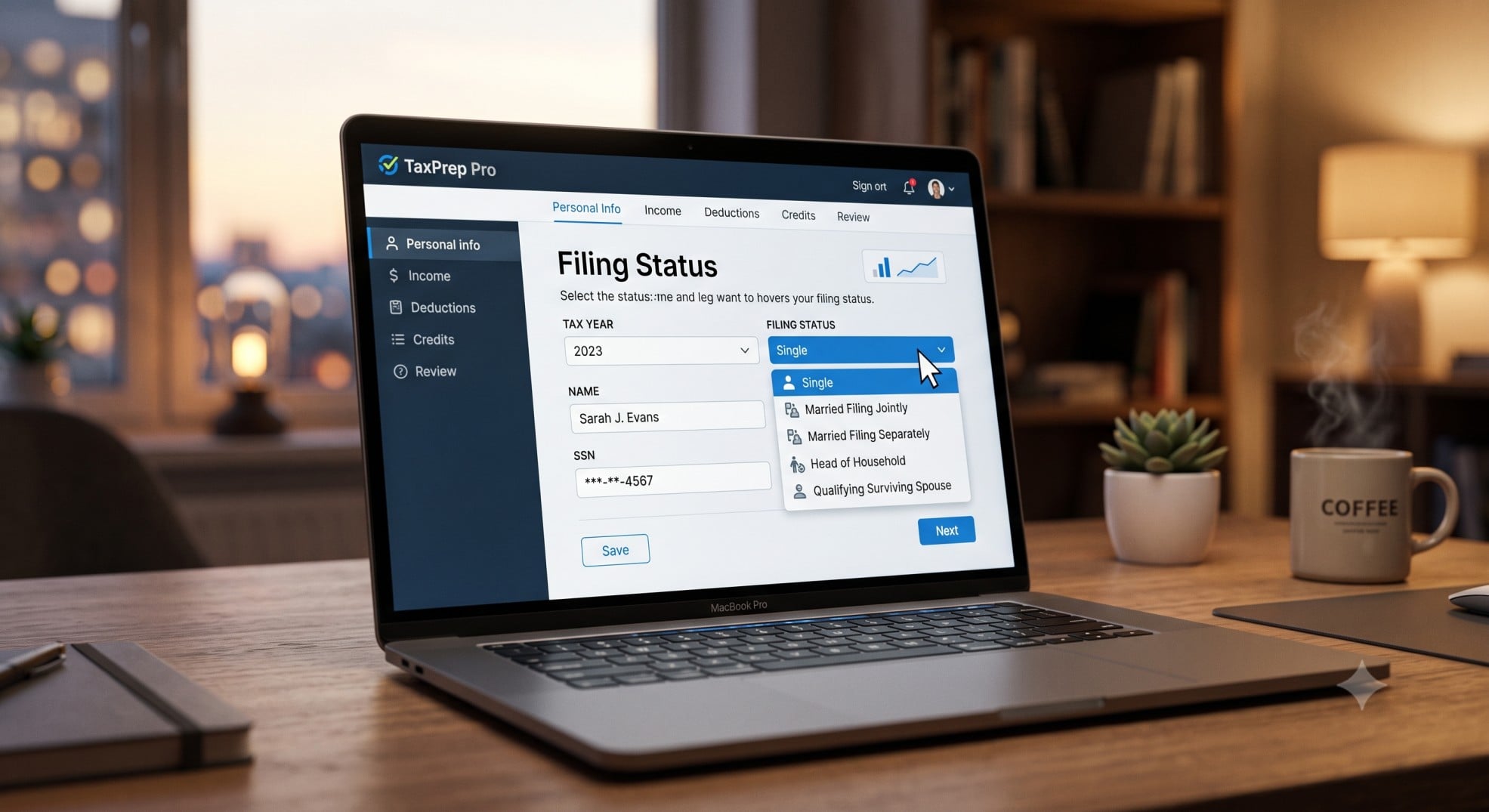
Step 1: Confirm Your Status on December 31
Your marital and family situation on the very last day of the year dictates your status for the entire 12-month period. If your divorce is finalized on December 30, you must file as single or head of household.
Step 2: Select Your Category on Form 1040
Look at the very top of your Form 1040. You will see checkboxes for Single, Married filing jointly, Married filing separately, Head of household, and Qualifying surviving spouse. Check the one box that applies to you.
Step 3: Check Age and Blindness Indicators
Right below your address, check the boxes if you or your spouse were born before January 2, 1962, or are legally blind. This ensures you get the extra add-ons applied to your 2026 standard deduction for single or joint returns.
Step 4: Enter the Amount on Line 12
Find Line 12 on your Form 1040. Write in the correct baseline amount for your chosen status. If you use digital tax software, the program automatically populates this line the moment you select your filing status.
Step 5: Calculate Your Taxable Income
Subtract the amount on Line 12 from your Adjusted Gross Income on Line 11. The resulting number is your taxable income. This is the exact figure the IRS uses to calculate your final tax liability against the federal brackets.
Frequently Asked Questions About 2026 Filing Statuses
What are the single file tax deductions for 2026?
The baseline deduction for an unmarried individual without dependents is $16,100. This flat amount directly reduces your taxable income before marginal tax rates are applied.
How much is the married filing jointly standard deduction 2026?
Couples filing a joint return can claim a baseline deduction of $32,200. This amount shields a massive portion of combined household income from federal taxation.
Can I claim head of household if I live with my partner?
You can only claim this status if you are legally unmarried, pay more than half the cost of keeping up the home, and have a qualifying dependent (like a child or relative) living with you. A romantic partner usually does not count as a qualifying dependent.
What is the standard deduction for 2026 single filers who are dependents?
If another taxpayer claims you as a dependent, your deduction is limited. It is the greater of $1,350 or your earned income plus $450 (not to exceed the regular $16,100 limit).
What happens if we get married on December 31, 2026?
The IRS considers you married for the entire tax year. You must choose between filing jointly and claiming the $32,200 deduction, or filing separately and claiming $16,100 each.
What is the single standard deduction 2026 for seniors?
An unmarried filer aged 65 or older receives the $16,100 baseline, plus a $2,050 age add-on, plus a potential $6,000 OBBBA senior bonus, bringing the total up to $24,150 depending on income limits.
Do I have to take the standard tax deduction 2026 single amount if I own a home?
No. You always have the right to itemize your deductions. If your mortgage interest, property taxes, and charitable gifts exceed $16,100, you should itemize to get the maximum tax benefit.
Can married couples file as head of household?
Generally, no. However, if you lived apart from your spouse for the last six months of the year, paid more than half the household costs, and provided the main home for a qualifying child, you might be considered “unmarried” for tax purposes and qualify.
Are the single file tax deductions permanent?
Yes. The One Big Beautiful Bill Act (OBBBA) passed in 2025 made the elevated deduction amounts permanent, preventing them from dropping back to pre-2018 levels.
What is the penalty for choosing the wrong filing status?
Choosing the wrong status (like claiming Head of Household when you only qualify for Single) can lead to an IRS audit. If the IRS corrects your status, you will owe back taxes, interest, and potential accuracy-related penalties.
