
⚡ Executive Summary: 2026 Tax Rule Changes
- The direct residential home improvement tax credit for 2026 was eliminated when the One Big Beautiful Bill Act (OBBBA) accelerated the expiration of Sections 25C and 25D to December 31, 2025.
- Homeowners who installed qualifying equipment in 2025 but failed to claim it can still recover their funds by filing an IRS Form 5695 retroactive claim via an amended return.
- The solar lease commercial tax credit for 2026 is now the primary financial mechanism for residential solar, allowing developers to pass commercial tax savings down to homeowners.
- New Department of Energy guidance enforces a strict state home electrification rebates fuel switching ban, limiting federal rebate funds to electric-to-electric upgrades only.
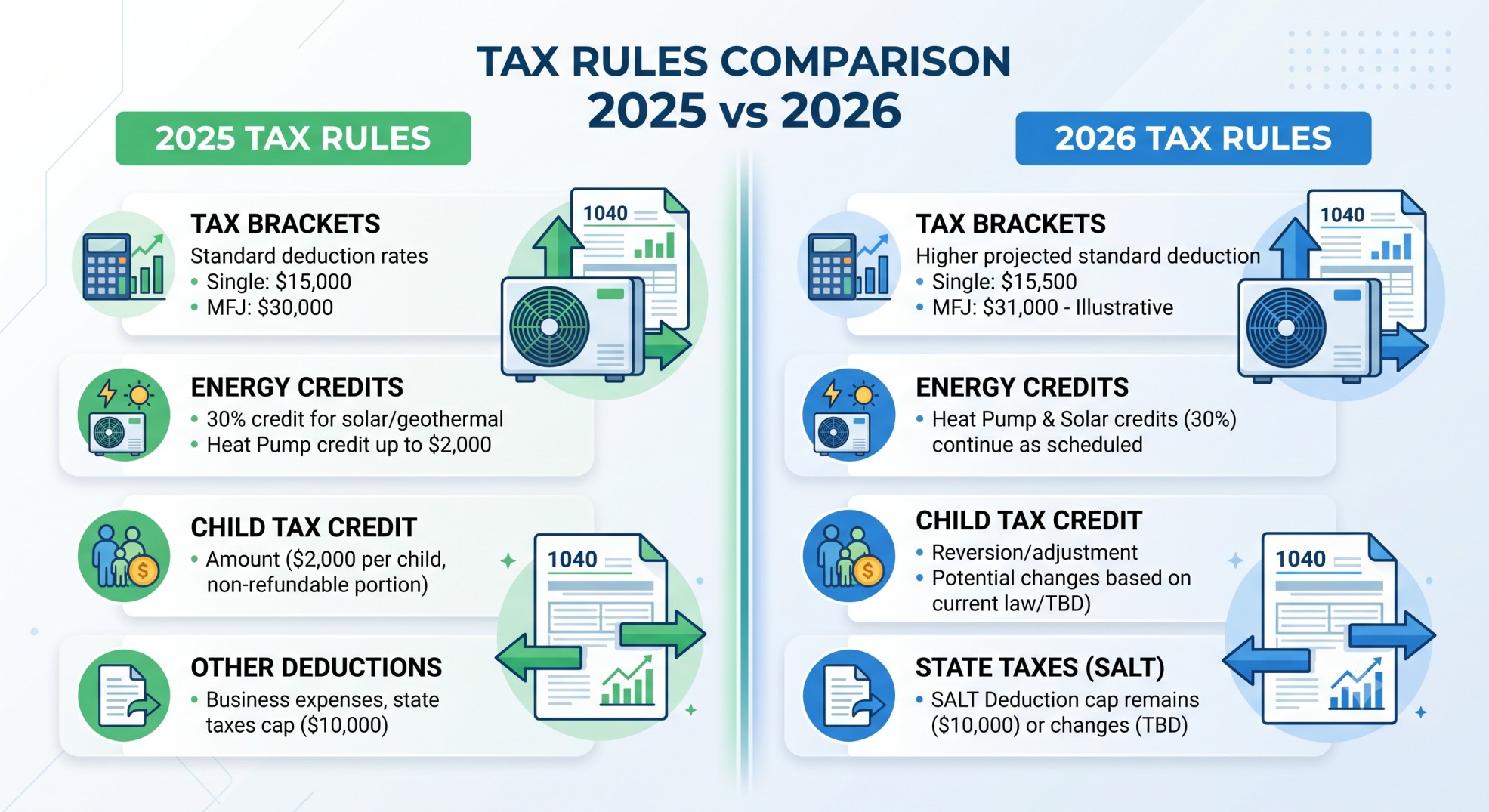
Table of Contents
- Did the residential clean energy credit expire?
- Can I claim 2025 home improvements on 2026 taxes?
- How to File an IRS Form 5695 Retroactive Claim for Past Projects
- The Solar Lease Commercial Tax Credit 2026: The New Path to Solar
- State Home Electrification Rebates Fuel Switching Ban Explained
- Alternative incentives for heat pumps 2026
- How to increase home cost basis with renovations
- Frequently Asked Questions About the Residential Home Improvement Tax Credit 2026
The federal tax code underwent a massive structural shift recently. Taxpayers searching for a residential home improvement tax credit for 2026 will find that the rules are completely different than they were just a year ago. The passage of the One Big Beautiful Bill Act (OBBBA) in 2025 accelerated the home energy credit expiration, terminating the most popular consumer incentives well ahead of their original schedule.
You still have financial options. You can capture missed money from past projects, utilize commercial tax structures for solar installations, and build your property’s tax-advantaged cost basis. This guide breaks down exactly how the tax law functions this year and what steps you must take to protect your wallet.
Did the residential clean energy credit expire?
Yes. The Residential Clean Energy Credit (Section 25D) and the Energy Efficient Home Improvement Credit (Section 25C) officially ended on December 31, 2025.
For years, homeowners relied on these two sections of the Internal Revenue Code to offset the high costs of modernizing their homes. Section 25C provided up to $3,200 annually for heat pumps, insulation, and energy-efficient windows. Section 25D offered an uncapped 30% credit for solar panels, geothermal systems, and battery storage.
The recent tax legislation fundamentally restructured federal energy incentives. The act explicitly targeted these consumer credits, ending them years ahead of their original 2032 expiration date. The law included no phase-out period and no grandfathering provisions for contracts signed before the deadline. If the physical equipment was not installed and placed in service by the final day of 2025, it does not qualify for a direct consumer tax credit.
This abrupt home energy credit expiration means that any out-of-pocket cash purchases for solar panels or HVAC systems made in 2026 will not yield a federal tax refund on your Form 1040 next April. Understanding your current tax bracket is still necessary for other deductions, but direct energy credits are off the table for new purchases.
Can I claim 2025 home improvements on 2026 taxes?
You cannot claim a new 2025 installation on your standard 2026 tax return (the one you file in April 2027) as a new expense. Tax credits must be claimed for the specific tax year the property was “placed in service.” If the equipment was turned on in 2025, it belongs on your 2025 tax return.
If you already filed your 2025 taxes and missed the credit, you must file an amended return. You do not mix past years’ expenses onto your current year’s standard return. The IRS is incredibly strict about matching the installation date to the correct tax year.
There is one major exception: carryforwards. The Residential Clean Energy Credit (Section 25D) allowed taxpayers to carry forward unused credit amounts. If you installed solar panels in 2025, claimed the credit on your 2025 return, but your tax liability was too low to use the entire credit, you are legally allowed to carry the remaining unused balance forward to your 2026 tax return. You will use the 2026 version of Form 5695 specifically to calculate and apply this carryforward amount.
How to File an IRS Form 5695 Retroactive Claim for Past Projects
If you installed qualifying equipment in 2025 but forgot to claim the credit on your tax return, you are not out of luck. You can file an IRS Form 5695 retroactive claim to secure the money you are legally owed.
The IRS grants taxpayers a three-year window to amend past returns. The clock starts from the original filing deadline of the return you are amending. To claim a missed credit, you must file Form 1040-X (Amended U.S. Individual Income Tax Return) and attach a newly completed Form 5695 for the specific tax year the equipment was placed in service.
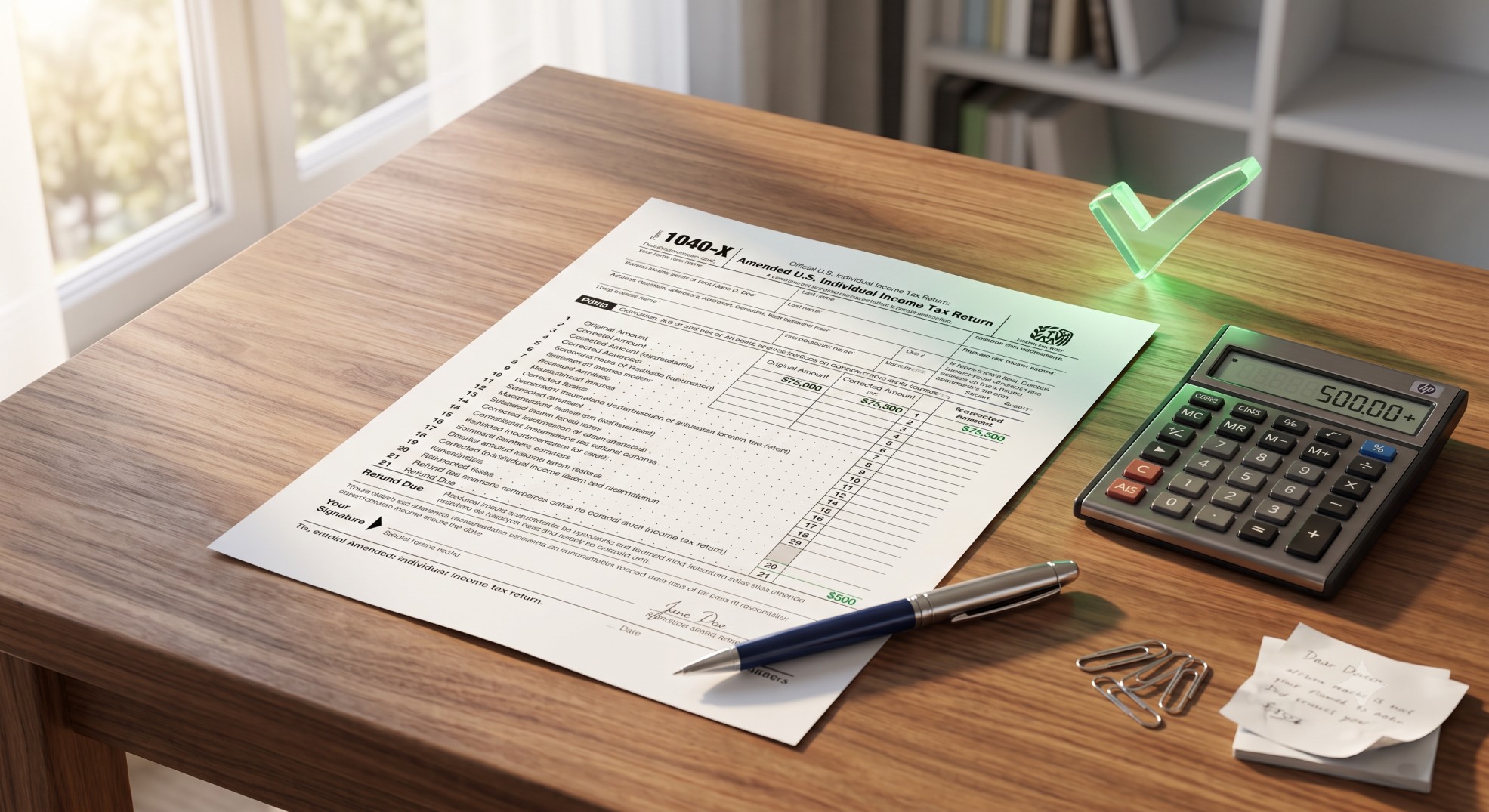
You must gather specific documentation before filing. The IRS requires you to have the purchase receipts, installation dates, and the Qualified Manufacturer Identification Number (QMID) for any property placed in service during 2025. You do not mail these receipts to the IRS with your amended return, but you must keep them in your files in case of an audit.
Filing an IRS Form 5695 retroactive claim is a straightforward process, but it requires precision. You must use the version of Form 5695 that corresponds to the year the installation was completed. Do not use the 2026 version of the form to claim a 2025 expense.
Hypothetical Scenario: The Retroactive Heat Pump Claim
Marcus installed a high-efficiency heat pump in October 2025 for $8,000. He filed his 2025 tax return in March 2026 but did not include Form 5695. In August 2026, he realizes his mistake. Marcus files Form 1040-X to amend his 2025 return, including an IRS Form 5695 retroactive claim. Because the equipment was placed in service before the December 31 deadline, he successfully claims the 30% credit, up to the $2,000 annual limit, resulting in a direct tax refund check from the Treasury.
The Solar Lease Commercial Tax Credit 2026: The New Path to Solar
Since you cannot claim a personal tax credit for buying solar panels this year, the renewable energy industry has pivoted. The solar lease commercial tax credit for 2026 is now the primary financial engine for residential solar installations.
While recent legislation eliminated consumer credits, it left commercial incentives intact. Under Section 48E of the tax code, businesses can still claim a substantial Investment Tax Credit (ITC) for clean electricity projects. Solar developers use this provision to offer Power Purchase Agreements (PPAs) and solar leases to homeowners.
When you sign a solar lease, you do not own the panels on your roof. The solar company retains ownership. Because they own the equipment, they legally claim the commercial tax credit. They then pass a portion of those federal savings down to you in the form of a significantly reduced monthly electricity rate. You get the benefit of cheaper, cleaner energy without needing to navigate the tax code yourself.
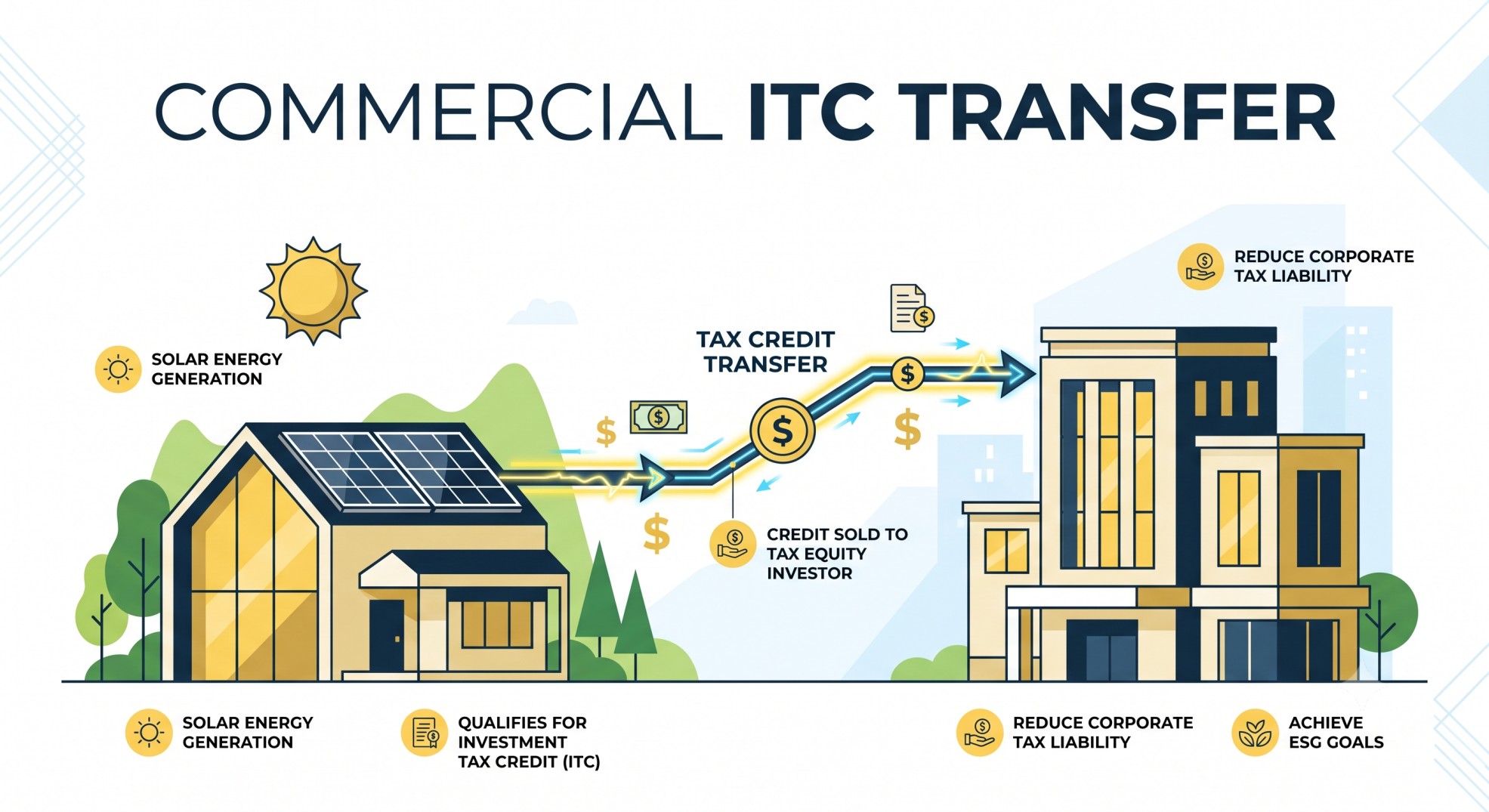
This arrangement bypasses the residential home improvement tax credit for 2026 restrictions entirely. Evaluating your local utility rates will help you determine if a PPA makes mathematical sense for your specific property. The solar lease commercial tax credit for 2026 ensures that the financial benefits of renewable energy are still accessible, just through a different legal mechanism.
Hypothetical Scenario: The 2026 Solar Pivot
Sarah wants to install solar panels in September 2026. A cash purchase costs $25,000. Because the residential credit expired, she would bear the full cost with no tax relief. Instead, she signs a Power Purchase Agreement. The solar developer installs the panels at no upfront cost to Sarah. The developer claims the solar lease commercial tax credit for 2026 under Section 48E. In exchange, Sarah locks in an electricity rate of 12 cents per kWh, down from her utility’s 22 cents per kWh, saving her $1,400 annually.
State Home Electrification Rebates Fuel Switching Ban Explained
Federal tax credits are gone, but state-level rebates funded by the Department of Energy (DOE) still exist. But there is a major restriction you must understand before hiring a contractor. In mid-2026, the DOE updated its guidance for the Home Electrification and Appliance Rebates (HEAR) program, implementing a strict state home electrification rebates fuel switching ban.
The original intent of these programs was to encourage households to move away from fossil fuels. The new 2026 regulatory framework completely reverses that approach. The DOE ended program allowances for switching from gas, oil, or propane appliances to electric alternatives. You can no longer receive federal rebate money to replace a natural gas furnace with an electric heat pump.
The funds are now strictly limited to upgrading existing electric equipment to more efficient electric models, or for installations in brand-new construction. The DOE also instituted a “weatherization-first” mandate, requiring homes to utilize rebates for insulation and air sealing before they are allowed to install new heating and cooling upgrades.
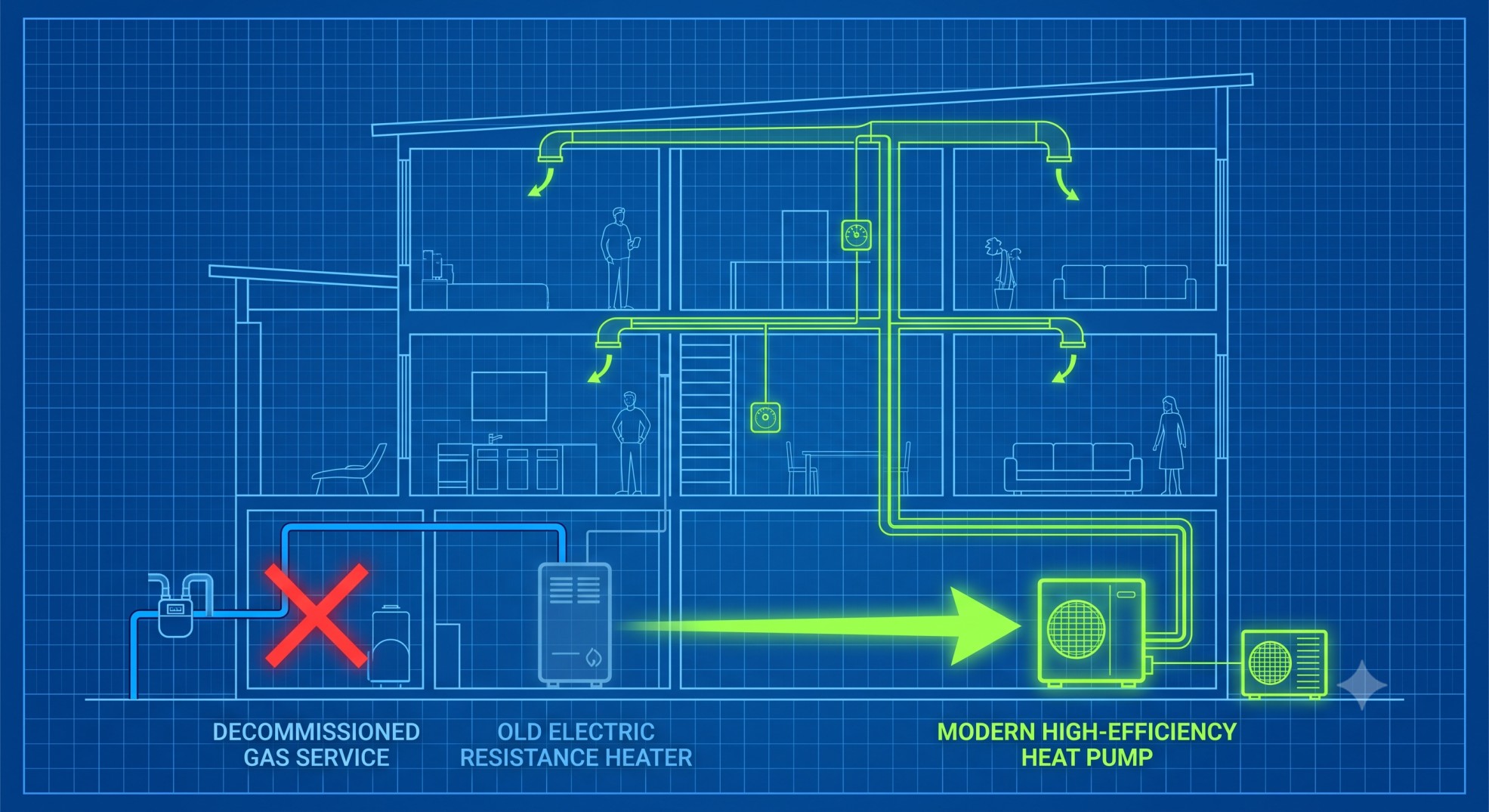
If your project qualifies under the new rules, the payouts are substantial. Income-qualified households can receive up to $8,000 for a heat pump, $4,000 for an electrical panel upgrade, and $1,600 for insulation. You just have to navigate the state home electrification rebates fuel switching restrictions carefully to ensure your specific upgrade is eligible.
Hypothetical Scenario: The HEAR Rebate Restriction
David and Linda live in Michigan. David has an old natural gas furnace and wants to upgrade to an electric heat pump. Under the new DOE guidance, the state home electrification rebates fuel switching ban prevents him from receiving federal HEAR funds for this gas-to-electric conversion. Linda, however, has an outdated electric resistance heating system. Because her upgrade is strictly electric-to-electric, she qualifies for an $8,000 point-of-sale rebate.
Alternative incentives for heat pumps 2026
If you are caught by the fuel-switching ban or simply want to upgrade your home this year, you must look beyond the IRS. Alternative incentives for heat pumps 2026 exist primarily at the local and corporate levels.
Many state governments operate their own independent energy offices funded by state tax dollars, not federal DOE grants. These independent programs often still allow fuel switching and provide direct cash rebates for heat pump installations. You must check your specific state’s energy website to verify active programs. For example, states like Colorado have maintained their own robust state-level tax credits and utility rebates that operate entirely independent of the federal home energy credit expiration.
Utility companies also offer substantial rebates to manage grid load. Local electric cooperatives and major utility providers frequently offer $500 to $2,000 rebates for installing high-efficiency heat pumps or smart thermostats. Manufacturers themselves occasionally run seasonal promotions that act as point-of-sale discounts, lowering the barrier to entry now that the residential home improvement tax credit for 2026 is no longer an option. Finding alternative incentives for heat pumps 2026 requires a bit more local research, but the savings are still out there.
How to increase home cost basis with renovations
Even without an immediate tax refund, your 2026 home improvements serve as an excellent long-term tax shelter. Every dollar you spend on capital improvements increases your home’s adjusted cost basis, which directly impacts your capital gains taxes when you eventually sell the property.
The IRS defines a capital improvement as an upgrade that adds value to your home, prolongs its useful life, or adapts it to new uses. Replacing a roof, installing central air conditioning, or putting in energy-efficient windows all qualify. Routine maintenance, like painting or fixing a leaky pipe, does not.
When you sell your primary residence, Section 121 of the tax code allows single filers to exclude up to $250,000 of profit from capital gains taxes (or up to $500,000 for married couples filing jointly). Your profit is calculated by subtracting your adjusted cost basis from the final sale price. By adding the cost of your 2026 renovations to your original purchase price, you raise your basis, shrink your taxable profit, and keep more money in your pocket.
Learning how to increase home cost basis with renovations is the most effective way to salvage the financial value of your upgrades now that the residential home improvement tax credit for 2026 is gone. Keep every receipt, invoice, and bank statement related to your project.
Hypothetical Scenario: Shielding Capital Gains
James buys a home for $300,000. In 2026, he spends $20,000 on a new roof and energy-efficient windows. He receives no immediate tax credits. His adjusted cost basis is now $320,000. Years later, he sells the home for $600,000. As a single filer, he excludes $250,000 of profit under Section 121. His taxable gain is calculated as $600,000 (sale) – $320,000 (basis) – $250,000 (exclusion) = $30,000. By documenting his 2026 improvements, he shielded an extra $20,000 from capital gains tax, saving him $3,000 at a 15% tax rate.
Frequently Asked Questions About the Residential Home Improvement Tax Credit 2026
Is there a residential home improvement tax credit for 2026?
No. The direct federal tax credits for residential energy improvements (Sections 25C and 25D) expired on December 31, 2025. Homeowners making out-of-pocket purchases in 2026 cannot claim these credits on their federal tax returns.
How do I file an IRS Form 5695 retroactive claim?
You must file Form 1040-X to amend the specific tax year’s return when the equipment was installed. Attach a completed Form 5695 for that year. You have three years from the original filing deadline to submit this amendment and claim your refund.
What caused the home energy credit expiration?
Recent tax legislation passed in 2025 accelerated the expiration of several consumer tax incentives. The law officially terminated the residential energy credits at the end of 2025 with no phase-out period.
How does the solar lease commercial tax credit for 2026 work?
Because residential credits expired, solar developers utilize the active commercial Investment Tax Credit (Section 48E). They own the panels on your roof, claim the commercial tax credit, and pass the savings to you through a lower monthly electricity rate via a lease or PPA.
What is the state home electrification rebates fuel switching ban?
In 2026, the Department of Energy updated rules for the HEAR rebate programs. The new guidance prohibits using federal funds to replace fossil-fuel appliances (like gas furnaces) with electric alternatives. Rebates are now restricted to electric-to-electric upgrades.
Can I carry forward unused solar credits from 2025 to 2026?
Yes. If you installed a qualifying solar system in 2025 or earlier and could not use the full credit due to low tax liability, the law allows you to carry the unused portion forward to your 2026 tax return using Form 5695.
Do new roofs qualify for any tax credits in 2026?
No. Traditional roofing materials do not qualify for federal tax credits in 2026. However, the cost of replacing your roof is considered a capital improvement, which increases your home’s adjusted cost basis and can lower future capital gains taxes.
How long do I have to amend my tax return for missed energy credits?
The IRS generally gives you three years from the date you filed your original return, or two years from the date you paid the tax, whichever is later. This gives you ample time to file an IRS Form 5695 retroactive claim for 2024 or 2025 projects.
Are there income limits for the HEAR appliance rebates?
Yes. The Home Electrification and Appliance Rebate (HEAR) program is income-restricted. It is designed primarily for low- and moderate-income households, generally defined as those earning less than 150% of the area median income. State-specific rules may apply.
Does upgrading my electrical panel qualify for a rebate in 2026?
Under the new 2026 DOE guidance, electrical panel upgrades may still qualify for rebates up to $4,000 if they are required to support a qualifying electric-to-electric appliance upgrade. You must verify the specific requirements with your state’s energy office before beginning work.
While the residential home improvement tax credit for 2026 is no longer available for new purchases, smart taxpayers can still utilize retroactive amendments, commercial lease structures, and cost basis tracking to optimize their financial position.
Disclaimer: This content provides general information for educational purposes only. Tax laws are complex and change often. It is not professional tax, legal, or financial advice. Always consult a qualified tax professional for personalized guidance regarding your specific situation. Ourtaxpartner.com is not responsible for any actions taken based on the information provided herein.
