
⚡ Executive Summary: The Core Regulatory Stack for Food Service
- Federal requirements center on obtaining an Employer Identification Number (EIN) from the IRS for tax purposes and payroll.
- State agencies issue your Sales Tax Certificate, allowing you to collect tax on meals, and control the highly regulated liquor license application process.
- County health departments mandate a rigorous plan review before issuing the primary Food Service Establishment Permit required to serve the public.
- City municipalities govern physical space rules, requiring Certificates of Occupancy, sign permits, and right-of-way dumpster placement permits.
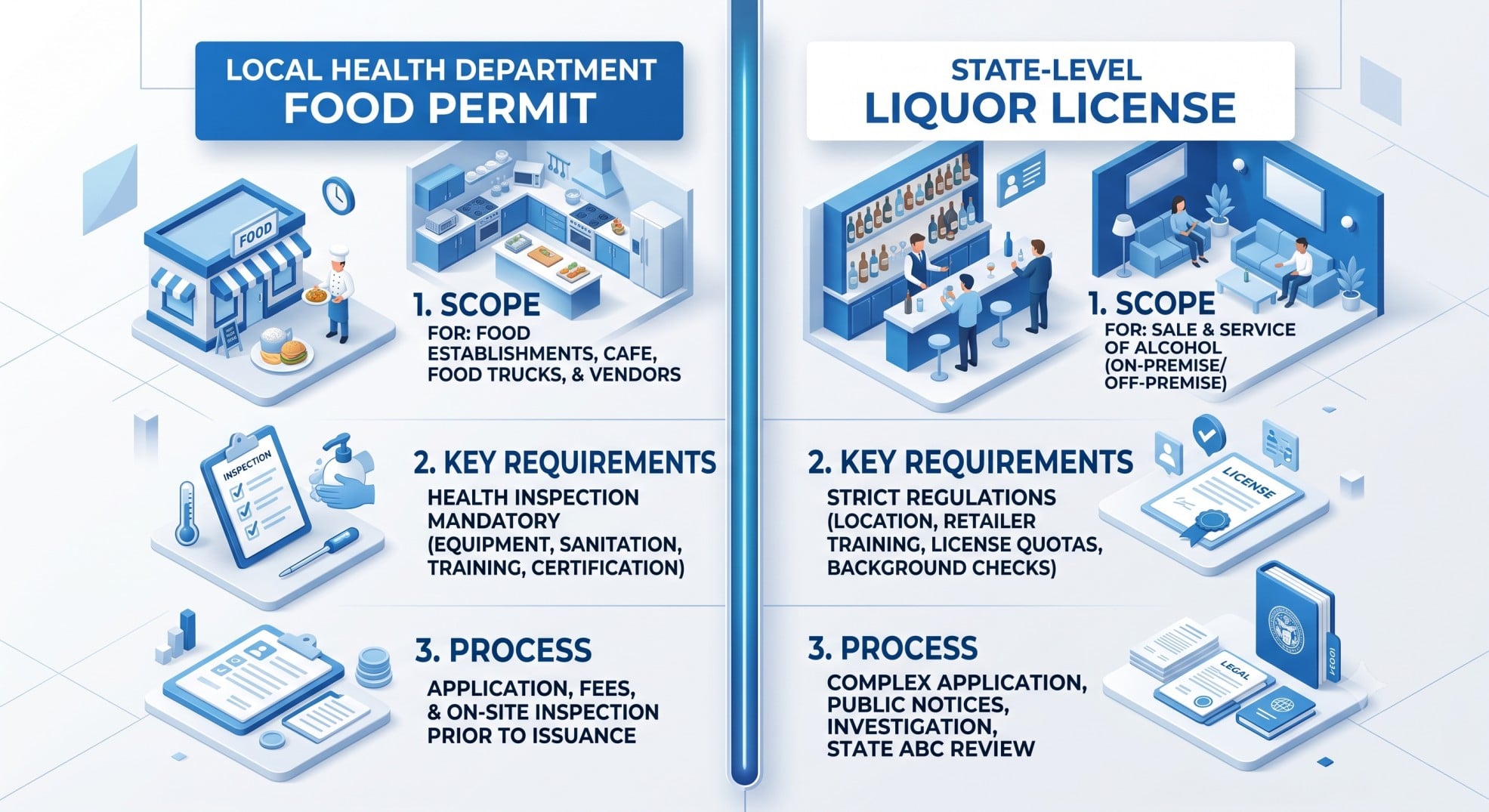
Table of Contents
- The Foundation: General Business and Tax Registrations
- Securing Your Food Service Establishment Permit
- Food Handler Cards vs. Food Protection Manager Certifications
- Pouring Profits: The Liquor License Application Process
- Navigating the ASCAP and BMI Music Licensing Maze
- The Overlooked Requirement: Dumpster Placement Permits
- Certificate of Occupancy and Fire Safety Approvals
- Frequently Asked Questions About Restaurant Licensing
Entrepreneurs entering the hospitality industry face a strict regulatory environment. Figuring out exactly what license do you need to open a restaurant is the first operational hurdle you must clear before signing a lease or hiring a chef. Operating a commercial kitchen involves overlapping jurisdictions. The federal government tracks your payroll taxes. The state regulates your alcohol sales. The county inspects your refrigerators. The city dictates where you can put your trash.
Missing a single application can delay a grand opening by months. This guide breaks down the exact sequence of approvals required to open your doors legally and keep them open.
The Foundation: General Business and Tax Registrations
Before you interact with the health department, you must establish your restaurant as a recognized legal and financial entity. Local and state governments will not process industry-specific permits until your baseline corporate paperwork is active.
First, you need an Employer Identification Number (EIN) from the IRS. This nine-digit number acts as a social security number for your business. You cannot open a corporate bank account, run payroll for your waitstaff, or apply for state tax accounts without it. The application is free and processed immediately on the IRS website.
Next comes the state-level Seller’s Permit, frequently called a Sales Tax Certificate. Restaurants sell prepared food, which is taxable in most jurisdictions. State departments of revenue require this permit to track the sales tax you collect from diners and remit to the government. Some states require a security deposit against future taxes if you have no prior business history.
Finally, you need a general Business License from the city or county where the restaurant physically sits. This is a baseline operational permit. In cities like Chicago or Los Angeles, the cost of this license often scales based on your projected gross receipts or the square footage of your dining room.
Securing Your Food Service Establishment Permit
When founders ask what license do you need to open a restaurant, the Food Service Establishment Permit is usually what they picture. Issued by your local county or city health department, this is the non-negotiable authorization required to store, prepare, and serve food to the public.
You do not simply fill out a form and receive this permit. It requires a multi-stage review process.
Before construction or remodeling begins, you must submit a Plan Review Packet. Health inspectors scrutinize your architectural drawings to ensure the facility meets commercial sanitation codes. They look for adequate handwashing sinks, commercial-grade ventilation hoods, proper grease traps, and easily cleanable surface materials (like FRP board on kitchen walls). You must also submit a proposed menu. The menu dictates the equipment you need; if you plan to serve raw sushi, the inspector will look for specific refrigeration units and parasite-destruction protocols.
Once the health department approves your physical plans, you can build out the kitchen. After construction, you schedule a pre-operational inspection. The inspector visits the physical site to verify the kitchen matches the approved plans, the refrigerators hold temperature, and the hot water reaches the required minimums. Only after passing this physical inspection will the agency issue your operating permit.
Real-World Scenario: The Plan Review Trap
Marcus signs a lease on a former retail clothing store in Cook County, Illinois, intending to open a fast-casual taco shop. He skips the health department plan review and immediately hires contractors to install a kitchen. When he finally applies for his food permit, the health inspector discovers the plumbing lines are too small for a commercial grease trap and the mop sink is located too close to the food prep area. Marcus fails the inspection. He is forced to tear out the new plumbing and rebuild the kitchen to code, delaying his opening by three months and costing an extra $25,000. Always get plan approval before swinging a hammer.
Food Handler Cards vs. Food Protection Manager Certifications
The facility itself holds the primary health permit, but the humans working inside the building must also be certified. Jurisdictions separate these personnel requirements into two distinct tiers.
Food Handler Cards are required for anyone who directly handles unpackaged food, utensils, or food-contact surfaces. This includes line cooks, prep cooks, dishwashers, bartenders, and servers. Obtaining a card usually requires a short online course (often under two hours) covering basic cross-contamination, temperature danger zones, and personal hygiene, followed by a simple test. Employees typically pay a small fee (around $10 to $25) and the card remains valid for two to three years.
Food Protection Manager Certification is a much stricter requirement. Most county health codes mandate that at least one certified manager be present on the premises during all operating hours. This certification requires passing an ANSI-accredited exam, such as ServSafe Manager. The coursework is intense, covering HACCP (Hazard Analysis Critical Control Point) principles, foodborne illness microbiology, and advanced facility sanitation. If a health inspector arrives and no certified manager is on duty, the restaurant can face immediate fines or temporary closure.
Pouring Profits: The Liquor License Application Process
Alcohol sales often carry the highest profit margins in a restaurant, but acquiring the legal right to sell them is notoriously difficult. If you are researching what license is required to open a restaurant with a full bar, prepare for a long timeline.
Liquor licenses are governed at the state level by Alcoholic Beverage Control (ABC) boards, though local municipalities often have veto power. The specific class of license you need depends on your menu. A “Beer and Wine” license is generally cheaper and easier to obtain than a “Full Liquor” license, which allows the sale of distilled spirits.
The application process routinely takes 60 to 90 days, and sometimes much longer. State boards conduct deep background checks on all owners, requiring fingerprinting and financial disclosures to prove the funding for the restaurant did not come from illicit sources. You must also post a public notice at the physical location for a set period (often 30 days) allowing neighborhood residents to object to the issuance of the license.
| License Type | What It Allows | Typical Difficulty & Cost |
|---|---|---|
| Beer & Wine Only | Sale of fermented beverages (no hard liquor). | Moderate. Often unlimited in availability. Fees range from $500 to $2,000 annually. |
| Full Liquor (On-Premise) | Sale of beer, wine, and distilled spirits for consumption at the restaurant. | High. Many states have quotas. Can cost anywhere from $3,000 to over $300,000 on the secondary market. |
| Bring Your Own Beverage (BYOB) | Allows patrons to bring their own alcohol. Restaurant provides glasses/corkage. | Low. Some cities require a specific BYOB permit; others just require basic zoning approval. |
Navigating the ASCAP and BMI Music Licensing Maze
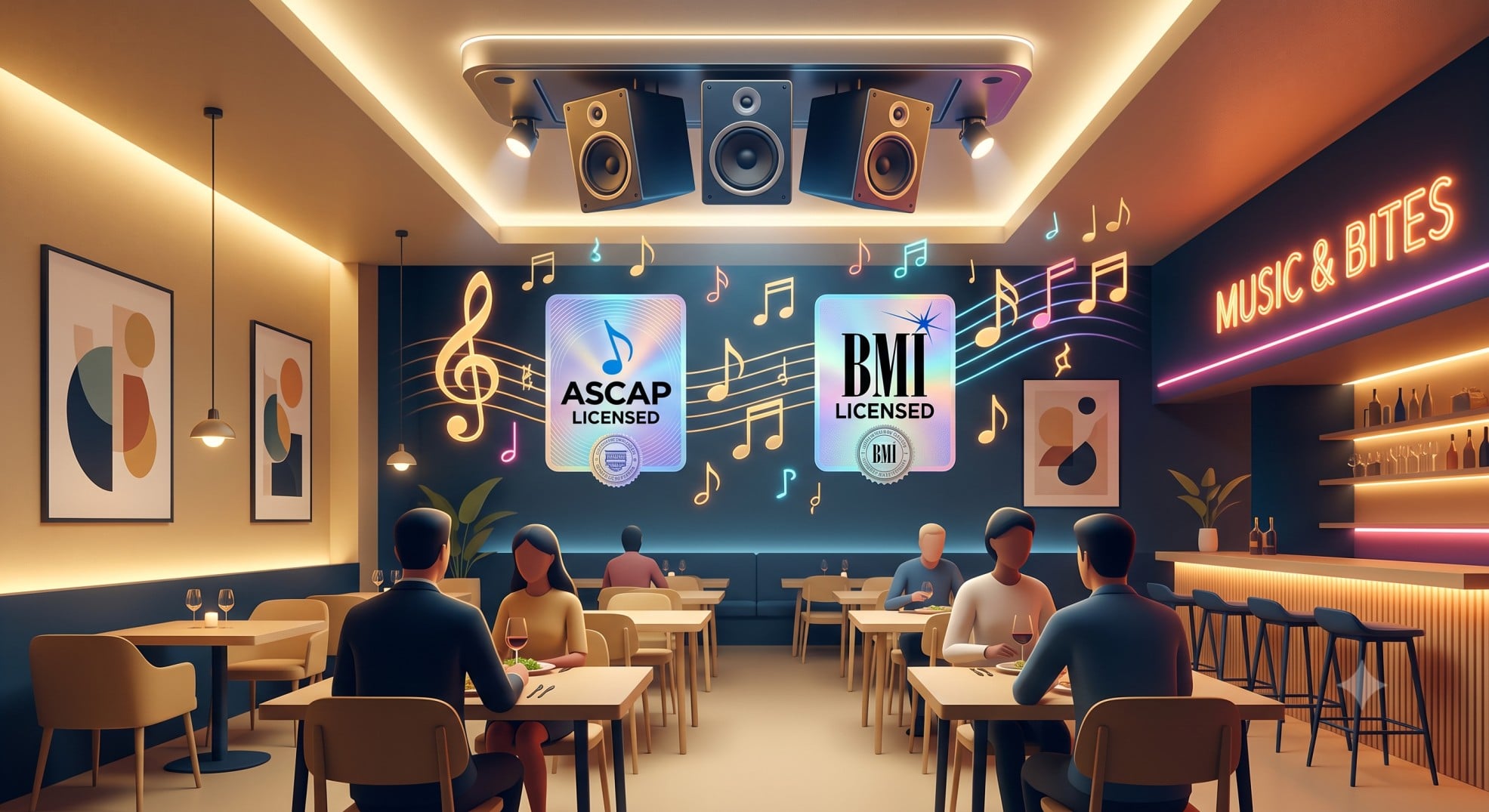
Many new owners do not realize that playing background music in a commercial space requires a specific legal agreement. You cannot simply connect a smartphone to a Bluetooth speaker and stream your personal Spotify or Apple Music account. Consumer streaming platforms explicitly prohibit commercial use in their terms of service.
Under U.S. copyright law, playing music in a restaurant constitutes a “public performance.” The songwriters and publishers hold the exclusive rights to authorize these performances. Performing Rights Organizations (PROs)—specifically ASCAP, BMI, SESAC, and GMR—collect royalties on behalf of these creators.
To play music legally, you must pay for a public performance license. The trap many owners fall into is assuming one license covers everything. ASCAP and BMI represent entirely different catalogs of artists. If you buy an ASCAP license but play a song written by a BMI artist, you are committing copyright infringement. Fines for unlicensed music playback can run into the tens of thousands of dollars per song.
To solve this, restaurants have two choices. They can negotiate blanket licenses with all four major PROs individually, which is expensive and time-consuming. Alternatively, they can subscribe to a B2B commercial music streaming service (like Soundtrack Your Brand or Custom Channels). These platforms bundle all the necessary PRO licenses into a single monthly subscription fee, ensuring total legal compliance.
Real-World Scenario: The Unlicensed Playlist
Sarah opens a coffee shop in Seattle. To save money, she plays her personal Spotify indie-pop playlist through the cafe’s speakers. A representative from BMI visits the cafe, identifies several tracks registered to BMI artists, and notes the lack of a commercial license. Two weeks later, Sarah receives a cease-and-desist letter and a demand for retroactive licensing fees totaling $3,500. She quickly unplugs the system and signs up for a $40/month commercial streaming service that includes all PRO clearances.
The Overlooked Requirement: Dumpster Placement Permits
Waste management is a massive logistical challenge for food service businesses. While securing a contract with a private carting company is straightforward, placing the physical dumpster often triggers local regulatory action.
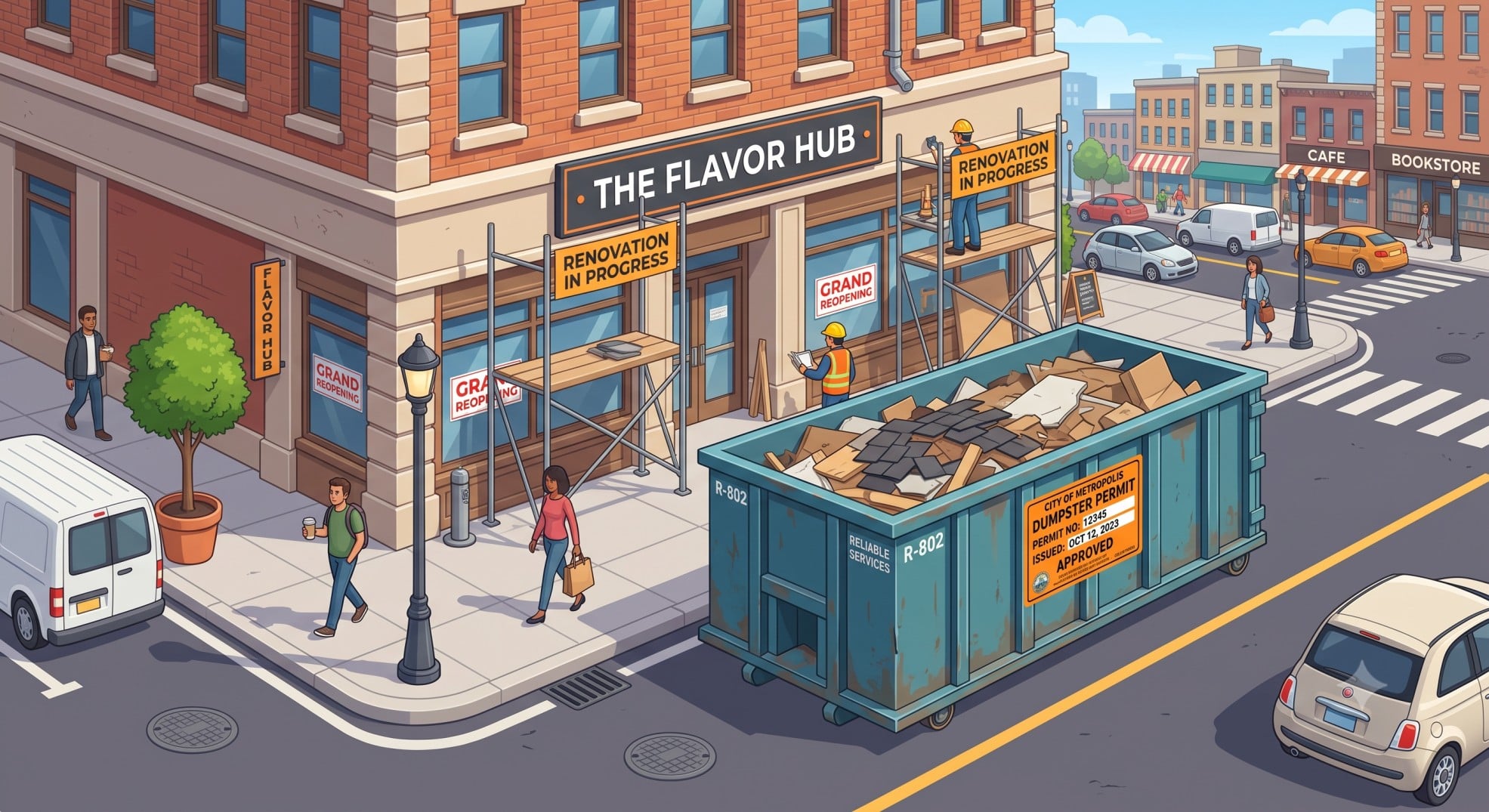
If your restaurant has a private parking lot or a dedicated rear alley on private property, you generally do not need a permit to place a dumpster there. But urban restaurants rarely have this luxury. If you must place a commercial roll-off dumpster or a permanent refuse container on a public street, a public sidewalk, or a city-owned alleyway, you need a Dumpster Placement Permit (sometimes called a Right-of-Way or Street Occupancy Permit).
Cities require these permits to ensure the dumpster does not block fire hydrants, impede emergency vehicle routes, or destroy pedestrian accessibility under the ADA. In cities like Houston, any commercial dumpster exceeding 50 cubic feet requires a Combustible Waste Storage permit. In New York City, the Department of Transportation (DOT) requires a Commercial Refuse Container permit, which must actually be pulled by the registered carting company, not the restaurant owner.
Failing to secure this permit results in immediate citations from public works departments and the potential impounding of the dumpster.
Certificate of Occupancy and Fire Safety Approvals
Before you can legally unlock the front doors, the local building department must declare the structure safe for human assembly. They do this by issuing a Certificate of Occupancy (CO).
The CO confirms that the building complies with all local zoning laws and building codes for its designated use class. A space previously zoned for retail cannot automatically be used as a restaurant; the change in use triggers a new CO application. The document will explicitly state the maximum legal occupancy limit for the space.
Securing the CO requires passing a final inspection from the local Fire Marshal. The fire department will test the commercial kitchen exhaust hood, verify the automatic fire suppression system over the cooking equipment is armed, check the placement of portable fire extinguishers, and ensure all emergency exit doors swing outward and remain unobstructed.
Understanding exactly what license you need to open a restaurant means recognizing that the health department cares about the food, but the building and fire departments care about the structural safety of the guests.
Real-World Scenario: The Capacity Crunch
David leases a historic building in downtown Austin for a new steakhouse. He purchases enough tables and chairs to seat 120 guests based on his financial projections. However, during the final building inspection, the Fire Marshal determines the building only has two viable emergency exits, limiting the legal capacity to 99 people. David’s Certificate of Occupancy reflects this lower number. He has to remove 20 seats and rewrite his entire revenue projection model just weeks before opening.
Frequently Asked Questions About Restaurant Licensing
What license do you need to open a restaurant if you only serve takeout?
Even if you have no dining room, you still need a Food Service Establishment Permit from the local health department, an EIN, a state seller’s permit, and a local business license. You bypass requirements for public restrooms and large occupancy permits, but the kitchen regulations remain identical to full-service restaurants.
How much do the licenses and permits needed to open a restaurant cost in total?
Costs vary wildly by jurisdiction and concept. A small cafe might spend $1,000 to $3,000 on basic health, business, and fire permits. A full-service restaurant seeking a liquor license in a quota state might spend anywhere from $10,000 to over $100,000 depending on the secondary market for alcohol permits.
What license required to open a restaurant takes the longest to get?
The liquor license is almost always the longest hurdle. State ABC boards often take 60 to 90 days to process an application, and public objection periods can extend this. The health department plan review process is the second longest, often taking 4 to 8 weeks for initial approval.
Do I need a music license if I only play the radio in my restaurant?
In limited cases, small restaurants (under 3,750 square feet) playing traditional terrestrial radio through a limited number of basic speakers may be exempt under copyright law exceptions. However, if you use commercial sound systems, stream digital audio, or charge a cover, you must pay ASCAP, BMI, and other PROs.
Can I transfer an existing health permit if I buy a restaurant?
Health permits are generally non-transferable. When ownership changes, the new legal entity must apply for a new Food Service Establishment Permit. The health department will usually require a new inspection, though they may waive the full architectural plan review if you are not changing the kitchen layout or the menu style.
What happens if I operate a food truck instead of a brick-and-mortar?
Food trucks require a Mobile Food Facility Permit. You still need all standard business licenses and tax registrations. Crucially, most health departments require food trucks to operate out of a permitted commissary kitchen for prep, cleaning, and waste disposal. You must provide a signed commissary agreement to get your mobile permit.
Do I need a separate permit for outdoor sidewalk seating?
Yes. If your tables and chairs sit on a public sidewalk, you need a Sidewalk Cafe Permit or Encroachment Permit from the city’s public works or transportation department. They will enforce strict rules regarding ADA clearance for pedestrians walking past your tables.
What license you need to open a restaurant if you plan to host live bands?
Beyond standard food and business permits, you need a Live Entertainment Permit from the city, which often involves zoning checks for noise ordinances. You also need expanded public performance licenses from PROs (ASCAP/BMI), as live music requires different royalty clearances than recorded background music.
Who issues the Certificate of Occupancy?
The local city or county building department issues the Certificate of Occupancy after all construction is finished and the space passes final inspections from the building inspector, electrical inspector, plumbing inspector, and the local fire marshal.
Can I apply for a restaurant business license before I have a location?
No. Most city business licenses and all health department permits are tied directly to the physical address of the facility. You can secure your federal EIN and form your LLC early, but you cannot apply for operational permits until you have a signed lease or deed for the specific property.
Disclaimer: This content provides general information for educational purposes only. Business regulations, licensing requirements, and laws vary drastically by federal, state, county, and city jurisdictions and change frequently. It is not professional legal, tax, or financial advice. Always consult a qualified attorney, CPA, or your local government agencies for personalized guidance regarding your specific business situation.
