
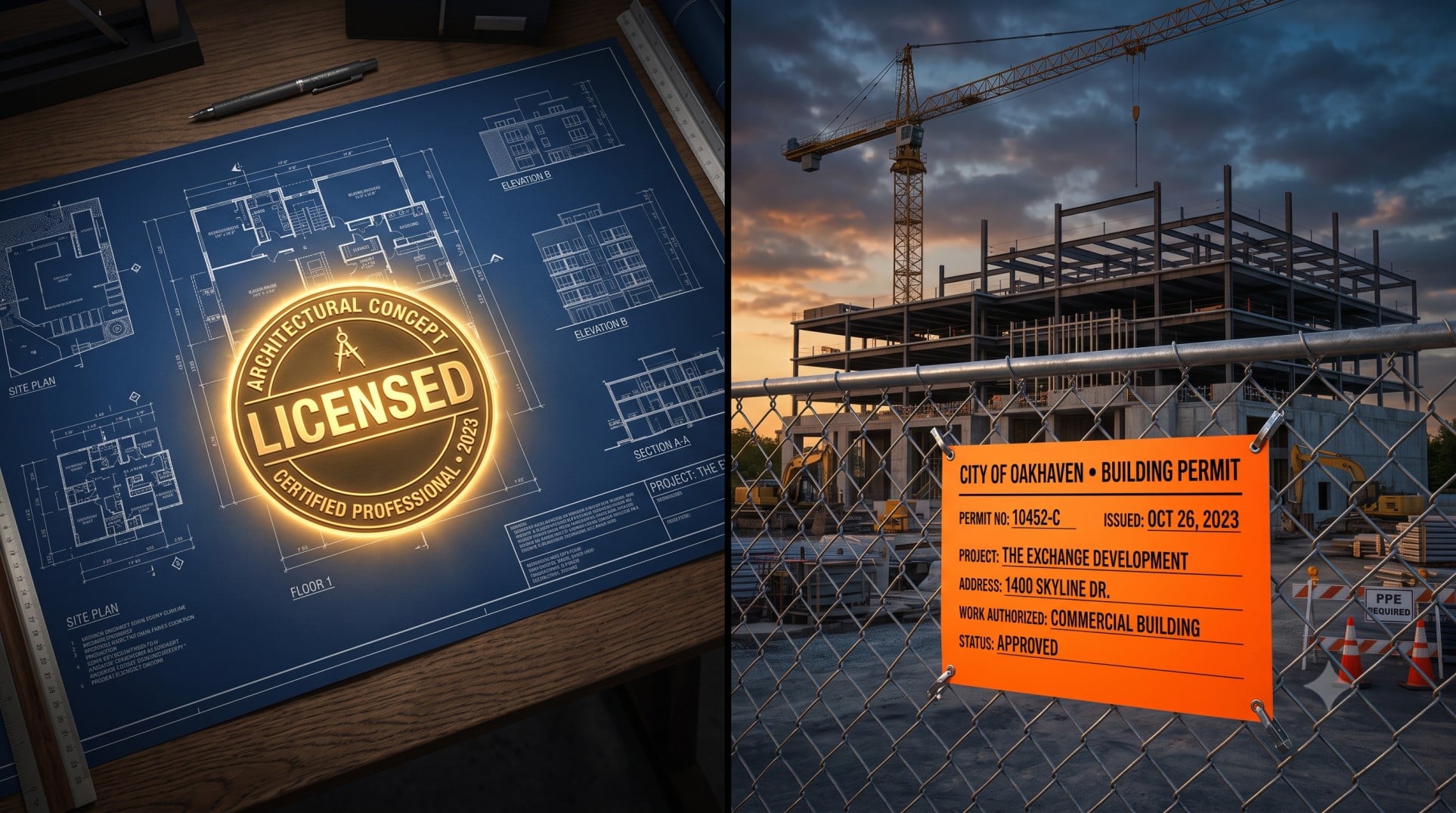
Running a successful construction business requires more than just a mastery of framing, plumbing, or electrical work. It demands a flawless understanding of legal compliance. Contractor licenses and construction permits form the legal foundation of your entire operation. Without them, you cannot legally bid on projects, hire subcontractors, or even swing a hammer on a job site.
Many new builders assume that once they form an LLC and buy some insurance, they are ready to break ground. That is a dangerous and costly misconception. The construction industry is one of the most heavily regulated sectors in the United States. State governments want to ensure you have the technical knowledge to build safely, while local municipalities want to ensure every specific structure meets strict zoning and structural codes.
If you mix up a state license requirement with a local building permit, you risk massive fines, project shutdowns, and even criminal misdemeanor charges. We are going to break down exactly how this regulatory system works. You will learn the critical differences between general and specialty contractor licenses, how to secure the right surety bonds, and the exact mechanics of pulling job-specific permits.
⚡ Executive Summary: Construction Compliance Essentials
- Licenses vs. Permits: A contractor license belongs to your business and gives you the legal right to operate. A permit belongs to a specific project and gives you the right to build that exact structure.
- State vs. Local: General and specialty contractor licenses are typically issued at the state level (e.g., a State Licensing Board). Building and zoning permits are issued at the local city or county level.
- Surety Bonds: Most states require you to purchase a contractor license bond before issuing your license. This protects the public from financial harm if you violate building codes or abandon a project.
Table of Contents
- General and Specialty Contractor Licenses: What Is The Difference?
- The Financial Safety Net: Understanding Surety Bonds for Contractors
- The Local Level: Pulling Building Permits and Zoning Approvals
- Step-by-Step Guide to Getting Licensed and Permitted
- Frequently Asked Questions About Contractor Licenses and Construction Permits
General and Specialty Contractor Licenses: What Is The Difference?
General and specialty contractor licenses dictate exactly what scope of work your business is legally allowed to perform. You cannot simply apply for a “construction license” and start taking on any job that comes your way. State licensing boards strictly categorize contractors based on their trade expertise, testing history, and proven field experience.
A General Contractor (often classified as a Class B license) is the project manager of the construction world. They are legally authorized to oversee entire construction projects, such as building a new home or a commercial strip mall. However, general contractors usually cannot perform specialized trade work themselves unless they also hold the specific license for that trade. Instead, they hire licensed subcontractors to handle the complex systems.
Specialty contractors (often classified as Class C licenses) are the masters of a single trade. Plumbers, electricians, HVAC technicians, and roofers fall into this category. To get a specialty license, you must prove thousands of hours of journeyman-level experience in that specific field and pass a rigorous trade exam. An electrician cannot legally bid on a roofing job, and a roofer cannot legally run new electrical panels.
The Three Main License Classifications
While terminology varies by state, most contractor licensing boards divide licenses into three primary tiers. Understanding where your business fits is the first step in compliance.
- Class A (General Engineering Contractor): These contractors handle fixed works requiring specialized engineering knowledge. Think highways, bridges, dams, and major earth-moving projects.
- Class B (General Building Contractor): These professionals build structures that house people, animals, or property. They manage the framing, carpentry, and overall coordination of subcontractors.
- Class C (Specialty Contractor): These are the trade-specific experts. States often have over 40 different specialty classifications, ranging from C-10 (Electrical) to C-36 (Plumbing) to C-27 (Landscaping).
Navigating general and specialty contractor licenses requires you to audit your business model. If you plan to flip houses and manage multiple trades, you need a Class B. If you are starting a dedicated HVAC repair company, you need the specific Class C specialty license.
🏢 Real-World Scenario: The Unlicensed Subcontractor Trap
Mark holds a valid Class B General Contractor license and wins a bid for a massive kitchen remodel. To save money, he hires his friend Dave to do the plumbing. Dave is highly skilled but does not hold a Class C Plumbing license. Midway through the project, a pipe bursts, causing $30,000 in water damage. Because Mark hired an unlicensed subcontractor, his general liability insurance denies the claim. Furthermore, the state licensing board investigates, fines Mark $5,000, and suspends his general contractor license for aiding and abetting unlicensed activity.
The Financial Safety Net: Understanding Surety Bonds for Contractors
You cannot discuss contractor licenses and construction permits without addressing financial guarantees. Before a state will issue your license, they want proof that you won’t leave clients high and dry. This is where surety bonds for contractors come into play. A bond is not insurance; it is a line of credit designed to protect the public, not your business.
A surety bond involves three parties. The Principal is you, the contractor. The Obligee is the state licensing board demanding the bond. The Surety is the financial institution backing the bond. If you abandon a job, steal a client’s deposit, or violate building codes, the client can file a claim against your bond. The surety company will pay the client up to the bond amount, but then they will come directly after you to recoup every single penny.
Most states require a standard Contractor License Bond just to activate your license. For example, California currently requires a $25,000 license bond for all contractors. The cost you pay for this bond (the premium) depends heavily on your personal credit score. A contractor with stellar credit might pay $250 a year, while a contractor with poor credit might pay $2,500 a year for the exact same bond.
Types of Contract Bonds for Specific Jobs
While a license bond keeps your business legal at the state level, you may need additional surety bonds for contractors to win specific projects. This is especially true if you are bidding on government contracts or large commercial jobs.
- Bid Bonds: Guarantees that if you win the bid, you will actually sign the contract and perform the work at the quoted price. It stops contractors from submitting frivolously low bids.
- Performance Bonds: Guarantees that you will complete the project according to the exact specifications in the contract. If you walk off the job, the bond pays the owner to hire a replacement contractor.
- Payment Bonds: Guarantees that you will pay all your subcontractors and material suppliers. This prevents unpaid suppliers from placing a mechanic’s lien on the property owner’s building.
The Local Level: Pulling Building Permits and Zoning Approvals
Once your state licenses and bonds are secured, your business is legally established. But you still can’t build anything until you deal with the local municipality. This is where pulling building permits and securing zoning permits for construction enter the equation. These are strictly local requirements managed by city or county building departments.
Zoning permits always come first. Zoning laws dictate what you can build and where you can build it. A local zoning board looks at land use, property lines, building heights, and parking requirements. If a client wants to build a commercial auto shop in a neighborhood zoned strictly for residential housing, the zoning department will deny the project immediately. You must secure zoning approval before anyone even looks at your structural blueprints.
Once zoning is approved, you move on to pulling building permits. Building permits dictate how the structure is built. The city wants to ensure the project meets the International Building Code (IBC) or local equivalent. This covers structural integrity, fire safety, electrical wiring, and plumbing sanitation. You must submit detailed architectural and engineering plans to the city for a “plan check.”
The Mechanics of Pulling a Permit
The process of pulling building permits is highly bureaucratic. Only the property owner or a licensed contractor authorized by the owner can legally pull a permit. When you pull the permit under your contractor license, you are taking full legal responsibility for the safety and compliance of that specific job.
- Application & Plan Submission: You submit your blueprints, engineering calculations, and energy compliance forms to the building department.
- Plan Check: City engineers review the plans. They will often return them with “redlines” (corrections) that you must fix before approval.
- Permit Issuance & Fees: Once approved, you pay the permit fees. These fees are usually based on the total valuation of the construction project.
- Progressive Inspections: A permit is not a one-and-done deal. You must schedule city inspections at specific milestones (e.g., after framing, but before drywall goes up).
Failing to secure zoning permits for construction or building permits is a fatal error. If a city inspector catches you working without a permit, they will issue a “Stop Work Order.” You will be forced to halt all construction, pay double the permit fees as a penalty, and potentially tear down completed work so the inspector can see what is behind the walls.
🏢 Real-World Scenario: The Setback Disaster
Sarah is hired to build a massive wrap-around deck for a homeowner. She successfully pulls the building permits for the structural design. However, she fails to check the local zoning ordinances regarding property line setbacks. She builds the deck two feet over the mandated zoning setback line. A neighbor complains to the city. Because Sarah violated the zoning code, the city forces her to tear down the completed deck and rebuild it, entirely at her own expense, wiping out her profit margin for the entire quarter.
Step-by-Step Guide to Getting Licensed and Permitted
Mastering contractor licenses and construction permits requires a strict chronological approach. You cannot skip steps, and you cannot handle local requirements before satisfying state requirements. If you are starting a new construction company, setting up your business entity is just the prologue. Here is the exact sequence of operations.
Step 1: Form Your Legal Entity and Get an EIN. Before applying for any licenses, you must form an LLC or Corporation with your Secretary of State. You then obtain an Employer Identification Number (EIN) from the IRS. Licensing boards will tie your contractor license directly to this specific business entity.
Step 2: Pass the State Trade and Law Exams. To obtain general and specialty contractor licenses, you must prove your competence. You will submit an application to the state licensing board detailing your years of journeyman experience. Once approved, you must sit for two exams: a trade-specific exam (testing your building knowledge) and a law/business exam (testing your knowledge of contracts, liens, and labor laws).
Step 3: Secure Insurance and Surety Bonds. Once you pass the exams, the state will demand proof of financial responsibility. You must purchase general liability insurance, workers’ compensation insurance (if you have employees), and the mandatory contractor license bond. You will submit the bond certificate directly to the state board.
Step 4: Register with Local Municipalities. Your state license allows you to operate in the state, but cities want their cut too. Before pulling building permits in a specific city, you usually must register your state license with that city’s finance department and pay a local business tax receipt or city business license fee.
Step 5: Pull Job-Specific Permits. With your business fully licensed at the state and city levels, you can now legally bid on jobs. For every new project, you will submit plans to the local building department, secure zoning permits for construction, pull the building permits, and schedule your progressive inspections.
Frequently Asked Questions About Contractor Licenses and Construction Permits
Do I need a contractor license for small handyman jobs?
It depends on the state and the project value. Many states have a “handyman exemption” allowing unlicensed individuals to perform minor repairs if the total cost (labor and materials) is under a specific threshold, usually between $500 and $1,000. However, electrical and plumbing work almost always requires a license regardless of price.
What is the difference between a building permit and a zoning permit?
Zoning permits dictate land use and location, ensuring your project complies with neighborhood rules, setbacks, and height limits. Building permits dictate structural safety, ensuring the actual construction meets the international building codes for framing, electrical, and plumbing.
Can a homeowner pull their own building permits?
Yes, most jurisdictions allow an “owner-builder” exemption. The homeowner can pull the permit themselves, but they assume all legal liability for the project’s safety and code compliance. If they hire you to do the work, you should insist on pulling the permit under your license to maintain control over the inspections.
Why do I need surety bonds for contractors if I have insurance?
Insurance protects your business from accidental damage or lawsuits. A surety bond protects the public and the state from your intentional failures, such as abandoning a project, violating building codes, or failing to pay your subcontractors. They serve entirely different legal purposes.
How long does it take to get a general contractor license?
The timeline varies wildly by state, but you should expect the process to take three to six months. This includes time to verify your experience, schedule and pass the state exams, undergo a criminal background check, and secure your bond and insurance paperwork.
What happens if I get caught contracting without a license?
Contracting without a required state license is a severe offense. You will face heavy administrative fines, potential misdemeanor criminal charges, and you lose your legal right to sue a client for non-payment. If a client refuses to pay an unlicensed contractor, the courts will not help you collect.
Do specialty contractors need to pull their own permits?
Usually, yes. While a general contractor will pull the master building permit for a new house, the specialty electrical and plumbing subcontractors must pull their own specific trade permits (often called sub-permits) under their own specialty licenses.
How much does it cost to pull a building permit?
Permit fees are set by the local city or county and are usually calculated based on the total estimated valuation of the construction project. A simple residential water heater permit might cost $100, while a permit for a new commercial building can cost tens of thousands of dollars.
Understanding contractor licenses and construction permits is the ultimate barrier to entry in the building trades. It separates the amateurs from the true professionals. By mastering the differences between general and specialty contractor licenses, maintaining your surety bonds for contractors, and flawlessly executing the process of pulling building permits and zoning permits for construction, you protect your profit margins and build a legally bulletproof empire.
Disclaimer: This content provides general information for educational purposes only. Business regulations, licensing requirements, and laws vary drastically by federal, state, county, and city jurisdictions and change frequently. It is not professional legal, tax, or financial advice. Always consult a qualified attorney, CPA, or your local government agencies for personalized guidance regarding your specific business situation.
