
⚡ Executive Summary: 2026 Gambling Tax Changes
- The new gambling tax law 2026 limits all loss deductions to just 90% of your total losses, up to the amount of your winnings.
- Break-even gamblers now face a “phantom income” tax penalty, owing federal taxes on 10% of their winnings even if they made zero actual profit.
- The Fair Bet Act is currently pending in Congress, aiming to repeal this 90% cap and restore the 100% deduction for taxpayers.
- The IRS reporting threshold for Form W-2G increased from $600 to $2,000 starting in tax year 2026, reducing the paperwork burden for casual players.
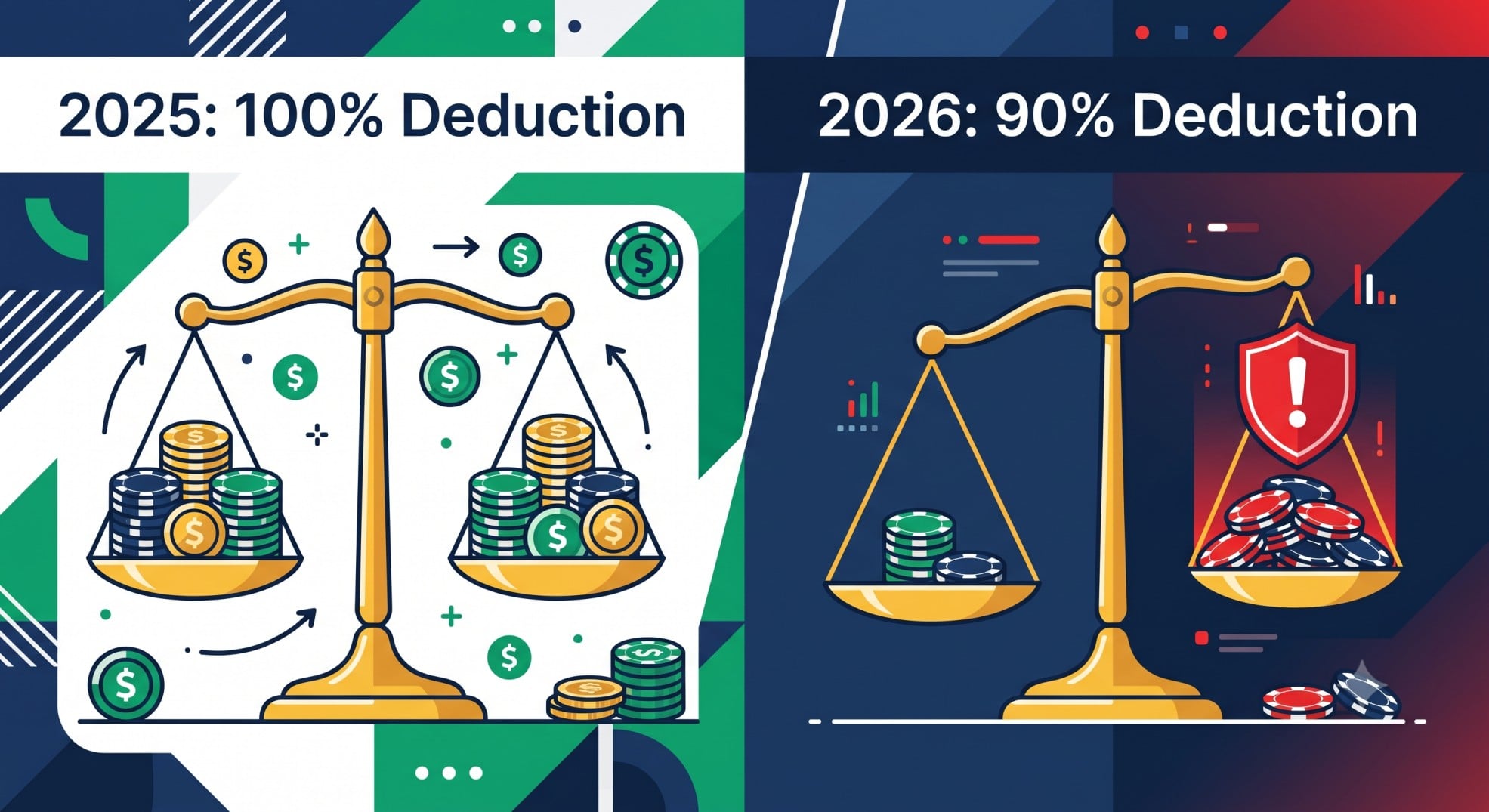
Table of Contents
- How the New 2026 Gambling Tax Law Creates “Phantom Income”
- The Break-Even Trap: Worked Examples of the 10% Tax Penalty
- Schedule A vs. Schedule C: How to Deduct Gambling Losses in 2026
- Can You Deduct Gambling Losses Without Itemizing?
- Why the Missing 10% Cannot Be Carried Forward
- Fair Bet Act Tracker: Bipartisan Efforts to Repeal the 90% Cap
- Latest Updates on the Fair Bet Act Status in Congress
- W-2G Thresholds, Session Logging, and Proving Losses to the IRS
- Are Casino Win/Loss Statements Accepted by the IRS?
- Frequently Asked Questions About the 2026 Gambling Tax Changes
How the New 2026 Gambling Tax Law Creates “Phantom Income”
The new gambling tax law 2026 completely rewrites the math for anyone who places a bet. Passed as part of the One Big Beautiful Bill Act (OBBBA) in July 2025, the legislation fundamentally altered Internal Revenue Code Section 165(d). You can no longer wipe out your gambling winnings with an equal amount of gambling losses.
Under the 2026 gambling tax changes, you are strictly limited to deducting 90% of your losses against your winnings. The remaining 10% of your losses simply vanish for tax purposes. This creates a massive problem known as the gambling phantom income tax. You are forced to pay taxes on money you never actually kept.
This rule applies across the board. It hits casino players, poker grinders, and anyone dealing with sports betting taxes 2026. The IRS does not care if you bet on a mobile app or at a physical sportsbook. The new tax on gambling losses 2026 ensures that even if your bankroll ends the year exactly where it started, the federal government still takes a cut.
The Break-Even Trap: Worked Examples of the 10% Tax Penalty
To understand the sheer impact of the 90% gambling loss rule, you have to run the math. If you use a taxes on gambling winnings calculator today, the results look vastly different than they did in 2025. Here is exactly how the phantom income trap works in practice.
Scenario 1: The Break-Even Casual Bettor
Marcus enjoys betting on NFL games. Throughout 2026, he wins exactly $50,000 and loses exactly $50,000. His net profit is zero.
- Winnings: $50,000
- Losses: $50,000
- Allowable Deduction (90%): $45,000
- Taxable Phantom Income: $5,000
Marcus must report $5,000 of taxable income. If he sits in the 24% federal tax bracket, he owes the IRS $1,200 out of pocket, despite making zero profit from his betting activity.
Scenario 2: The High-Volume Professional
Sarah is a professional poker player filing on Schedule C. She cashes for $400,000 in tournaments during 2026. Her buy-ins and travel expenses total $380,000. Her actual net profit is $20,000.
- Winnings: $400,000
- Total Losses & Expenses: $380,000
- Allowable Deduction (90% of $380k): $342,000
- Taxable Income: $58,000
Sarah made $20,000 in real life. The IRS taxes her on $58,000. Her effective tax rate skyrockets, making it incredibly difficult to sustain a thin-margin professional gambling career under the new gambling tax law 2026.
Schedule A vs. Schedule C: How to Deduct Gambling Losses in 2026
The mechanics of claiming a gambling loss deduction 2026 depend entirely on your tax classification. The IRS divides taxpayers into two categories: casual gamblers and professional gamblers. You cannot choose your category arbitrarily; it is based on the facts and circumstances of your activity.
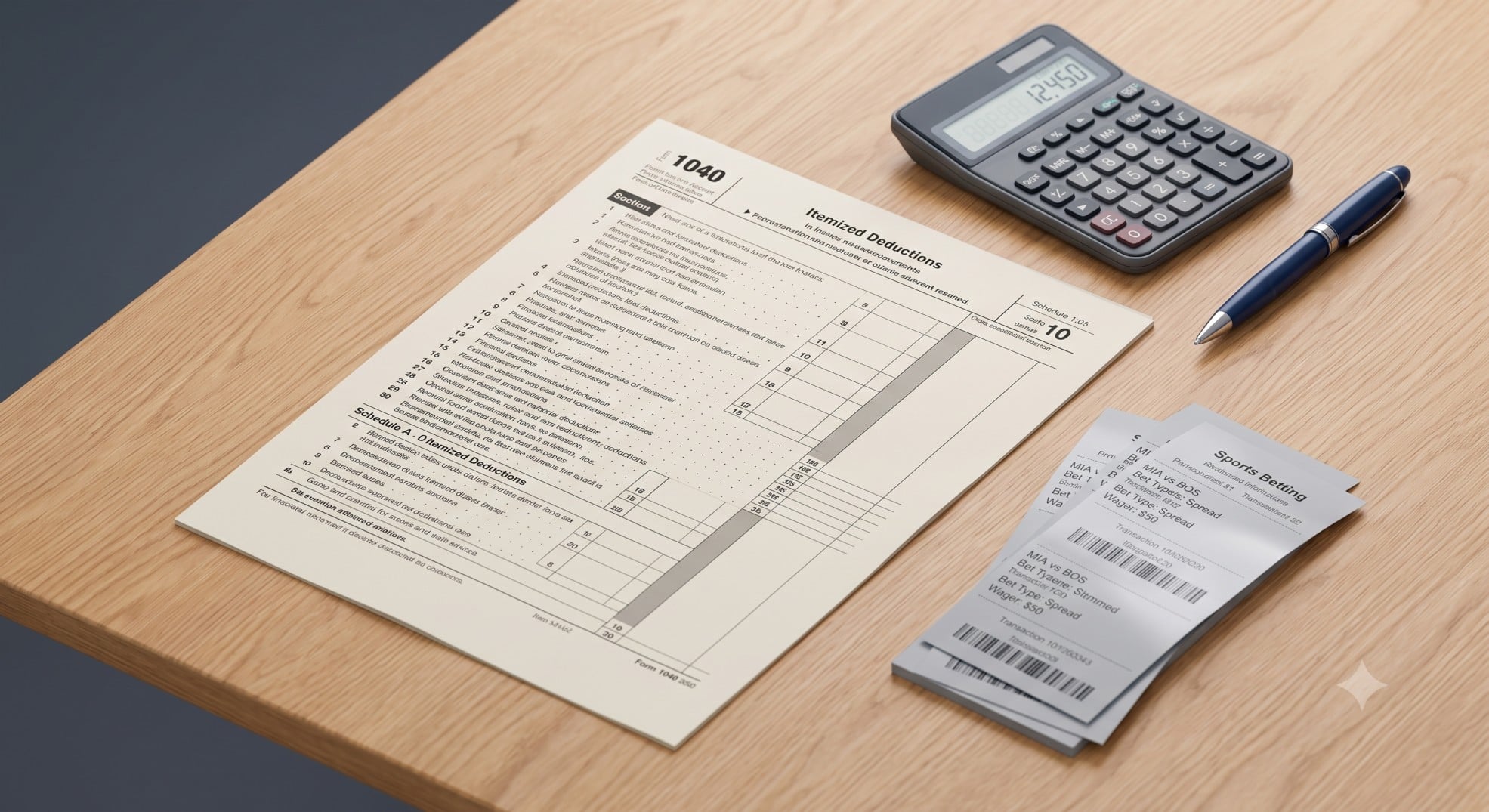
Casual gamblers must report all winnings as “Other Income” on Schedule 1 of Form 1040. To claim any losses, they must use Schedule A. Reporting Schedule A gambling losses means you are itemizing your deductions. You write off your losses on Line 16, subject to the new 90% cap.
Professional gamblers treat their betting as a legitimate trade or business. They report income and expenses on Schedule C. However, under the One Big Beautiful Bill gambling tax changes, professionals are also hit by the 90% cap. Their wagering losses and ordinary business expenses (like travel, internet, and tournament fees) are bundled together and subjected to the 90% limitation.
Can You Deduct Gambling Losses Without Itemizing?
Taxpayers constantly ask: how do I deduct gambling losses without itemizing? The direct answer is you cannot. The IRS strictly prohibits deducting gambling losses if you take the standard deduction.
People often wonder what is the standard deduction for gambling losses. There is no such thing. The standard deduction is a flat amount that reduces your overall taxable income. If you choose to take it, you forfeit the right to deduct your gambling losses entirely.
This creates a massive tax trap for casual players. If you win $15,000 and lose $15,000, but your total itemized deductions (including the capped $13,500 in gambling losses) are lower than the standard deduction for your filing status, you will likely take the standard deduction. As a result, you pay tax on the full $15,000 of winnings. Learning how to itemize gambling losses is the only way to mitigate this, but it requires giving up the standard deduction.
Why the Missing 10% Cannot Be Carried Forward
When determining how much gambling losses can you deduct, you will inevitably hit the 90% wall. So, what happens to the remaining 10%? Many ask, can gambling losses be carried forward to future years?
No. The IRS does not allow you to carry forward gambling losses. The 10% of losses disallowed by the new gambling loss deduction limit are permanently lost. They cannot be applied to next year’s winnings, and they absolutely cannot be used to offset your regular W-2 wages or investment income. The tax year is a closed loop.
Fair Bet Act Tracker: Bipartisan Efforts to Repeal the 90% Cap
The backlash against the 90% cap was immediate. Professional bettors, casino lobbyists, and casual players quickly realized the devastating impact of phantom income. In response, lawmakers introduced the Fair Bet Act (H.R. 4304) to reverse the damage.
Introduced by Representative Dina Titus (D-NV), the Fair Bet Act aims to restore the 100% deduction for gambling losses. The bill specifically amends IRC Section 165(d) to strip out the 90% limitation implemented by the OBBBA. It has garnered strong bipartisan support, with co-sponsors from both sides of the aisle recognizing that taxing imaginary income is bad policy.
Similar to the proposed Safe Bet Act and the Full House Act discussed in previous legislative sessions, the Fair Bet Act is heavily backed by the American Gaming Association. Industry leaders argue that the 90% cap pushes players away from legal, regulated sportsbooks and back into offshore, unregulated markets where tax reporting is easily evaded.
Latest Updates on the Fair Bet Act Status in Congress
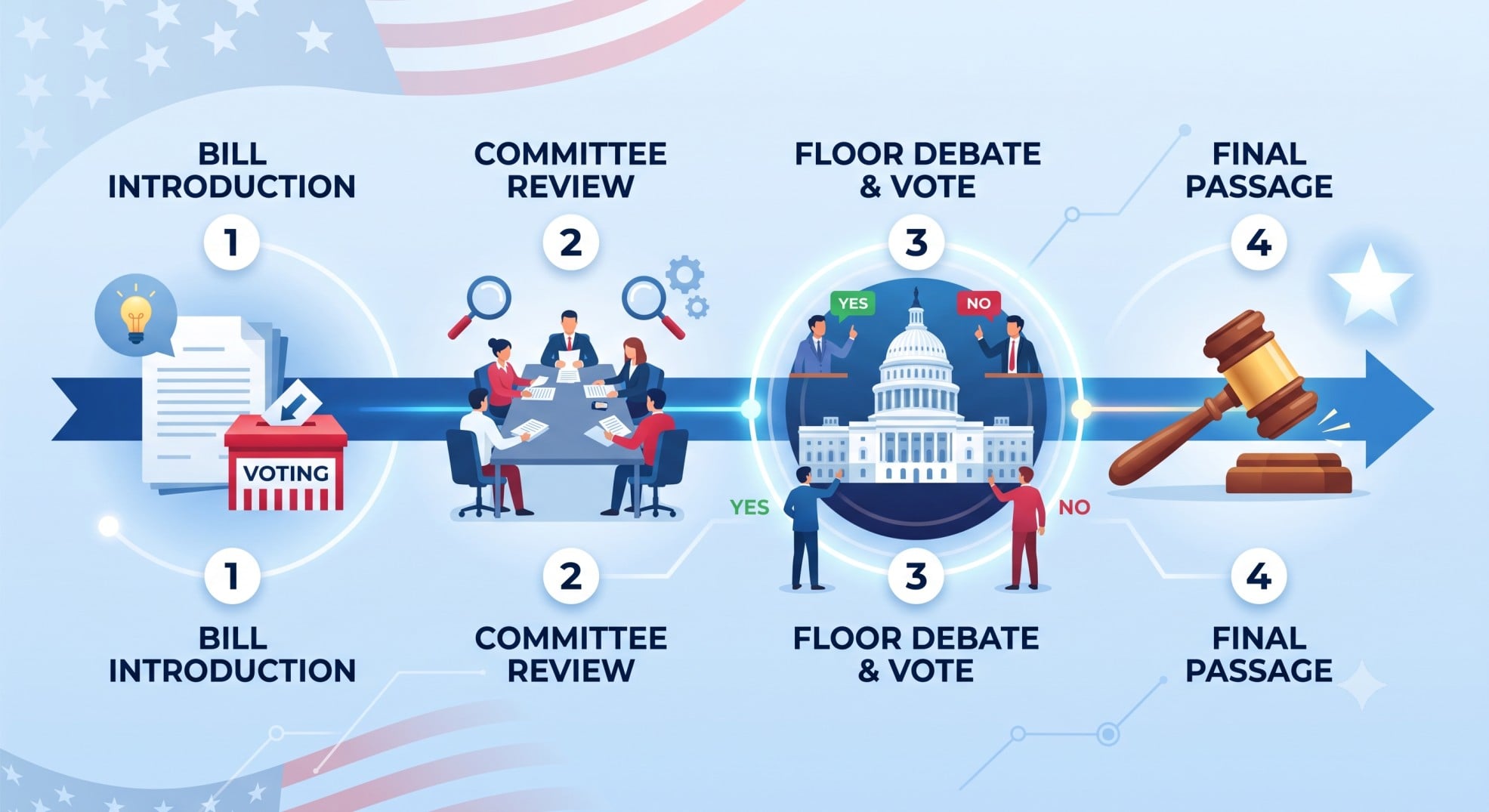
Checking the Fair Bet Act status is a daily routine for high-stakes players. As of mid-2026, the bill remains in the House Committee on Ways and Means. Representative Titus recently filed a discharge petition to force the bill out of committee and onto the House floor for a vote.
The latest Fair Bet Act update shows that while the bill has over two dozen bipartisan co-sponsors, it faces procedural hurdles. Bettors are asking when will the Fair Bet Act be voted on, but congressional leadership has not yet scheduled a floor vote. Until the bill passes the House, clears the Senate, and receives a presidential signature, the new gambling tax law 2026 remains the active law of the land. You must file your 2026 returns assuming the 90% cap is permanent.
Read our complete guide on how to file an amended tax return if legislation changes retroactively.W-2G Thresholds, Session Logging, and Proving Losses to the IRS
While the deduction limits tightened, the IRS did offer one piece of administrative relief in 2026. The IRS gambling winnings threshold 2026 for issuing a Form W-2G increased from $600 to $2,000. This means casinos and sportsbooks will issue fewer tax forms for small jackpots.
Knowing when is a W-2G issued is critical for your recordkeeping. A W-2G is triggered when your winnings meet the $2,000 threshold and are at least 300 times the amount of your wager. Receiving a W-2G form guarantees the IRS knows about that specific win. The W 2G will show your gross winnings and any federal income tax withheld.
However, the IRS does not track your losses. That burden falls entirely on you. The IRS requires you to track your gambling activity using the “session method.” A session is a continuous period of gambling at a single venue or on a single app. You must log the date, location, type of wager, amounts won, and amounts lost for every single session.
Are Casino Win/Loss Statements Accepted by the IRS?
If you are wondering how do I prove gambling losses on my taxes, you might assume you can just download a year-end summary from your sportsbook. Can I use a casino win/loss statement for taxes?
The IRS explicitly states that a casino win/loss statement is not sufficient proof on its own. These statements often contain disclaimers that they are estimates based on player card tracking. If you are audited, the IRS wants to see a contemporaneous diary or logbook, backed up by tangible receipts, bank withdrawals, and betting tickets.
Furthermore, if you are part of a group that hits a large jackpot, you must handle the tax reporting carefully. Using IRS Form 5754 allows you to split the tax liability of a single W-2G among multiple winners, ensuring you don’t get stuck paying taxes on gambling losses for money you handed over to your friends.
Frequently Asked Questions About the 2026 Gambling Tax Changes
What is the new gambling tax law 2026?
The new gambling tax law 2026 limits your ability to deduct gambling losses to just 90% of your total losses, up to your winnings. This creates taxable phantom income for break-even players.
How do I deduct gambling losses without itemizing?
You cannot. The IRS requires you to itemize your deductions on Schedule A to claim any gambling losses. If you take the standard deduction, you pay tax on all your winnings and deduct zero losses.
Do senior citizens have to pay taxes on gambling winnings?
Yes. Do senior citizens have to pay taxes on gambling winnings? Absolutely. The IRS taxes gambling income regardless of your age, retirement status, or whether you are collecting Social Security benefits.
What are the penalties for not reporting gambling winnings?
The penalties for not reporting gambling winnings include a 20% accuracy-related penalty on the underpaid tax, plus accumulated interest. If the IRS proves intentional tax evasion, you could face criminal charges and severe financial fines.
Do you have to report gambling winnings under $600?
Yes. Do you have to report gambling winnings under $600? You must report every dollar you win to the IRS, even if the casino does not issue you a W-2G form. The reporting threshold only dictates when the casino must notify the IRS, not when your tax liability begins.
How to avoid taxes on gambling winnings?
If you are looking for how to avoid taxes on gambling winnings legally, your only option is to track your losses meticulously and itemize your deductions. You cannot avoid the tax entirely due to the 90% cap, but accurate logging minimizes your liability.
Why are gambling losses tax deductible?
Understanding why are gambling losses tax deductible requires looking at the tax code’s treatment of income. The IRS taxes net accretions to wealth. Deducting losses against winnings ensures you are taxed closer to your actual economic reality, though the 2026 cap distorts this principle.
Can you offset gambling winnings with losses from previous years?
Taxpayers often ask, can you offset gambling winnings with losses from a prior year? No. Gambling losses cannot be carried forward or backward. They must be applied in the exact same tax year the winnings occurred.
Calculating taxable gambling winnings 2026: How does the math work?
Calculating your taxable gambling winnings for 2026 requires taking your total winnings and subtracting 90% of your total losses. If you won $10,000 and lost $10,000, you subtract $9,000, leaving $1,000 in taxable income.
Will the Fair Bet Act pass before tax season?
The Fair Bet Act is currently pending in the House. While it has bipartisan support, it has not yet been scheduled for a floor vote. Taxpayers should prepare to file under the 90% cap rules for the 2026 tax year unless emergency legislation passes.
Disclaimer: This content provides general information for educational purposes only. Tax laws are complex and change often. It is not professional tax, legal, or financial advice. Always consult a qualified tax professional for personalized guidance regarding your specific situation. Ourtaxpartner.com is not responsible for any actions taken based on the information provided herein.
