
Executive Summary
- Primary Residences: Standard homeowners insurance premiums paid on a primary residence are strictly non-deductible personal expenses.
- Rental Properties: Landlords can fully deduct property insurance premiums on Schedule E as an ordinary and necessary business expense.
- Home Offices: Self-employed individuals can deduct a proportional percentage of their home insurance using Form 8829, provided they meet exclusive use tests.
- PMI in 2026: Private Mortgage Insurance (PMI) is fully deductible as mortgage interest in 2026, subject to AGI phase-out limits starting at $100,000.
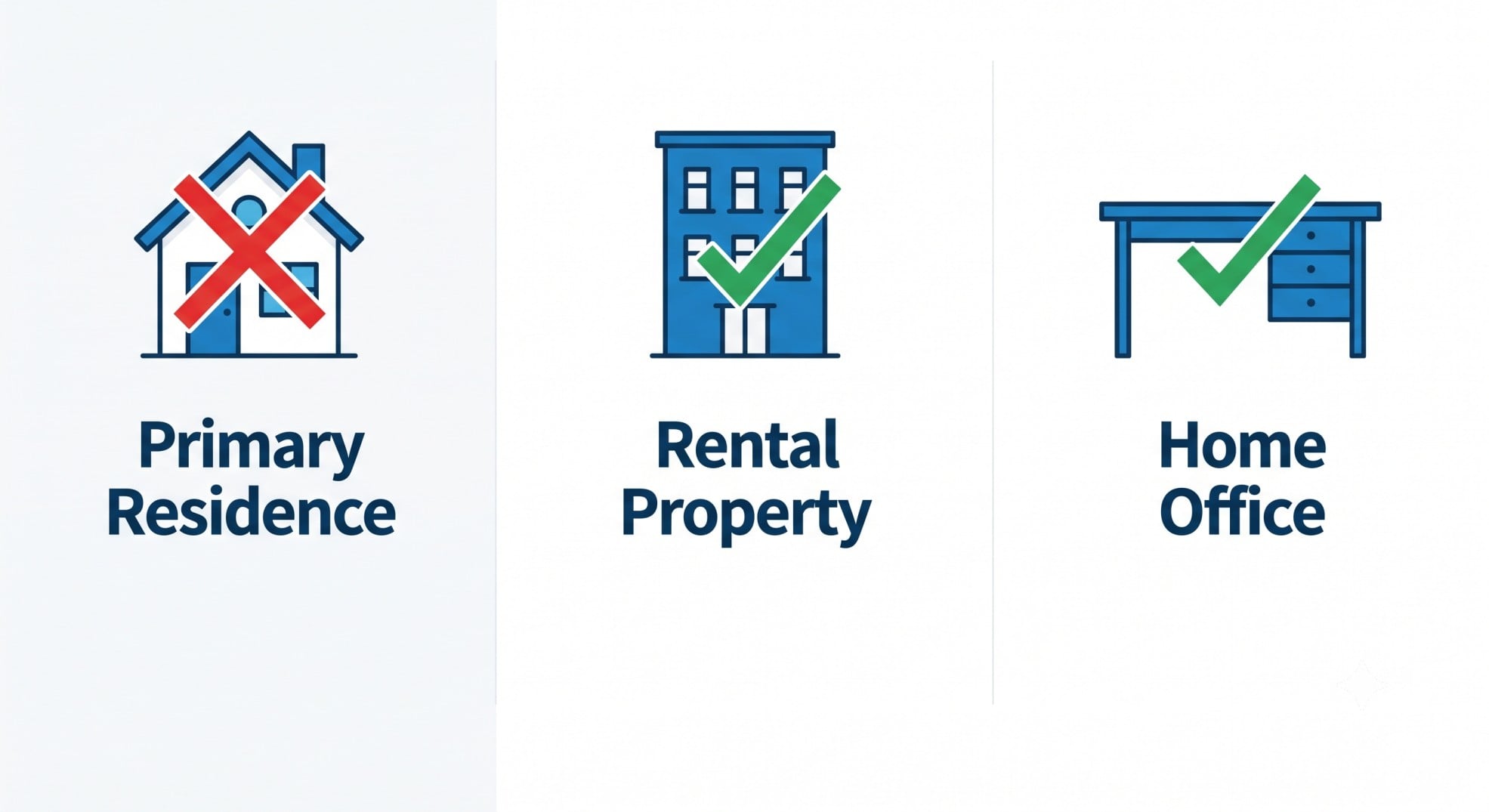
Property owners constantly look for ways to reduce their taxable income. When reviewing annual expenses, the cost of protecting the physical structure of a house stands out as a major line item. Taxpayers frequently ask their accountants, is home insurance deductible on taxes? The answer requires a strict categorization of how the property is used. The IRS treats personal residences, rental properties, and home offices entirely differently. Understanding these distinctions is a core component of maximizing the tax benefits of owning a home.
If you attempt to deduct the wrong type of insurance on the wrong IRS schedule, you risk immediate audit triggers and penalties. The tax code draws a hard line between personal living expenses and costs associated with generating income. This guide breaks down the exact rules for deducting property insurance, hazard policies, and mortgage insurance for the 2026 tax year.
Can I Deduct Homeowners Insurance on My Primary Residence?
Can I deduct homeowners insurance on my primary residence? The IRS provides a definitive “no” for standard homeowners insurance on a primary residence. If you live in the home and do not use it for any income-producing business activities, the premiums you pay for comprehensive property insurance are classified as non-deductible personal expenses.
Many taxpayers confuse property taxes with property insurance. State and local property taxes are deductible up to the $40,400 SALT cap in 2026. Insurance premiums paid to a private company to protect against fire, theft, or liability offer zero federal tax relief.
People often wonder, can you write off home insurance on taxes if the lender requires the policy? Even if your mortgage agreement mandates that you carry a specific level of coverage to secure the loan, the IRS still views the premium as a personal expense. When taxpayers ask, is home insurance deductible on taxes, they are usually hoping to offset the high costs of homeownership, but the federal government does not subsidize personal property protection.
Is Hazard Insurance Tax Deductible?
Is hazard insurance tax deductible? Hazard insurance is a specific component of a homeowners policy that covers structural damage from risks like fire, windstorms, or hail. In areas prone to specific natural disasters, homeowners might purchase standalone hazard policies, such as separate flood insurance through FEMA or private earthquake insurance.
If you live in a flood zone, you might wonder, is house insurance tax deductible when it is mandated by the federal government? Despite being separate policies or federally mandated, the tax treatment remains identical. For a primary residence, hazard insurance is not tax deductible. The IRS does not differentiate between a standard HO-3 comprehensive policy and a standalone hazard policy. Both are classified as personal living expenses under IRS Publication 530.
Is Private Mortgage Insurance (PMI) Tax Deductible in 2026?
Is private mortgage insurance (PMI) tax deductible in 2026? Unlike standard property insurance, Private Mortgage Insurance (PMI) protects the lender, not the homeowner, in the event of a loan default. For years, the deductibility of PMI was an on-again, off-again provision in the tax code.

For the 2026 tax year, the answer is yes. Under the recently enacted One Big Beautiful Bill Act (OBBBA), Congress reinstated and made permanent the tax deduction for PMI. The IRS treats these premiums as deductible mortgage interest.
To claim this deduction, taxpayers must meet specific criteria. You must itemize your deductions on Schedule A. If you take the 2026 standard deduction ($32,200 for married filing jointly), you cannot deduct PMI. The mortgage must have been originated after January 1, 2007. The deduction is also subject to strict income phase-outs.
The ability to deduct PMI begins to phase out when a taxpayer’s Adjusted Gross Income (AGI) exceeds $100,000 ($50,000 if married filing separately). The deduction is reduced by 10% for every $1,000 that your AGI exceeds the $100,000 threshold. It is completely eliminated once AGI reaches $109,000.
Hypothetical Scenario: PMI Phase-Out Math
A married couple filing jointly has an AGI of $104,000 in 2026. They paid $2,000 in PMI premiums during the year.
Because their AGI is $4,000 over the $100,000 limit, their deduction is reduced.
Calculation: $4,000 / $1,000 = 4. Then, 4 x 10% = 40% reduction.
They must reduce their $2,000 deduction by 40% ($800).
They can legally deduct $1,200 of their PMI premiums on Schedule A.
Can You Deduct Home Insurance on a Rental Property?
Can you deduct home insurance on a rental property? When a property generates rental income, the tax rules shift entirely. The IRS views rental real estate as a business endeavor. Because of this, the answer to “is house insurance tax deductible” becomes a definitive yes.
You report rental income and expenses on Schedule E (Form 1040). The premiums you pay for landlord insurance, fire insurance, and liability insurance on a rental property are fully deductible as ordinary and necessary business expenses. This deduction lowers your net rental income, directly reducing your tax liability. Landlords rarely need to ask, can you write off home insurance on taxes, because the tax code clearly defines it as a business expense.
If you rent out a property for only part of the year, you must prorate the insurance deduction. You can only deduct the portion of the premium that corresponds to the exact number of days the property was rented or available for rent.
| Property Type | Insurance Deductibility | IRS Form Used |
|---|---|---|
| 100% Personal Residence | Not Deductible | N/A |
| 100% Rental Property | Fully Deductible | Schedule E |
| Mixed-Use (e.g., Duplex) | Proportionally Deductible | Schedule E (for rental portion) |
Hypothetical Scenario: The Owner-Occupied Duplex
A taxpayer buys a duplex. They live in Unit A as their primary residence and rent out Unit B to a tenant. Both units have identical square footage. The annual insurance premium for the entire building is $3,000.
The taxpayer cannot deduct the entire $3,000. They must split the expense based on usage.
Unit A (Personal): 50% of the premium ($1,500) is a non-deductible personal expense.
Unit B (Rental): 50% of the premium ($1,500) is fully deductible on Schedule E.
Is Homeowners Insurance Tax Deductible for a Home Office?
Is homeowners insurance tax deductible for a home office? Taxpayers who run a business out of their primary residence often ask, is home insurance deductible on taxes? The answer is yes, but only a specific percentage of it. The answer to is house insurance tax deductible changes the moment a portion of the property becomes a principal place of business.
To qualify, you must meet the IRS’s strict requirements for the home office deduction. The space must be used regularly and exclusively for conducting business. It must be your principal place of business or a place where you regularly meet with clients. W-2 employees working remotely do not qualify for this deduction; it is strictly for self-employed individuals, freelancers, and small business owners filing Schedule C.
If you qualify, you can deduct a portion of your homeowners insurance using the “Regular Method” of calculating the home office deduction on Form 8829. You determine the percentage of your home used for business and apply that percentage to your total annual insurance premium.
If you choose the “Simplified Method” (deducting $5 per square foot of home office space, up to 300 square feet), you cannot deduct a separate line item for homeowners insurance. The simplified rate encompasses all home-related expenses, including insurance, utilities, and minor repairs.
Hypothetical Scenario: Form 8829 Allocation
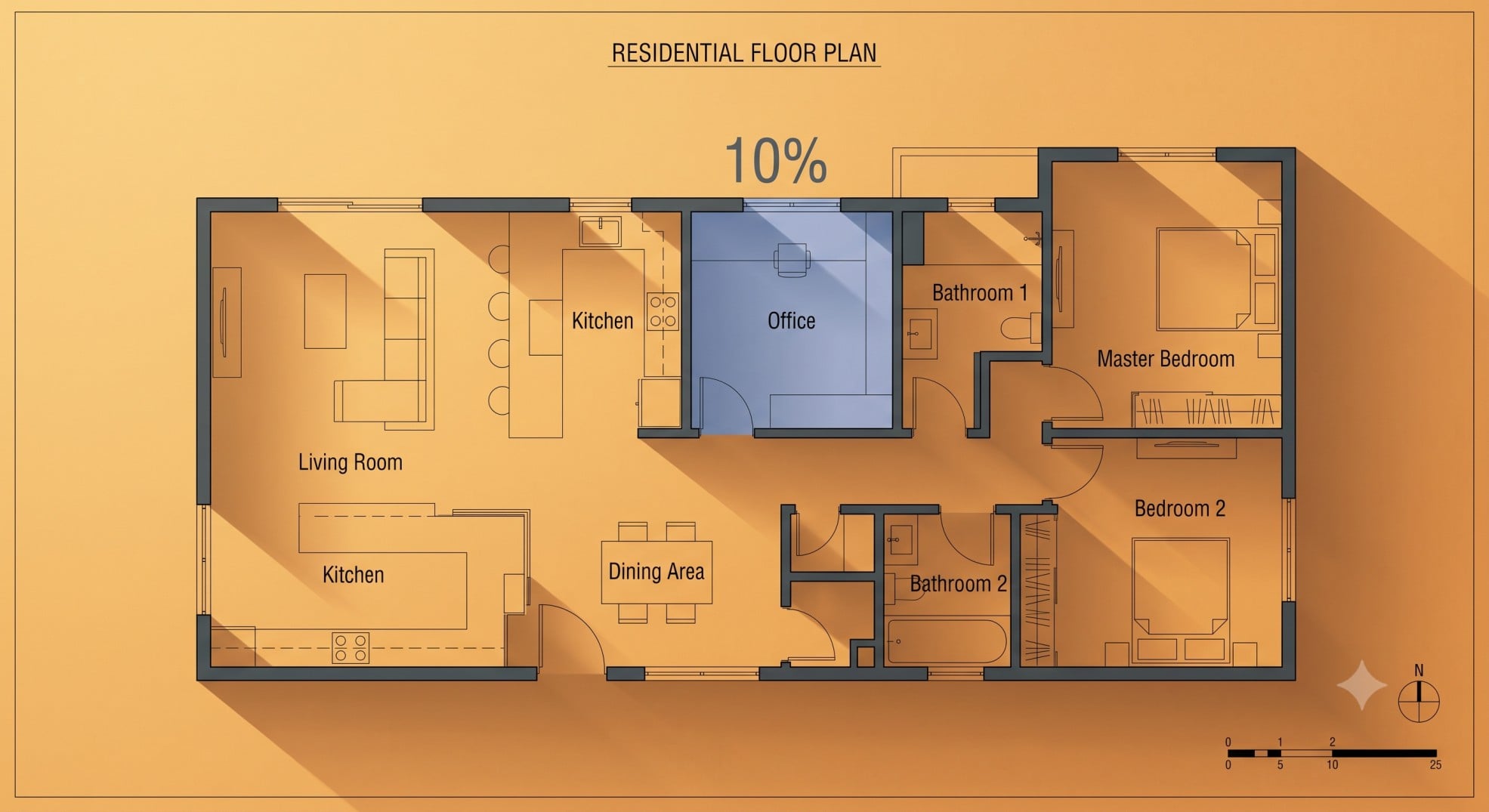
A freelance graphic designer works from a dedicated 300-square-foot office inside their 3,000-square-foot home. They pay $2,500 annually for homeowners insurance.
Business percentage: 300 / 3,000 = 10%.
They can deduct 10% of their insurance premium ($250) as a business expense on Form 8829, which flows to Schedule C. The remaining $2,250 is a non-deductible personal expense.
Step-by-Step: How to Claim Deductible Insurance Premiums
If your situation qualifies for a deduction, follow these exact steps to ensure IRS compliance. Knowing exactly when is home insurance deductible on taxes prevents costly audit triggers.
- Identify the Policy Type: Confirm whether the premium paid was for standard property insurance, hazard insurance, or private mortgage insurance (PMI).
- Determine Property Use: Categorize the property as a primary residence, a 100% rental property, a mixed-use property, or a home with a qualifying home office.
- Locate Your Tax Forms: For PMI, look for Form 1098 sent by your mortgage servicer. Box 5 will display the exact amount of mortgage insurance premiums paid during the year. For rental properties, gather your insurance declaration pages and canceled checks to verify the exact premiums paid.
- Execute the Math: Calculate any necessary prorations for mixed-use properties based on square footage or days rented. Apply the AGI phase-out math for PMI if your income exceeds $100,000.
- File the Correct IRS Schedule: Report PMI on Schedule A (Itemized Deductions). Report rental property insurance on Schedule E (Supplemental Income and Loss). Report home office insurance on Form 8829, which transfers to Schedule C (Profit or Loss From Business).
Common Mistakes When Deductressing Property Insurance
Taxpayers frequently make errors when attempting to claim insurance deductions. The IRS actively looks for these specific discrepancies during automated reviews.
- Deducting Title Insurance: Title insurance is a one-time fee paid at closing to protect against ownership disputes. It is never an itemized deduction. It is added to the property’s cost basis to reduce future capital gains.
- Deducting Escrow Withholdings: Your mortgage servicer holds money in an escrow account to pay your future insurance bills. You cannot deduct the amount withheld in escrow. You can only deduct the actual premium paid to the insurance company during the calendar year (and only if it applies to a rental or home office).
- Double Dipping the Home Office: If you use the Simplified Method for the home office deduction, you cannot also deduct a percentage of your homeowners insurance on Schedule C.
- Ignoring the PMI Phase-Out: Taxpayers often input their Box 5 amount from Form 1098 directly into their tax software without realizing their AGI exceeds the $109,000 limit, leading to rejected deductions.
Frequently Asked Questions
Is home insurance deductible on taxes for a standard single-family home?
Is home insurance deductible on taxes for a standard home? No. If you use the home exclusively as your personal residence, the premiums paid for comprehensive property insurance are non-deductible personal expenses.
Can you write off home insurance on taxes if you work from home as a W-2 employee?
Can you write off home insurance on taxes if you are a remote worker? No. The Tax Cuts and Jobs Act eliminated unreimbursed employee expenses. W-2 employees cannot claim the home office deduction, meaning they cannot deduct any portion of their home insurance.
Is house insurance tax deductible if I pay it through my mortgage escrow account?
Is house insurance tax deductible if paid via escrow? The method of payment does not change the tax rules. Paying through escrow does not make personal homeowners insurance deductible. It only matters if the property is used for business or rental purposes.
Can I deduct homeowners insurance on my primary residence if my lender requires it?
Can I deduct homeowners insurance on my primary residence? No. Even if your mortgage contract legally requires you to maintain a specific level of hazard or comprehensive insurance, the IRS still classifies the premium as a personal expense.
Is private mortgage insurance (PMI) tax deductible in 2026?
Is private mortgage insurance (PMI) tax deductible in 2026? Yes. Under current 2026 tax laws, PMI is treated as deductible mortgage interest. You must itemize your deductions on Schedule A, and the deduction phases out for taxpayers with an AGI over $100,000.
Can you deduct home insurance on a rental property?
Can you deduct home insurance on a rental property? Yes. Insurance premiums paid to protect a rental property are fully deductible as an ordinary and necessary business expense. You report these deductions on Schedule E.
Is homeowners insurance tax deductible for a home office?
Is homeowners insurance tax deductible for a home office? Yes, self-employed taxpayers can deduct a proportional percentage of their home insurance based on the square footage of their exclusive home office space using Form 8829.
Is hazard insurance tax deductible in hurricane or flood zones?
Is hazard insurance tax deductible? No. Standalone hazard policies, such as flood or earthquake insurance, are treated exactly like standard homeowners insurance. They are not deductible on a primary residence.
Is home insurance deductible on taxes if I rent out a room on Airbnb?
Is home insurance deductible on taxes for short-term rentals? Yes, but only partially. You can deduct a prorated portion of your insurance premium based on the square footage of the rented room and the exact number of days it was rented during the year.
Can you write off home insurance on taxes using the standard deduction?
Can you write off home insurance on taxes without itemizing? No. Even for deductible items like PMI, you must itemize on Schedule A. For rental properties and home offices, the deductions are taken on Schedule E and Schedule C, which are separate from your choice to itemize or take the standard deduction.
Disclaimer: The tax information provided in this article is for general educational purposes only and does not constitute legal or tax advice. Tax laws, including standard deductions, brackets, and phase-out limits, are subject to frequent changes by the IRS and Congress. Every taxpayer’s financial situation is unique. We strongly recommend consulting with a licensed Certified Public Accountant (CPA) or Enrolled Agent (EA) to verify how current tax laws apply to your specific circumstances before filing your return.
