
Executive Summary
- The 2026 Landscape: The One Big Beautiful Bill Act (OBBBA) significantly changed homeowner tax math for 2026, raising the standard deduction to $32,200 for married couples and increasing the SALT deduction cap to $40,400.
- The Itemization Hurdle: Buying a house only lowers your taxable income if your combined mortgage interest, property taxes, and other eligible expenses exceed your standard deduction.
- Closing Costs: Most closing costs are not deductible. You can only deduct prepaid interest (points) and prorated property taxes paid at the settlement table.
- Cash Flow Strategy: Homeowners who itemize massive deductions should adjust their W-4 withholdings to increase their monthly take-home pay rather than waiting for a massive spring refund.
Transitioning from a renter to a homeowner triggers the most significant shift in your financial profile. You stop taking the simple standard deduction by default and start tracking mortgage interest, property taxes, and settlement fees. Figuring out how does buying a house affect taxes requires understanding the specific IRS rules that govern real estate deductions in 2026. While many new buyers aggressively search for tax credits for first time home buyers, the reality is that your primary financial benefit will come from itemizing your deductions on Schedule A.
The 2026 tax year introduces new variables. The recently enacted One Big Beautiful Bill Act (OBBBA) altered the State and Local Tax (SALT) cap and adjusted standard deductions for inflation. These changes dictate exactly how much value you extract from your new property. We will break down the exact timeline of first-time filing taxes after buying a house, explain which closing costs you can legally deduct, and show you how to adjust your paycheck to capture your tax savings immediately.
Do you pay taxes when buying a house?
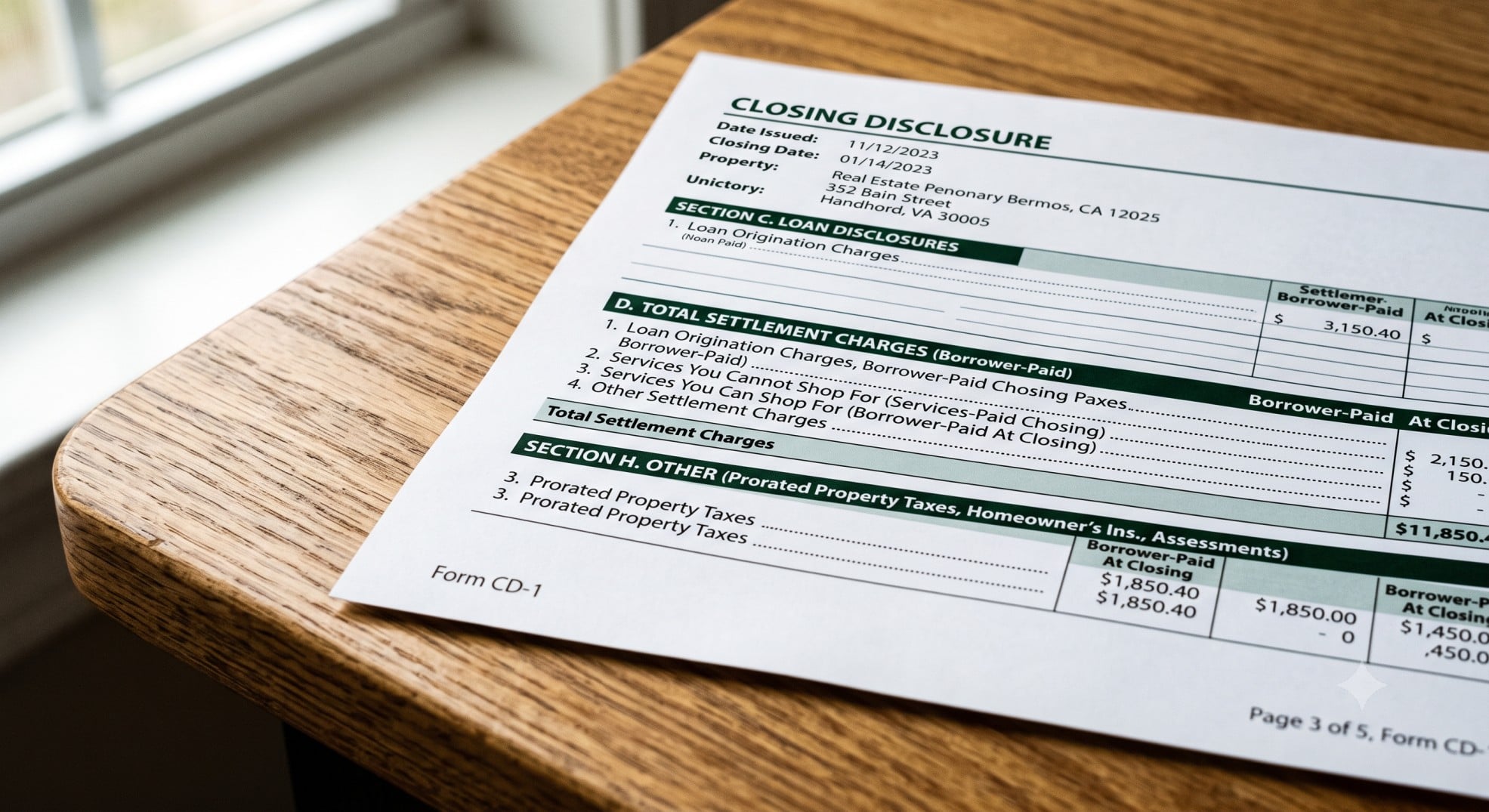
Yes, you pay specific local and state taxes at the closing table, but they are handled differently on your federal return. When you review your Closing Disclosure, you will see several line items labeled as taxes.
You will encounter transfer taxes and recording taxes. Local governments charge these fees to legally transfer the property title from the seller to you. The IRS considers transfer taxes a cost of acquiring the asset. You cannot deduct them on your annual return. You add them to the cost basis of your home, which helps reduce your capital gains tax liability when you eventually sell the property decades later.
You will also pay prorated property taxes. If the seller already paid the annual property tax bill to the county, you must reimburse them for the portion of the year you will own the home. This reimbursement is fully deductible on your federal return as part of your SALT deduction. Managing these specific taxes when buying a house requires keeping your Closing Disclosure in a safe place, as this document proves exactly what you paid on settlement day.
What happens to my tax bracket when I buy a house?
Nothing happens directly to your tax bracket. A common misconception among new homeowners is that purchasing real estate automatically drops them into a lower tax tier. The IRS determines your tax bracket based entirely on your taxable income, not the assets you own.
Buying a house affects your taxes by providing deductions that lower your total taxable income. If your deductions are large enough, they might reduce your income just enough to push your top dollars into a lower marginal bracket. The house itself does not trigger the change; the math on Schedule A does.
The 2026 Math: Standard Deduction vs. Itemizing
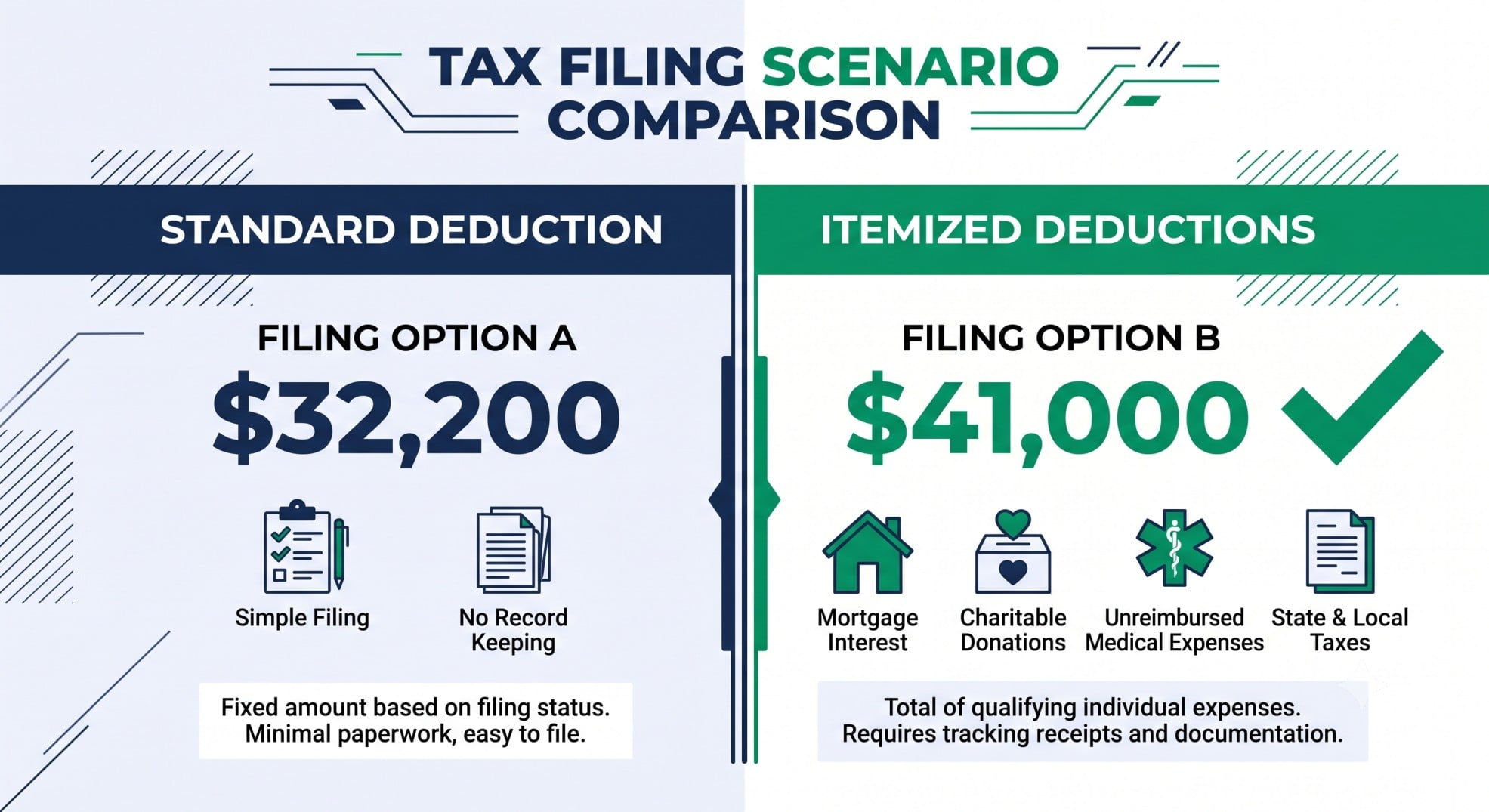
To understand how does buying a house affect taxes, you must master the concept of itemization. The IRS gives every taxpayer a standard deduction—a flat, no-questions-asked reduction in taxable income. For 2026, the standard deduction is $16,100 for single filers and $32,200 for married couples filing jointly.
You only receive a tax benefit from your home if your total itemized deductions (mortgage interest, property taxes, state income taxes, and charitable contributions) exceed that standard deduction number. If your itemized deductions total $30,000, and you are married filing jointly, you will simply take the $32,200 standard deduction. Your house provided zero additional federal tax benefit that year.
The 2026 OBBBA legislation raised the SALT deduction cap to $40,400. This allows homeowners in high-tax states to deduct significantly more of their property taxes than they could under the previous $10,000 limit, making it much easier to clear the standard deduction hurdle.
Hypothetical Scenario 1: Clearing the MFJ Hurdle
Mark and Jessica are married and file jointly. They purchase a $600,000 home in New Jersey in January 2026. They secure a 6.5% interest rate.
- Mortgage Interest Paid in 2026: $35,000
- Property Taxes Paid: $14,000
- State Income Taxes Paid: $8,000
First, they calculate their SALT deduction. Their combined property and state income taxes equal $22,000. This is well below the new 2026 OBBBA cap of $40,400, so they can claim the entire $22,000.
Next, they add their mortgage interest. $35,000 (interest) + $22,000 (SALT) = $57,000 in total itemized deductions.
The 2026 standard deduction for married couples is $32,200. Because $57,000 is vastly higher than $32,200, Mark and Jessica will itemize. They reduce their taxable income by an extra $24,800. If they sit in the 24% tax bracket, this specific tax break saves them $5,952 in actual federal tax liability compared to renting.
The tax implications of assuming a mortgage
With interest rates fluctuating, many buyers look for alternative financing. Assuming a seller’s existing FHA or VA loan allows you to take over their historically low interest rate. The tax implications of assuming a mortgage are slightly different than originating a brand-new loan.
When you assume a mortgage, you step into the seller’s shoes. You can legally deduct the mortgage interest you pay from the exact date the assumption is finalized. The IRS treats this interest exactly the same as interest on a new loan, subject to the standard $750,000 debt limit.
You cannot deduct any discount points the original seller paid years ago when they first originated the loan. Points are considered prepaid interest, and the IRS only allows the person who actually paid the cash to claim the deduction. If you pay an assumption fee to the lender to process the transfer, this fee is generally not deductible as interest; it is treated as a non-deductible closing cost. Navigating the tax implications of assuming a mortgage requires careful review of your settlement statement to separate deductible interest from administrative fees.
Should I adjust my W-4 withholdings after buying a home?
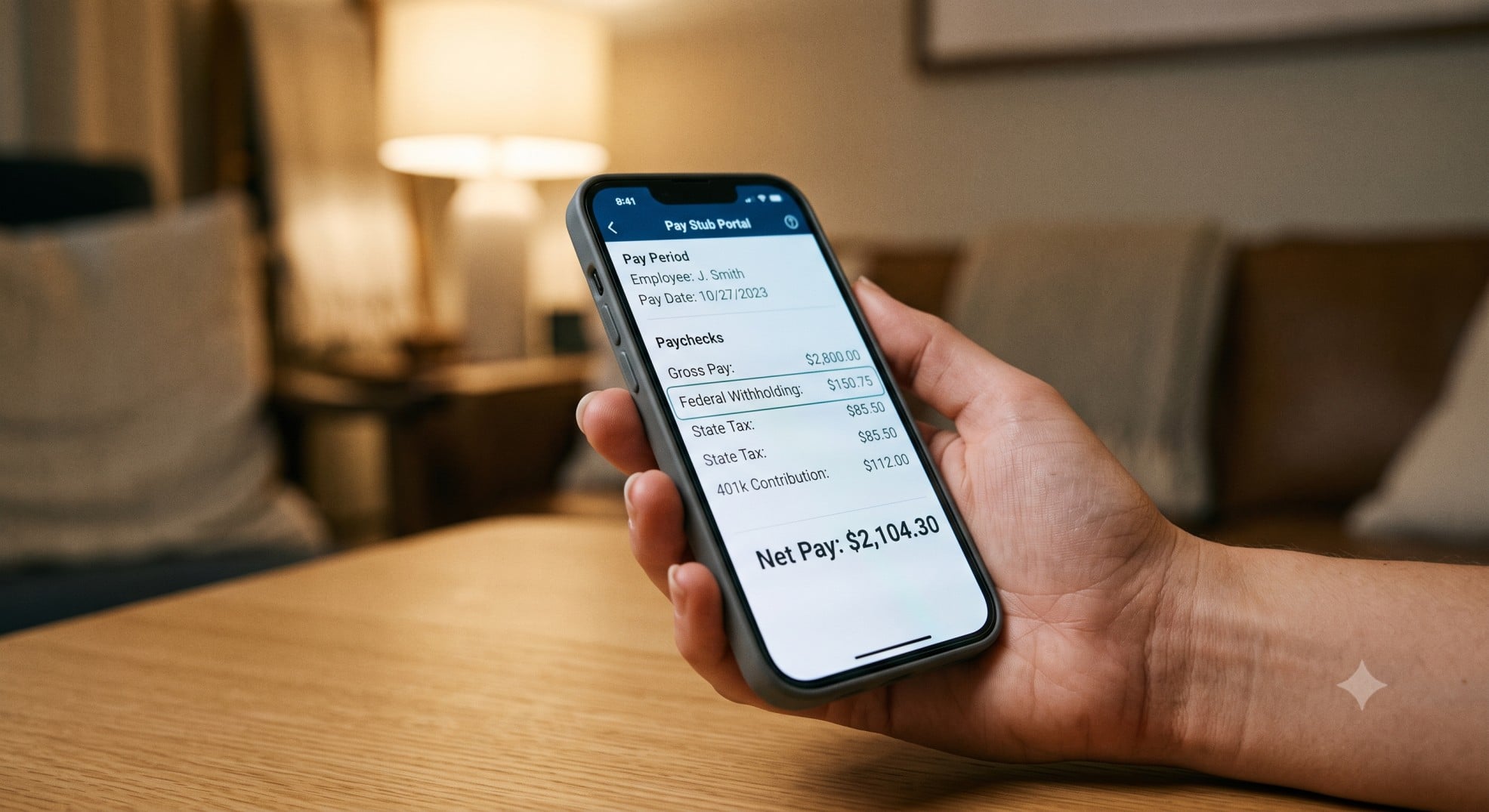
Yes, adjusting your W-4 is the smartest cash-flow move you can make. When people ask how much will my tax refund be after buying a house, they often expect a massive windfall in April. Relying on a massive refund means you are giving the IRS a free loan of your money all year long.
Once you calculate that your itemized deductions will significantly exceed the standard deduction, you know your final tax liability will drop. You should submit a new W-4 to your employer to reduce the amount of federal tax withheld from each paycheck.
Hypothetical Scenario 2: The W-4 Cash Flow Strategy
David is a single filer in the 24% tax bracket. He buys a house and calculates that his new itemized deductions (mortgage interest and property taxes) will exceed his $16,100 standard deduction by exactly $12,000.
That extra $12,000 deduction reduces his total tax bill by $2,880 for the year ($12,000 x 0.24). David has two choices.
- Choice A (Do Nothing): He leaves his W-4 alone. He struggles slightly to make his new, higher monthly mortgage payment. In April of the following year, the IRS sends him a $2,880 refund check.
- Choice B (Adjust W-4): He uses the IRS Tax Withholding Estimator and submits a new W-4 to his HR department. His employer reduces his tax withholding, increasing David’s net take-home pay by $240 every single month. He uses this extra cash to comfortably pay his mortgage and fund home repairs.
Choice B is the mathematically superior strategy. First-time filing taxes after buying a house should be a confirmation of your planning, not a surprise windfall.
first time home buyer tax return checklist
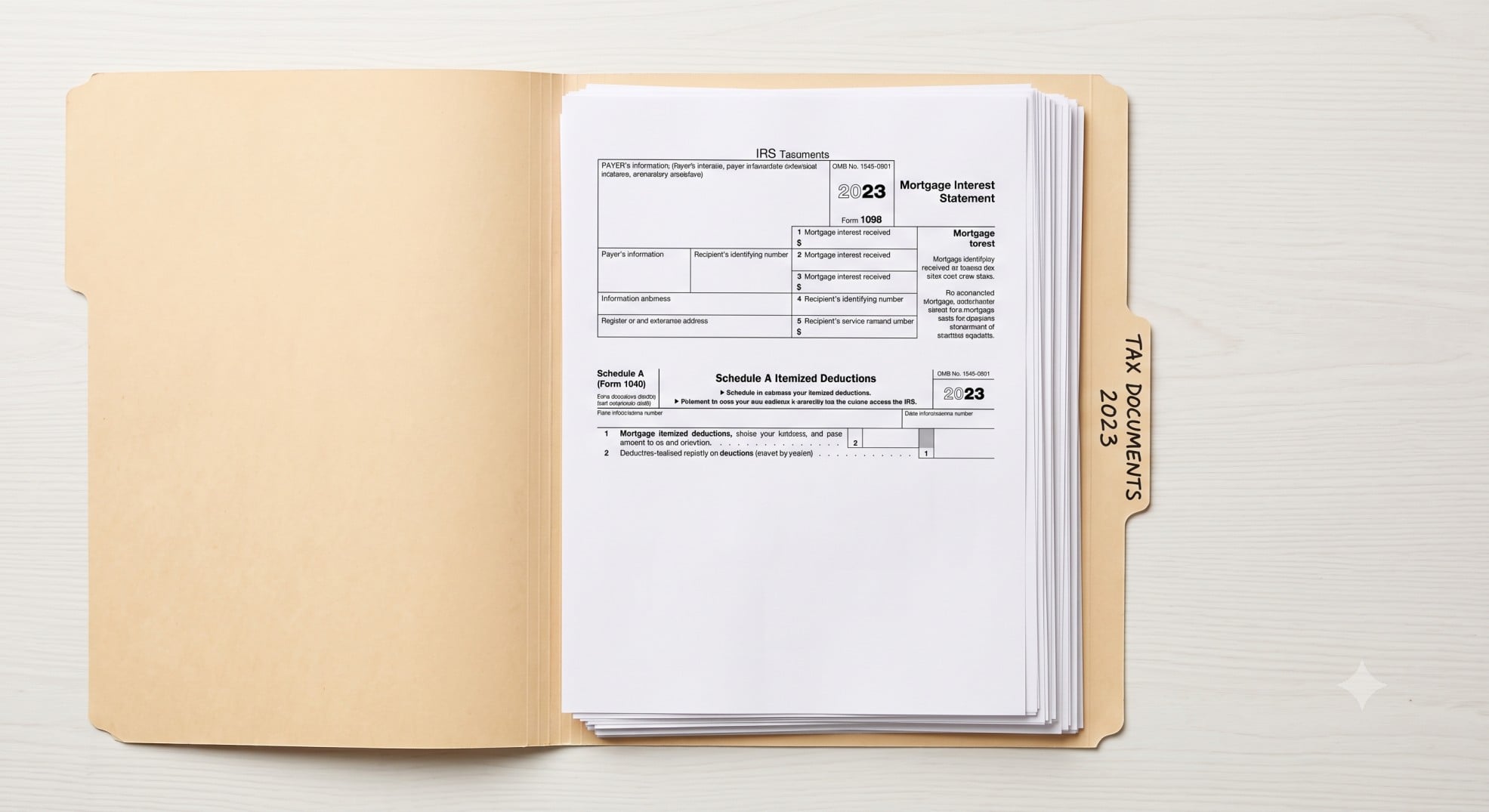
Preparation is the key to surviving your first tax season as a homeowner. Missing a single document can cost you thousands in unclaimed deductions. Follow this exact first time home buyer tax return checklist to ensure you capture every eligible expense.
- Locate Your Closing Disclosure (CD): This five-page document was given to you at settlement. Look specifically at Page 2. Highlight any boxes showing “Points” or “Prorated Property Taxes.” These are your deductible day-one expenses.
- Wait for Form 1098: Your mortgage servicer will mail this form by January 31st. Box 1 shows the exact amount of mortgage interest you paid. Box 10 shows any property taxes paid out of your escrow account.
- Track Direct Property Tax Payments: If you do not have an escrow account, gather the canceled checks or digital receipts from the payments you made directly to your county tax assessor.
- Gather State Income Tax Records: Pull your W-2 to see exactly how much state income tax was withheld from your paychecks. You will combine this with your property taxes to calculate your total SALT deduction (up to the $40,400 limit).
- Download Schedule A: This is the IRS form used for itemized deductions. You will transfer the numbers from your 1098 and Closing Disclosure directly onto this form.
First-time filing taxes after buying a house requires patience. Do not rush to file on February 1st. Mortgage servicers frequently issue corrected 1098 forms in mid-February if they miscalculated escrow disbursements. Filing too early with incorrect numbers guarantees an IRS audit flag.
Frequently Asked Questions
1. How does buying a house affect taxes in the first year?
Buying a house affects your taxes by introducing new itemized deductions, specifically mortgage interest and property taxes. If these combined expenses exceed your standard deduction, they lower your taxable income and reduce your overall tax liability.
2. Do you pay taxes when buying a house directly to the IRS?
No, you do not pay federal taxes to the IRS when buying a house. You pay local transfer taxes and county property taxes at the closing table. The IRS actually offers deductions for some of these local taxes, rather than charging you new ones.
3. What happens to my tax bracket when I buy a house?
Your tax bracket thresholds remain exactly the same. However, the large deductions generated by mortgage interest might reduce your taxable income enough to drop your top-earned dollars into a lower percentage bracket.
4. Are my closing costs tax-deductible?
Most closing costs are not deductible. Appraisal fees, title insurance, attorney fees, and inspection costs cannot be deducted. You can only deduct mortgage discount points (prepaid interest) and prorated property taxes.
5. Should I adjust my W-4 withholdings after buying a home?
Yes. If you plan to itemize deductions, adjusting your W-4 reduces the federal tax withheld from your paycheck. This increases your monthly take-home pay, giving you immediate cash flow to help cover your new mortgage payment.
6. How much will my tax refund be after buying a house?
Your refund depends entirely on your income, your withholding, and how much your itemized deductions exceed the standard deduction. If you adjust your W-4 correctly, your refund should actually be close to zero, because you received the money in your paychecks throughout the year.
7. What are the tax implications of assuming a mortgage from a seller?
When assuming a mortgage, you can deduct the interest you pay going forward, just like a new loan. You cannot deduct any points the original seller paid, and assumption fees charged by the bank are generally non-deductible.
8. Can I deduct my down payment?
No. The IRS considers a down payment an investment of capital into an asset. It is not an expense, and it is never tax-deductible.
9. What is the SALT deduction cap for 2026?
Under the 2026 OBBBA rules, the State and Local Tax (SALT) deduction cap is $40,400 for single filers and married couples filing jointly. This allows you to deduct a combination of property taxes and state income taxes up to that limit.
10. Do I need a CPA for first-time filing taxes after buying a house?
While tax software can handle Schedule A, hiring a CPA for your first year as a homeowner is highly recommended. A professional ensures you correctly extract the deductible points and prorated taxes hidden inside your Closing Disclosure, preventing costly mistakes.
Understanding exactly how does buying a house affect taxes empowers you to make smarter financial decisions. From managing the taxes when buying a house at the closing table to mastering the tax implications of assuming a mortgage, every step impacts your bottom line. Use the first time home buyer tax return checklist to organize your documents, and consult a professional to ensure your 2026 return is flawless.
Disclaimer: The information provided in this article is for general educational purposes only and does not constitute legal, tax, or financial advice. Tax laws, including the 2026 standard deductions and OBBBA provisions, are subject to change. Always consult with a licensed Certified Public Accountant (CPA) or qualified tax professional regarding your specific situation before filing your return or making financial decisions.
