
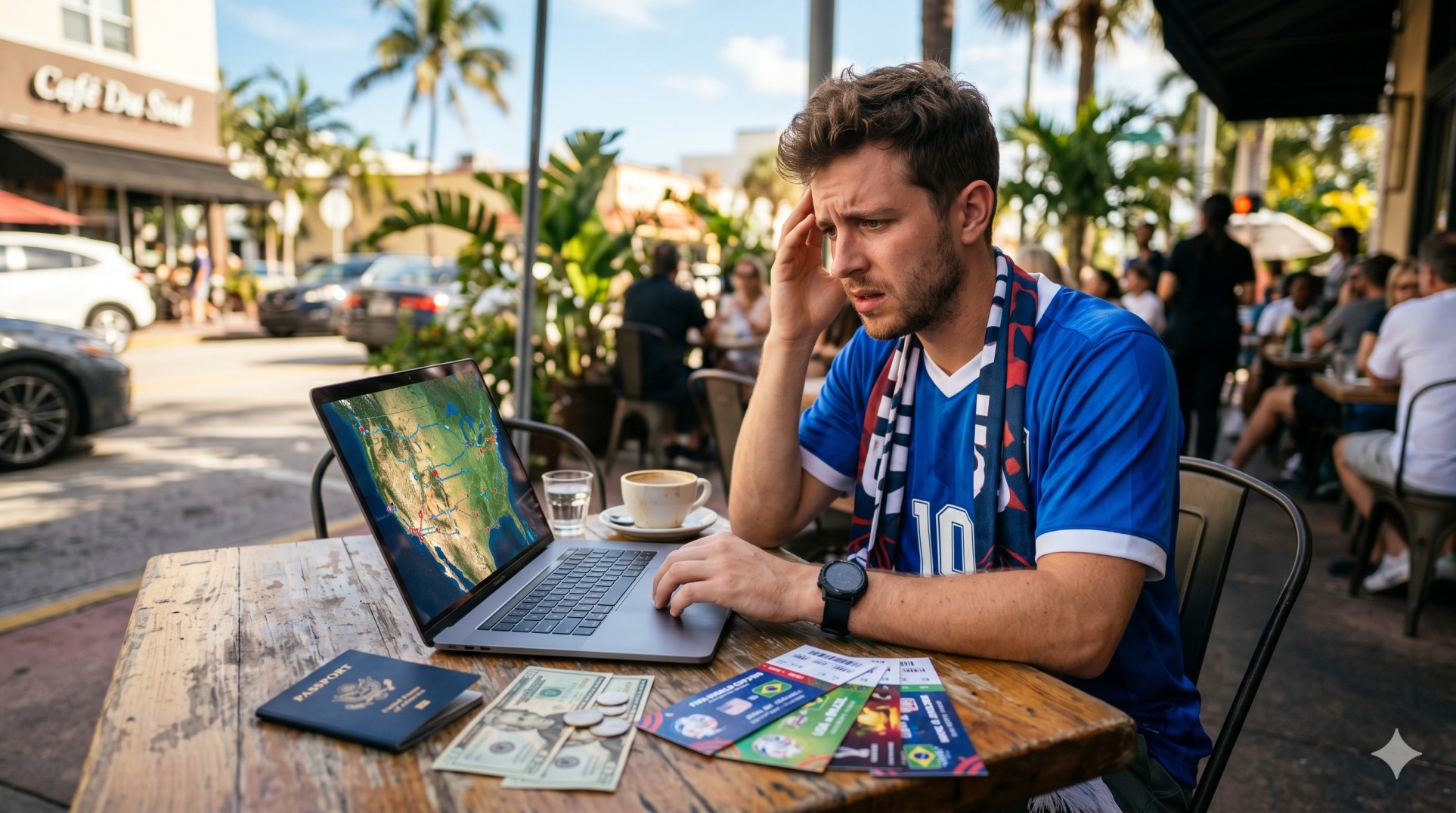
The 2026 FIFA World Cup will be an incredible global event. Millions of fans will travel to the United States. Naturally, many international visitors will bring their laptops. They want to work remotely between thrilling football matches.
However, choosing the right basecamp is absolutely critical. Specifically, you must understand which host cities are located in states with no income tax. Otherwise, your working holiday could trigger a massive financial nightmare.
The US tax system is incredibly complex. Many tourists accidentally break the law simply by answering emails. Therefore, let us explore how to choose the best city for your remote workcation.
The Hidden Trap of US State Taxes
Many foreign tourists misunderstand the American tax system. They assume the federal IRS is the only tax agency. Unfortunately, this assumption is completely wrong. The United States features a multi-layered tax system.
Consequently, individual states have their own aggressive tax departments. Furthermore, these state agencies operate independently from the federal government. Therefore, your physical location within the country matters immensely.
If you earn money while sitting in a specific state, that state wants a cut. Ultimately, ignorance of local laws will not protect you from heavy fines.
Federal vs. State Tax Rules
Federal tax rules apply everywhere in the United States. However, state tax rules change every time you cross a border. For example, working in Miami is legally different from working in Los Angeles.
Some states aggressively tax non-residents who work within their borders. Conversely, other states do not tax individual income at all. Therefore, digital nomads must plan their travel routes very carefully.
Ultimately, picking the right city saves you thousands of dollars. You must align your travel itinerary with smart financial planning.
The Aggressive Tax States: Proceed with Caution
Several major World Cup host cities are located in high-tax states. These states actively hunt for remote workers and visiting business owners. Therefore, you must proceed with extreme caution if you visit them.
They use sophisticated tracking methods to find non-resident workers. Let us examine the most dangerous locations for your wallet.
California Non-Resident Tax (Los Angeles & San Francisco)
California is notoriously aggressive regarding taxes. The state hosts matches in Los Angeles and the San Francisco Bay Area. However, the California Franchise Tax Board strictly monitors visitors.
If you work remotely while sitting in a Los Angeles hotel, California wants a cut. Specifically, they tax income earned while physically present in the state. Furthermore, California does not always honor federal tax treaties.
Consequently, foreign remote workers face severe double-taxation risks here. You must limit your working hours strictly when visiting California.
New York State Tax Rules (New York/New Jersey)
The New York and New Jersey area will host the tournament final. Naturally, millions of fans will flock to this region. However, New York state tax rules are incredibly strict for non-residents.
If you perform services within New York, that income is taxable. Furthermore, New York aggressively audits high-net-worth individuals and foreign executives. Therefore, conducting business in Manhattan is highly risky for your finances.
You must track your working days meticulously in this region. Otherwise, you will face a massive surprise tax bill next year.
The Tax-Free Havens: Best Cities for Remote Workers
Fortunately, several host cities offer a massive financial advantage. These specific cities are located in states with no income tax. Therefore, they are the absolute best destinations for digital nomads.
By basing your trip here, you eliminate state-level tax stress entirely. Let us explore these tax-friendly havens.
Florida’s Tax Advantage (Miami)
Miami is a vibrant, exciting host city. More importantly, Florida does not have a state income tax. Therefore, you can work remotely from a sunny Miami cafe without state-level worries.
You only have to navigate the federal IRS rules. Consequently, Miami is the ultimate basecamp for international remote workers. You keep much more of your hard-earned money.
The Texas Tax Shield (Dallas & Houston)
Texas will host numerous matches in Dallas and Houston. Similar to Florida, Texas is one of the states with no income tax. Therefore, foreign business owners can safely network and work here.
You will not face state income tax audits in Texas. Furthermore, the cost of living is generally lower than in California. Ultimately, Texas provides a fantastic, tax-efficient environment for your World Cup trip.
Washington State Benefits (Seattle)
Seattle is another fantastic host city for football fans. Additionally, Washington State does not levy a traditional personal income tax. Therefore, tech workers and digital nomads can safely operate from Seattle.
You can enjoy the beautiful Pacific Northwest without aggressive state taxation. Consequently, Seattle ranks highly for international remote workers seeking a cooler climate.
The Risk of Corporate State Taxes
Individual income tax is not your only worry. Foreign business owners face massive corporate tax risks. Specifically, working from a hotel can create a “Permanent Establishment” for your company.
This concept applies at both the federal and state levels. Therefore, your casual workcation could impact your entire business structure.
What is a Permanent Establishment?
A Permanent Establishment means your business has a stable presence in a region. If you conduct regular business from a Los Angeles Airbnb, California notices. Consequently, California might demand corporate taxes from your foreign company.
They will claim your company is now operating within their state borders. Therefore, the financial consequences extend far beyond your personal wallet. You must protect your corporate entity.
Protecting Your Foreign Corporation
To protect your company, you must limit your business activities. Do not hold formal client meetings in high-tax states. Furthermore, do not use a New York hotel address on any official business documents.
Instead, treat your trip strictly as a vacation when visiting aggressive states. Ultimately, this clear separation protects your global corporate profits from state auditors.
The Commercial Traveler Exception at the State Level
The federal IRS offers a Commercial Traveler Exception for short-term visitors. This rule allows you to earn up to $3,000 tax-free under strict conditions. However, you must understand how states view this federal rule.
State laws do not always match federal laws. Therefore, you must research local regulations carefully.
States Ignoring Federal Rules
States like California and New York do not always conform to federal exceptions. They have their own specific thresholds for non-residents. Therefore, you might be exempt from federal taxes but still owe state taxes.
Consequently, you must research the specific laws of every state you visit. A federal tax treaty will not save you from a California state audit.
The Benefit of Tax-Free States
This is why states with no income tax are so incredibly valuable. In Florida or Texas, you do not have to worry about conflicting state rules. Because the state tax rate is zero, the federal exception is your only concern.
Therefore, your tax planning becomes incredibly simple. You can focus entirely on enjoying the World Cup matches instead of reading tax codes.
Essential IRS Forms for Remote Workers
Even in tax-free states, you must satisfy the federal government. The IRS requires specific documentation from foreign visitors. Therefore, you must prepare your paperwork before arriving.
Let us review the most important forms you need to carry.
Form W-8BEN for Foreign Status
Form W-8BEN is absolutely critical for international freelancers. This form officially certifies your foreign non-resident status. If you use US-based platforms like Upwork, you need this document.
Specifically, it prevents US companies from withholding 30% of your income. Therefore, always keep a completed digital copy on your laptop. It is your shield against automatic tax deductions.
Form 8840 for the Closer Connection
Frequent visitors face another major federal trap. If you stay too long, you might fail the Substantial Presence Test. Consequently, the IRS will tax your worldwide income.
However, Form 8840 provides a legal escape route. This form proves you have a “closer connection” to your home country. Therefore, it protects your global assets from federal taxation.
Real-Life Case Studies: State Taxes in Action
Understanding tax laws is much easier with real numbers. Therefore, let us examine four realistic scenarios. These case studies highlight the massive difference between host cities.
Pay close attention to the financial outcomes based on geographic location.
Case Study 1: The Expensive Los Angeles Workcation
Mateo is a freelance software developer from Spain. He travels to Los Angeles for a four-week World Cup vacation. During his trip, he works remotely from his hotel room.
He earns $10,000 from his European clients during this month. Because he physically worked in California, the state considers this California-sourced income. Consequently, Mateo owes California state income tax on that $10,000.
Furthermore, he must hire a US accountant to file a non-resident state tax return. Ultimately, his LA trip became incredibly expensive due to poor planning.
Case Study 2: The Profitable Miami Basecamp
Chloe is a digital marketing consultant from the UK. She decides to base her World Cup trip in Miami. She stays for four weeks and earns $10,000 working remotely.
Because Florida is one of the states with no income tax, she owes nothing to the state. Furthermore, her UK tax treaty protects her from federal IRS taxes. Therefore, Chloe keeps 100% of her earnings.
Her smart city selection saved her thousands of dollars. She enjoyed the tournament completely stress-free.
Case Study 3: The New York Tax Surprise
Lukas is a German business executive. He visits New York/New Jersey for the tournament finals. While there, he spends two weeks working from a Manhattan office.
He earns $15,000 during this specific period. New York State aggressively taxes non-residents who work within its borders. Therefore, Lukas must pay New York state taxes on his $15,000 earnings.
In addition, his company faces scrutiny for creating a potential corporate presence. Consequently, his brief New York workcation caused massive corporate headaches.
Case Study 4: The Cross-Country Road Trip
Alejandro is a freelance journalist from Mexico. He plans a massive road trip for the World Cup. He starts in Dallas, drives to Los Angeles, and finishes in Seattle.
He works remotely from his laptop every single day. In Dallas and Seattle, he owes zero state taxes. However, during his two weeks in Los Angeles, he earns $4,000.
California requires him to file a non-resident return for that specific $4,000. Therefore, Alejandro must separate his income by geographic location. This creates a massive accounting headache.
Actionable Precautions for Your World Cup Trip
You can easily avoid these state-level tax traps with proper planning. The rules are strict, but compliance is straightforward. Here are the exact steps you must take before your trip.
Track Your Physical Location
First, you must track your physical location every single day. State tax agencies use flight records and credit card receipts during audits. Therefore, keep a detailed travel diary.
If you visit California or New York, limit your working hours strictly. Conversely, schedule your heavy work weeks while visiting Texas or Florida. This simple strategy saves you money.
Avoid Signing Contracts Locally
Second, never sign business contracts while physically present in a high-tax state. If you close a deal in Los Angeles, California might claim jurisdiction over the revenue.
Therefore, wait until you return to your home country to finalize agreements. Ultimately, patience protects your business from aggressive state auditors.
Frequently Asked Questions (FAQ)
Do I pay state tax if my company is foreign?
Yes, you might. State tax agencies care about where you physically perform the work. They do not care where your employer is headquartered. If you type on your laptop in California, California considers that taxable local income. Therefore, your foreign employer provides no protection at the state level.
Which World Cup host cities are in states with no income tax?
Several fantastic host cities offer this massive financial benefit. Specifically, Miami (Florida), Dallas (Texas), Houston (Texas), and Seattle (Washington) are located in states with no income tax. Therefore, these are the safest destinations for international digital nomads and remote workers.
Can state tax agencies track my location?
Yes, state tax agencies are incredibly sophisticated. They frequently use digital footprints to prove physical presence. For example, they can subpoena hotel records, flight manifests, and credit card transactions. Furthermore, they monitor social media posts. Therefore, you cannot simply hide your location from state auditors.
Does a tax treaty protect me from state taxes?
Usually, no. International tax treaties are negotiated by the federal government. Therefore, they only protect you from federal IRS taxes. Individual states, like California and New York, frequently ignore these federal treaties. Consequently, you might owe state taxes even if your federal taxes are zero.
What happens if I ignore state tax laws?
Ignoring state tax laws is highly dangerous. State agencies share information with the federal IRS. If they discover unreported income, they will issue massive penalties and interest. Furthermore, unpaid state taxes can lead to collections and future travel complications. Therefore, compliance is always the safest strategy.
Conclusion and Next Steps
The 2026 World Cup will be an unforgettable experience. You will enjoy world-class football across amazing American cities. However, remote workers must choose their destinations very carefully.
By prioritizing states with no income tax, you protect your hard-earned money. Cities like Miami and Dallas offer incredible football and tax-free remote work. Conversely, working in Los Angeles or New York requires extreme caution.
Did you find this guide helpful? Please share this article with your fellow traveling fans and digital nomads! In addition, bookmark this page so you can easily reference it during your trip. Finally, explore our other helpful World Cup tax and travel guides on our blog to ensure a smooth vacation.
Disclaimer: This article is strictly for educational and informational purposes only. This website does not provide tax, legal, or accounting services. The information presented here may not reflect the most current legal developments. Therefore, readers should consult a certified CPA or qualified tax professional for advice regarding their specific situations.
