
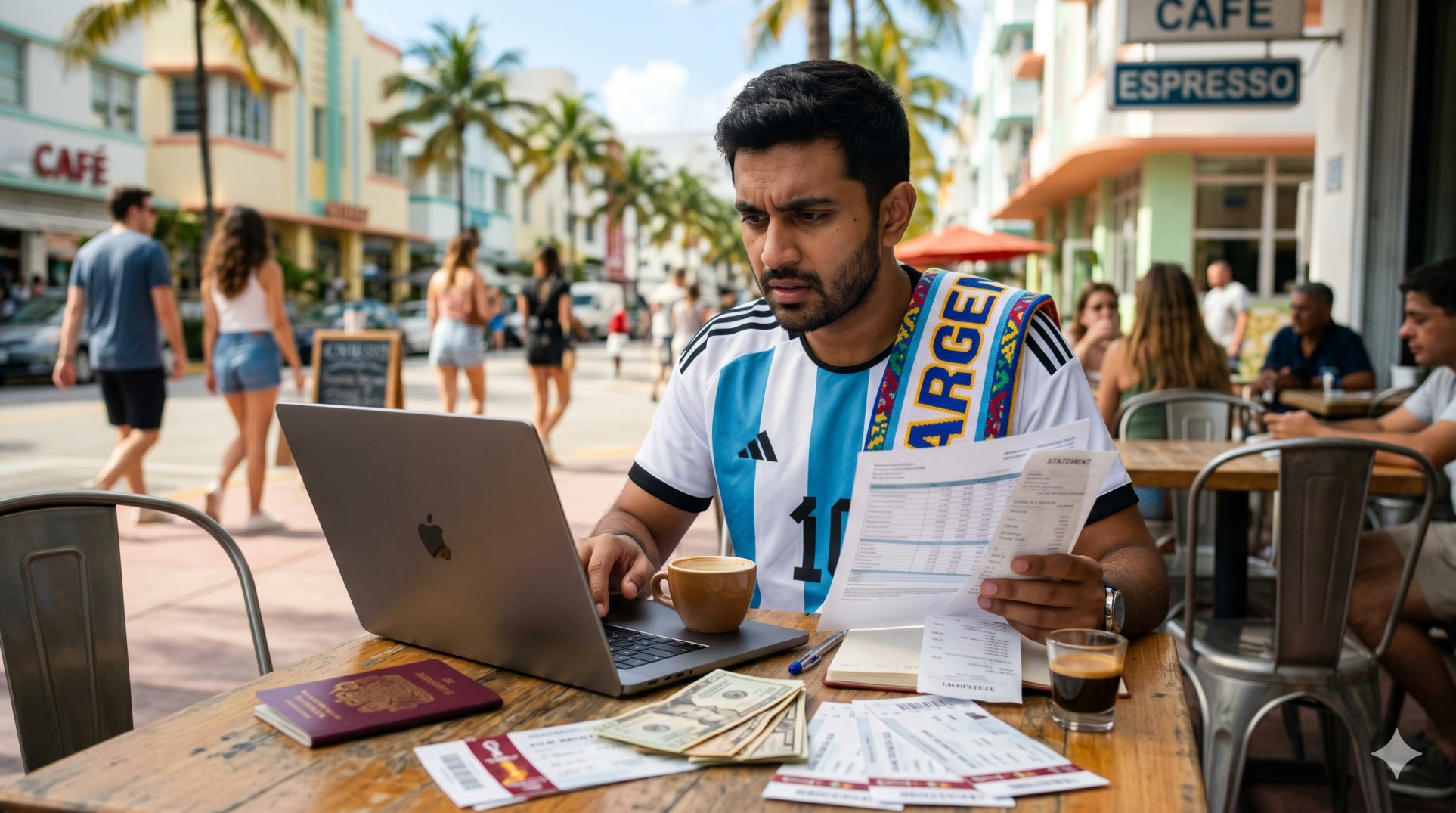
The 2026 FIFA World Cup is rapidly approaching. Millions of passionate fans will soon travel to America. Naturally, many visitors will bring their laptops along. They plan to combine thrilling football matches with a working holiday.
However, working remotely in the US carries hidden financial dangers. Specifically, the IRS enforces strict rules about earning money on American soil. Therefore, you must understand these complex tax laws before you open your laptop.
Otherwise, your fun workcation could trigger a massive, unexpected tax bill. Many international tourists accidentally violate federal regulations every year. Let us explore how to protect your income and enjoy the tournament stress-free.
The Danger of the Digital Nomad Lifestyle
Many international tourists make a very dangerous assumption. They assume their home country exclusively taxes their income. Indeed, your employer is located in Europe or South America. Furthermore, your paycheck goes directly into a foreign bank account.
Consequently, you might think the IRS does not care about your laptop work. Unfortunately, this assumption is completely wrong. The United States taxes income based on where the work is physically performed. Therefore, your physical location matters more than your employer’s location.
If you perform services while standing in America, the IRS wants a cut. Ultimately, this strict geographic rule catches thousands of digital nomads by surprise. You must change how you view your daily work tasks.
Understanding US-Sourced Income Rules
The IRS uses a specific legal concept called “US-sourced income.” Essentially, any compensation for labor performed within the United States is US-sourced. It absolutely does not matter where your boss lives.
In addition, it does not matter what currency you receive. If you type code in a Miami cafe, you are generating US-sourced income. Consequently, this income is technically subject to US federal income tax.
Furthermore, this rule applies to both traditional employees and independent freelancers. Therefore, answering work emails or designing graphics in your hotel room creates taxable events. You must track your working hours carefully.
The “Commercial Traveler Exception” Explained
Fortunately, the IRS offers a small legal loophole for short-term visitors. This specific loophole is known as the Commercial Traveler Exception. Specifically, it falls under Section 861 of the US Tax Code.
This rule allows certain non-resident aliens to work completely tax-free. However, you must meet three very strict conditions simultaneously. If you fail even one condition, the protective exception disappears instantly.
Therefore, you must memorize these rules before your flight. Let us break down the exact criteria you need to meet. Compliance requires careful planning and strict income tracking.
The Three Strict Conditions
First, you must be physically present in the US for 90 days or less. This limit applies to the entire calendar year. Second, your total US-earned compensation cannot exceed $3,000. Third, you must work for a foreign employer.
Furthermore, this foreign employer cannot be engaged in a US trade or business. If you meet all three criteria, your income remains entirely tax-free. Consequently, you do not have to file a complicated US tax return.
The Problem with the $3,000 Limit
The Commercial Traveler Exception sounds wonderful initially. However, the $3,000 limit is incredibly low for modern professionals. This specific law was written decades ago and never adjusted for inflation.
Therefore, most remote workers will exceed this limit in just a few weeks. If you earn $4,000 during your trip, the entire amount becomes taxable. Consequently, this exception rarely protects highly paid executives or successful freelancers.
The Dangers of Signing Contracts on US Soil
Beyond basic remote work, foreign business owners face even bigger risks. Many entrepreneurs will use the World Cup to network globally. You might meet potential clients in Dallas or Los Angeles.
Naturally, you will want to close lucrative deals immediately. However, signing contracts on US soil is highly dangerous. Specifically, it can trigger massive corporate tax liabilities for your home company.
The IRS monitors foreign business activities very closely. Therefore, a simple handshake agreement can cause years of legal headaches. You must separate your vacation from your corporate deal-making.
Creating a Permanent Establishment
When you conduct active business in America, you risk creating a “Permanent Establishment.” Essentially, the IRS might decide your foreign company now operates a US branch. Consequently, the US government will tax your company’s global profits.
Therefore, you must avoid conducting binding business activities. Do not sign official contracts while visiting host cities. Instead, wait until you return safely to your home country.
Ultimately, this simple delay saves your business from aggressive IRS audits. You can network and build relationships, but avoid finalizing legal paperwork. Patience is your best financial strategy.
State-Level Tax Traps in Host Cities
The United States features a complex, multi-layered tax system. You do not just worry about the federal IRS. In addition, you must worry about individual state tax agencies.
Every World Cup host city follows completely different tax rules. Therefore, your choice of destination heavily impacts your financial risk. Let us compare some popular 2026 World Cup locations.
Miami and Dallas: The Tax-Free Havens
Some states are incredibly friendly to remote workers and tourists. For example, Florida and Texas do not have a state income tax. Therefore, if you work remotely from Miami or Dallas, you avoid state-level taxes entirely.
You only have to worry about the federal IRS rules. Consequently, these specific cities are perfect for a World Cup workcation. You keep much more of your hard-earned money.
Los Angeles and New York: The Aggressive Taxers
Conversely, states like California and New York are notoriously aggressive. They impose very high state income taxes. Furthermore, they actively hunt for non-residents working within their borders.
If you work from a hotel in Los Angeles or New York, you might owe state taxes immediately. They do not always honor federal tax treaties. Therefore, digital nomads should limit their working days in these specific locations.
Real-Life Case Studies: Workcations in Action
Understanding tax law is much easier with real numbers. Therefore, let us look at three specific scenarios. These examples feature traveling football fans navigating the US system.
They will show you exactly how working remotely in the US impacts your wallet. Pay close attention to the different outcomes based on their planning.
Case Study 1: The British Coder in Miami
David is a software developer from the UK. He travels to Miami for a three-week World Cup vacation. During his trip, he works remotely for his British employer.
He earns exactly $2,500 during those three weeks. Because he stays under 90 days and earns less than $3,000, he qualifies for the Commercial Traveler Exception. Therefore, David owes zero US taxes.
He enjoys his trip completely stress-free. His careful planning and short stay protected his income perfectly. Ultimately, he returns to the UK without any IRS obligations.
Case Study 2: The German Executive in New York
Sarah is a marketing executive from Germany. She spends four weeks in New York watching matches. She works remotely from her hotel and earns $8,000 during her stay.
Because she exceeds the $3,000 limit, her income is now US-sourced. Consequently, she owes federal income tax on that $8,000. Furthermore, New York State will also demand a significant cut.
Ultimately, Sarah faces a complex and expensive tax filing next year. She will have to hire a US accountant to resolve her dual tax liabilities. Her workcation became very costly.
Case Study 3: The Spanish Freelancer in Los Angeles
Carlos is a freelance graphic designer from Spain. He visits Los Angeles for a month. While there, he meets a local business owner at a fan festival.
They agree to a $10,000 design contract. Carlos signs the contract and starts working from his LA hotel. Because he is an independent contractor engaging in US business, he triggers self-employment taxes.
Therefore, Carlos must navigate both federal and California state tax laws. He accidentally created a US trade or business. Consequently, his profits are heavily reduced by unexpected tax bills.
Actionable Precautions for Your Trip
You can easily avoid these massive headaches with proper planning. The rules are strict, but compliance is straightforward. Here are the exact steps you must take before your workcation begins.
Do not wait until you arrive at the airport. You must prepare your documents and strategy in advance. Let us review the best practices for international remote workers.
Track Your Days Carefully
First, you must track every single day you spend in the United States. Do not rely on your memory. Instead, use a calendar app to log your physical presence accurately.
This helps you monitor the 90-day limit for the Commercial Traveler Exception. Furthermore, it helps you avoid the Substantial Presence Test. If you stay over 183 days, you become a full US tax resident.
Therefore, tracking is absolutely essential. If you approach the 183-day limit, you must file Form 8840. This form proves your closer connection to your home country.
Prepare Form W-8BEN
Second, you should understand and prepare Form W-8BEN. This specific form proves your official status as a non-resident alien. If you use US-based freelance platforms, they will definitely ask for this document.
By submitting it, you prevent them from withholding 30% of your income automatically. Therefore, always keep a digital copy of this form on your laptop. It is your primary defense against backup withholding.
Understand Customs Declarations
Third, be careful when entering the country. Customs and Border Protection (CBP) officers will ask about the purpose of your trip. If you say you are “working,” they might deny your entry on a tourist visa.
Furthermore, if you carry more than $10,000 in cash to fund your trip, you must declare it. Specifically, you must file Form 105 at the airport. Failing to declare cash results in immediate confiscation.
The Power of Tax Treaties
Finally, you must check if your home country has a tax treaty with the US. Many major football nations, like the UK, Germany, and Spain, have special agreements. These treaties are incredibly powerful.
These treaties often override the strict $3,000 limit. For instance, a treaty might allow you to earn unlimited income if you stay under 183 days. However, you must be paid by a foreign employer.
Therefore, researching your specific treaty is highly profitable. It can completely eliminate your federal tax liability. Always consult the IRS treaty list before finalizing your travel plans.
Frequently Asked Questions (FAQ)
Can I work remotely in the USA on a tourist visa?
Technically, a B1/B2 tourist visa does not permit active employment in the US. While checking occasional emails is generally fine, full-time remote work violates immigration rules. Therefore, you must be extremely cautious about your activities and how you describe your trip at the border.
Do I pay US tax if I work for a foreign company in America?
Yes, you might. The IRS considers income earned while physically present in the US as US-sourced. Unless you qualify for the Commercial Traveler Exception or a specific tax treaty, that income is taxable. Your employer’s location does not protect you.
How does the IRS know I am working remotely?
The IRS shares information with Customs and Border Protection. Furthermore, if you use US bank accounts, freelance platforms, or sign US contracts, you leave a digital paper trail. Therefore, hiding your work is never a safe or legal strategy.
What is Form 8840 used for?
Form 8840 is the Closer Connection Exception Statement. You file this if you spend significant time in the US but want to prove your tax home remains abroad. Consequently, it helps you avoid worldwide taxation under the Substantial Presence Test.
Conclusion and Next Steps
The 2026 World Cup will be an incredible, once-in-a-lifetime experience. You will create lifelong memories in amazing host cities like Miami, Dallas, and Los Angeles. However, you must navigate the complex US financial system carefully.
Working remotely in the US carries hidden risks that can ruin your vacation budget. By understanding US-sourced income rules, you can protect your wallet. Furthermore, avoiding US contracts ensures your business remains safe from audits.
Did you find this guide helpful? Please share this article with your fellow traveling fans and digital nomads! In addition, bookmark this page so you can easily reference it during your trip. Finally, explore our other helpful World Cup tax and travel guides on our blog to ensure a smooth vacation.
Disclaimer: This article is strictly for educational and informational purposes only. This website does not provide tax, legal, or accounting services. The information presented here may not reflect the most current legal developments. Therefore, readers should consult a certified CPA or qualified tax professional for advice regarding their specific situations.
