
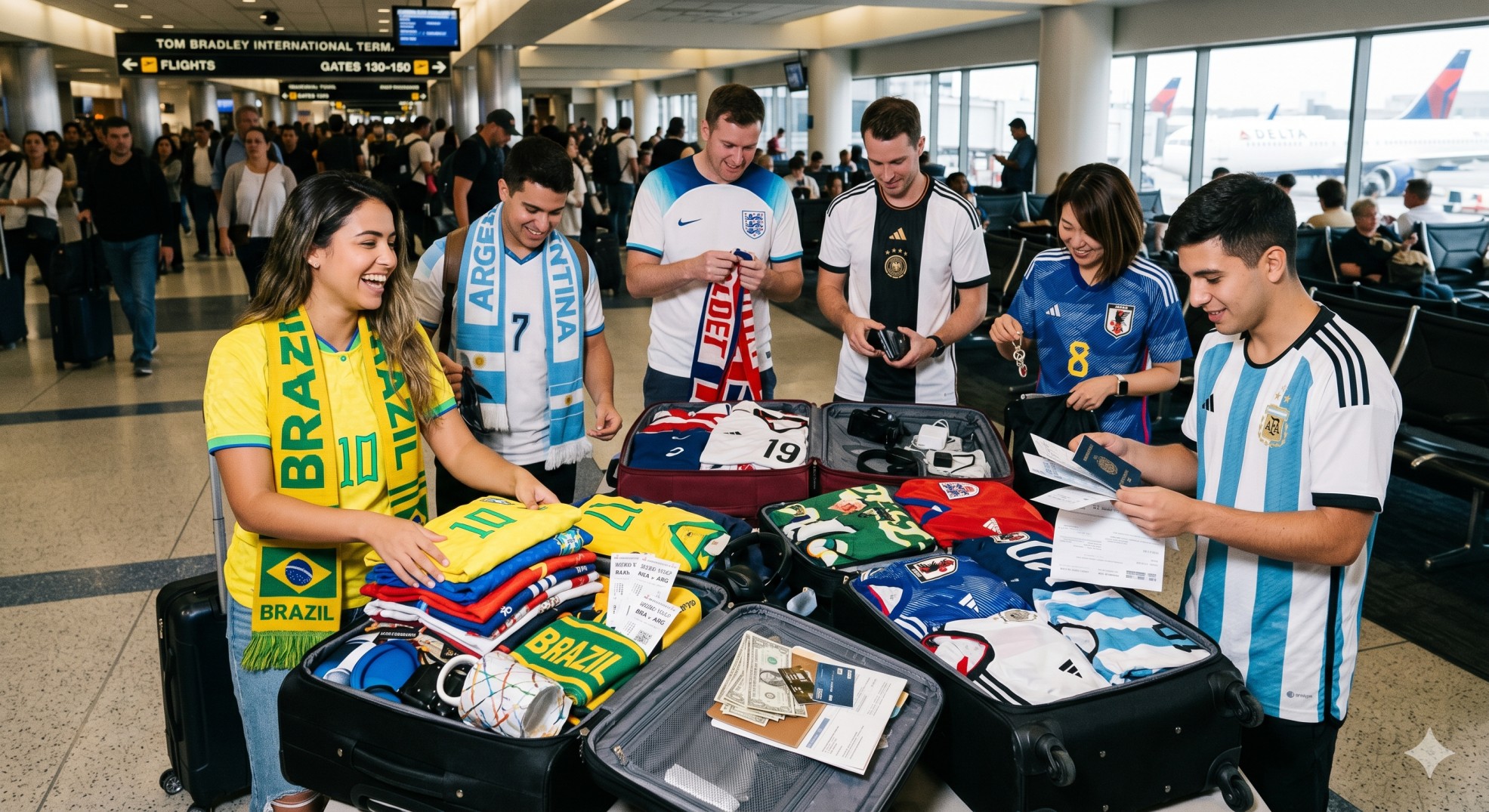
The 2026 FIFA World Cup will be an incredible global celebration. Millions of fans will travel to the United States. Naturally, you will want to buy souvenirs, electronics, and luxury fashion. However, you must understand your US customs duty free allowance before flying home.
Many international tourists worry about paying massive taxes when leaving America. They fear that customs officers will confiscate their expensive new purchases. Fortunately, the rules are highly manageable if you plan ahead.
You can easily bring your favorite merchandise home without ruining your vacation budget. However, you must understand the difference between US export rules and your home country’s import laws. Let us explore how to bring your gifts home safely and tax-free.
The Myth of US Export Taxes
Many foreign visitors completely misunderstand American tax laws. They assume the US government charges an export tax on souvenirs. Fortunately, this is a complete myth. The United States does not tax personal goods leaving the country.
Therefore, you can pack your suitcases full of official merchandise. You will not pay a federal departure tax at the airport. The US government is perfectly happy to let you take your purchased goods home.
However, this does not mean you are completely free from government rules. You still have to pass through security and customs checkpoints. Consequently, you must prepare your luggage correctly to avoid unnecessary delays.
The Real Challenge: Your Home Country
While the US lets you leave freely, your home country is waiting. Specifically, your home country enforces its own strict import taxes. Every nation has a specific duty-free allowance for returning residents.
If you exceed this monetary limit, you must pay import duties. Consequently, your cheap American electronics might suddenly become very expensive. Therefore, maximizing your exemptions requires careful packing and excellent record-keeping.
You must research your home country’s specific limits before you start shopping. Ultimately, your local government dictates how much you can bring back tax-free.
Navigating US Customs and Border Protection (CBP)
Even though there is no export tax, US Customs still watches departing flights. Specifically, Customs and Border Protection (CBP) enforces strict export rules. They want to ensure you are not smuggling restricted items.
For example, certain high-tech electronics and agricultural products face strict export bans. Furthermore, taking large quantities of alcohol or tobacco might trigger commercial export rules. Therefore, you must know what is legally allowed in your luggage.
Stick to standard consumer goods like clothing, smartphones, and official FIFA merchandise. If you buy normal retail items, CBP officers will not bother you. Consequently, your departure will be smooth and stress-free.
The $10,000 Cash Rule and FinCEN Form 105
Furthermore, the US government strictly monitors physical currency. You can legally take unlimited cash out of the United States. However, if you carry more than $10,000, you must declare it.
Specifically, you must file FinCEN Form 105 before your departure. This rule applies to all foreign and domestic currencies combined. If you fail to file this form, CBP officers will confiscate your money.
Therefore, always declare your leftover vacation cash. Filing the form is completely free and does not trigger any taxes. It simply proves to the government that you are not laundering money.
How to Maximize Your Duty-Free Exemptions
You want to bring gifts home without paying massive import taxes. Therefore, you must use smart packing strategies. Every country sets a specific monetary limit for tax-free imports.
For instance, the UK allows returning citizens to bring £390 worth of goods. If you stay under this limit, you owe nothing. Let us review how to protect your shopping budget and maximize your limits.
Keep Your Receipts Organized
First, you must keep every single shopping receipt. When you buy official merchandise in Dallas or Miami, save the paper receipt. Customs officers in your home country will ask for proof of purchase.
If you cannot provide a receipt, they will estimate the value. Usually, their estimate is much higher than what you actually paid. Consequently, you will pay higher taxes. Therefore, keep a dedicated folder for all your American receipts.
Remove Packaging for Personal Items
Second, you should remove the original packaging from personal items. If you buy a new jacket in New York/New Jersey, take off the price tags. Wear the jacket during your trip.
This proves the item is for personal use, not for commercial resale. Customs officers heavily scrutinize brand-new, boxed items. Ultimately, packing items as personal belongings reduces your risk of taxation.
Do Not Combine Allowances
Third, understand how family allowances work. Most countries do not allow you to combine individual exemptions for a single expensive item. For example, a husband and wife cannot combine their allowances to import one expensive laptop.
The laptop will be taxed based on its full value. Therefore, you should distribute smaller gifts evenly among your family members’ suitcases. This strategy ensures everyone stays under their individual limit.
Mailing Gifts Home vs. Carrying Them
Sometimes, your suitcase simply becomes too full. Consequently, you might consider mailing your gifts back to your home country. However, mailing packages triggers completely different customs rules.
When you mail a package, your home country applies a different duty-free threshold. Usually, the allowance for mailed gifts is much lower than the allowance for passenger luggage. Therefore, mailing items is often a costly mistake.
Furthermore, you will have to pay expensive international shipping fees. Therefore, carrying the items on your flight is almost always the most tax-efficient strategy. Buy an extra suitcase if necessary.
Shopping in World Cup Host Cities
The 2026 World Cup features amazing host cities with incredible shopping districts. Naturally, you will want to explore these retail havens. However, your shopping location impacts your overall budget.
Let us look at some popular destinations and how they affect your purchasing power. Smart geographic shopping is a brilliant financial strategy.
Luxury Shopping in Los Angeles and Miami
Los Angeles and Miami offer world-class luxury boutiques. You can find exclusive designer brands and high-end electronics. However, remember that these states charge local sales taxes when you buy the items.
The US does not refund these local sales taxes at the airport. Therefore, factor this initial cost into your overall duty-free allowance calculations. A $1,000 laptop will actually cost you closer to $1,090.
Tax-Free Shopping Near Philadelphia
Conversely, you can shop smarter on the East Coast. If you attend matches in Philadelphia or New York, take a trip to Delaware. Delaware charges zero state sales tax.
Consequently, you save money upfront. This allows you to buy more items while staying under your home country’s import limit. Ultimately, avoiding US sales tax maximizes your international exemptions.
Real-Life Case Studies: Bringing Merchandise Home
Understanding customs rules is much easier with real numbers. Therefore, let us examine three realistic scenarios involving traveling football fans. These examples highlight the importance of knowing your US customs duty free allowance.
Case Study 1: The British Fan in Miami
Thomas travels from the UK to Miami for the tournament. He buys $450 worth of official football jerseys and souvenirs. The UK duty-free allowance is £390 (approximately $490 USD).
Because Thomas kept all his receipts, he proves his total is under the limit. Consequently, he walks through the “Nothing to Declare” channel in London. He pays zero import taxes and enjoys his souvenirs.
Case Study 2: The German Tech Buyer in Los Angeles
Lukas visits Los Angeles and buys a new laptop for $1,500. The German duty-free allowance for air travelers is €430 (approximately $460 USD). Clearly, the laptop exceeds this limit.
Lukas must declare the laptop upon arriving in Frankfurt. He pays the standard 19% German VAT on the laptop’s value. Because he declared it honestly, he avoids massive smuggling fines. He simply pays the required tax and goes home.
Case Study 3: The Mexican Family in Dallas
Maria and her husband travel to Dallas with their two children. They buy $1,000 worth of clothing and toys. Mexico allows returning citizens arriving by air a $500 exemption per person.
Because they have four family members, their total family allowance is $2,000. They distribute the receipts and items among their suitcases. Therefore, they easily clear Mexican customs without paying any import duties.
Important IRS and CBP Forms to Remember
While leaving the US is generally easy, paperwork is sometimes required. You must familiarize yourself with specific government forms. Ignorance of these forms can lead to confiscated goods or delayed flights.
Let us review the essential documents you might encounter at the airport. Preparation is the key to a smooth departure.
FinCEN Form 105 for Large Cash Amounts
As mentioned earlier, FinCEN Form 105 is absolutely critical. If you leave the US with more than $10,000 in currency, you must file this. This includes US dollars, foreign currency, and traveler’s checks.
You present this form to CBP officers before boarding your departure flight. It does not trigger any taxes. It simply proves you are not laundering money.
CBP Form 4457 for Registering Your Gear
Furthermore, you should protect the expensive gear you brought into the US. If you travel with a high-end camera, you might face questions when returning home. Your home country might think you bought it in America.
To prevent this, carry the original purchase receipts from your home country. This proves you already owned the item before your vacation. Consequently, you will not be taxed twice for the same camera.
Frequently Asked Questions (FAQ)
Do I pay US export taxes on souvenirs?
No, the United States does not charge export taxes on personal merchandise. You can freely take your purchased souvenirs, clothing, and electronics out of the country. However, you must still comply with your home country’s import tax laws upon arrival.
Can I get a US sales tax refund at the airport?
Generally, no. The US does not have a national VAT system. Therefore, there are no federal tax refund desks at airports. The only exception is the state of Texas, which offers a specific state sales tax refund for qualifying purchases.
What happens if I do not declare items in my home country?
Failing to declare items that exceed your duty-free allowance is illegal. If customs officers search your bags and find undeclared luxury goods, they will confiscate them. Furthermore, they will charge you massive financial penalties. Therefore, honesty is always the best policy.
Does the $10,000 cash limit apply to families?
Yes, the $10,000 reporting limit applies to individuals and families traveling together. You cannot split $15,000 among three family members to avoid the paperwork. This is a federal crime called structuring. You must declare the total family amount on a single FinCEN Form 105.
Conclusion and Next Steps
The 2026 World Cup will be an unforgettable adventure. You will create lifelong memories exploring amazing American cities. Furthermore, you will likely buy fantastic merchandise to remember your trip.
By understanding your US customs duty free allowance, you can shop with confidence. Remember to keep your receipts, remove packaging from personal items, and declare large amounts of cash. Therefore, you will breeze through customs and enjoy your souvenirs stress-free.
Did you find this customs and travel guide helpful? Please share this article with your fellow traveling fans! In addition, bookmark this page so you can easily reference it during your trip. Finally, explore our other helpful World Cup tax and travel guides on our blog to ensure a perfect vacation.
Disclaimer: This article is strictly for educational and informational purposes only. This website does not provide tax, legal, or accounting services. The information presented here may not reflect the most current legal developments. Therefore, readers should consult a certified CPA or qualified tax professional for advice regarding their specific situations.
