
Understanding Topic no. 305, Recordkeeping is the foundation of audit defense and accurate tax preparation for every American household and business owner. Under Internal Revenue Code (IRC) Section 6001, every taxpayer is legally required to maintain books, receipts, canceled checks, and digital documentation sufficient to establish the exact gross income, deductions, credits, and exclusions reported on a federal tax return.
In late 2026, official IRS outreach on social media (@IRSnews) and IRS News Release IR-2026-128 emphasized a simple message ahead of the 2027 filing season: year-round tax organization eliminates filing delays, prevents refund holds, and protects you if your return is selected for examination. With the One Big Beautiful Bill Act (OBBBA) introducing major changes for Tax Year 2026—including a higher $2,000 reporting threshold for Forms 1099-NEC and 1099-MISC, permanent 100% bonus depreciation, a $2,560,000 Section 179 cap, and new individual deductions for qualified tips, overtime, and auto loan interest—your paper and digital trail matters more than ever.
This guide organizes the official rules from IRS Topic no. 305, Recordkeeping and Publication 583 (Starting a Business and Keeping Records) into a logical, step-by-step framework. You will learn why records matter, what documents to save, how to record business transactions, how to satisfy the statutory burden of proof, and the exact statutes of limitations governing when you can safely shred old files.
⚡ Executive Summary: Key 2026 Tax Rules at a Glance
- Standard 3-Year Audit Window: Under IRC Section 6501, you must keep supporting tax records for at least 3 years from the date you filed your 2026 return (or April 15, 2027, if filed early), or 2 years from the date the tax was paid, whichever is later.
- Extended 4-, 6-, and 7-Year Retention Triggers: Employment tax records require a minimum 4-year retention period; omitting more than 25% of gross income (or over $5,000 in foreign financial asset income) triggers a 6-year statute; and claims for bad debt deductions or worthless securities require keeping records for 7 years.
- 2026 Post-OBBBA Documentation Rules: Even though the 2026 Form 1099-NEC and 1099-MISC reporting threshold rose from $600 to $2,000, business owners and freelancers must still track 100% of gross receipts and substantiate expenses on Schedule C, Form 1065, Form 1120-S, or Form 1120.
- Electronic Storage Compliance: Per IRS Revenue Procedure 97-22, scanned digital receipts and cloud accounting ledgers carry the exact same legal weight as paper originals, provided your system indexes files legibly and can reproduce hard copies upon an IRS examiner’s request.
Table of Contents
- ⚡ Executive Summary: Key 2026 Tax Rules at a Glance
- Why Should I Keep Records? Preparing for the 2027 Filing Season
- What Kinds of Records Should I Keep for 2026?
- How Should I Record My Business Transactions?
- What Is the Burden of Proof? Substantiating Your 2026 Tax Return
- How Long Should I Keep Records? Statutes of Limitations Explained
- How Long Should I Keep Employment Tax Records?
- Specific Retention Rules: Property, Healthcare Insurance, and Business Income
- Step-by-Step Guide to Building an Audit-Proof 2026 Recordkeeping System
- 2026 Real-World Recordkeeping & Audit Scenarios
- State Record Retention Rules vs. Federal IRS Guidelines
- Frequently Asked Questions About Topic No. 305, Recordkeeping
- Final Takeaways on Organizing Your 2026 Tax Records
Why Should I Keep Records? Preparing for the 2027 Filing Season
To answer why should I keep records? directly: well-organized records allow you to monitor business progress, prepare financial statements, identify income sources, track deductible expenses and property basis, file an accurate 2026 tax return in 2027, and prove every reported line item during an IRS audit.
In its recent @IRSnews social media campaign and Publication 5349-A (Year-Round Tax Planning is for Everyone), the IRS highlighted that disorganized paperwork is the single biggest cause of filing errors, math notices, and delayed tax refunds. When you wait until April 2027 to piece together twelve months of 2026 financial activity, you risk two expensive mistakes: overlooking legitimate tax deductions (causing you to overpay your taxes) or claiming unsubstantiated write-offs that get disallowed with a 20% accuracy-related penalty under IRC Section 6662.
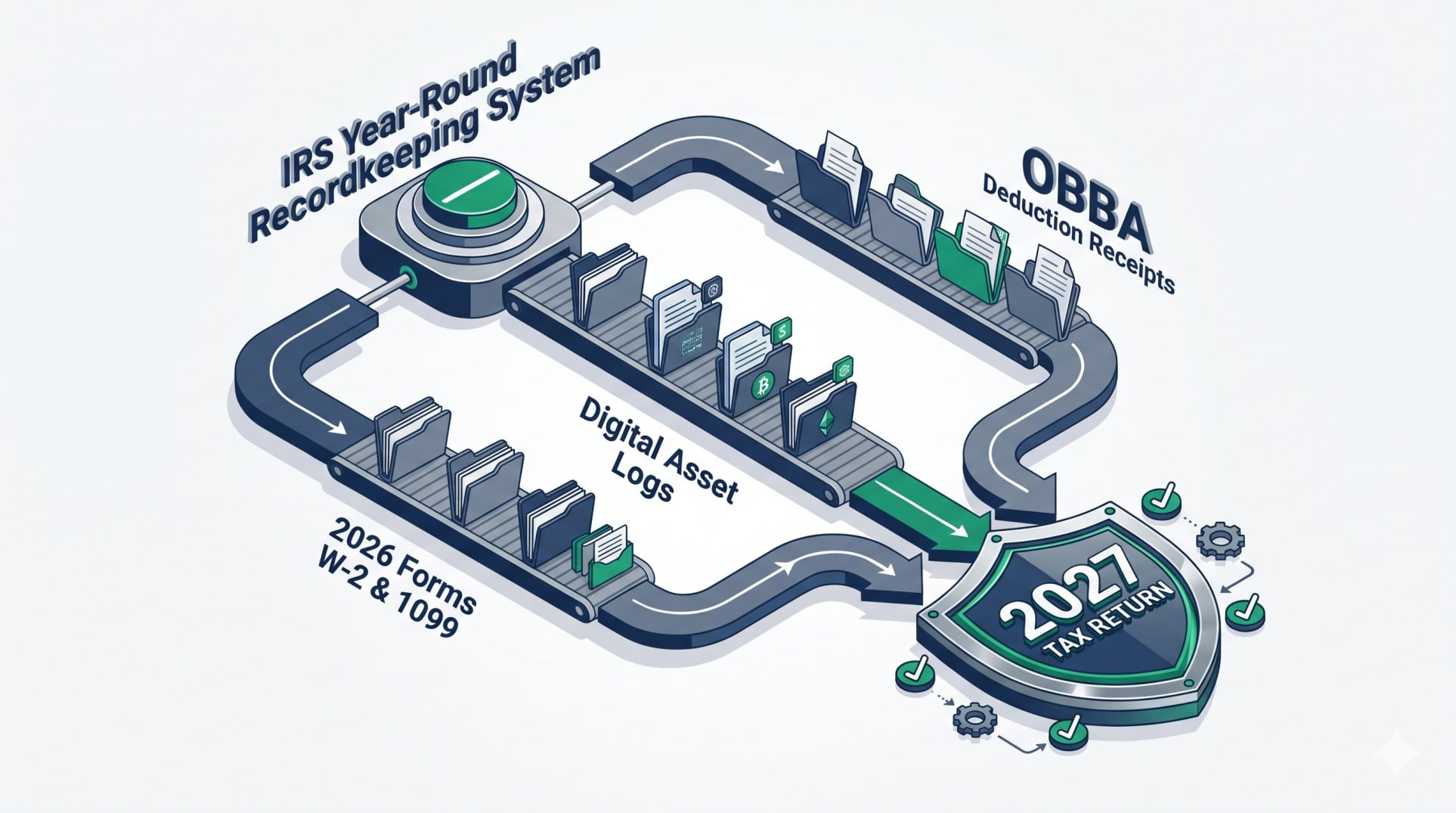
Whether you file an individual Form 1040 or manage a multi-member business entity, IRS guidance breaks the core benefits of systematic recordkeeping into seven practical pillars:
- Monitor the Progress of Your Business: Monthly profit-and-loss statements and balance sheets show whether your venture is growing, which product lines are profitable, and where overhead costs need trimming before year-end.
- Prepare Accurate Financial Statements: Banks, SBA lenders, and outside investors require clean income statements and balance sheets before extending business credit lines or commercial mortgages.
- Identify Sources of Income: Taxpayers receive money and property from dozens of channels—W-2 wages, client invoices, bank interest, peer-to-peer payment apps, crypto sales, and nontaxable loans or gifts. Detailed deposit logs separate taxable gross income from nontaxable transfers so you never pay tax twice on your own money.
- Keep Track of Deductible Expenses: If you fail to log an expense when it happens, you will almost certainly forget it when preparing your return in 2027. Contemporaneous tracking captures every deductible dollar.
- Keep Track of Your Basis in Property: Your “basis” is your capital investment in an asset for tax purposes. Without original purchase contracts, improvement receipts, and prior depreciation schedules, you cannot accurately compute your taxable capital gain or deductible loss when you sell real estate, stocks, or business equipment.
- Prepare Your Tax Returns Efficiently: When your 2026 forms and receipts sit in categorized folders, completing Form 1040, Schedule C, or corporate returns takes hours instead of weeks.
- Support Items Reported on Your Tax Returns: If the IRS sends an automated inquiry (such as a CP2000 underreporter notice) or selects your return for examination, organized records let you resolve the inquiry immediately.
What Kinds of Records Should I Keep for 2026?
When asking what kinds of records should I keep?, the IRS states that you must keep all receipts, canceled checks, statements, and source documents that substantiate any item of income, deduction, or credit appearing on your 2026 tax return, tailored to your specific household or industry.
Except in specific statutory areas—such as vehicle mileage, travel, gifts, and listed property under IRC Section 274(d)—federal tax law does not mandate a rigid, one-size-fits-all recordkeeping format. You can use cloud accounting software, encrypted spreadsheets, or physical folders, provided your records clearly reflect your true income and expenses.
1. Essential Individual Taxpayer Records (2026 Post-OBBBA Checklist)
In News Release IR-2026-128, the IRS urged individual filers to establish a centralized folder for 2026 documents as they arrive in the mail or via online portals. Even if you claim the 2026 standard deduction ($16,100 for Single or Married Filing Separately; $32,200 for Married Filing Jointly; $24,150 for Head of Household, plus the temporary $6,000 bonus deduction for qualifying seniors age 65 and older), you still need documentation for above-the-line adjustments, OBBBA deductions, and tax credits:
- Income Statements: All 2026 Forms W-2, 1099-NEC, 1099-MISC, 1099-K (for third-party payment network transactions exceeding the statutory $20,000 and 200-transaction federal threshold), 1099-INT, 1099-DIV, 1099-B, 1099-R, SSA-1099, and Schedule K-1 packages from partnerships, S-Corporations, or trusts.
- 2026 OBBBA Special Deduction Records: If you claim the new 2026 deductions enacted under the One Big Beautiful Bill Act—such as the deduction for qualified tips, qualified overtime compensation, or up to $10,000 in qualified passenger vehicle loan interest (for new US-assembled personal vehicles)—keep your year-end pay stubs, employer W-2 verification breakdowns, VIN documentation, and lender interest statements.
- Above-the-Line & Itemized Deduction Proof: Form 1098 (mortgage interest), property and state tax receipts (supporting the expanded $40,400 2026 SALT deduction cap on Schedule A), Form 5498-SA and Form 1099-SA for Health Savings Accounts (HSAs), student loan interest statements (Form 1098-E), and written acknowledgments for charitable contributions.
- Digital Asset & Cryptocurrency Logs: Complete transaction histories showing dates acquired, cost basis in U.S. dollars, dates sold or exchanged, wallet-to-wallet transfer fees, and Form 1099-DA statements issued by digital asset brokers for 2026 dispositions.
- Prior Returns & IRS Correspondence: Copies of your prior federal and state returns (especially if you have capital loss carryforwards, net operating losses, or adoption credit carryforwards) and all official IRS notices or letters.
For a deeper breakdown of how individual write-offs work alongside the standard deduction, see our complete guide to 2026 standard vs. itemized deductions.
2. Essential Business Supporting Documents
If you operate a business, every purchase, sale, payroll run, and asset acquisition generates a “supporting document.” Under IRS Publication 583, you must retain four primary buckets of business source documents:
- Gross Receipts (Proof of Income): Cash register tapes, POS terminal summaries, deposit information (cash and credit sales), receipt books, invoices billed to clients, and Forms 1099-NEC or 1099-K received.
- Purchases & Cost of Goods Sold (COGS): Canceled checks, cash register tape receipts, credit card sales slips, and vendor invoices showing the amount paid and confirming the items were bought for resale or raw materials for manufacturing.
- Operating Expenses: Canceled checks, bank/ACH transfer confirmations, petty cash slips for small cash payments, vendor bills, and credit card receipts that identify the payee, amount, proof of payment, date, and description of the item or service purchased.
- Assets & Capital Equipment: Purchase invoices, closing statements, improvement receipts, and sales contracts demonstrating when and how you acquired or disposed of machinery, buildings, or vehicles, including records substantiating 2026 Section 179 expensing (up to $2,560,000) or 100% bonus depreciation on Form 4562.
How Should I Record My Business Transactions?
To answer how should I record my business transactions?, the IRS requires you to summarize your supporting documents in systematic books—specifically journals and ledgers—using a consistent accounting method (Cash or Accrual) and dedicated business bank accounts that clearly reflect your income and expenses.
Keeping a pile of loose receipts in an envelope does not satisfy IRS bookkeeping standards. Your supporting documents must be recorded chronologically and categorized into formal books of account, whether you use cloud accounting software (such as QuickBooks, Xero, or Wave) or a double-entry spreadsheet system.
1. Journals, Ledgers, and Separate Bank Accounts
According to the official IRS Small Business Recordkeeping guide, a complete bookkeeping system relies on three core components:
- Journals: A journal is the book or digital register where you record each business transaction chronologically as it occurs, using the data from your supporting receipts and invoices.
- Ledgers: A ledger is a collection of accounts (your Chart of Accounts) that takes the chronological entries from your journals and organizes them by category—such as Gross Sales, Advertising, Rent, Utilities, Payroll, and Cost of Goods Sold. These ledger totals feed directly onto the lines of your tax return.
- Separate Business Bank and Credit Card Accounts: Commingling personal grocery trips and family vacations with business revenue in a single checking account is a major IRS audit trigger. Maintaining a dedicated business checking account and business credit card creates an automatic, third-party bank audit trail.
2. Cash vs. Accrual Accounting Method Rules for 2026
How and when you record a transaction in your books depends on your accounting method:
- Cash Method: Most sole proprietors, freelancers, and small pass-through entities use the cash method. You record income only when cash, checks, or digital payments are actually or constructively received, and you deduct expenses in the tax year you actually pay them.
- Accrual Method: Under the accrual method, you record income when you earn it (upon completing the service or shipping the product and issuing an invoice) and deduct expenses when you incur the liability, regardless of when the cash changes hands. Under IRC Section 448 and Revenue Procedure 2025-32 inflation adjustments, C-Corporations and partnerships with a C-Corporation partner must generally use the accrual method for 2026 if their average annual gross receipts for the prior three tax years exceed the $32,000,000 small business gross receipts threshold.
3. Bookkeeping Nuances Across Business Entity Structures
Your legal entity dictates how closely the IRS scrutinizes your balance sheet and equity ledgers:
- Sole Proprietorships & Single-Member LLCs (Schedule C, Form 1040): You report income and expenses on Schedule C. You do not file a balance sheet with the IRS, making clean separation between personal draws and business operating expenses critical during an examination.
- Partnerships & Multi-Member LLCs (Form 1065 & Schedule K-1): Partnerships must track each partner’s tax basis capital account. If the partnership’s total receipts for 2026 are $250,000 or more, or total assets at year-end are $1 million or more, the partnership must complete Schedule L (Balance Sheets per Books) and Schedule M-1/M-2 on Form 1065.
- S-Corporations (Form 1120-S & Schedule K-1): S-Corp owners must maintain payroll records proving they paid themselves “reasonable compensation” via Form W-2 before taking shareholder distributions. Furthermore, S-Corp shareholders must personally maintain cumulative stock and debt basis records on IRS Form 7203 to prove that distributions are tax-free or that pass-through losses are deductible.
- C-Corporations (Form 1120): C-Corporations face strict double-entry bookkeeping requirements, corporate minute book retention for dividend declarations and executive compensation, and full balance sheet reporting (Schedule L) once receipts and assets reach the $250,000 threshold.
If you are weighing whether to upgrade your business structure, read our 2026 comparison of LLC vs. S-Corporation tax rules.
What Is the Burden of Proof? Substantiating Your 2026 Tax Return
When taxpayers ask what is the burden of proof?, the answer is clear: under federal tax law, the responsibility to prove (substantiate) every entry, deduction, credit, and statement made on your tax return rests squarely on you, the taxpayer.
Under Tax Court Rule 142(a), any notice of deficiency issued by the IRS carries a legal presumption of correctness. That means the IRS does not have to prove your deduction is fake—you must prove your deduction is real. While IRC Section 7491 allows the burden of proof to shift to the IRS in a court proceeding, that shift only happens if you first introduce credible evidence, comply with all substantiation requirements of the Internal Revenue Code, maintain all required records, and cooperate with reasonable IRS requests for meetings and documents.
Documentary Evidence vs. Bank Statements Alone
A common misconception is that a monthly credit card statement or a canceled check is enough to survive an IRS audit. It is not. According to IRS Publication 583, a canceled check or bank statement proves only that money left your account—it does not prove what you bought or whether the item was an ordinary and necessary business expense under IRC Section 162. To meet your burden of proof, you must pair your payment proof (canceled check, ACH confirmation, or credit card statement) with an itemized invoice, sales slip, or receipt from the vendor showing the exact items or services purchased.
Strict Substantiation Under IRC Section 274(d) vs. The Cohan Rule
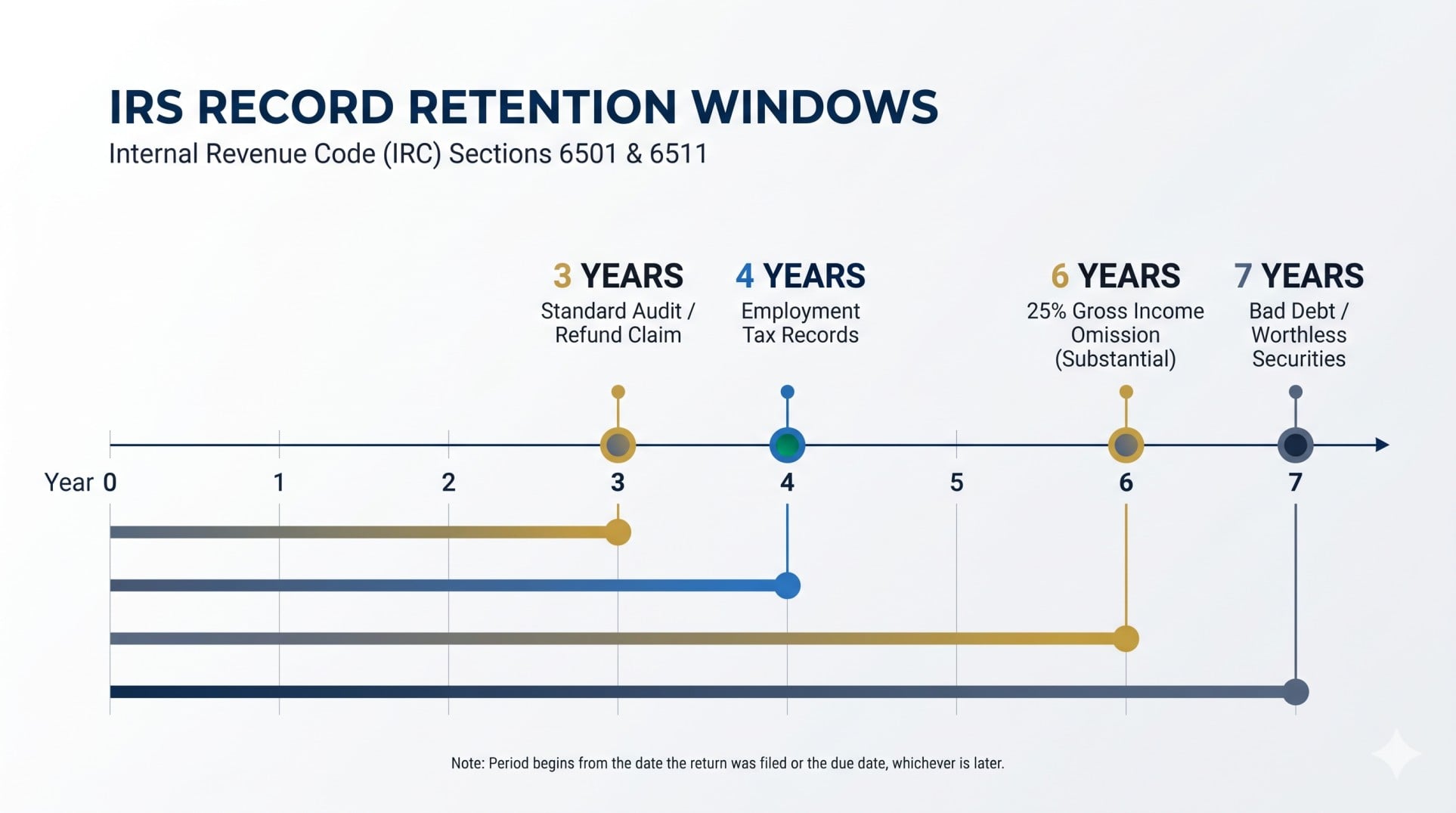
For general business overhead (like office supplies or utilities), if your records were accidentally destroyed in a flood or fire, tax courts occasionally allow taxpayers to estimate reasonable expenses using credible secondary evidence—a legal doctrine known as the Cohan rule (from Cohan v. Commissioner). However, Congress explicitly outlawed the Cohan rule for four specific categories of expenses under IRC Section 274(d):
- Business Travel Away From Home (airfare, lodging, and 50% deductible business travel meals).
- Business Gifts (capped at $25 per recipient per year).
- Business Vehicle Expenses & Mileage (whether claiming actual expenses or the 2026 IRS standard mileage rate).
- Listed Property (vehicles and property lending itself to personal use).
Zero-Tolerance Audit Rule for Section 274(d) Expenses: You cannot estimate vehicle mileage, travel, or business meal expenses. To satisfy the burden of proof under IRC Section 274(d), you must maintain a contemporaneous log (created at or near the time of the expense) plus documentary receipts (required for all lodging and any single expenditure of $75 or more) proving four mandatory elements: (1) the exact Amount, (2) the Time and Date, (3) the Place or Destination, and (4) the specific Business Purpose (and business relationship of the person entertained or dining with you).
How Long Should I Keep Records? Statutes of Limitations Explained
To answer how long should I keep records?, the IRS states under Topic no. 305, Recordkeeping that you must retain documents supporting income, deductions, or credits until the “period of limitations” expires for that specific tax return—generally 3 years, though specific situations require 4, 6, or 7 years, or indefinite retention.
The “period of limitations” is the statutory time window during which you can amend your tax return on Form 1040-X to claim an additional credit or refund, or during which the IRS can audit your return and assess additional tax. Note that if you file your tax return before the April deadline (for example, e-filing your 2026 return in February 2027), the IRS treats the return as filed on the official due date (April 15, 2027) when starting the clock. If you file on extension (up to October 15, 2027), the clock starts on the actual date you file.
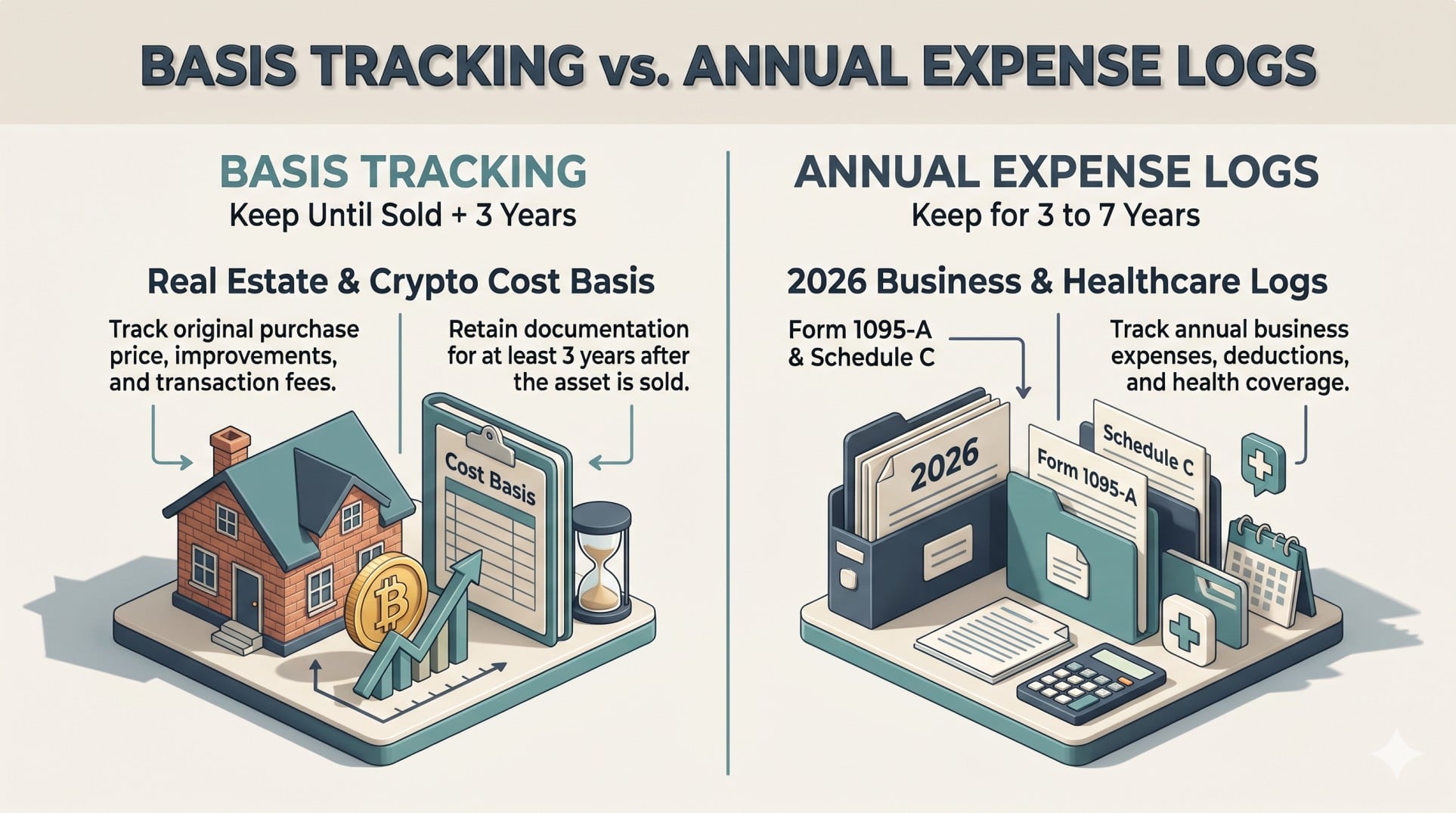
Below are the exact statutory timeframes listed in IRS Topic no. 305, Recordkeeping:
Period of Limitations for Assessment of Tax:
Under IRC Section 6501, the IRS’s legal window to examine your return and assess additional tax owed follows three distinct rules:
- 3 Years: For assessment of tax you owe, this period is generally 3 years from the date you filed the return. Returns filed before the due date are generally treated as filed on the due date. For a 2026 Form 1040 filed on or before April 15, 2027, the standard assessment window closes on April 15, 2030.
- 6 Years (Substantial Omission or Foreign Assets): If you don’t report income that you should have reported, and it is more than 25% of the gross income shown on the return, or if the omitted income is attributable to specified foreign financial assets (such as those reportable on Form 8938) and is more than $5,000, the time for the IRS to assess tax jumps to 6 years from the date you filed the return (closing April 15, 2033, for a timely filed 2026 return). Furthermore, under IRC Section 6501(e)(1)(B), an overstatement of your cost basis when selling property counts as an omission of gross income that can trigger this 6-year audit window!
- No Limit (Indefinite Retention): There is no period of limitations to assess tax when you file a fraudulent return or when you do not file a valid return at all. If you never file a required tax return for a given year, the IRS audit clock never starts ticking, and you must keep your records indefinitely.
Period of Limitations for Refund Claims:
Under IRC Section 6511, the period of limitations for filing an amended return to claim a credit or refund follows these exact rules:
- The Later of 3 Years or 2 Years After Tax Was Paid: For filing a claim for credit or refund, generally the period to make the claim is 3 years from the date you filed the original return (or the due date if filed early) or 2 years from the date the tax was paid, whichever is later. If no return was filed, the period to file a claim is strictly limited to 2 years from the date the tax was paid.
- 7 Years (Bad Debt or Worthless Securities): For filing a claim for credit or refund due to an overpayment resulting from a bad debt deduction (under IRC Section 166) or a loss from worthless securities (under IRC Section 165(g)), the time to make the claim is extended to 7 years from the date the return was due (until April 15, 2034, for a 2026 return due April 15, 2027).
Use this master reference table to determine the exact disposal dates for your 2025 and 2026 tax documents:
| IRS Topic No. 305 Situation / Record Category | Statutory Retention Period (IRC Sec. 6501 / 6511) | Earliest Safe Disposal Date for Tax Year 2025 Return (Filed April 15, 2026) | Earliest Safe Disposal Date for Tax Year 2026 Return (Filed April 15, 2027) |
|---|---|---|---|
| Standard Tax Return & Supporting Receipts (No fraud; no >25% omission) | 3 years from filing date (or due date if filed early), or 2 years from payment | After April 15, 2029 | After April 15, 2030 |
| Employment Tax Records (Forms 941, 940, W-2, W-4, tips, payroll deposits) | At least 4 years after the tax becomes due or is paid, whichever is later | After April 15, 2030 (for Q4/annual 2025 filings) | After April 15, 2031 (for Q4/annual 2026 filings) |
| Unreported Income >25% of Gross Income (Or >$5,000 omitted foreign asset income) | 6 years from the date the return was filed | After April 15, 2032 | After April 15, 2033 |
| Claim for Loss from Worthless Securities or Bad Debt Deduction | 7 years from the date the return was due | After April 15, 2033 | After April 15, 2034 |
| Property & Asset Basis Records (Real estate, stocks, crypto, business equipment) | 3 to 6 years AFTER the tax year the property is sold or disposed of in a taxable event | 3+ years after the return reporting the future sale is filed | 3+ years after the return reporting the future sale is filed |
| Unfiled Tax Return or Fraudulent Return | No limit (Keep Indefinitely) | Never (Keep Permanently) | Never (Keep Permanently) |
How Long Should I Keep Employment Tax Records?
To answer how long should I keep employment tax records?, the IRS mandates that if you have employees, you must keep all employment tax records for at least 4 years after the date the tax becomes due or is paid, whichever is later.
Whether you run a corporation with fifty employees or employ a single household nanny reported on Schedule H, employment taxes carry heightened IRS enforcement because FICA withholdings include “trust fund” taxes held on behalf of the government. Under IRS Publication 15 (Circular E, Employer’s Tax Guide), your 4-year employment record archive must contain these specific items:
- Your Employer Identification Number (EIN) and copies of all filed employment tax returns—including quarterly Forms 941, annual Form 940 (FUTA), Form 944, and copies of all Forms W-2 and Form W-3 transmittals.
- Wage, Annuity, and Pension Payment Logs: The exact dollar amounts and dates of all wage payments, plus the fair market value of any in-kind fringe benefits provided.
- Employee Tip Reports & OBBBA Overtime/Tip Logs: Copies of written tip reports submitted by employees (such as Form 4070) and detailed payroll registers tracking qualified tips and qualified overtime compensation required for 2026 W-2 reporting under the One Big Beautiful Bill Act.
- Employee Personal Information & Withholding Certificates: Every employee’s legal name, current address, Social Security Number, occupation, dates of employment, and signed Forms W-4.
- Tax Deposit Proofs: Dates and amounts of all federal tax deposits made via the Electronic Federal Tax Payment System (EFTPS), along with records of fringe benefit exclusions and substantiation for any employer tax credits claimed.
Specific Retention Rules: Property, Healthcare Insurance, and Business Income
Under Topic no. 305, Recordkeeping, the IRS highlights three specialized record categories that require extra attention beyond ordinary receipts: property records, healthcare insurance documentation, and business income and expenses.
Throwing these specific files away after three years is a costly mistake. Here is how the IRS instructs taxpayers to handle each category for Tax Year 2026 and beyond.
Property Records
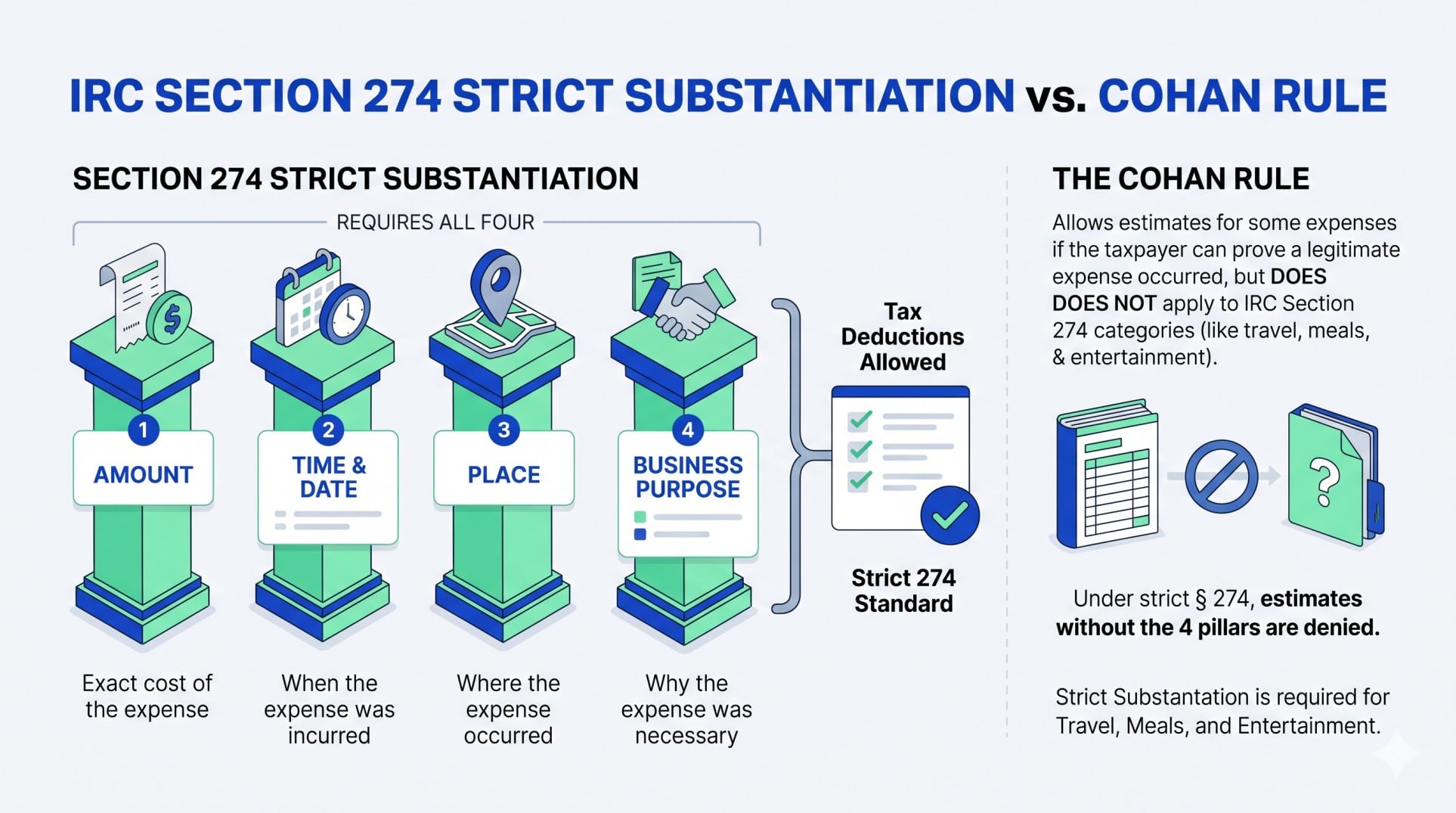
You must keep records relating to property until the period of limitations expires for the year in which you dispose of the property in a taxable disposition. You need these historical documents to calculate your depreciation, amortization, or depletion deductions while you own the asset, and to figure your adjusted cost basis for computing taxable gain or loss when you eventually sell or exchange the property.
- Real Estate & Home Improvements: If you bought a rental property or primary residence in 2012, remodeled the kitchen in 2019, installed a new roof in 2026, and sell the property in 2031 (reported on your 2031 tax return filed in April 2032), you must keep the 2012 closing statement, the 2019 remodel invoices, and the 2026 roof receipts until at least April 15, 2035 (3 years after the 2031 return is filed).
- Nontaxable Exchanges (Section 1031 Like-Kind Exchanges): If you swap real property in a tax-deferred Section 1031 exchange on Form 8824, your basis in the old property carries over to the new replacement property. You must retain the records for both the old property and the new property until the period of limitations expires for the year you finally sell the replacement property in a fully taxable sale!
- Inherited & Gifted Property: Keep estate valuation appraisals (Form 706 or date-of-death fair market value appraisals proving stepped-up basis under IRC Section 1014) or donor cost basis records for gifted assets (IRC Section 1015).
Healthcare Insurance
Under Topic no. 305, Recordkeeping, you should keep records of your own and your family members’ healthcare insurance coverage alongside your tax files. Specifically:
- Premium Tax Credit (PTC) Reconciliation: If you or a family member enrolled in health insurance through the Health Insurance Marketplace in 2026, you must keep Form 1095-A (Health Insurance Marketplace Statement) and records of the monthly premiums you paid. You need Form 1095-A to complete IRS Form 8962 and reconcile any advance payments of the Premium Tax Credit (APTC) received during 2026. Failing to attach Form 8962 when Form 1095-A is issued is one of the top reasons the IRS freezes tax refunds.
- Employer & Other Coverage Forms: Retain Form 1095-B and Form 1095-C for your records (and for state-level individual health mandate filings in states like California, Massachusetts, New Jersey, Rhode Island, and the District of Columbia).
- Self-Employed Health Insurance & HSAs: Self-employed business owners claiming the above-the-line health insurance deduction on Form 7206 and Schedule 1 (Form 1040), Line 17 must retain policy invoices and payment proofs. Likewise, keep every pharmacy, dental, and medical receipt paid using pre-tax Health Savings Account (HSA) distributions reported on Form 8889.
Business Income and Expenses
As emphasized in Topic no. 305, Recordkeeping, if you are in business, there is no single required method of bookkeeping you must use, but your chosen system must clearly and accurately reflect your gross income and expenses. Beyond daily sales and expense receipts, 2026 business owners must maintain specialized documentation for post-OBBBA business provisions:
- The New $2,000 Form 1099-NEC / 1099-MISC Threshold: Starting in Tax Year 2026, the One Big Beautiful Bill Act raised the information reporting threshold under IRC Sections 6041 and 6041A from $600 to $2,000 per contractor. Do not let this higher threshold make your bookkeeping sloppy! On the income side, freelancers must report 100% of gross business income even if a client paid them $1,800 and didn’t issue a 1099-NEC. On the expense side, business owners must still keep vendor invoices, contracts, and payment proofs for contractors paid under $2,000 to substantiate the deduction on Schedule C or Form 1120-S, and should still collect Form W-9 before issuing payment in case cumulative payments cross $2,000 before December 31, 2026.
- Permanent 20% QBI Deduction (IRC Section 199A): Keep payroll ledgers (tracking W-2 wages paid) and fixed asset schedules (tracking the unadjusted basis immediately after acquisition [UBIA] of qualified property) to substantiate your 20% Qualified Business Income deduction on Form 8995 or Form 8995-A.
- Restored Domestic R&D Expensing (IRC Section 174A): Businesses deducting domestic research and experimental expenditures immediately in 2026 under OBBBA’s Section 174A must keep contemporaneous project time-tracking logs, engineer wage allocations, and supply invoices proving the expenses qualify as domestic research.
To see how the new contractor reporting rules affect your year-end filings, check out our 2026 Form 1099-NEC $2,000 threshold compliance guide.
| Expense or Tax Item Category | Primary IRS Form / Schedule | Mandatory Source Documents Required to Pass an IRS Examination |
|---|---|---|
| Business Vehicle & Mileage | Schedule C (Line 9) / Form 4562 | Contemporaneous mileage log (date, destination, business purpose, miles per trip, Jan 1 and Dec 31 odometer readings) plus gas/repair receipts if using actual expenses. |
| Business Travel & Meals (50%) | Schedule C (Line 24a / 24b) | Itemized restaurant/hotel receipts (mandatory if $75+ or any lodging), payment proof, date, location, name of client/attendee, and specific business topic discussed. |
| Equipment & Capital Assets | Form 4562 (Sec. 179 / Bonus) | Purchase invoice, financing agreement, proof of date placed in service in 2026, and business-use percentage log (must exceed 50% for Section 179). |
| Home Office Deduction | Form 8829 / Schedule C (Line 30) | Floor plan showing total home square footage vs. exclusive/regular business room square footage; utility bills, insurance, and Form 1098 (if using actual method). |
| Charitable Contributions | Schedule A (Form 1040) | Bank record or receipt for any cash gift; contemporaneous written acknowledgment from charity for gifts of $250+; Form 8283 for noncash gifts over $500; qualified appraisal if over $5,000. |
| Healthcare & HSA Distributions | Form 8962 / Form 8889 | Form 1095-A from Marketplace; itemized medical/dental/vision receipts showing expenses were not reimbursed by insurance and matched Form 1099-SA distributions. |
Step-by-Step Guide to Building an Audit-Proof 2026 Recordkeeping System
Setting up a compliant digital recordkeeping system takes less than an hour and satisfies both IRS Topic no. 305, Recordkeeping and the electronic storage standards of IRS Revenue Procedure 97-22. Follow these five steps to organize your 2026 tax files ahead of the 2027 filing deadlines.
Step 1: Digitize Thermal Paper Receipts Immediately (Rev. Proc. 97-22 Compliance)
Thermal paper receipts from gas stations, restaurants, and office supply stores fade into blank white slips within 6 to 12 months. If an IRS examiner audits your 2026 return in 2029 and opens an envelope of faded, unreadable paper slips, your deductions will be disallowed. Under IRS Revenue Procedure 97-22, the IRS accepts scanned digital images (PDFs or JPEGs) in place of original paper receipts, provided your electronic storage system meets four conditions:
- The digital image is an accurate, complete, and legible reproduction of the original document.
- Your system has an indexing convention (such as naming files
2026-05-14_HomeDepot_Materials_$342.10.pdf) so any specific transaction can be retrieved quickly. - Your system includes reasonable controls to prevent unauthorized alteration or deletion of records.
- You can print legible hard copies or provide electronic copies to the IRS upon request.
Step 2: Structure Your Cloud Folders by Tax Year and IRS Form Line
Create a master folder labeled 2026_Tax_Records_Filed_2027 on an encrypted cloud drive with automatic backup (following the 3-2-1 backup rule: three copies, two local media types, one cloud backup—because “my hard drive crashed” is not a legal defense in Tax Court). Inside that master folder, create five subfolders:
01_Income_Statements(W-2s, 1099s, K-1s, bank deposit summaries)02_Business_Expenses_Schedule_C(Subfolders matching Schedule C Part II expense lines: Advertising, Contract Labor, Insurance, Legal/Professional, Office Expense, Travel, Meals)03_Personal_Deductions_and_Credits(Form 1095-A, Form 1098, SALT tax receipts, Form 2441 child care receipts, OBBBA tip/overtime/auto loan interest statements)04_Permanent_Property_and_Basis_Vault(Real estate closing disclosures, home improvement invoices, Form 8606 nondeductible IRA basis forms, Form 4562 depreciation schedules)05_Filed_2026_Returns_and_EFile_Confirmations(Signed Form 1040, Form 8879 e-file authorization, state returns, and payment confirmations)
Step 3: Automate Bank Feeds and Reconcile Monthly
Connect your dedicated business checking account and business credit card to your accounting software. At the end of every month in 2026, reconcile your bank statement balance against your general ledger balance, attach digital receipt images directly to each transaction entry, and note the specific business purpose in the memo field while the details are fresh in your mind.
Step 4: Close Your 2026 Books Before the 2027 Filing Deadlines
Verify that your 2026 records are reconciled prior to these mandatory 2027 federal deadlines:
- January 15, 2027: Due date for Q4 2026 estimated tax payments (Form 1040-ES).
- February 1, 2027: Deadline to furnish 2026 Forms W-2 to employees and Forms 1099-NEC (for payments of $2,000 or more) to independent contractors (since January 31, 2027, falls on a Sunday).
- March 15, 2027: Filing deadline for 2026 Partnership returns (Form 1065) and S-Corporation returns (Form 1120-S), or to request a 6-month extension on Form 7004 until September 15, 2027.
- April 15, 2027: Filing deadline for 2026 Individual returns (Form 1040) and C-Corporation returns (Form 1120), or to request a 6-month extension on Form 4868 until October 15, 2027.
To make sure you never miss a quarterly payment or filing cutoff, bookmark our 2026–2027 federal tax deadline calendar.
2026 Real-World Recordkeeping & Audit Scenarios
To illustrate how the rules in Topic no. 305, Recordkeeping impact your wallet during an IRS examination or property sale, walk through these four realistic scenarios with exact 2026 math.
Scenario 1: Schedule C Contractor Audited on Vehicle Mileage and Equipment
Taxpayer Profile: Devon is a self-employed HVAC technician in Georgia operating a single-member LLC (taxed as a sole proprietorship on Schedule C). In 2026, Devon earned $145,000 in gross receipts. He bought a heavy-duty service van in June 2026 for $52,000 and drove it 18,000 miles for work and 2,000 miles for personal errands (90% business use). He claimed $46,800 ($52,000 × 90%) in immediate expensing under Section 179/100% bonus depreciation on Form 4562. In 2028, the IRS selects Devon’s 2026 return for a correspondence examination.
- What happens if Devon only kept gas station credit card statements? Without a contemporaneous mileage log required under IRC Section 274(d) proving that his business use exceeded 50%, the IRS disallows his 90% business-use claim. Worse, dropping below 50% business use triggers Section 179 recapture, forcing Devon to pay back the deduction plus self-employment tax (15.3%), income tax, interest, and a 20% negligence penalty.
- What happens because Devon used a compliant GPS mileage app and digital vault? Devon exports his 2026 GPS mileage log showing the date, client address, HVAC job number, and exact miles for all 18,000 business miles, alongside the van’s purchase invoice and Jan 1 / Dec 31 odometer photos. The IRS closes the examination with $0 additional tax assessed.
Scenario 2: The 6-Year Statute Trap From Missing Property Basis Records
Taxpayer Profile: Nadia and Sam, married joint filers in Virginia, bought a vacation rental home in 2016 for $300,000. In 2019, they paid a contractor $85,000 to build a major addition, raising their adjusted basis (before depreciation) to $385,000. However, in 2023, thinking they only needed to keep records for “3 years,” they shredded their 2019 contractor invoices and bank statements. In 2026, they sell the property for $600,000 and report the sale on Form 4797 and Schedule D of their 2026 return (filed April 15, 2027).
- The Costly Recordkeeping Error: Because Nadia and Sam destroyed their 2019 improvement receipts before the period of limitations expired for the year of sale (2026), they cannot substantiate the $85,000 capital improvement during an IRS review.
- The 2026 Tax Impact: Losing $85,000 of documented cost basis artificially inflates their taxable long-term capital gain by $85,000. At a combined 15% federal capital gains rate plus the 3.8% Net Investment Income Tax (Form 8960) and 5.75% Virginia state tax (24.55% total), shredding those receipts four years too early costs them $20,867.50 in avoidable taxes. Furthermore, if they claimed the $85,000 basis anyway and that overstatement of basis omitted more than 25% of their gross income on the 2026 return, IRC Section 6501(e)(1)(B) extends their audit statute of limitations from 3 years to 6 years (until April 15, 2033).
Scenario 3: W-2 Employee Substantiating 2026 OBBBA Overtime and Auto Loan Interest
Taxpayer Profile: Carlos is a single emergency room nurse in Ohio earning $94,000 in 2026, including $14,000 in FLSA-qualified overtime pay ($4,667 of which represents the overtime premium portion above his regular base rate). In February 2026, Carlos also purchased a brand-new, US-assembled SUV for personal use and paid $3,200 in qualified auto loan interest during 2026. He takes the 2026 Single standard deduction of $16,100 and claims the new OBBBA deductions for qualified overtime and auto loan interest.
- Required 2026 Records: To substantiate these two new post-OBBBA deductions if the IRS sends an automated verification letter in 2027, Carlos saves his year-end 2026 pay stubs and Form W-2 showing the employer’s separate reporting of qualified overtime compensation, along with his vehicle purchase contract (confirming the final assembly in the United States via the 17-character VIN starting with 1, 4, or 5) and the lender’s 2026 annual interest statement.
- Final Retention Timeline: Because Carlos files his 2026 Form 1040 on March 20, 2027 (treated as filed on April 15, 2027), he keeps his 2026 overtime pay stubs and auto loan statements in his digital folder until at least April 16, 2030.
Scenario 4: S-Corporation Owner Managing the 4-Year Payroll Rule and $2,000 1099-NEC Threshold
Taxpayer Profile: Priya owns 100% of an S-Corporation marketing agency in Illinois (filing Form 1120-S). In 2026, the agency pays Priya a W-2 salary of $110,000, employs two part-time assistants, and hires four freelance graphic designers who are each paid $1,500 ($6,000 total contract labor).
- Contractor Recordkeeping Under the New 2026 Rules: Because each freelancer was paid $1,500—below the new 2026 OBBBA reporting threshold of $2,000—Priya is not required to file Form 1099-NEC for them in January 2027. However, to deduct the $6,000 on Form 1120-S, she still collects a signed Form W-9, an itemized invoice from each designer, and ACH payment confirmations, retaining them until at least March 15, 2030 (3 years after the March 15, 2027 S-Corp filing deadline).
- Employment Tax Retention: For her own W-2 payroll and her two part-time employees, Priya must keep all 2026 Forms 941, Form 940, W-4s, and EFTPS deposit confirmations for at least 4 years after the Q4 2026 tax was due or paid—meaning she cannot purge her 2026 payroll files until after April 15, 2031.
State Record Retention Rules vs. Federal IRS Guidelines
While IRS Topic no. 305, Recordkeeping establishes a 3-year baseline for federal returns, you must check your state Department of Revenue statute of limitations before destroying any financial documents—because several major states give state auditors 4 years or more to examine your return.
Federal and state tax systems operate independently. Shredding your 2026 receipts on April 16, 2030, satisfies the 3-year federal window, but it can leave you defenseless in a state tax audit if you live or do business in a non-conforming jurisdiction:
- 4-Year State Assessment Windows: States including California (Franchise Tax Board), Arizona, Kentucky, Michigan, Ohio, and Wisconsin enforce a standard 4-year statute of limitations for state income tax audits from the date the state return is filed or due.
- State Decoupling on Depreciation (Bonus & Section 179): While the OBBBA permanently restored 100% federal bonus depreciation and raised the 2026 federal Section 179 limit to $2,560,000, many states (such as California, New York, Pennsylvania, and New Jersey) decouple from federal bonus depreciation or enforce much lower state Section 179 caps. That means you must maintain two separate depreciation schedules—one federal and one state—for the entire life of the business asset plus the state’s post-disposition audit window.
- Federal Audit Adjustments Restart the State Clock: In virtually every state with an income tax, if the IRS audits your federal return and changes your taxable income (a “federal revenue agent’s report” or RAR adjustment), you are legally required to report that change to your state within 60 to 180 days. Doing so opens a brand-new state statute of limitations window, even if the return is five or six years old.
The CPA “7-Year Golden Rule” for Tax Records: Because state audit windows often run 4 years, the IRS substantial omission window runs 6 years, and bad-debt claims run 7 years, most certified public accountants advise clients to follow a simple practical policy: keep all supporting annual tax receipts, bank statements, and W-2/1099 forms in a secure digital folder for 7 full years, and keep copies of your filed tax returns, W-2s, Form 8606 IRA basis forms, and property purchase/improvement records permanently.
If you ever receive a notice questioning your return, our step-by-step guide on how to respond to an IRS audit or CP2000 notice explains exactly how to package your records for an examiner.
Frequently Asked Questions About Topic No. 305, Recordkeeping
1. Does the IRS accept digital or scanned receipts instead of paper originals?
Yes, under IRS Revenue Procedure 97-22, the IRS accepts scanned digital copies and smartphone photos of receipts on the exact same basis as original paper documents. To remain compliant, your electronic storage system must produce legible images, organize files with an indexing system, prevent tampering, and allow you to print hard copies if an IRS examiner requests them.
2. Are bank and credit card statements enough to prove business deductions in an audit?
No, bank statements and credit card statements alone are generally insufficient to pass an IRS audit because they only prove the payment amount and payee, not what specific items were purchased. Under IRS Topic no. 305, Recordkeeping and Publication 583, you must pair your bank or credit card statements with itemized vendor receipts or invoices showing the exact goods or services bought and their business purpose.
3. How long should I keep my actual filed Form 1040 tax returns?
While the IRS period of limitations for supporting receipts generally expires after 3 to 7 years, tax professionals strongly recommend keeping copies of your actual filed Form 1040 tax returns (and all attached schedules and W-2s) permanently. Filed tax returns take up minimal digital storage space, prove that you filed a valid return (since unfiled returns have no statute of limitations), help correct Social Security earnings records, and establish carryforward balances.
4. What happens if I lose my receipts due to a natural disaster, fire, or computer crash?
If your records are destroyed by a fire, flood, hurricane, or other casualty beyond your control, you can often reconstruct ordinary business or personal expenses using third-party bank statements, vendor duplicates, and reasonable estimates under the Cohan rule. For strict substantiation items under IRC Section 274(d)—such as vehicle mileage, travel, and meals—IRS regulations expressly permit you to reconstruct your log if your original contemporaneous records were destroyed by a casualty outside your control.
5. Do I still need to keep records for contractors paid under $2,000 in 2026?
Yes, you must still keep invoices, contracts, and proof of payment for every independent contractor you pay in 2026, even if the total paid is below the new $2,000 Form 1099-NEC reporting threshold enacted by the One Big Beautiful Bill Act. The $2,000 threshold only governs when an information return (Form 1099-NEC) must be filed; you still carry the full burden of proof to substantiate every dollar of contract labor deducted on your tax return.
6. How long do I need to keep records for home improvements on my primary residence?
You must keep receipts and contractor invoices for capital home improvements (such as a new roof, HVAC system, deck, or kitchen remodel) for as long as you own the home, plus at least 3 to 6 years after you file the tax return for the year you sell the home. Even with the Section 121 home sale gain exclusion ($250,000 Single / $500,000 Married Filing Jointly), you need improvement records to prove your adjusted cost basis and minimize or eliminate taxable capital gains above the exclusion limit.
7. What records do I need to keep for cryptocurrency and digital assets in 2026?
According to IRS guidance and IR-2026-128, you must keep detailed records of every digital asset acquisition, sale, exchange, staking reward, hard fork, or payment transaction. Your logs must show the date and time each unit was acquired, its cost basis in U.S. dollars, the date and time of disposition, the fair market value at disposition, and any Form 1099-DA statements received from brokers, retained until at least 3 to 6 years after the tax year the digital asset is sold.
8. Does filing an amended return (Form 1040-X) extend how long I must keep my records?
Filing an amended return on Form 1040-X does not generally extend the original 3-year statute of limitations for the IRS to assess tax on your original return, unless you file Form 1040-X within 60 days of the expiration of the assessment window (which gives the IRS an extra 60 days under IRC Section 6501(c)(7)). However, if you file Form 1040-X to claim a refund, you must retain all supporting documentation until the refund claim is fully processed and the 2-year or 3-year refund limitation period closes.
9. What is the penalty for failing to keep adequate tax records?
If an IRS examination reveals that you failed to keep adequate books and records to substantiate your reported income or deductions, the IRS will disallow the unsupported deductions and assess the unpaid tax plus statutory interest. In addition, inadequate recordkeeping is defined under IRC Section 6662 as “negligence or disregard of rules or regulations,” triggering an automatic 20% accuracy-related penalty on the resulting tax underpayment.
Final Takeaways on Organizing Your 2026 Tax Records
Following the official guidelines in IRS Topic no. 305, Recordkeeping protects your hard-earned money long after you submit your 2026 return by April 15, 2027. As the IRS emphasized in its late-2026 outreach campaign, setting up a clean electronic or paper filing system today turns tax preparation from a frantic spring scramble into a smooth, predictable checklist.
Start by digitizing your 2026 receipts into indexed cloud folders, separating personal and business bank accounts, logging vehicle mileage contemporaneously, and storing property basis documents in a permanent folder. Hold onto your general tax records for at least 3 to 7 years, keep employment tax files for at least 4 years, and never shred asset purchase records until the statute of limitations expires for the year you sell the property. Ready to put your organized records to work? Check out our ultimate 2026 year-end tax planning guide to lock in every deduction before the year closes.
Disclaimer: This content provides general information for educational purposes only and reflects federal tax laws applicable to Tax Year 2026 (returns filed in 2027). Tax laws are complex and subject to change. This article does not constitute professional tax, legal, or accounting advice. Always consult a certified public accountant (CPA), enrolled agent (EA), or qualified tax attorney regarding your specific financial situation. Ourtaxpartner.com is not responsible for any actions taken based on the information provided herein.
