
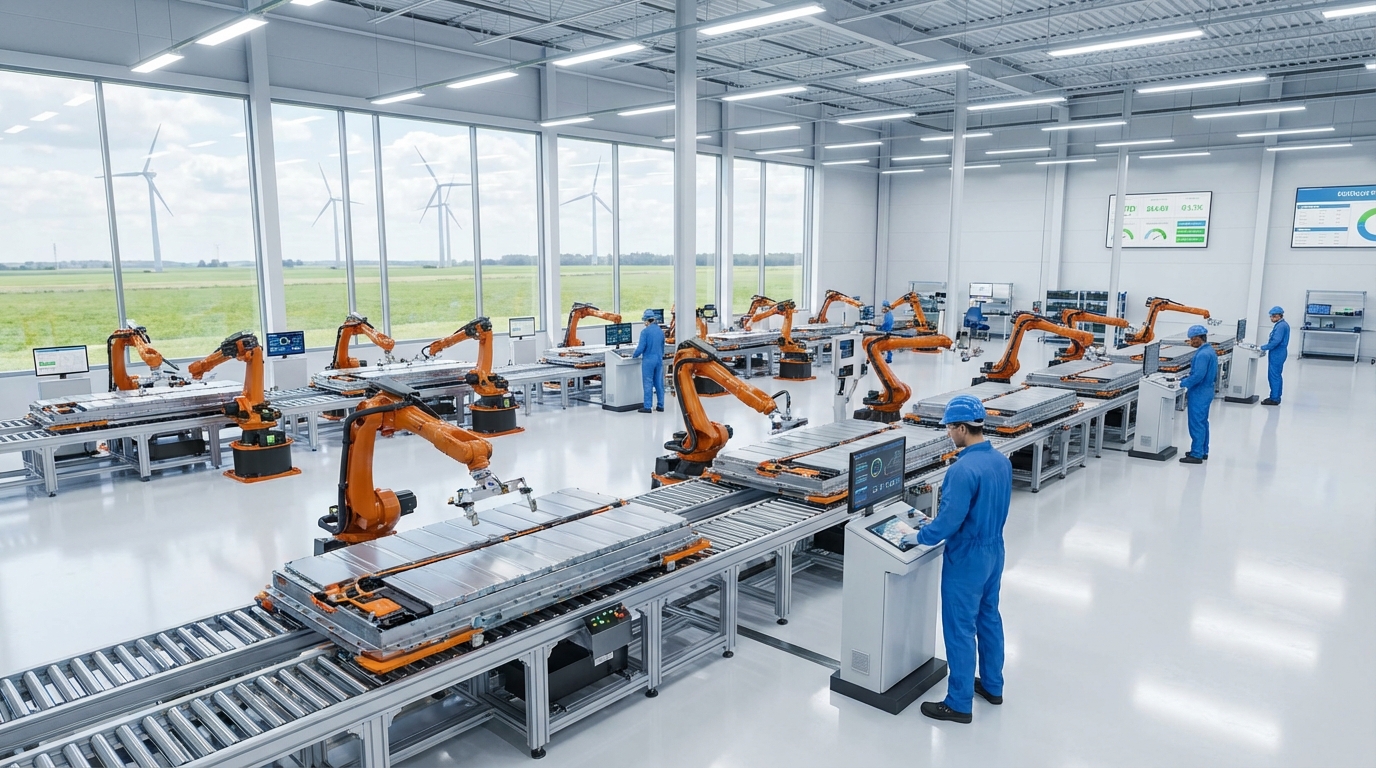
Illinois has rapidly transformed into the primary hub for the electric revolution in the Midwest. With the presence of industry giants like Rivian and Lion Electric, the state has built a robust regulatory framework to support new players. However, if you are looking to start a facility, you should know that there is no single document called a “Battery & Electric Vehicle (EV) Manufacturing License in Illinois.” Instead, operating legally requires a sophisticated package of state registrations, environmental permits, and incentive agreements.
As a business consultant who has helped dozens of firms move through this process, I can tell you that the 2026 landscape is more favorable than ever, thanks to expanded tax credits. But the paperwork is dense. This guide will walk you through the essential steps to get your facility up and running while staying compliant with the latest 2026 mandates.
What is the Battery & Electric Vehicle (EV) Manufacturing License in Illinois?
In the eyes of the state, your “license” to operate is actually a combination of three major components. First is your legal Illinois business registration for EV entities through the Secretary of State. Second is the EV manufacturing permits Illinois requires for environmental safety, managed by the Illinois Environmental Protection Agency (IEPA). Finally, most manufacturers seek a formal agreement under the Reimagining Energy and Vehicles (REV) Illinois Act.
The REV Act is the crown jewel of Illinois’ green energy policy. It isn’t just a set of Illinois REV Act incentives; it is a formal certification from the Department of Commerce and Economic Opportunity (DCEO) that designates your business as a “REV Illinois” participant. This status grants you massive tax exemptions but requires strict adherence to job creation and investment milestones.
Who Needs This License? (Eligibility)
Eligibility for the full suite of Illinois manufacturing benefits depends on your specific role in the supply chain. The 2026 standards categorize eligible businesses into several tiers:
- EV Manufacturers: Companies building complete electric or hybrid vehicles.
- Component Part Manufacturers: Businesses making batteries, motors, or specialized EV hardware.
- Power Supply Equipment: Manufacturers of EV charging stations and infrastructure.
- Battery Recycling & Raw Materials: Facilities focused on the circular economy of lithium-ion batteries.
To qualify for the most lucrative Illinois REV Act incentives, you must meet minimum investment thresholds. For instance, Tier 1 projects generally require a $20 million investment and the creation of 50 new jobs. Larger Tier 2 projects for major vehicle assembly may require investments upwards of $1.5 billion. If you are a smaller component maker, the 2026 “AIM” (Advancing Innovative Manufacturing) credit now offers a pathway for investments starting at $10 million.
Checklist: Documents Required for EV Manufacturing Permits Illinois
Before you even break ground, you need a mountain of documentation. Based on current 2026 requirements, here is what you must have ready:
| Category | Required Documents | Purpose |
|---|---|---|
| Entity Formation | Articles of Organization, FEIN, Illinois SOS Certificate of Good Standing | Establishes legal existence in Illinois. |
| Environmental | IEPA Form APC-200 (Air Construction), NPDES Water Permit, RCRA Hazardous Waste ID | Ensures compliance with emissions and waste standards. |
| Incentives (REV) | REV Application, Workforce Diversity Plan, Project Site Plan, Investment Timeline | Required to access tax credits and utility exemptions. |
| Local Compliance | Zoning Clearance, Building Permits, Fire Marshal Approval | Ensures the physical site is safe and properly zoned. |
| New for 2026 | Battery Stewardship Plan (for battery makers), Financial Assurance for Storage | Mandated by the 2026 Battery Recycling and Storage Act. |
Step-by-Step Application Procedure
Moving through the Battery & Electric Vehicle (EV) Manufacturing License in Illinois process requires a specific sequence. Skipping a step can lead to months of delays in your Illinois EPA air permits approval.
Step 1: Legal Entity Formation
Start by registering your corporation or LLC with the Illinois Secretary of State. You will need to appoint a registered agent and obtain your Federal Employer Identification Number (FEIN). This is the foundation for all subsequent Illinois business registration for EV filings.
Step 2: DCEO Pre-Application for REV Incentives
Before you commit to a site, contact the DCEO. You must apply for the REV Illinois program *before* you make a public announcement or start construction. This involves submitting a detailed project proposal that outlines your expected investment and hiring numbers. The DCEO will evaluate if your project qualifies for Tier 1 or Tier 2 status.
Step 3: Secure Environmental Construction Permits
This is often the longest part of the process. You must apply for Illinois EPA air permits (specifically an Air Pollution Construction Permit) before you begin building. The IEPA will review your planned machinery and emission controls. If you are handling large volumes of batteries, you must also register under the new 2026 Part 1220 rules for used EV battery storage.
Step 4: Local Siting and Zoning
Manufacturing facilities are high-impact. You must work with the local municipality (e.g., the City of Chicago or Bloomington-Normal) to ensure your site is zoned for heavy industrial use. This often involves public hearings and environmental impact assessments.
Step 5: Execution of the REV Agreement
Once the DCEO approves your application, you will sign a formal REV Illinois Agreement. This document legally binds you to your investment goals but also “unlocks” your ability to retain income tax withholdings and claim sales tax exemptions on building materials.
Fees and Processing Time
The cost of obtaining a Battery & Electric Vehicle (EV) Manufacturing License in Illinois varies significantly based on the scale of your operation. Here is a breakdown of the 2026 fee schedule:
- SOS Registration: $150 for LLC formation; $100 for expedited processing.
- IEPA Air Construction Permit: $5,000 base “entry fee” for new major sources, plus $4,000 per new emission unit.
- NPDES Water Permit: Varies by flow rate, typically $1,000 to $5,000 annually.
- REV Application: No direct state fee, but requires significant legal and consulting preparation.
Timing: Expect the entire process to take 9 to 18 months. IEPA permits alone typically take 6 to 12 months for review, while the REV agreement negotiation can take 3 to 6 months.
Validity and Renewal Process
Your business registration is perpetual as long as you file your Annual Report with the Secretary of State. However, your EV manufacturing permits Illinois and REV agreements have strict lifespans:
- IEPA Operating Permits: Usually valid for 5 years. You must apply for renewal at least 180 days before expiration.
- REV Agreements: These typically last 10 to 15 years, provided you meet your annual job creation and investment benchmarks. You must submit an “Exhibit D” report annually to the DCEO to prove compliance.
- Battery Storage Registration: Requires annual certification and updated financial assurance starting in 2026.
Penalties for Non-Compliance
The risks of operating without the proper Battery & Electric Vehicle (EV) Manufacturing License in Illinois are severe. If you begin construction without an IEPA permit, you face fines of up to $50,000 per day of violation. Furthermore, failing to meet the job requirements in your REV agreement can trigger a “recapture” provision, where the state forces you to pay back all the tax credits you received with interest.
FAQs about Illinois Business Registration for EV
1. Can small startups qualify for REV incentives?
Yes. While the original REV Act focused on massive plants, 2026 updates allow component manufacturers with investments as low as $2.5 million to access certain benefits if they create at least 50 jobs.
2. What is the new 2026 Battery Stewardship law?
As of January 1, 2026, any battery manufacturer selling in Illinois must participate in or fund a state-approved battery collection and recycling program. This is a mandatory part of your operating compliance.
3. Do I need a separate license for EV charging station manufacturing?
You don’t need a separate “license,” but you must ensure your products meet Illinois Commerce Commission (ICC) standards if you plan to install them within the state.
Conclusion & CTA
Securing a Battery & Electric Vehicle (EV) Manufacturing License in Illinois is a complex but rewarding endeavor. By aligning your Illinois business registration for EV with the right Illinois EPA air permits and Illinois REV Act incentives, you position your company at the forefront of the green economy. The 2026 regulatory environment is designed to reward those who plan ahead and commit to the state’s workforce.
If you are ready to start your application, your first move should be a consultation with a qualified CPA or business consultant to map out your investment timeline. Don’t leave your tax credits to chance—start your DCEO pre-application today.
Disclaimer: This article is for informational purposes only and does not constitute legal advice. Always consult with a local attorney or CPA.
