
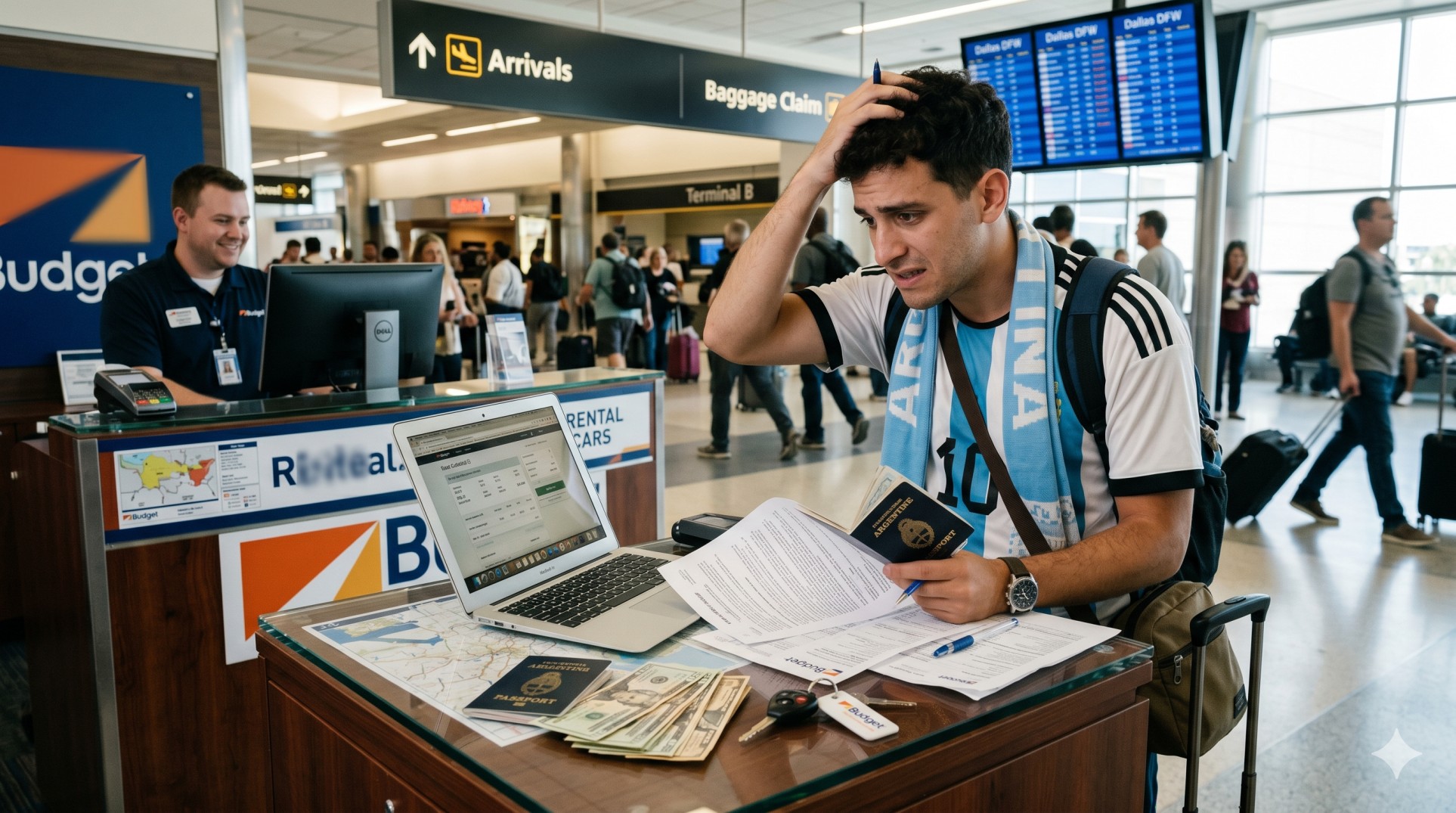
The 2026 FIFA World Cup will be an incredible global adventure. Millions of passionate fans will travel across the United States. Naturally, many tourists will rent cars to explore the vast American landscape. For example, driving between Dallas and Houston is a very popular travel plan.
However, navigating US rental car insurance for tourists is incredibly confusing. The American system uses complex acronyms and hidden fees. If you choose the wrong coverage, you face massive financial risks. Furthermore, an uninsured accident can trigger unexpected IRS tax traps.
Therefore, you must understand these complex rental terms before you drive. You cannot simply rely on your home country’s driving rules. Let us explore how to protect your wealth and enjoy your road trip safely.
The Hidden Financial Risks of US Roads
The United States has a highly litigious legal culture. If you cause a traffic accident, the other driver will likely sue you. Consequently, you could face hundreds of thousands of dollars in legal judgments. Medical bills in America are astronomically high.
Many foreign visitors assume they can simply leave the country after an accident. However, ignoring US debt carries severe long-term consequences. Specifically, it can trigger a massive IRS tax nightmare for international travelers.
If a US court or insurance company eventually forgives your unpaid debt, the IRS steps in. They legally classify forgiven debt as taxable income. Therefore, you might receive an IRS Form 1099-C for “Cancellation of Debt.”
The Form 1099-C Tax Trap
Receiving a Form 1099-C is a serious financial problem. If a company forgives a $50,000 lawsuit settlement, the IRS taxes that amount. Consequently, you suddenly owe federal income taxes on $50,000 of phantom income.
You must then file a US non-resident tax return (Form 1040-NR). If you ignore this tax bill, the IRS will add massive penalties. Ultimately, a simple car accident can ruin your financial standing in the United States.
Decoding Confusing Rental Car Terms
When you arrive at the rental counter, the agent will offer multiple add-ons. Usually, they use confusing acronyms to describe the policies. Therefore, you must know exactly what you are buying before you sign.
Let us break down the two most important coverage options. Understanding these specific terms will save you from financial ruin. You must separate vehicle protection from personal liability protection.
What is CDW (Collision Damage Waiver)?
First, you will encounter the Collision Damage Waiver (CDW). Sometimes, rental companies call this a Loss Damage Waiver (LDW). Essentially, this waiver protects the physical rental car itself.
If you crash the rental car, the company waives their right to charge you. Therefore, you do not have to pay for the expensive vehicle repairs. Furthermore, it usually covers vehicle theft and vandalism.
However, you must understand one critical limitation. CDW does not cover damage to other vehicles. In addition, it does not cover medical bills for injured people. It only protects the specific car you rented.
What is SLI (Supplemental Liability Insurance)?
Second, you will see Supplemental Liability Insurance (SLI). Sometimes, companies call this Liability Insurance Supplement (LIS). This is absolutely the most critical coverage for foreign visitors.
SLI protects you if you injure another person or damage their property. Usually, SLI provides up to $1 million in third-party liability protection. Therefore, it shields your personal wealth from devastating American lawsuits.
You should never drive in the US without robust liability coverage. If you hit a luxury car in Miami, the repair bill could exceed $100,000. Consequently, SLI is your ultimate financial safety net.
The Danger of State Minimum Liability Laws
You might wonder if rental cars already include basic insurance. Indeed, US law requires rental companies to provide minimum liability coverage. However, these state minimums are dangerously low.
For instance, California only requires $15,000 in bodily injury liability per person. If you cause a severe accident in Los Angeles, $15,000 will not cover the hospital bill. Therefore, the injured driver will sue you for the remaining balance.
Consequently, relying on state minimum coverage is a terrible gamble. You must purchase SLI to boost your protection to a safe level. Ultimately, $1 million in coverage provides true peace of mind.
Why Your Home Insurance Might Fail You
Many international tourists assume their domestic auto insurance covers them abroad. Unfortunately, this is almost never true. Foreign auto policies rarely extend liability coverage to the United States.
Furthermore, many fans rely on their premium travel credit cards. Indeed, many travel credit cards offer free rental car protection. However, you must read the fine print very carefully before relying on them.
The Credit Card Insurance Illusion
Most credit cards only provide CDW coverage. They protect the physical rental car, but they offer zero liability protection. Consequently, if you injure someone, your credit card will not help you at all.
In addition, credit cards often exclude specific types of vehicles. For example, they frequently exclude luxury cars, large SUVs, and multi-passenger vans. If you rent a large van for your football group, your card might deny the claim entirely.
Hidden Rental Car Taxes in Host Cities
Insurance is not the only confusing part of renting a car. You must also prepare for hidden local taxes. The United States does not have a flat national VAT system.
Instead, individual states and cities levy their own specific taxes. Furthermore, rental cars face some of the highest tax rates in the country. Therefore, your final bill will be much higher than the quoted daily rate.
State Excise Taxes and Tourism Fees
Local governments love to tax tourists. For instance, renting a car in New York/New Jersey includes heavy state excise taxes. Similarly, Miami and Los Angeles add local tourism surcharges to every rental contract.
Furthermore, airports charge massive “concession recovery fees.” If you rent a car directly at the Dallas airport, you will pay a premium. Therefore, always ask for the fully taxed total before signing the contract.
The Trap of Unpaid Tolls and Traffic Fines
Driving between host cities involves navigating complex toll roads. Texas, Florida, and New York rely heavily on electronic tolling systems. Usually, these roads do not accept physical cash.
If you drive through an electronic toll without a transponder, the state bills the rental company. Consequently, the rental company will charge your credit card for the toll. Furthermore, they will add a massive administrative fee for their trouble.
If your credit card declines the charge, the debt goes to a collections agency. Ultimately, unpaid traffic fines can cause issues during future visits to the US. Therefore, you should always rent an electronic toll transponder from the rental counter.
Real-Life Case Studies: Rental Car Nightmares
Understanding these rules is much easier with real numbers. Therefore, let us examine three realistic scenarios involving traveling football fans. These examples highlight the extreme dangers of driving uninsured.
Case Study 1: The Dallas to Houston Fender Bender
Thomas travels from the UK to watch matches in Texas. He rents a car to drive from Dallas to Houston. He declines all insurance at the counter to save money.
During a sudden rainstorm, he rear-ends another vehicle. The rental car suffers $8,000 in physical damage. Because he declined the CDW, the rental company charges his credit card for the full $8,000.
Consequently, Thomas ruins his vacation budget completely. If he had simply paid $20 per day for the CDW, he would owe nothing. Therefore, skipping coverage is a terrible financial gamble.
Case Study 2: The Los Angeles Liability Disaster
Maria visits Los Angeles from Spain. She relies entirely on her credit card for insurance. She assumes she is fully protected. However, her card only provides CDW.
She accidentally runs a red light and hits a local driver. The other driver suffers medical injuries and sues Maria for $100,000. Because Maria lacks SLI, she is personally responsible for the massive debt.
She cannot pay, so she returns to Spain. Eventually, the debt is settled and forgiven for a fraction of the cost. However, the US agency issues an IRS Form 1099-C for the forgiven $80,000.
Now, Maria owes massive federal income taxes on that phantom income. Her simple misunderstanding created a multi-year legal and tax nightmare.
Case Study 3: The Smart Planner in Miami
Lukas is a German tourist visiting Miami. Before his trip, he researches US rental rules thoroughly. At the rental counter, he uses his premium credit card for CDW protection.
However, he smartly purchases the SLI policy directly from the rental company. This costs him an extra $15 per day. Later that week, he accidentally scrapes a parked luxury car.
The damage to the other car is $12,000. Fortunately, his SLI policy covers the entire liability claim. Lukas pays nothing out of pocket and enjoys the rest of his World Cup trip stress-free.
Actionable Precautions for Foreign Drivers
You can easily avoid these massive financial headaches with proper planning. The rules are strict, but compliance is straightforward. Here are the exact steps you must take before driving.
Always Buy Liability Insurance
First, you must secure Supplemental Liability Insurance (SLI). If your travel medical policy does not include third-party liability, buy it at the rental counter. This is absolutely non-negotiable for your financial safety.
Do not let the rental agent rush you. Take your time and verify that SLI is explicitly listed on your contract. Ultimately, this small daily fee protects your entire life savings.
Verify Your Credit Card Terms
Second, call your credit card company before you travel. Ask them explicitly if they provide primary or secondary CDW coverage in the US. Furthermore, ask them what specific types of vehicles are excluded.
If they exclude your desired vehicle class, you must buy CDW from the rental company. Therefore, knowing your exact credit card benefits prevents nasty surprises at the counter.
Document Everything Carefully
Third, take photos and videos of the rental car before you drive away. Document every single scratch, dent, and interior stain. This prevents the company from charging you for pre-existing damage.
Furthermore, keep all your rental receipts and insurance documents in a safe place. If you face a dispute after returning home, these documents are your only defense. Therefore, treat them like valuable financial records.
Frequently Asked Questions (FAQ)
Do I need an International Driving Permit (IDP)?
Yes, many US states require an International Driving Permit. You must carry this document alongside your valid home country driver’s license. Furthermore, rental car companies might refuse to hand over the keys without an IDP. Therefore, obtain one before leaving your home country.
Does my travel medical insurance cover car accidents?
Your travel medical insurance will cover your own personal hospital bills. However, it will not cover the damage you cause to other people or their property. Therefore, you still need SLI for third-party liability protection.
Are rental car taxes included in the quoted online price?
Usually, third-party booking websites do not include local US taxes in their initial quotes. They only show the base daily rate. Therefore, you must click through to the final checkout page to see the true taxed total. Always budget for an extra 20% to 30% in taxes and fees.
What happens if I get a speeding ticket in a rental car?
If a traffic camera catches you speeding, the local government bills the rental company. The rental company will then charge your credit card for the fine. In addition, they will add a hefty administrative fee. Therefore, always obey local speed limits to avoid these expensive surprise charges.
Conclusion and Next Steps
The 2026 World Cup will be an unforgettable experience. You will create lifelong memories exploring host cities like Dallas, Houston, and Miami. However, you must protect your financial future while on the road.
By understanding US rental car insurance for tourists, you can drive with complete confidence. Always secure liability coverage to prevent devastating lawsuits and hidden IRS tax traps. Therefore, plan your rental strategy carefully today.
Did you find this travel and financial guide helpful? Please share this article with your fellow traveling fans! In addition, bookmark this page so you can easily reference it during your trip. Finally, explore our other helpful World Cup tax and travel guides on our blog to ensure a safe vacation.
Disclaimer: This article is strictly for educational and informational purposes only. This website does not provide tax, legal, or accounting services. The information presented here may not reflect the most current legal developments. Therefore, readers should consult a certified CPA or qualified tax professional for advice regarding their specific situations.
