

The 2026 tax year brings a big new way to save: the Trump Account. Created by the “One Big Beautiful Bill Act” (OBBBA), these tax-advantaged accounts help families plan for their kids’ financial future. You’ll want to understand how Form 4547 works, who can get a Trump Account, and the details of the pilot program. This guide gives you a clear, expert look at these new rules, straight from the IRS.
Understanding the Rules: Where Trump Accounts Come From
The legal foundation for Trump Accounts comes from the Internal Revenue Code (IRC) and recent IRS guidance. IRC Section 530A defines Trump Accounts as a new type of individual retirement account (IRA) for eligible minors. IRC Section 6434 sets out the $1,000 pilot program contribution. After a child turns 18, IRC Section 408(a) treats Trump Accounts much like traditional IRAs. The “One Big Beautiful Bill Act” (OBBBA), also known as the Working Families Tax Cut (Public Law 119-21), became law on July 4, 2025. That’s when these accounts were born.
The Treasury and IRS have also released proposed regulations (REG-117270-25 and REG-117002-25) with detailed instructions. Revenue Procedure 2026-25, issued on June 29, 2026, clarifies how certain individual contributions are treated for tax purposes. It says they’re considered completed gifts of present interests, which is a good thing for taxpayers. Notice 2025-68 (December 2025) told taxpayers that the IRS planned to propose these regulations.
Form 4547, called “Trump Account Election(s),” is the official IRS form. You use it to open a Trump Account for an eligible child. You can also use it to ask for the $1,000 pilot program contribution.
Trump Accounts in 2026: What You Need to Know
Here’s a quick rundown of the important rules for Trump Accounts in 2026:
- Filing Form 4547: You can file Form 4547 electronically with your federal income tax return. Or, you can mail a paper copy to the IRS. You can even submit an electronic version through your IRS Online Account.
- Who’s Eligible? Any child who hasn’t turned 18 by the end of the year when you open the account can get one. They just need a valid Social Security number.
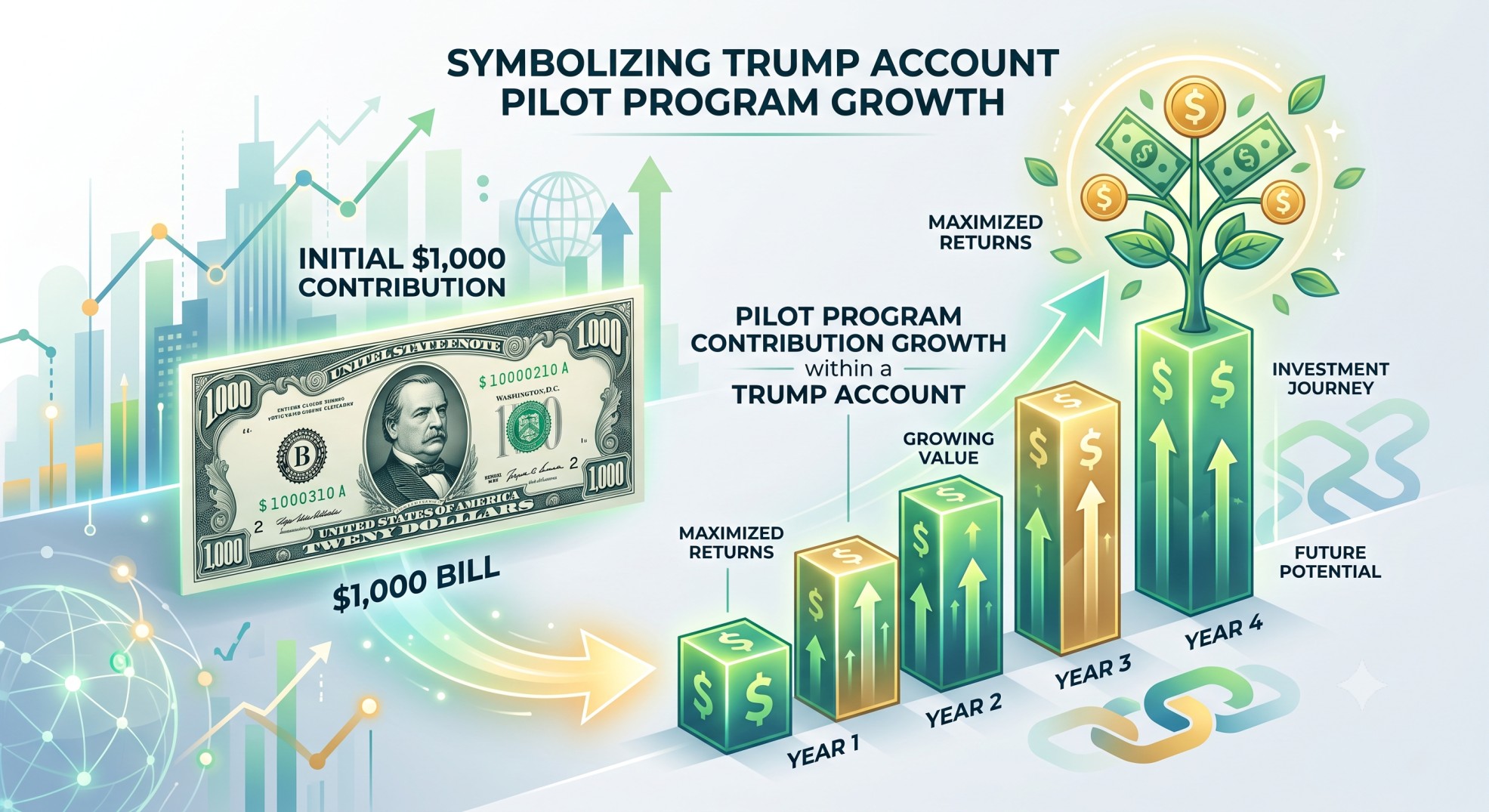
- Pilot Program Contribution: Kids born between January 1, 2025, and December 31, 2028, who are U.S. citizens, can get a one-time $1,000 contribution from the government. The child must be a “qualifying child” of the person opening the account.
- When Can You Start Contributing? You can begin making regular contributions to Trump Accounts starting July 4, 2026.
Let’s talk about contribution limits for 2026. These are important to keep in mind:
| Contribution Type | Limit/Rule | Notes |
|---|---|---|
| General Annual Limit | $5,000 per year per child | Applies to contributions from individuals and employers before the child turns 18. |
| Exclusions from Limit | Not counted towards $5,000 limit | Includes the $1,000 pilot program contribution, qualified general contributions from nonprofits or governments, and qualified rollover contributions. |
| Employer Contributions | Up to $2,500 per employee per year | Excludable from employee’s gross income. Counts towards the overall $5,000 annual limit. |
What about taxes on these contributions? Individual contributions are made with after-tax dollars; they aren’t tax-deductible. But the money inside the account grows tax-deferred. Employer contributions are pre-tax for the employee.
When can you take money out? During the “growth period” (from when the account opens until January 1 of the year the child turns 18), withdrawals are generally off-limits. The only exception is if the child passes away.
Once the child turns 18, the Trump Account changes. It becomes a traditional IRA. Then, standard IRA contribution and distribution rules kick in. If you take money out early (before age 59½) from this traditional IRA part, you might face a 10% penalty. But there are exceptions, like for qualified education expenses or buying a first home.
Investment options are specific during the growth period. You can only invest in low-cost mutual funds or ETFs that track broad U.S. equity indices. There are also rules against leverage and high fees (e.g., no higher than 0.1%).
What about gift taxes in 2026? Contributions to Trump Accounts are considered gifts. Revenue Procedure 2026-25 offers a safe harbor. If your only taxable gifts for the year are cash contributions to Trump Accounts for a child under 18, and your total gifts to that child (including the Trump Account money) don’t go over the annual per-donee gift tax exclusion ($19,000 for 2026), then you don’t need to file a gift tax return (Form 709). If you don’t meet these conditions, you might need to file that form.
Who’s in charge of the account? The person who chooses to open the account (like a parent, legal guardian, adult sibling, or grandparent, in that order) is the “responsible party.” They manage the account until the child turns 18.

What Tax Pros Are Saying About Trump Accounts
The launch of Trump Accounts has really got tax professionals and financial analysts talking. Many top CPA firms and financial journals see them as a new, tax-advantaged way to save for kids. Especially with that $1,000 government seed contribution.
Professionals often compare Trump Accounts to other savings options, like 529 plans and traditional IRAs. While they’re a type of traditional IRA for minors, they have unique rules during the “growth period.” Experts suggest that while Trump Accounts offer tax-deferred growth, 529 plans might still be better for education savings. That’s because of potential state tax benefits and more investment choices.
The Revenue Procedure 2026-25 was a welcome sight. It cleared up a lot about gift tax reporting. This “safe harbor” makes things easier for people contributing to these accounts. It helps prevent an “avalanche of unnecessary forms.” But remember, your total gifts to a child must stay within the annual exclusion limit. Otherwise, you’ll still need to file a gift tax return.
Some groups, like the Tax Foundation, argue that while saving is good, Trump Accounts add more complexity to an already tricky savings system. They think for many families, the tax benefits might not be as big as other options. The IRS is making things easier, though. They’ve added new features to IRS Individual Accounts for electronic Form 4547 submission and status checks. Plus, the Treasury launched a Trump Accounts app. It’s all about making it more accessible.
Common Questions About Trump Accounts
What is a Trump Account?
A Trump Account is a new tax-advantaged savings vehicle introduced in the 2026 tax year under the “One Big Beautiful Bill Act” (OBBBA). It’s designed to encourage long-term financial planning for minors, functioning similarly to a traditional IRA for children, with specific rules during its “growth period.”
Who is eligible for a Trump Account?
An account can be opened for any child who has not reached age 18 by the end of the calendar year in which the election is made and possesses a valid Social Security number.
How do I open a Trump Account?
You open a Trump Account by filing Form 4547, “Trump Account Election(s),” with the IRS. This can be done electronically with your federal income tax return, by mailing a paper copy, or through your IRS Online Account.
What is the $1,000 pilot program contribution?
Eligible U.S. citizens born between January 1, 2025, and December 31, 2028, can receive a one-time $1,000 contribution from the U.S. government to their Trump Account. The child must be a “qualifying child” of the individual making the election.
What are the annual contribution limits for Trump Accounts in 2026?
For 2026, the general annual contribution limit from individuals and employers is $5,000 per year per child before they turn 18. The $1,000 pilot program contribution, qualified nonprofit/government contributions, and rollovers do not count towards this limit. Employers can contribute up to $2,500 per employee per year, which counts towards the $5,000 overall limit.
How are withdrawals handled from a Trump Account?
During the “growth period” (until January 1 of the year the child turns 18), withdrawals are generally prohibited, except in cases of the account beneficiary’s death. After the child turns 18, the Trump Account converts into a traditional IRA, and standard IRA distribution rules apply, including potential penalties for early withdrawals before age 59½, unless an exception applies.
Are there gift tax implications for contributing to a Trump Account?
Yes, contributions are considered gifts. However, Revenue Procedure 2026-25 provides a safe harbor: if your only taxable gifts for the year are cash contributions to Trump Accounts for a child under 18, and total gifts to that child don’t exceed the annual per-donee gift tax exclusion ($19,000 for 2026), you likely won’t need to file a gift tax return (Form 709).
Wrapping Up: Plan Smart with Trump Accounts
Understanding Trump Accounts and Form 4547 is key for smart financial planning for kids in 2026. These new rules can be complex. So, talking to a qualified tax professional is always a good idea. They can give you personalized advice for your unique financial situation. This helps you make the most of these new savings opportunities.
Tax laws change. Stay informed about legislative updates. Always rely on accurate information from trusted sources, like the IRS website. By focusing on real tax strategies and staying in the know, you can make smarter financial decisions. You’ll proactively manage your tax implications related to these new accounts.
Disclaimer: This content is for informational purposes only and does not constitute financial, tax, or legal advice. Tax laws are complex and subject to change. Always consult with a qualified tax professional or financial advisor for advice tailored to your specific situation. Ourtaxpartner.com is not responsible for any actions taken based on the information provided herein.
