
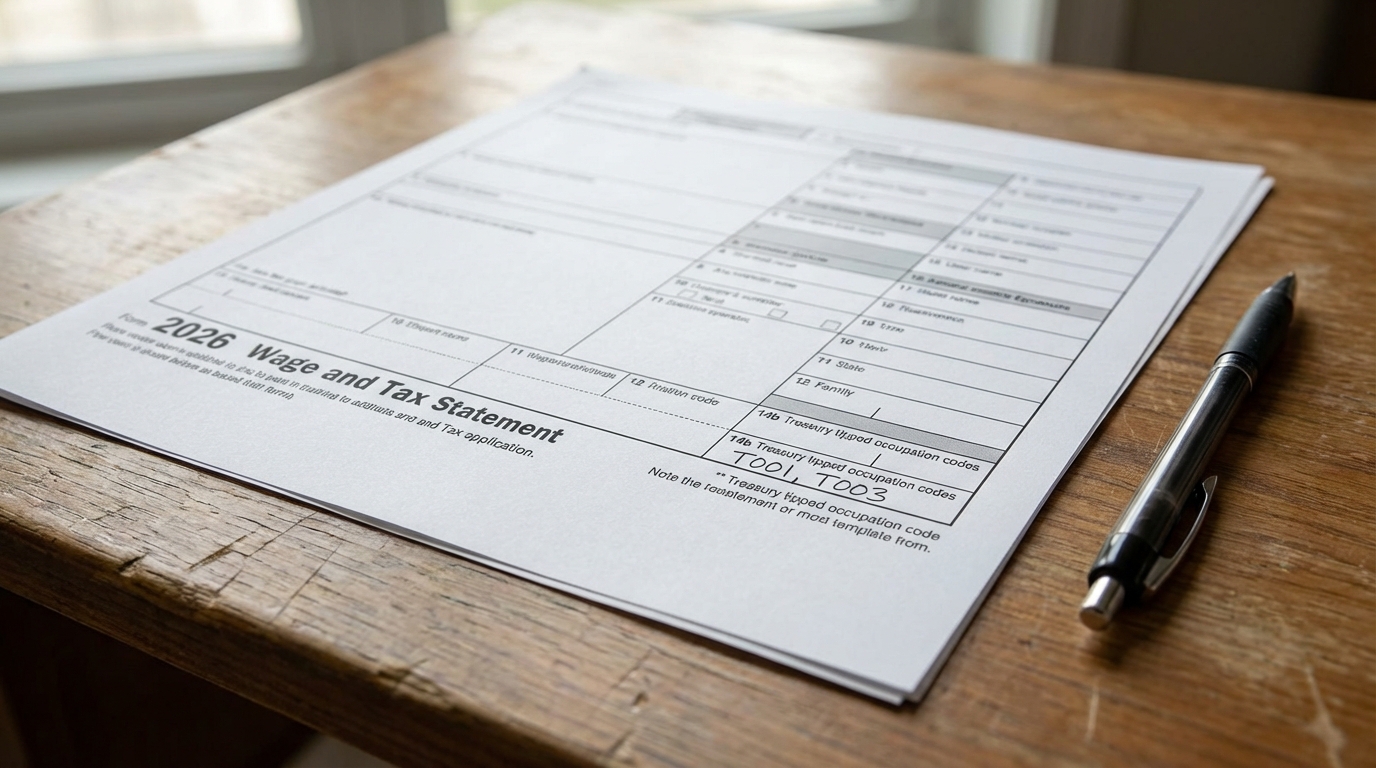
As we approach the 2026 filing season, taxpayers are facing a unique regulatory landscape defined by significant legislative updates and procedural shifts. For Tax Year 2025 (filed in early 2026), the Internal Revenue Service (IRS) and Congress have introduced changes that directly impact how millions of Americans will file their simple W-2 returns. Most notably, the enactment of the One Big Beautiful Bill Act (OBBB) has fundamentally altered standard deduction amounts and solidified provisions from the Tax Cuts and Jobs Act (TCJA).
This guide serves as a comprehensive resource for navigating free tax filing 2026 options. We will analyze the suspension of the IRS Direct File program, the expansion of the IRS Free File AGI limits, and the specific reporting requirements for the new W-2 form 2026. Whether you are a single filer, a married couple, or a tipped employee, understanding these changes is critical to maximizing your refund and ensuring compliance.
Key Takeaways for Tax Season 2026
- Filing Deadline: The standard deadline for filing your 2025 federal tax return is April 15, 2026. Extensions move this date to October 15, 2026.
- IRS Free File 2026 Eligibility: Taxpayers with an Adjusted Gross Income (AGI) of $84,000 or less can access free guided software.
- Direct File Suspended: The IRS Direct File pilot program has been suspended and will not be available for the 2026 filing season.
- Increased Standard Deduction: Under the OBBB, the standard deduction has risen to $15,750 for single filers and $31,500 for married couples filing jointly.
- New W-2 Reporting: A new Box 14b is required for reporting “Treasury tipped occupation codes” for tipped employees.
Detailed Guide: Filing Simple W-2 Returns in 2026
1. The Regulatory Framework: OBBB and Revenue Procedures
The 2026 tax season is governed by the One Big Beautiful Bill Act (OBBB), signed into law on July 4, 2025. This legislation not only makes permanent several expiring provisions of the TCJA but also introduces an additional 5% increase to the inflation-adjusted standard deduction. These changes are codified alongside the IRS’s annual guidance, specifically Rev. Proc. 2025-1 through Rev. Proc. 2025-7, which outline the procedural rules for the year.
For taxpayers with a simple tax return 2026—typically defined as income primarily from wages (Form W-2), interest, and dividends without complex itemizations—these legislative updates provide a substantial reduction in taxable income through higher standard deductions.
2. Standard Deduction Analysis for Tax Year 2025
The standard deduction serves as a critical baseline for reducing taxable income. For the 2025 tax year, the OBBB has established the following amounts:
| Filing Status | 2025 Standard Deduction | Additional Deduction (65+ or Blind) |
|---|---|---|
| Single | $15,750 | +$2,000 |
| Married Filing Jointly | $31,500 | +$1,600 per spouse |
| Head of Household | $23,625 | +$2,000 |
| Married Filing Separately | $15,750 | +$1,600 |
Note: The additional standard deduction applies to those aged 65 or older. For a single filer over 65, the total deduction is $17,750 ($15,750 + $2,000).
3. Free Filing Options: What is Available?
With the suspension of the IRS Direct File program, taxpayers must rely on the IRS Free File 2026 program or commercial alternatives. The landscape for free filing this year is defined by specific income thresholds.
IRS Free File Program
This public-private partnership remains the gold standard for free federal filing. For the 2026 season (Tax Year 2025), the AGI limit is set at $84,000. Taxpayers under this threshold can choose from various guided tax software providers available at IRS.gov starting in January 2026.
Free File Fillable Forms
For taxpayers with AGI exceeding $84,000, the IRS offers Free File Fillable Forms. These are electronic versions of paper forms (e.g., Form 1040) that perform basic math but offer no guidance. This option is best suited for those comfortable navigating the Internal Revenue Code (IRC) and form instructions independently.
Commercial Options: TaxAct Free Filing and Others
Many commercial providers, such as TaxAct, offer their own “free” tiers outside of the official IRS Free File alliance. TaxAct Free Filing typically covers simple returns (Form 1040 with W-2 income) but may charge for state filings or additional schedules. It is vital to verify if your specific tax situation—such as Health Savings Account (HSA) contributions or student loan interest—qualifies for their free tier, as these often trigger upgrades.
4. The New W-2 Form 2026: Box 14b
Employers are required to furnish Form W-2 to employees by January 31, 2026. However, because this date falls on a Saturday, the IRS has confirmed the deadline for filing 2025 Forms W-2 with the Social Security Administration (SSA) is February 2, 2026.
A critical update for 2026 is the modification of Box 14. The existing Box 14 is now Box 14a, and a new Box 14b has been added. Box 14b is designated for the “Treasury tipped occupation code,” a requirement for employers to categorize tipped employees more accurately. If you work in the service industry, ensure this box is populated correctly to avoid discrepancies.
5. Tax Brackets for Tax Year 2025
Understanding your marginal tax rate is essential for planning. Under the current law, the top marginal rate remains 37%. The brackets apply to taxable income (AGI minus the Standard Deduction).
- 10%: Lowest income tier.
- 12%, 22%, 24%, 32%, 35%: Intermediate tiers.
- 37%: Applies to Single filers > $626,350 and Married Joint filers > $751,600.
Comprehensive Filing Scenarios
To illustrate how these rules apply, we have developed six detailed scenarios for the 2026 filing season.
Scenario A: The Recent Graduate (Single, Simple W-2)
Profile: Sarah, age 24, earned $48,000 in wages (W-2) in 2025. She has no other income.
Analysis: Sarah’s AGI is $48,000, which is well below the $84,000 threshold. She qualifies for IRS Free File 2026.
Calculation:
AGI: $48,000
Standard Deduction: -$15,750
Taxable Income: $32,250
Outcome: Sarah files for free using guided software. Her taxable income falls into the 12% bracket.
Scenario B: The Married Couple (Joint Filers, Dual Income)
Profile: Mark and Linda, ages 40 and 38, earned a combined $82,000. They have two W-2s and $200 in interest income.
Analysis: Their total income ($82,200) is under the $84,000 Free File cap.
Calculation:
AGI: $82,200
Standard Deduction: -$31,500
Taxable Income: $50,700
Outcome: By filing jointly, they utilize the $31,500 deduction. They can use IRS Free File software to prepare their return at no cost.
Scenario C: The High Earner (Single, Exceeds Free File)
Profile: James, age 35, earned $95,000. He has a simple tax situation with one W-2.
Analysis: James exceeds the $84,000 limit for IRS Free File software.
Options: He can use Free File Fillable Forms (free, no guidance) or a commercial product like TaxAct Free Filing (if his return qualifies as “simple” under their terms) or pay for a basic tier.
Outcome: James likely pays a small fee for convenience or uses Fillable Forms if he is comfortable with tax forms.
Scenario D: The Service Industry Worker (Tipped Employee)
Profile: Elena works as a server. Her W-2 shows $30,000 in wages and tips.
Analysis: Elena must check Box 14b on her W-2 for the “Treasury tipped occupation code.”
Calculation:
AGI: $30,000
Standard Deduction: -$15,750
Taxable Income: $14,250
Outcome: Elena uses IRS Free File. She verifies Box 14b matches her occupation to ensure her social security credits are properly recorded and her return is compliant.
Scenario E: The Senior Filer (Single, 66 Years Old)
Profile: Robert is retired but works part-time, earning $20,000. He receives Social Security benefits.
Analysis: Because Robert is over 65, he qualifies for the additional standard deduction.
Calculation:
Base Deduction: $15,750
Additional Deduction: +$2,000
Total Deduction: $17,750
Outcome: If his wages are his only taxable income, his taxable income is just $2,250 ($20,000 – $17,750). He can use IRS Free File to file easily.
Scenario F: The “Direct File” Legacy User
Profile: Marcus used the IRS Direct File pilot in 2025 and planned to use it again.
Analysis: Since IRS Direct File is suspended for 2026, Marcus must switch methods.
Action: He should visit IRS.gov/freefile to choose a private partner. Since his data will not transfer automatically from the Direct File pilot, he must have his prior year (2024) tax return handy to locate his AGI for identity verification (signing the return).
Common Pitfalls & Mistakes
Even with simple returns, errors can lead to processing delays. Avoid these common mistakes for the 2026 season:
- Ignoring the Feb 2 W-2 Deadline: While employees receive W-2s by late January, employers file them with the SSA by February 2, 2026. If your W-2 is missing or incorrect, contact your employer immediately. Do not file based on your final pay stub alone, as it may lack specific codes like Box 14b.
- Confusing Box 14a and 14b: With the new split in Box 14, ensure you enter the data into the correct fields in your tax software. Misreporting the tipped occupation code (14b) could trigger an inquiry.
- Assuming State Filing is Free: Many “Free File” options cover the federal return but charge for state filing. Read the fine print on commercial offers like TaxAct or TurboTax. The IRS Free File partners often include state filing, but criteria vary by provider.
- Overlooking the “OBBB” Deduction Hike: Ensure your software is updated to reflect the OBBB statutory increase to $15,750/$31,500. Using outdated calculators or 2024 forms will result in a lower refund.
Frequently Asked Questions (FAQ)
1. Is the IRS Direct File program available for 2026?
No. The IRS Direct File program has been suspended and will not be operational for the Filing Season 2026. Taxpayers should utilize the IRS Free File program or commercial software instead.
2. What is the income limit for IRS Free File in 2026?
For the 2026 filing season (Tax Year 2025), the Adjusted Gross Income (AGI) limit is $84,000. If your AGI is below this amount, you qualify for free guided tax preparation software.
3. When are my taxes due if I owe money?
Your tax return and any tax payments are due by April 15, 2026. If you cannot file by this date, you can request an extension to October 15, 2026, but you must still pay your estimated taxes by the April deadline to avoid penalties and interest (currently 7% for underpayments).
4. Did the standard deduction change for 2026?
Yes. Under the One Big Beautiful Bill Act (OBBB), the standard deduction for Tax Year 2025 (filed in 2026) increased to $15,750 for single filers and $31,500 for married couples filing jointly.
Conclusion
Tax Season 2026 brings higher standard deductions and a return to the partnership-based IRS Free File model as the primary free option. By understanding the implications of the OBBB legislation and the new W-2 reporting requirements, taxpayers can navigate this season with confidence. Remember to gather your documents early—specifically watching for the new Box 14b on your W-2—and file by April 15, 2026, to ensure a smooth process.
Disclaimer: The information provided in this article is for educational and informational purposes only and does not constitute professional financial or tax advice. Tax laws are subject to change. We recommend consulting with a qualified tax professional regarding your specific situation.
