
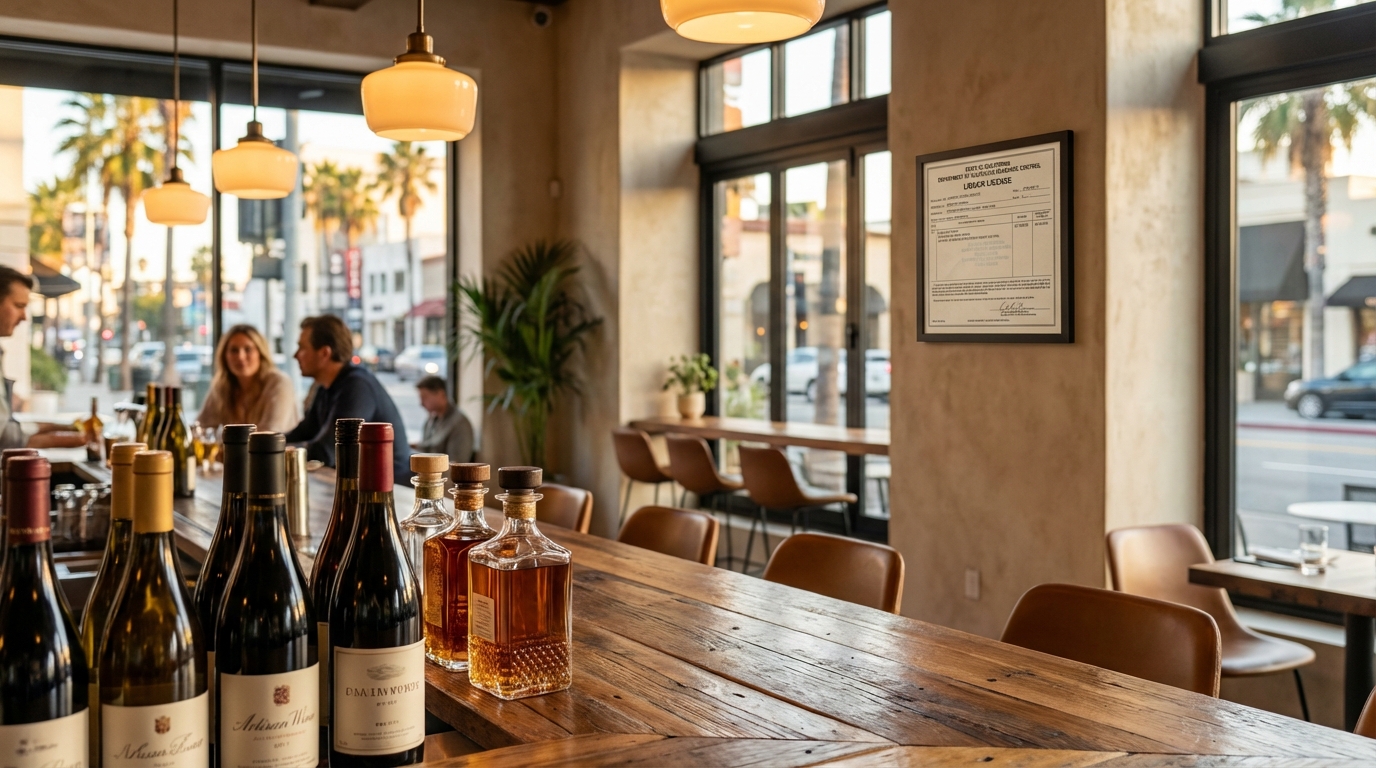
Opening a restaurant, bar, or boutique wine shop in the Golden State is a dream for many entrepreneurs. However, the path to serving that first glass of Napa Cabernet or a craft cocktail is paved with complex regulations. As a consultant who has helped hundreds of businesses navigate the California Department of Alcoholic Beverage Control (ABC), I can tell you that patience and precision are your best friends. Obtaining a liquor license in California is not just a matter of paying a fee; it is a multi-step legal process that requires coordination with state, local, and sometimes federal agencies.
What is a Liquor License in California?
In simple terms, a liquor license is a legal permit issued by the California Department of Alcoholic Beverage Control (ABC) that allows a business to sell alcoholic beverages. The ABC is the sole issuing authority in the state. They are responsible for ensuring that every licensee is of good moral character and that the location of the business will not create a public nuisance. Think of the ABC as the gatekeeper of public safety regarding alcohol. They don’t just look at your business plan; they look at your personal history, your financial sources, and the impact your business will have on the surrounding neighborhood.
Who Needs a Liquor License? (California Liquor License Types)
If you plan to sell, manufacture, or even give away alcohol in a commercial setting, you need a license. California offers over 90 different California liquor license types, but most small business owners will fall into one of these five categories:
- Type 41 (On-Sale Beer & Wine – Eating Place): This is the most common for small restaurants. It allows you to sell beer and wine for consumption on-site. You must operate as a “bona fide eating place,” meaning you have a kitchen and actual meal sales.
- Type 47 (On-Sale General – Eating Place): This is the “gold standard” for full-service restaurants. It allows for beer, wine, and distilled spirits. Like Type 41, you must serve food.
- Type 48 (On-Sale General – Public Premises): This is for bars and nightclubs where food is not required. You must be 21 or older to enter.
- Type 20 (Off-Sale Beer & Wine): Ideal for convenience stores or markets selling beer and wine for consumption off the premises.
- Type 21 (Off-Sale General): This is for liquor stores selling the full range of spirits, beer, and wine for off-site consumption.
New for 2026, the state has also streamlined permits for craft distillers (Type 94) to ship directly to consumers, reflecting the evolving digital marketplace.
Checklist: Documents Required for Your California ABC Application
Before you even step into an ABC district office, you need to have your paperwork in order. Missing a single document can set your timeline back by weeks. Here is the essential alcohol permit requirements checklist for 2026:
| Document Name | Purpose |
|---|---|
| ABC-211-SIG | The formal application signature sheet. |
| ABC-208-A/B | Financial affidavit showing where your investment money came from. |
| Zoning Affidavit | Proof from your city/county that alcohol sales are allowed at your address. |
| Lease Agreement | Must show you have the right to occupy the space for the license period. |
| Floor Plan (ABC-257) | A detailed diagram of where alcohol will be stored and served. |
| Live Scan Fingerprints | Required for all owners and officers to check for criminal history. |
| Seller’s Permit | Issued by the California Department of Tax and Fee Administration (CDTFA). |
Why is the financial affidavit so important? The ABC wants to ensure that “hidden owners” or organized crime are not funding the business. You will need to provide bank statements or loan documents for every dollar used to start the venture.
Step-by-Step Application Procedure
The California ABC application process is a marathon, not a sprint. Follow these steps to stay on track:
Step 1: Local Zoning and the CUP
Before you talk to the state, you must talk to your city. Most California municipalities require a Conditional Use Permit (CUP). This is often the hardest part. You may have to attend public hearings where neighbors can voice concerns about noise or traffic. Do not sign a long-term lease without a “liquor license contingency” clause.
Step 2: File the Initial Application
Once you have local support, file your application with the nearest ABC district office. You will pay your initial fees at this time. If you are applying for a “General” license (Type 47 or 48) in a county where the quota is full, you will likely be buying the license from an existing owner on the secondary market. In this case, you must also open an escrow account.
Step 3: The 30-Day Posting Period
After filing, you must post a large yellow notice (ABC-207) in your window for 30 consecutive days. This tells the public you are applying. During this time, anyone within 500 feet can file a protest. If you get a protest, the ABC will investigate to see if the objection is valid.
Step 4: The ABC Investigation
An ABC investigator will visit your site. They check if the location is near a school or church and ensure your floor plan is accurate. They also conduct a background check on all applicants. Expect this to take 45 to 60 days.
Step 5: Final Review and Issuance
If there are no protests and the investigation is clean, the file goes to headquarters for final approval. Once issued, you must display the license prominently behind your bar.
Liquor License Cost California and Processing Time
The liquor license cost California entrepreneurs face varies wildly based on the license type and whether you are buying it from the state or a private seller.
- Original General License (State Lottery): Approximately $18,635 (as of 2026). These are only available once a year via a priority drawing if the county population has grown.
- Secondary Market (Type 47/48): Because of quotas, these can cost anywhere from $50,000 to over $400,000 in high-demand areas like Los Angeles or San Francisco.
- Non-General Licenses (Type 41): Usually around $1,000 to $1,500 for the initial application.
- Annual Renewal Fees: Expect to pay between $500 and $1,300 annually, depending on your license type and local population.
Processing Time: A simple Type 41 might take 90 days. A complex Type 47 transfer involving a CUP and escrow can easily take 6 to 9 months. Always plan for at least 180 days from start to finish.
Validity and Renewal Process
Your license is valid for 12 months. The ABC will mail a renewal notice about 60 days before it expires. In 2026, all payments to wholesalers must be made via Electronic Funds Transfer (EFT), and your license must be in good standing to maintain these accounts. If you miss the renewal deadline, you will face a 50% penalty fee. If you are 60 days late, the license is automatically cancelled.
Penalties for Non-Compliance
The ABC does not play around. Common violations include selling to minors, allowing over-intoxication, or operating outside of your permitted hours. Penalties range from a $1,000 fine to a 15-day suspension. For repeat offenders, the ABC can revoke the license entirely, which effectively kills the value of your business. As of 2026, the ABC officially recognizes the use of electronic age-verification scanners as a sign of “good faith” compliance, though it doesn’t provide absolute immunity if a sale to a minor occurs.
Frequently Asked Questions
1. Can I move my license to a new location?
Yes, this is called a “Premises-to-Premises” transfer. You must still go through the zoning and posting process at the new site, and fees apply.
2. Do my employees need special training?
Yes. Under the Responsible Beverage Service (RBS) Training Act, all alcohol servers and managers must be certified by an ABC-approved provider within 60 days of hire.
3. What is a “Priority Drawing”?
It is a lottery held every September for new licenses created by population growth. It is the only way to get a full liquor license at the base state price rather than the expensive secondary market.
Conclusion
Securing a liquor license in California is a significant milestone for any hospitality business. While the regulations are strict, they are designed to create a fair and safe marketplace. By starting early, double-checking your financial records, and staying proactive with your local planning department, you can successfully navigate this process. If you’re feeling overwhelmed, consider hiring a professional consultant or attorney to handle the heavy lifting. Ready to get started? Visit the California ABC website today to find your local district office.
Disclaimer: This article is for informational purposes only and does not constitute legal advice. Always consult with a local attorney or CPA.
