
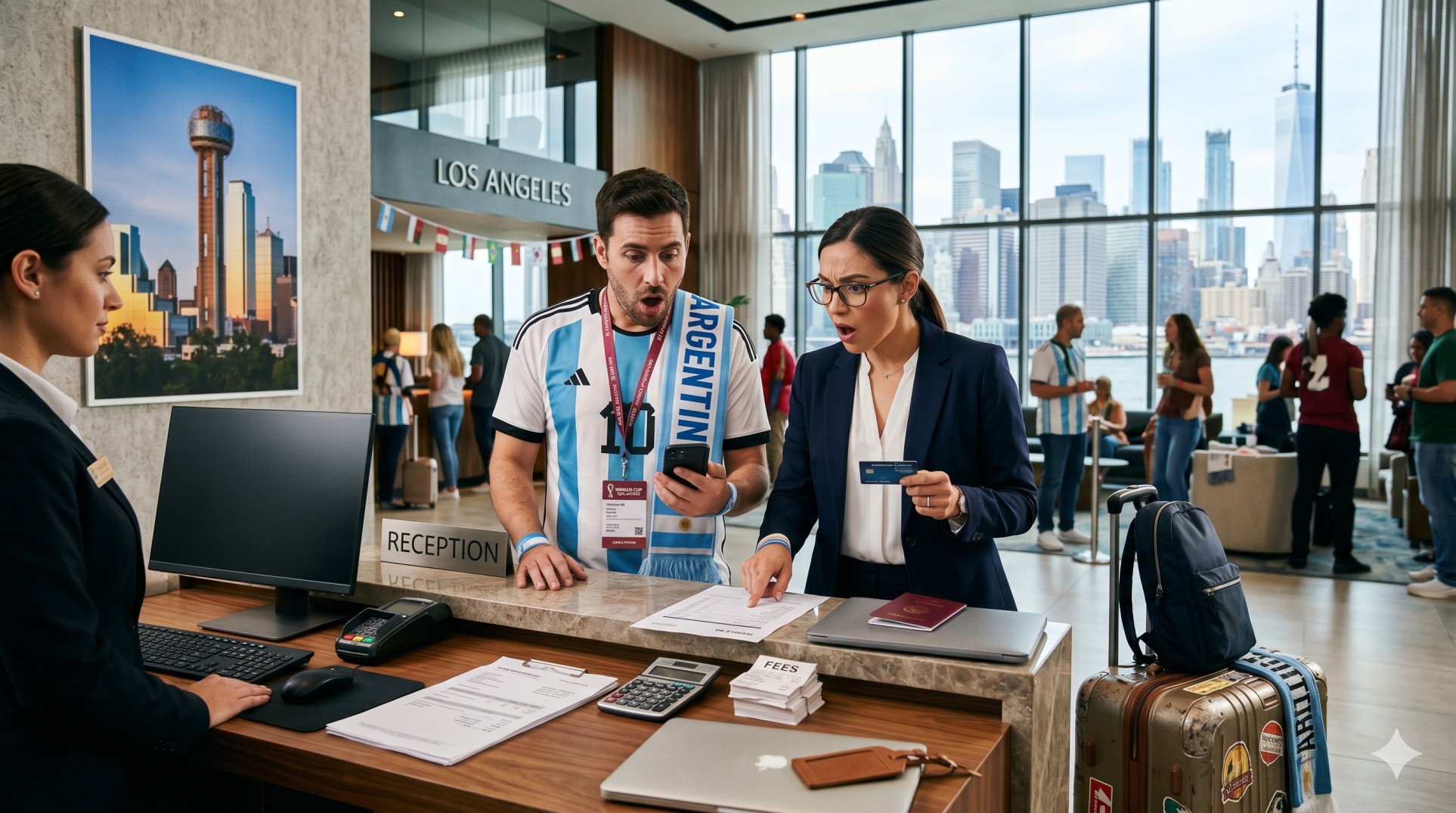
The 2026 FIFA World Cup will bring huge excitement to the United States. However, it can also bring a billing surprise. Your hotel room, Airbnb, or vacation rental may cost more than the nightly rate suggests because of hotel occupancy tax, resort fees, and local tourism taxes.
That matters in host cities like Miami, New York/New Jersey, Los Angeles, Dallas, and Houston. Therefore, if you are booking a stay for the tournament, you should budget for more than the advertised price. The number on the booking page is often only the starting point.
Why the Nightly Rate Is Only the Starting Point
In the United States, lodging bills often include several layers. The room rate appears first. Then taxes and fees are added. In addition, some properties charge extra for services that sound optional but are not always easy to avoid.
That is why a room that looks affordable online can feel much more expensive at checkout. Furthermore, the final bill can vary by city, county, and property type. A hotel in New York may be taxed differently from an Airbnb in Miami or a resort in Los Angeles.
What Can Appear on a Hotel or Airbnb Bill?
Travelers often see more than one extra charge. Some are taxes. Others are fees. However, all of them can raise the final cost of your stay.
- Occupancy tax: A lodging tax charged on the right to stay in a hotel or short-term rental.
- Resort fee: A property fee that may cover amenities, Wi-Fi, gym access, or other services.
- Destination fee: A hotel fee that may be added to the room cost for local services or facilities.
- Local tourism tax: A city, county, or special local tax that supports tourism and venue spending.
- Cleaning fee or host fee: Common on short-term rentals, and sometimes taxable depending on the city.
Important: These charges do not always show up the same way. Sometimes they appear separately. Sometimes they are bundled into the total. Therefore, always read the full booking summary before you pay.
How World Cup Host Cities Add Extra Cost
Each host city follows its own tax rules. However, the pattern is the same. The room rate may look simple, but taxes and fees can stack up fast.
New York/New Jersey
New York treats hotel and short-term rental occupancy as taxable. In New York City, operators and booking services must also charge a separate $1.50 per unit per day unit fee. In addition, local bed taxes may apply in some areas. Therefore, a hotel or Airbnb bill in New York can grow quickly.
New York also requires certain booking services to collect tax on short-term rental occupancy. Furthermore, some extra charges, like service fees, host fees, parking, or cleaning fees, may also be taxable depending on the facts.
Miami
Miami travelers should expect several layers of tax. Florida charges state sales tax on transient rentals, and counties can add local transient rental taxes. In Miami-Dade, local transient rental taxes can also apply.
As a result, a Miami hotel or vacation rental bill may include state tax, local tax, and additional tourism-related charges. In addition, cleaning fees and platform fees can increase the taxable total in some cases.
Dallas and Houston
Texas uses a hotel occupancy tax system that combines state and local layers. The state hotel tax rate is 6%. Local hotel taxes can be added on top of that, and Dallas County can also impose venue-related taxes in some situations.
Texas also taxes many short-term rentals. Therefore, if you book a room, condo, or rental home for less than 30 days, you should expect lodging tax to show up on the bill. Houston follows the same general framework, but local add-ons can still differ.
Los Angeles
Los Angeles is another city where lodging costs can climb quickly. The city transient occupancy tax is commonly 14% of the rent paid, and it can include fees and service charges. Therefore, a hotel bill in Los Angeles may rise well above the nightly rate you first saw online.
That matters for travelers who book through platforms or room resellers. In addition, some hotels add their own service charges or destination fees. So, the final bill may be higher than expected even before you add your meals and transportation.
Why Resort Fees Catch Travelers Off Guard
Resort fees are one of the most frustrating surprises for international visitors. They often appear after you have already chosen the hotel. Furthermore, they may not be clearly reflected in the first price you see.
These fees can cover Wi-Fi, pool access, gym access, local calls, luggage storage, or other amenities. However, whether they are taxable depends on the city and the property structure. In many places, they can increase both the taxable base and the final bill.
Tip: Always ask whether the quoted price includes all mandatory fees and taxes. If not, compare the total stay cost, not just the nightly rate.
Airbnb and Short-Term Rentals Can Also Be Taxed
Do not assume short-term rentals are cheaper simply because the base rate looks lower. Airbnb, vacation homes, condos, and similar stays can carry the same kind of local lodging taxes as hotels.
In New York, booking services must collect sales tax on short-term rental occupancy in many cases. In Florida, transient rentals can trigger state sales tax, local surtax, and county transient rental taxes. In Texas, short-term rentals can also fall under hotel occupancy tax rules.
In addition, short-term rental platforms may add service fees, host fees, or cleaning fees. Those charges can change the final amount you pay. Therefore, always review the complete checkout screen before you confirm the booking.
What Foreign Tourists and NRAs Should Know
Your travel status does not usually remove hotel taxes. Most international visitors and non-resident aliens still pay the same occupancy taxes as everyone else. Therefore, you should plan your budget as if taxes will apply.
That said, some exemptions may exist for special situations. For example, official government business or qualifying exempt organizations may use special paperwork. However, those rules are narrow, and they do not usually apply to ordinary World Cup travel.
Best practice: Ask for the full total before booking. Then save your receipt. That simple step can help with expense tracking, business records, and later questions about what you paid.
Important Forms That Are Often Confused With Lodging Taxes
Many travelers hear U.S. tax form names and assume they affect hotel billing. Usually, they do not. However, these forms are useful to know if you are also doing business, receiving payments, or moving money across the border.
Form W-8BEN and W-8BEN-E
These forms are for foreign status and withholding purposes. They are not hotel tax forms. Therefore, they do not reduce your occupancy tax or eliminate resort fees.
If a bank, platform, or payer asks for one of these forms, it is usually about income, not lodging. In addition, businesses generally use W-8BEN-E, while individuals use W-8BEN.
Form 8840
Form 8840 is used for the closer connection exception to the substantial presence test. That matters for certain federal residency questions. However, it does not change your hotel tax bill.
For most short World Cup trips, this form will not be needed. Still, longer-stay visitors and repeated travelers should know it exists.
FinCEN Form 105
FinCEN Form 105 is a cash reporting form. You file it if you carry, mail, or ship more than $10,000 in currency or monetary instruments into or out of the United States.
That rule is separate from hotel tax. Nevertheless, it matters for business travelers and anyone bringing large amounts of cash to the World Cup.
How to Keep Your Lodging Budget Under Control
You can avoid most surprises with a few simple steps. Furthermore, these steps work well for both tourists and foreign business owners.
- Compare the total price, not just the nightly rate.
- Look for mandatory fees before booking.
- Check whether taxes are already included.
- Save every receipt and booking confirmation.
- Ask about short-term rental cleaning and host fees.
- Use the exact address to understand local tax rules.
In addition, build a cushion into your World Cup budget. A room that seems reasonable online may become noticeably more expensive after taxes and fees. Therefore, leave room for the real total, not just the advertised rate.
Frequently Asked Questions
Why is my hotel bill higher than the advertised room rate?
Because taxes and fees are often added later. Occupancy tax, resort fees, and local tourism taxes can all raise the final bill.
Do Airbnb and vacation rentals pay the same taxes as hotels?
Often yes. Many cities tax short-term rentals, and some platforms also collect fees and taxes at checkout.
Are resort fees taxable?
In many places, yes. Resort fees, destination fees, and similar charges can be taxable or can increase the taxable total.
Do foreign tourists get a special exemption from hotel taxes?
Usually no. Most tourists and non-resident aliens pay the same lodging taxes as other guests unless a narrow exemption applies.
Final Takeaway
If you are traveling to the United States for the 2026 World Cup, do not stop at the nightly rate. Hotel occupancy tax, resort fees, and local tourism taxes can significantly increase the real cost of your stay. Therefore, always compare the full total before you book.
Share this article with fellow traveling fans, bookmark it for your trip planning, and explore our other World Cup tax and travel guides on the blog.
Disclaimer: This article is strictly for educational and informational purposes only. This website does not provide tax or legal services. Readers should consult a certified CPA or tax professional for their specific situations.
