
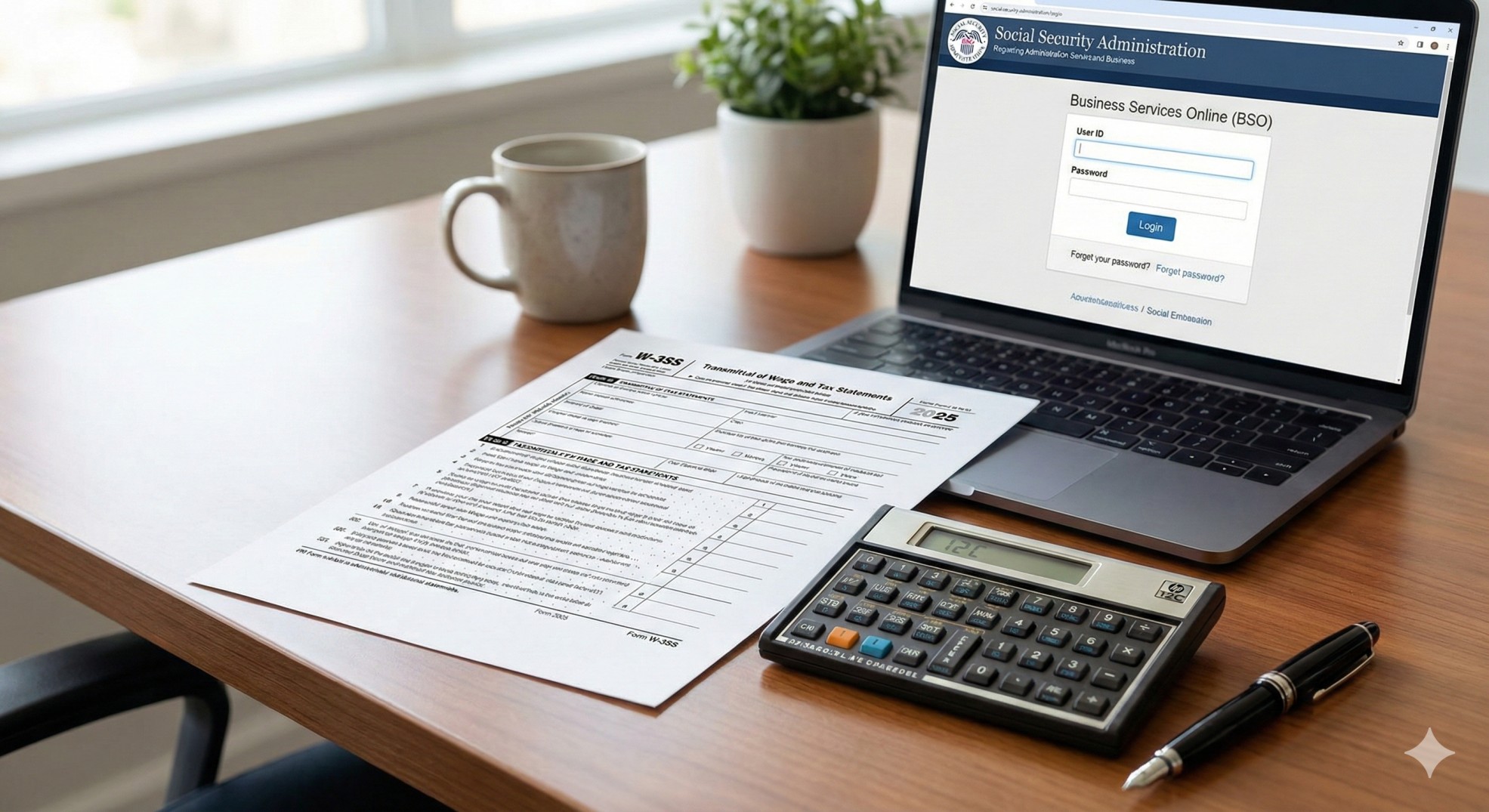
In my 15 years of practice as a CPA, I have found that payroll compliance for U.S. territories is often a source of confusion for many practitioners. Specifically, the Form W-3SS Transmittal is a critical document that summarizes the wage and tax information for employees in American Samoa, Guam, and the U.S. Virgin Islands. This form is not just a simple cover sheet; it is a formal transmittal that must be filed with the Social Security Administration (SSA). Consequently, any discrepancy between the W-3SS and the underlying W-2 forms can trigger a series of IRS and SSA inquiries that are both time-consuming and costly to resolve.
Purpose of Form W-3SS Transmittal
The primary purpose of the Form W-3SS Transmittal is to provide a summary of the total wages, Social Security taxes, and Medicare taxes reported on the individual wage statements for employees in U.S. territories. Furthermore, it serves as the official transmittal for Form W-2AS, Form W-2GU, and Form W-2VI. By filing this form, the employer ensures that the SSA can accurately credit the earnings of territory employees to their respective Social Security records. In addition, the form allows the IRS to reconcile the total amounts reported on the annual W-2s with the quarterly amounts reported on Form 941-SS or Form 944-SS.
Who Must File
Any employer who pays wages to employees in American Samoa, Guam, or the U.S. Virgin Islands must file the Form W-3SS Transmittal. This requirement is triggered regardless of whether the employer is a domestic U.S. entity or a territory-based business. Specifically, if you are issuing a Form W-2AS, Form W-2GU, or Form W-2VI, you must include a W-3SS as the summary transmittal. Furthermore, even if you only have one employee in these territories, the filing requirement remains mandatory. In my experience, many small businesses overlook this form when they first expand their operations into the territories, leading to late-filing notices.
Objective and Merit of the Form
The objective of the Form W-3SS Transmittal is rooted in IRC Section 6051, which mandates that every employer provide a written statement to each employee and a summary statement to the government. The legislative intent is to ensure the integrity of the Social Security and Medicare trust funds. The merit of the form lies in its role as a reconciliation tool. By requiring a summary transmittal, the SSA can quickly identify errors in the individual W-2 filings. Consequently, this form serves as a vital link in the Social Security Administration filing process, ensuring that the benefits earned by territory workers are properly documented and protected.
Describing Different Sections
The Form W-3SS Transmittal is divided into several technical boxes that require precise data entry:
- Box b (Kind of Payer): This identifies the type of employer, such as a 941-SS filer, a household employer, or a 501(c) non-profit.
- Box c (Total number of Forms W-2): This is the count of the individual Form W-2AS, Form W-2GU, or Form W-2VI forms being transmitted.
- Box h (Other EIN used this year): If the business changed EINs during the year, this box must be completed to ensure proper reconciliation.
- Boxes 1 through 19: These boxes correspond directly to the boxes on the individual W-2 forms. For example, Box 1 reports total wages, while Box 4 reports Social Security tax withheld.
- Box 15 (Territory): This is a critical box where you must check the appropriate territory (American Samoa, Guam, or the U.S. Virgin Islands).
Conditions, Situations, and Major Provisions
A major provision that every practitioner must be aware of is the 10-return threshold. Starting with the 2023 tax year, any employer filing 10 or more information returns in aggregate (including W-2s and 1099s) must file electronically. This effectively mandates that almost all Social Security Administration filing for territory employers must occur through the SSA’s Business Services Online (BSO) portal. Furthermore, if you are filing for multiple territories, you must file a separate Form W-3SS Transmittal for each territory. In my 15 years of practice, I have found that “mixing” territories on a single W-3SS is a leading cause of rejected filings.
How To Complete Form
To complete the form with professional accuracy, I recommend a three-step reconciliation workflow. First, aggregate all the data from your Form W-2AS, Form W-2GU, and Form W-2VI forms. Second, compare these totals against the sum of the four quarterly Form 941-SS filings for the year. Third, enter the reconciled totals onto the W-3SS. If you are filing on paper (and meet the under-10-return exception), you must use the official red-ink version of the form. However, I strongly advise all clients to use the BSO portal, as it provides immediate validation and reduces the risk of transcription errors.
When To File & Procedure
The deadline for filing the Form W-3SS Transmittal and the accompanying W-2s is January 31st of the year following the tax year. This deadline applies to both paper and electronic filings. Consequently, there is no “grace period” for electronic filers. The procedure involves either uploading a data file in the EFW2 format to the SSA or using the “W-2 Online” feature on the BSO website to manually enter the data. In my experience, waiting until the last week of January is risky, as the BSO portal often experiences high traffic and potential downtime.
Extension of Time To File & Procedure
If an employer cannot meet the January 31st deadline, they may request a one-time 30-day extension by filing Form 8809, Application for Extension of Time To File Information Returns. This form must be filed by January 31st. However, it is important to note that an extension for filing with the SSA does *not* extend the deadline for furnishing the W-2s to the employees. Furthermore, the IRS only grants these extensions in very limited circumstances, such as a natural disaster or a catastrophic technical failure. In my practice, I view Form 8809 as a last resort rather than a standard planning tool.
Where To File
For electronic filings, the “where” is the SSA’s Business Services Online (BSO) portal. For the few employers who still qualify for paper filing, the Form W-3SS Transmittal and the accompanying Form W-2AS, Form W-2GU, or Form W-2VI must be mailed to the Social Security Administration’s Data Operations Center in Wilkes-Barre, Pennsylvania. The specific address is provided in the form instructions. I always recommend using a private delivery service with a tracking number if you are mailing paper forms, as the SSA does not provide an acknowledgment of receipt for paper filings.
Amending of the Form (Applicability)
If you discover an error after filing the Form W-3SS Transmittal, you must file Form W-3SSc, Transmittal of Corrected Wage and Tax Statements. This form is used to transmit Form W-2c (Corrected Wage and Tax Statement). The procedure for amending is similar to the original filing: you must summarize the “as previously reported” amounts and the “correct” amounts. The statute of limitations for the SSA to adjust earnings records is generally three years, three months, and 15 days after the year in which the wages were paid, so timely corrections are essential.
Penalties of Non-Filing
The penalties for failing to file the Form W-3SS Transmittal or the underlying W-2s are governed by IRC Section 6721. These penalties are adjusted annually for inflation and are currently as follows:
- $60 per return if filed within 30 days of the deadline.
- $120 per return if filed more than 30 days late but by August 1st.
- $330 per return if filed after August 1st or not filed at all.
- Intentional Disregard: If the IRS determines the failure was willful, the penalty increases to $660 per return or 10% of the aggregate amount, with no maximum cap.
In my 15 years of practice, I have seen these penalties reach six figures for mid-sized companies that neglected their territory filings.
CPA’s Professional Insights
One of the most common “audit red flags” I see is a mismatch between the Form W-3SS Transmittal and the total Social Security wages reported on the four quarterly 941-SS forms. The SSA and IRS share this data. If the numbers don’t match, you will likely receive a “Notice of Discrepancy” (SSA-L-93 or SSA-L-94). To avoid this, I always perform a “Year-End Payroll Tie-Out” before the January 31st deadline. Furthermore, if you have employees in multiple territories, ensure your payroll software is correctly tagging the “Territory” box on each W-2, as this is the most frequent data entry error I encounter.
Conclusion
The Form W-3SS Transmittal is the final, critical step in the annual payroll cycle for territory employers. By understanding the technical requirements of the Social Security Administration filing process and ensuring that every Form W-2AS, Form W-2GU, and Form W-2VI is accurately summarized, you protect your business from significant penalties. In the world of territory taxation, precision is paramount. Do not leave your compliance to chance; reconcile your records early and utilize the electronic filing tools provided by the SSA to ensure a smooth and accurate filing season.
Frequently Asked Questions (FAQ)
1. Can I use a standard Form W-3 for territory employees?
No. Form W-3 is for domestic U.S. employees. For American Samoa, Guam, and the U.S. Virgin Islands, you must use the Form W-3SS Transmittal.
2. What is the “Kind of Payer” for a standard business?
For most private-sector businesses, the “Kind of Payer” is “941-SS.” This indicates that you file quarterly federal tax returns for territory employees.
3. Do I need to file a W-3SS if I file my W-2s electronically?
When you file electronically through the BSO portal, the system automatically generates a “digital” W-3SS based on the W-2 data you upload. You do not need to mail a paper W-3SS in this case.
4. How do I report “Third-Party Sick Pay” on the W-3SS?
If you have third-party sick pay, you must check the “Third-party sick pay” box in Box b and report the total amount in the designated boxes. This often requires a separate W-3SS filing from your regular payroll.
5. What happens if I use the wrong EIN on the W-3SS?
This is a major error that will prevent the SSA from matching the wages to your account. You must file a Form W-3SSc and Form W-2c for all affected employees to correct the EIN as soon as the error is discovered.
