
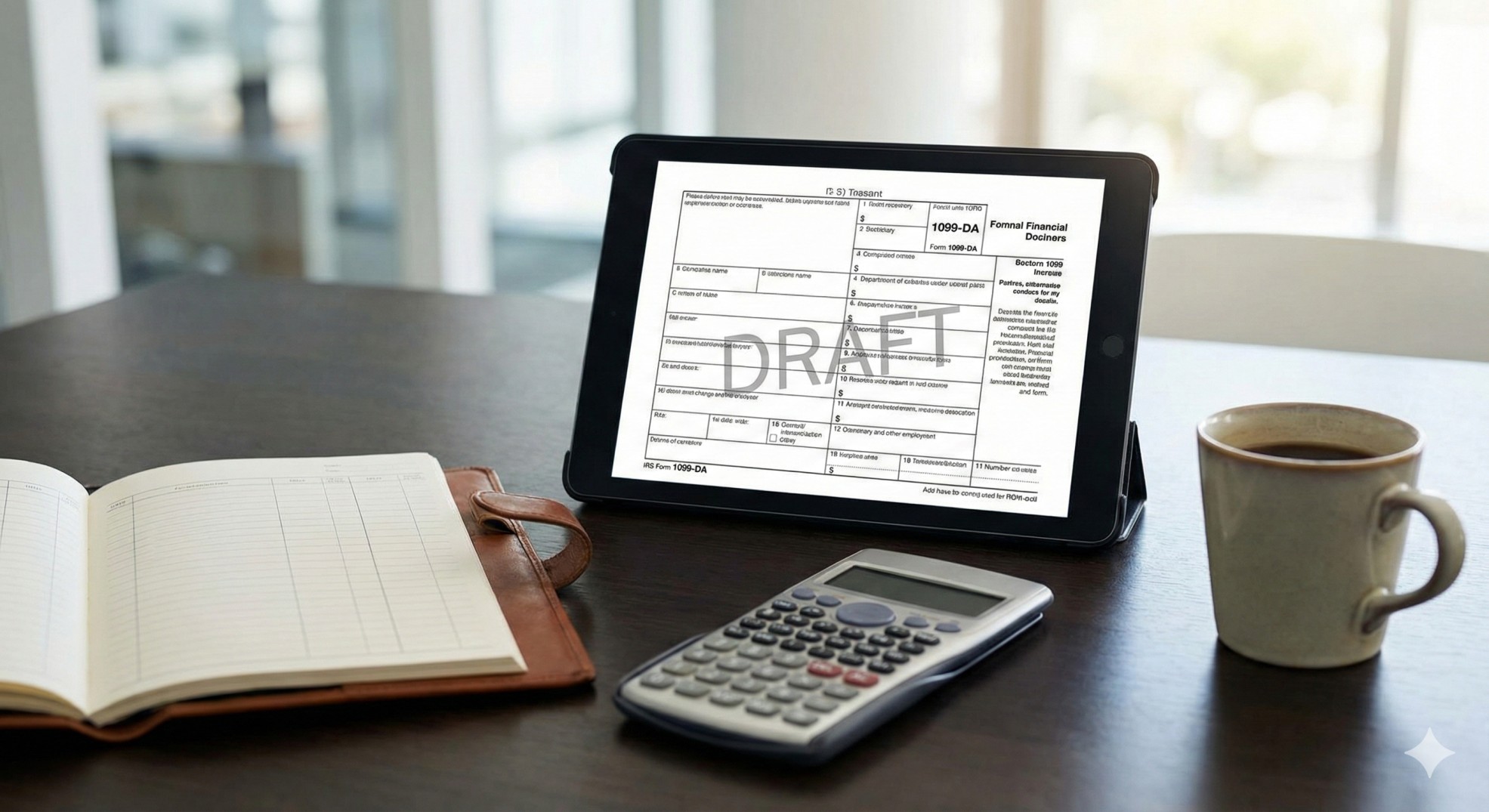
In my 15 years of practice, I have witnessed several seismic shifts in tax compliance, but few compare to the introduction of Form 1099-DA Digital Asset Reporting. For years, the digital asset space operated under a “voluntary” reporting regime that often left taxpayers and the IRS in a state of perpetual reconciliation. However, the landscape has changed. With the Treasury’s release of final regulations in 2024, the IRS has officially integrated cryptocurrency and other digital assets into the standard information reporting framework. This guide provides a deep dive into the technical requirements that every practitioner and high-net-worth investor must understand.
Purpose of Form 1099-DA Digital Asset Reporting
The primary purpose of Form 1099-DA Digital Asset Reporting is to provide the IRS with a standardized data point regarding the gross proceeds and adjusted basis of digital asset transactions. Historically, the lack of third-party reporting led to a significant “tax gap” in the crypto sector. Consequently, this form functions similarly to Form 1099-B used for traditional equities. It ensures that the IRS receives a copy of your transaction history, including the date of acquisition, date of sale, and the resulting gain or loss. By mandating this reporting, the IRS aims to eliminate the ambiguity that has plagued digital asset taxation for over a decade.
Who Must File
The filing obligation for Form 1099-DA Digital Asset Reporting falls upon “brokers” as defined by the newly expanded Digital Asset Broker Regulations. Under the final Treasury regulations (TD 10000), the following entities are generally required to file:
- Custodial Exchanges: Centralized platforms that trade, store, and transfer digital assets for customers.
- Hosted Wallet Providers: Entities that manage private keys on behalf of users while facilitating transactions.
- Digital Asset Kiosk Operators: Physical crypto-ATM providers.
- Certain Processors of Digital Asset Payments (PDAPs): Entities that facilitate the use of crypto for purchasing goods or services.
Notably, the IRS has temporarily exempted non-custodial (decentralized) platforms and unhosted wallet software from these requirements while they continue to refine the technical definitions of “middlemen” in a decentralized environment.
Objective and Merit of the Form
The legislative genesis of this form is found in the Infrastructure Investment and Jobs Act of 2021, which amended IRC Section 6045. The objective is twofold: revenue collection and taxpayer accuracy. From a merit perspective, the form provides a “safe harbor” of sorts for taxpayers. In my experience, many clients struggle with Cost Basis Reporting because they move assets between multiple platforms. By requiring brokers to issue a 1099-DA, the burden of tracking basis begins to shift toward the institutions, theoretically reducing the likelihood of an audit resulting from simple mathematical errors or lost records.
Describing Different Sections
The Form 1099-DA Digital Asset Reporting contains several specific boxes that differ from traditional financial forms:
- Box 1a: Description of the asset (e.g., “Bitcoin” or “Ethereum”) and the quantity sold.
- Box 1b & 1c: The acquisition date and sale date, which are critical for determining long-term vs. short-term capital gains treatment.
- Box 1d: Gross proceeds, representing the fair market value at the time of the transaction.
- Box 1e: Cost or other basis. This is where Cost Basis Reporting becomes technically demanding, especially for assets transferred from other platforms.
- Box 5: A checkbox indicating if the asset is a “non-covered security,” typically meaning it was acquired before the reporting effective dates.
- Box 7: This unique field requires the “Digital Asset Address” (wallet address) and the “Transaction Hash,” providing a direct link to the blockchain ledger.
Conditions, Situations, and Major Provisions
Several complex provisions govern Form 1099-DA Digital Asset Reporting. First, the “Transfer Statement” rule under Section 6045A requires brokers to pass basis information to one another when a user moves assets between exchanges. If this information is missing, the broker may report the basis as zero, which is a significant trap for the unwary. Second, the regulations provide a “de minimis” threshold for certain stablecoin transactions to prevent a flood of low-value reports. Furthermore, practitioners must be aware that while wash sale rules under Section 1091 do not currently apply to digital assets, the 1099-DA framework is built to capture the data necessary should Congress extend those rules in the future.
How To Complete Form
For a broker, completing the form involves a rigorous data aggregation process. First, the broker must determine the Fair Market Value (FMV) in U.S. dollars at the exact timestamp of the trade. Second, they must apply the appropriate accounting method—usually First-In-First-Out (FIFO) unless the taxpayer has provided “Specific Identification” instructions before the sale. Third, the broker must subtract any transaction fees (gas fees) from the gross proceeds or add them to the basis. Finally, the broker must validate the taxpayer’s TIN to avoid backup withholding requirements under Section 3406.
When To File & Procedure
The filing timeline for Form 1099-DA Digital Asset Reporting follows the standard information return cycle. Brokers must furnish the statement to the recipient by January 31st of the year following the transaction. For filing with the IRS, the deadline is February 28th if filing by paper, or March 31st if filing electronically. Given the volume of data involved in digital assets, the IRS strongly encourages electronic filing for all participants.
Extension of Time To File & Procedure
If a broker requires additional time, they may file Form 8809 to obtain an automatic 30-day extension for filing with the IRS. However, this does not extend the deadline for furnishing the form to the taxpayer. To extend the recipient deadline, the broker must send a formal letter to the IRS explaining the “extraordinary circumstances” that prevent timely delivery. In my practice, I emphasize that failing to furnish the form to the recipient on time is a frequent trigger for taxpayer complaints and subsequent IRS inquiries.
Where To File
Brokers must file Form 1099-DA Digital Asset Reporting electronically if they file 10 or more information returns in a calendar year. This is done through the IRIS (Information Returns Intake System) or the FIRE system. For the few who still qualify for paper filing, the forms are sent to the Internal Revenue Service Center listed in the form instructions, determined by the broker’s legal residence or principal place of business.
Amending of the Form (Applicability)
If an error is discovered after the form has been filed, the broker must issue a “Corrected” 1099-DA. This is common when Cost Basis Reporting is updated due to a late-arriving transfer statement from another broker. The broker must check the “CORRECTED” box at the top of the form and submit the new data to both the IRS and the recipient as soon as possible. The statute of limitations for the IRS to assess penalties on incorrect information returns is generally three years from the date of filing.
Penalties of Non-Filing
The penalties for failing to adhere to Digital Asset Broker Regulations are substantial. Under IRC Sections 6721 and 6722, the penalty for failure to file a correct information return is $330 per return, with a maximum annual penalty exceeding $3.9 million for large businesses. If the IRS proves “intentional disregard,” the penalty increases to $660 per return or 10% of the aggregate amount of the items required to be reported, with no maximum cap. However, brokers may seek relief under the “Reasonable Cause” defense if they can demonstrate that the failure was due to circumstances beyond their control and that they acted in a responsible manner.
CPA’s Professional Insights
In my 15 years of practice, I have found that the biggest risk with Form 1099-DA Digital Asset Reporting is the “Basis Mismatch.” Many taxpayers will receive a 1099-DA with a blank or zero basis because they moved assets from a cold wallet to an exchange. The IRS computers will flag this as a 100% profit transaction. Consequently, I advise all clients to maintain a contemporaneous sub-ledger using third-party software. This allows us to “step up” the basis on Form 8949 and provide the necessary disclosure to avoid an automated underreporter notice (CP2000).
Conclusion
The implementation of Form 1099-DA Digital Asset Reporting marks the end of the “Wild West” era of crypto taxation. While the Infrastructure Investment and Jobs Act has created a more complex compliance environment, it also provides a structured path for legitimate investors to report their gains accurately. As Digital Asset Broker Regulations continue to evolve, staying ahead of the technical requirements of IRC Section 6045 is the only way to ensure long-term tax health and avoid the heavy hand of IRS penalties.
Frequently Asked Questions (FAQ)
1. Does Form 1099-DA apply to NFTs?
Yes, if the NFT is traded through a broker that meets the definition under the final regulations. However, the reporting for certain “collectibles” may involve different tax rates, even if reported on the same form.
2. What if my 1099-DA shows the wrong cost basis?
You should not ignore it. You must report the transaction on Form 8949 and use an adjustment code (typically Code B) to show the correct basis, while ensuring you have the documentation to support your claim.
3. Will I get a 1099-DA for “staking” rewards?
Generally, staking rewards are considered ordinary income at the time of receipt and may be reported on a Form 1099-MISC. The 1099-DA would only be issued later when you sell or exchange those rewarded tokens.
4. Does this form mean the IRS knows about my private cold wallet?
Not directly. However, when you transfer assets from a private wallet to a broker to sell, the broker is required to report the transaction and may be required to include the originating wallet address in Box 7.
5. Are stablecoins exempt from 1099-DA reporting?
There is a “de minimis” rule for certain qualifying stablecoins to reduce the burden of reporting everyday transactions, but large-scale sales or exchanges of stablecoins are still subject to the reporting requirements.
