
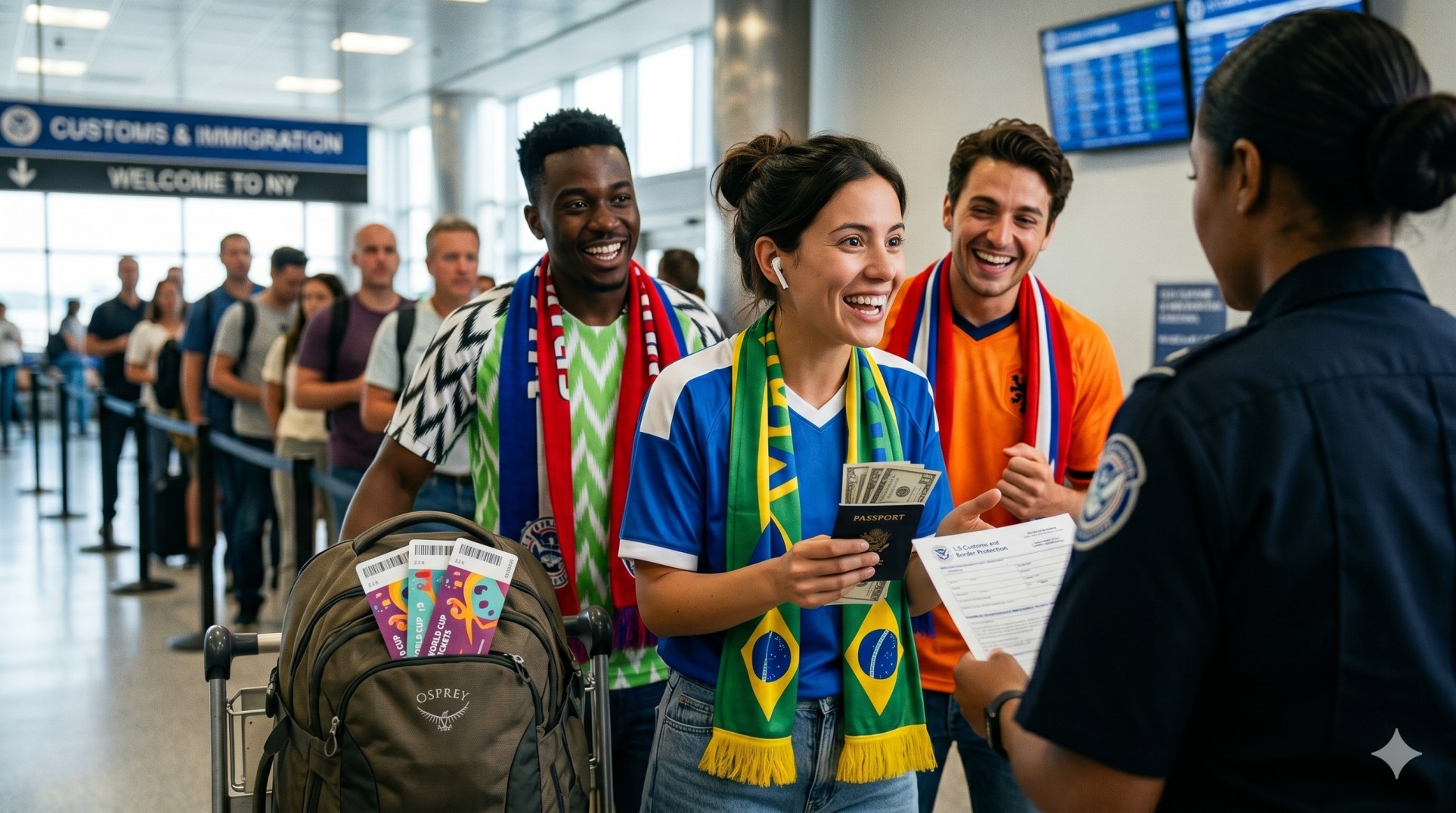
The 2026 FIFA World Cup will be an incredible global celebration. Millions of passionate fans will travel to the United States. Naturally, you will need significant funds to pay for hotels, tickets, and food. However, bringing money to the US often causes massive anxiety for international tourists.
Many visitors worry that the IRS will tax their personal savings. Furthermore, they fear that customs officers will confiscate their cash at the airport. Fortunately, most of these fears are based on common travel myths.
You can easily fund your luxury vacation without paying unnecessary taxes. However, you must understand specific banking and customs regulations. Let us explore how to move your wealth safely and efficiently during your World Cup adventure.
The Big Myth: Is Wiring Personal Wealth Taxed?
Many foreign tourists assume that wiring large sums of money triggers a tax bill. For example, you might wire $50,000 to a US bank account to rent a Miami mansion. Consequently, you might worry that the IRS will take a 30% cut.
Fortunately, this is a complete myth. The United States does not tax you for simply moving your own money. Transferring your personal wealth across borders is never a taxable event. Therefore, your savings remain entirely yours.
The IRS only taxes income. Because your savings were already taxed in your home country, they are safe. However, while the IRS will not tax your wire transfer, the government still watches it closely.
Anti-Money Laundering (AML) Flags
The United States enforces incredibly strict banking laws. Specifically, the Bank Secrecy Act monitors all large financial transactions. If you wire more than $10,000 into the country, the system automatically flags it.
Consequently, the receiving bank must file a Currency Transaction Report. This is a standard anti-money laundering (AML) procedure. The bank simply wants to ensure the money comes from a legitimate source.
If the bank suspects illegal activity, they will freeze your funds immediately. Therefore, a frozen account could ruin your plans in Dallas or Los Angeles. You must take proactive steps to prevent this disaster.
How to Prevent Frozen Wire Transfers
You can easily avoid AML account freezes with simple communication. First, you should notify the receiving US bank before you send the wire. Tell them exactly why you are transferring the funds.
Second, you must provide clear proof of the source of funds. For instance, you can show a bank statement from your home country. Alternatively, you can provide a recent pay stub or property sale document.
Ultimately, transparency is your best defense. When the bank understands the money is for a World Cup vacation, they will process it smoothly. Therefore, your funds will be ready when you arrive.
Carrying Cash: The Airport Precaution
Some international fans prefer to carry physical cash. Indeed, carrying cash helps you avoid expensive international wire transfer fees. Furthermore, it prevents unexpected credit card blocks while traveling.
You might plan to bring a large stack of Euros or Dollars to New York/New Jersey. Once again, the US government does not tax the cash in your suitcase. However, Customs and Border Protection (CBP) enforces very strict reporting rules.
If you ignore these airport rules, you face severe consequences. The government will not tax your money, but they might confiscate it entirely. Therefore, you must understand the declaration limits.
Understanding FinCEN Form 105
The golden rule of US customs is the $10,000 limit. Specifically, if you bring more than $10,000 in currency into the US, you must declare it. This rule applies to all forms of currency combined.
To declare your money legally, you must file FinCEN Form 105. This is the “Report of International Transportation of Currency or Monetary Instruments.” You must hand this form to the customs officer when you arrive.
Filing this form is completely free. Furthermore, it does not trigger any taxes or import duties. It simply tells the government that your money is legitimate. Therefore, you should never hide your cash from customs officers.
The Danger of “Structuring” Your Cash
Many families try to outsmart the customs rules. For example, a father might carry $15,000. To avoid the paperwork, he gives $8,000 to his wife and keeps $7,000 for himself.
Consequently, they both fall under the $10,000 limit. However, this strategy is a massive mistake. The US government considers this a federal crime called “structuring.” The $10,000 limit applies to individuals and families traveling together.
If customs officers catch you splitting cash to avoid reporting, they will seize all of it. Therefore, you must declare the total family amount on a single FinCEN Form 105. Honesty is always the safest policy at the border.
Forex and Currency Exchange: Do You Owe Tax?
Global currency markets fluctuate constantly. Therefore, you might exchange a massive amount of foreign currency into US Dollars. For instance, you might convert British Pounds to USD before your trip.
If the exchange rate shifts in your favor, you technically make a profit. Consequently, many tourists wonder if they owe the IRS taxes on these currency gains. The US tax code addresses this specific issue directly.
Fortunately, the rules are very favorable for international tourists. You can usually exchange your vacation money without worrying about capital gains taxes. Let us explore the specific legal exemption that protects you.
The Section 988 Forex Exemption
The IRS governs foreign currency transactions under Section 988 of the tax code. Generally, currency exchange profits are taxable for US citizens. However, non-resident aliens enjoy a special exemption for personal transactions.
Specifically, if you exchange currency strictly for personal travel expenses, your gains are tax-exempt. Therefore, if your Euros gain value against the Dollar while you visit Miami, you owe nothing. You can spend that extra profit on better match tickets.
This exemption covers hotels, food, transportation, and entertainment. Ultimately, the IRS does not want to track the daily exchange rates of millions of tourists. Therefore, your vacation funds remain completely safe.
The Day-Trading Warning
However, you must understand the limits of this exemption. The Section 988 exemption only applies to personal travel expenses. It absolutely does not apply to active currency trading.
If you sit in your Los Angeles hotel room day-trading Forex on your laptop, you face different rules. Active trading generates US-sourced capital gains. Consequently, the IRS might demand a cut of your trading profits.
Therefore, you must separate your vacation money from your investment portfolio. Keep your travel funds in a standard checking account. Ultimately, this prevents the IRS from classifying you as a professional trader.
Real-Life Case Studies: Funding Your Trip
Understanding financial rules is much easier with real-world examples. Therefore, let us examine three realistic scenarios involving traveling football fans. These case studies highlight the right and wrong ways to move your money.
Case Study 1: The Wire Transfer to Miami
Carlos is a wealthy business owner from Spain. He wants to rent a luxury yacht in Miami for the World Cup. The rental company requires a $60,000 wire transfer upfront.
Carlos wires the money directly from his Spanish bank to the Miami company. Because he is paying a business for a service, there are no gift tax issues. However, the US bank flags the massive incoming wire under AML rules.
Fortunately, Carlos anticipated this. He previously emailed the yacht company a copy of his Spanish bank statement. The company provided this proof to their bank. Consequently, the bank cleared the funds immediately, and Carlos enjoyed his yacht.
Case Study 2: The Cash Confiscation in New York
Thomas and his brother travel from the UK to New York/New Jersey. They bring $25,000 in physical cash to pay for scalped tickets and parties. They want to avoid filling out customs paperwork.
Therefore, Thomas carries $12,500, and his brother carries $12,500. They do not declare the money. At the customs checkpoint, an officer searches their bags and finds the cash.
Because they are traveling together and split the money to avoid reporting, they committed structuring. The customs officers confiscate the entire $25,000. Ultimately, their World Cup trip is completely ruined because they ignored FinCEN Form 105.
Case Study 3: The Forex Win in Los Angeles
Maria travels from Mexico to Los Angeles for the tournament. She converts a large amount of Mexican Pesos into $15,000 USD. She places the money in a US travel account.
During her month-long stay, the Peso drops significantly in value. Technically, her $15,000 USD is now worth much more in her home currency. She effectively made a $2,000 profit on the exchange rate.
Because she uses this money strictly to buy food, hotel rooms, and match tickets, she is safe. The Section 988 exemption protects her personal travel funds. Therefore, Maria owes zero US taxes on her currency gain.
Actionable Tips for a Smooth Financial Trip
You can easily avoid banking headaches and customs nightmares with proper planning. The rules are strict, but compliance is very straightforward. Here are the exact steps you must take before your trip.
Prepare Your Documentation
First, always carry printed proof of your funds. If you bring cash, bring the withdrawal receipt from your home bank. This proves the money was legally obtained and already taxed in your home country.
Second, if you plan to wire money, communicate with the receiving party. Ensure they alert their US bank about the incoming international transfer. Transparency prevents automated security freezes.
Download FinCEN Form 105 Early
Third, do not wait until you reach the customs desk to fill out paperwork. You can download and print FinCEN Form 105 from the internet before your flight. Fill it out completely while you are on the airplane.
Consequently, you will breeze through the customs checkpoint. The officers appreciate prepared travelers. Ultimately, declaring your cash takes less than five minutes and guarantees your money stays safe.
Frequently Asked Questions (FAQ)
Is there a limit to how much cash I can bring to the US?
No, there is absolutely no legal limit to the amount of cash you can bring into the United States. You can bring one million dollars if you want. However, you must declare any amount over $10,000 by filing FinCEN Form 105 at the customs checkpoint.
Does the IRS tax money transferred from a foreign bank?
No, the IRS does not tax the transfer of personal wealth. Moving your own savings from a foreign bank to a US bank is not a taxable event. The IRS only taxes income, not the movement of existing, previously taxed assets.
What happens if I forget to declare my cash at customs?
If you fail to declare cash exceeding $10,000, the consequences are severe. Customs and Border Protection (CBP) can legally seize and confiscate the entire amount. Furthermore, you might face civil penalties or criminal prosecution for smuggling. Therefore, always declare your funds.
Can my family split $15,000 so we don’t have to declare it?
No, you cannot split the money. The $10,000 reporting threshold applies to individuals and family members traveling together. Splitting the cash to avoid the reporting requirement is a federal crime known as structuring. You must declare the total $15,000 on a single form.
Conclusion and Next Steps
The 2026 World Cup will be an unforgettable experience. You will create lifelong memories in amazing host cities like Miami, Dallas, and Los Angeles. However, you must manage your travel funds wisely to avoid unnecessary stress.
By understanding the rules for bringing money to the US, you protect your wealth. Remember that wiring personal savings is tax-free. Furthermore, always file FinCEN Form 105 if you carry large amounts of cash. Therefore, you can focus entirely on enjoying the football matches.
Did you find this financial guide helpful? Please share this article with your fellow traveling fans! In addition, bookmark this page so you can easily reference it during your trip planning. Finally, explore our other helpful World Cup tax and travel guides on our blog to ensure a smooth vacation.
Disclaimer: This article is strictly for educational and informational purposes only. This website does not provide tax, legal, or accounting services. The information presented here may not reflect the most current legal developments. Therefore, readers should consult a certified CPA or qualified tax professional for advice regarding their specific situations.
