
⚡ Executive Summary: Profit Motive and Tax Deductions
- The IRS Safe Harbor Rules in 2026 state that if you show a net profit in three out of five consecutive years, your activity is legally presumed to be a business.
- Under current tax law, hobby expenses are 0% deductible. If classified as a hobby, you must pay income tax on 100% of your gross revenue without writing off any costs.
- If you fail the mathematical safe harbor test, you must prove your profit motive using the IRS’s strict nine-factor “facts and circumstances” test.
- Navigating the IRS Safe Harbor Rules successfully means keeping your personal and business finances entirely separate from day one.
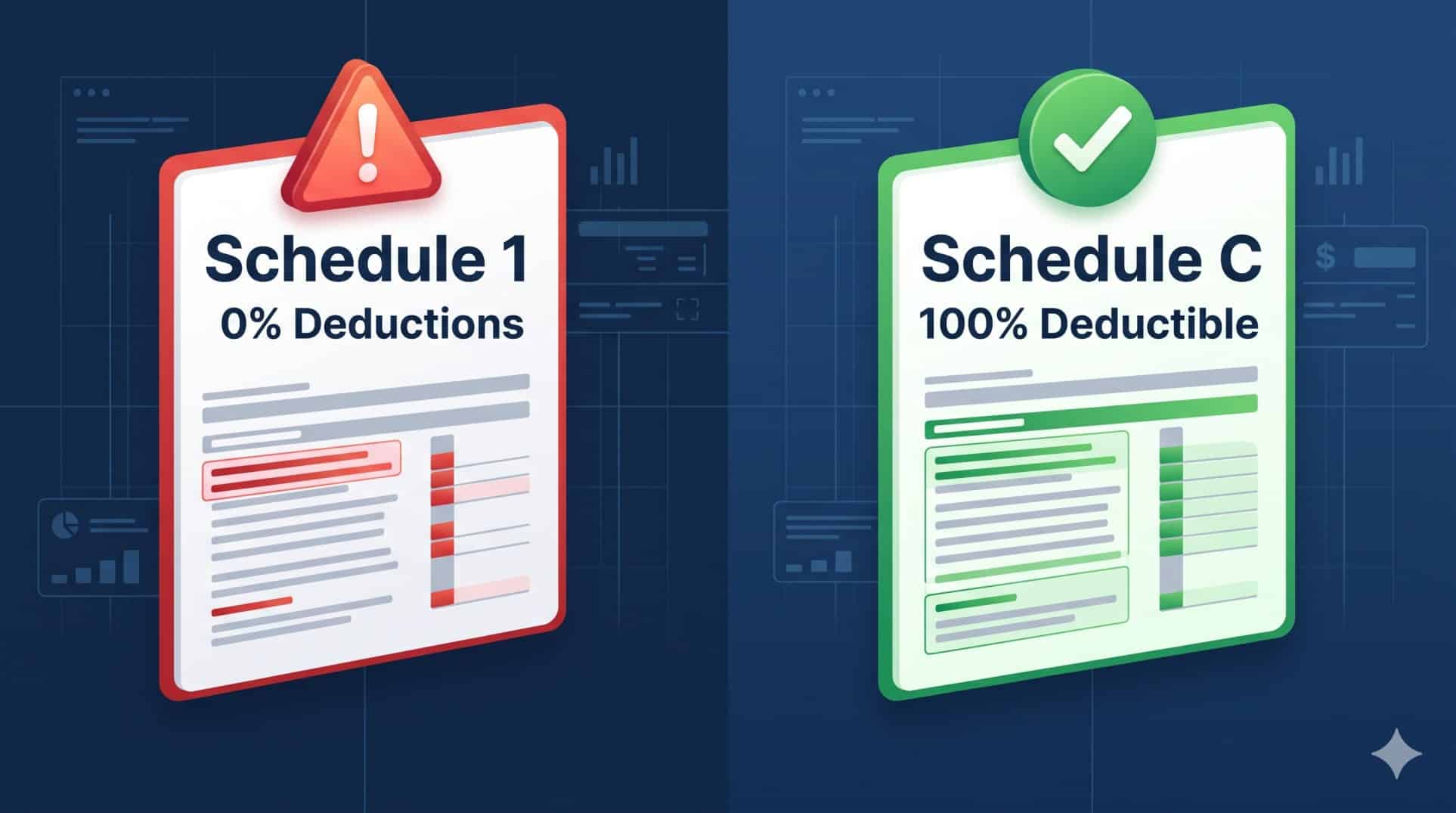
Table of Contents
- The Tax Trap: Why the Hobby vs. Business Distinction Matters
- How the IRS Safe Harbor Rules in 2026 Protect Your Deductions
- Failing the Safe Harbor: The 9-Factor IRS Profit Motive Test
- Real-World Examples: When side-hustlers Face the IRS
- How to Protect Your Deductions When starting to make real money
- Frequently Asked Questions About the IRS Safe Harbor Rules in 2026
You started a passion project in your garage, and now people are actually buying your products. If you are starting to make real money, the IRS is paying attention. The federal tax code draws a hard, unforgiving line between a legitimate commercial enterprise and a personal pastime.
Millions of side-hustlers operate in a gray area, claiming massive deductions for equipment, travel, and supplies while reporting zero net profit year after year. The IRS actively hunts for these tax returns. When they find them, they reclassify the activity, disallow the deductions, and send a bill for back taxes and penalties.
Understanding the IRS Safe Harbor Rules in 2026 is the only way to protect your write-offs. We are going to break down exactly how the federal government evaluates your profit motive. You will see the exact math behind the three-year profitability test, learn how to survive the nine-factor audit, and find out how to keep your deductions completely legal.
The Tax Trap: Why the Hobby vs. Business Distinction Matters
The Hobby vs. Business classification dictates exactly how your expenses are treated on your tax return. The financial difference between the two is staggering.
If the IRS classifies your operation as a legitimate business, you report your income and expenses on Schedule C. You are allowed to deduct all ordinary and necessary business expenses. If you spend more than you make, that net loss passes through to your Form 1040. It can offset your W-2 wages or investment income, lowering your overall tax bill.
If the IRS classifies your operation as a hobby, you fall into a brutal tax trap. You are legally required to report 100% of your gross revenue as “Other Income” on Schedule 1. But under current tax law, you cannot deduct a single penny of your expenses.
Because miscellaneous itemized deductions remain suspended, the old rule that allowed hobbyists to deduct expenses up to their hobby income no longer exists. If you sell $5,000 worth of handmade jewelry but spend $8,000 on supplies, you pay income tax on the full $5,000. You absorb the $8,000 cost entirely out of pocket.
| Tax Feature | Legitimate Business (Schedule C) | Personal Hobby (Schedule 1) |
|---|---|---|
| Gross Revenue | 100% Taxable | 100% Taxable |
| Expense Deductions | Fully Deductible | 0% Deductible |
| Net Losses | Can offset other income (e.g., W-2) | Cannot be claimed |
| Self-Employment Tax | Applies to net profit | Does not apply |
How the IRS Safe Harbor Rules in 2026 Protect Your Deductions
The IRS does not expect every new company to be profitable on day one. They know that building a customer base takes time and capital. To prevent subjective arguments over what constitutes a “profit motive,” the tax code provides a mathematical baseline.
The IRS Safe Harbor Rules in 2026 state that an activity is presumed to be a business if it produces a net profit in at least three out of the last five consecutive tax years.
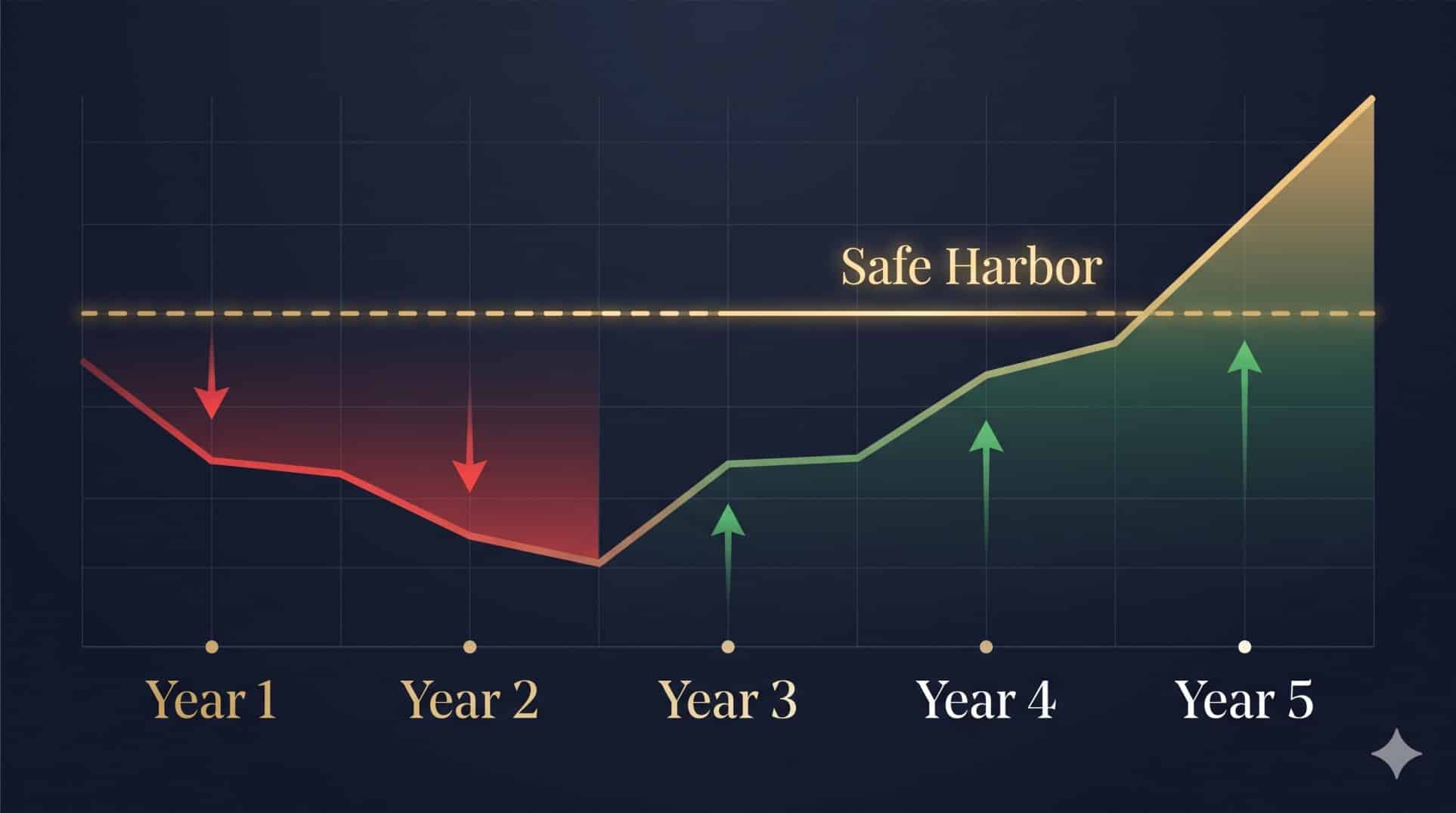
If you meet this 3-out-of-5 test, the burden of proof shifts. The IRS must presume you are operating a legitimate business. If an auditor wants to reclassify you as a hobby, they have to prove you are not trying to make money—a very difficult argument for them to win when the math shows otherwise.
There is a specific exception for taxpayers who breed, train, show, or race horses. Because the equine industry requires massive upfront capital and long development timelines, the safe harbor test for horses is two profitable years out of seven consecutive years.
Failing the Safe Harbor: The 9-Factor IRS Profit Motive Test
What happens if you have three years of losses and only two years of profit? You lose the safe harbor presumption. The burden of proof shifts back to you. You must prove to the IRS that you possess a genuine profit motive.
Navigating the IRS Safe Harbor Rules requires understanding that failing the mathematical test does not automatically make you a hobby. It just forces you to defend your operation using the IRS’s nine-factor “facts and circumstances” test, found in Treasury Regulation Section 1.183-2(b).
“The determination whether an activity is engaged in for profit is to be made by reference to objective standards, taking into account all of the facts and circumstances of each case.”
— Treasury Regulation Section 1.183-2(a)
Auditors will evaluate your operation against these nine criteria:
- Manner of operation: Do you keep pristine books, maintain a separate business bank account, and operate like a professional? This is a common trap for side-hustlers who mix personal and business funds.
- Expertise: Do you have industry knowledge, or did you hire experts to advise you? Taking courses or hiring a business coach proves intent.
- Time and effort: Do you spend substantial time working on the activity? Spending 40 hours a week shows business intent, while two hours a month looks like a hobby.
- Asset appreciation: Do you expect the assets you purchase (like land, equipment, or breeding stock) to increase in value?
- Past success: Have you successfully turned other similar activities into profitable businesses in the past? Serial entrepreneurs get more leeway here.
- History of income or loss: Are your losses due to startup phase challenges or unforeseen circumstances (like a natural disaster)? A permanent string of losses is a massive red flag.
- Amount of occasional profits: Even if you only have one profitable year, was the profit substantial enough to justify the prior losses? One $50,000 profit year easily justifies five $2,000 loss years.
- Financial status: Do you have a high-paying W-2 job that you are trying to offset with these losses? The IRS aggressively targets high-income earners who use side businesses as tax shelters.
- Personal pleasure: Does the activity involve significant recreation? The IRS is highly suspicious of travel blogs, photography, and auto racing.
Real-World Examples: When side-hustlers Face the IRS
Let’s look at how these rules apply to real taxpayers. These hypothetical scenarios demonstrate the exact math and logic the IRS uses during an examination.
Scenario 1: The Etsy Seller (Meets Safe Harbor)
Jane sells custom leather goods online. In Year 1, she lost $4,000 buying tools. In Year 2, she lost $1,000. In Years 3, 4, and 5, she generated net profits of $500, $2,000, and $4,500.
The Logic: Jane meets the 3-out-of-5 test. The IRS Safe Harbor Rules in 2026 protect her. The IRS presumes she is a business, and her early losses remain fully deductible against her other income. She does not need to argue the nine-factor test.
Scenario 2: The Weekend Photographer (Fails Safe Harbor, Fails 9-Factor)
Mark works as a corporate executive earning $200,000 a year. He loves photography. He buys $15,000 worth of camera gear and writes it off on Schedule C. He shoots a few weddings for friends, earning $3,000. He reports a $12,000 net loss. He repeats this pattern for four years, never showing a profit.
The Logic: Mark fails the safe harbor test. During an audit, the IRS applies the nine-factor test. Mark mixes his photography income with his personal checking account. He has no business plan. He has a high W-2 income, and photography is inherently recreational.
The Result: The IRS reclassifies the activity as a hobby. Mark must report his $3,000 of revenue as taxable income. His $15,000 in deductions are completely disallowed. Assuming a 24% tax bracket, Mark pays $720 in phantom tax on money he never actually kept, plus he absorbs the $15,000 equipment cost out of pocket.
Scenario 3: The Tech Consultant (Fails Safe Harbor, Passes 9-Factor)
David starts a specialized software consulting firm. He loses money in Years 1, 2, and 3 while building his proprietary software. He fails the 3-out-of-5 safe harbor test.
The Logic: The IRS audits David in Year 4. David produces a formal business plan, a separate corporate bank account, and proof that he hired marketing experts to acquire clients. He shows that his losses were strictly due to the long development cycle of his software, not personal recreation.
The Result: Despite failing the safe harbor, David wins the nine-factor test. The IRS agrees he has a genuine profit motive. His deductions are sustained.
How to Protect Your Deductions When starting to make real money
Entrepreneurs who are starting to make real money often reinvest every dollar back into the operation. This aggressive reinvestment can artificially suppress your net profit, causing you to fail the safe harbor test.
To audit-proof your tax return, you must operate like a corporation from day one.
First, never mix funds. Open a dedicated business checking account. If you buy a printer for your business using your personal credit card, you are handing the IRS ammunition to call your operation a hobby.
Second, write a business plan. It does not need to be a 50-page prospectus. A simple, one-page document outlining your target market, your pricing strategy, and your projected timeline to profitability proves your intent. Update this plan annually. If you lose money three years in a row, document exactly what operational changes you are making to reverse the trend.
Finally, secure the proper licenses. Register an LLC with your state. Obtain an Employer Identification Number (EIN) from the IRS. Apply for a local city business license. Hobbyists do not pay for commercial liability insurance or file articles of organization. Businesses do.
Frequently Asked Questions About the IRS Safe Harbor Rules in 2026
What are the IRS Safe Harbor Rules in 2026?
The IRS Safe Harbor Rules in 2026 require you to show a net profit in at least three out of five consecutive tax years. If you meet this mathematical threshold, the IRS legally presumes your activity is a for-profit business rather than a personal hobby.
How does the IRS determine Hobby vs. Business status?
If you do not meet the safe harbor test, the IRS uses a nine-factor facts and circumstances test. They evaluate how you run the operation, your expertise, the time you invest, your history of losses, and whether the activity brings you significant personal pleasure.
Can side-hustlers deduct startup costs?
Yes, but only if the side hustle is classified as a legitimate business. If it is a business, you can deduct up to $5,000 in startup costs in your first year. If the IRS classifies the activity as a hobby, you cannot deduct any startup costs.
What should I do if I am starting to make real money but still showing a loss?
If you are starting to make real money but your heavy reinvestment keeps your net income below zero, you must rely on the nine-factor test. Maintain pristine records, use a separate business bank account, and document the specific operational changes you are making to eventually achieve profitability.
Are hobby expenses deductible in 2026?
No. Under current tax law, miscellaneous itemized deductions are suspended. This means you cannot deduct hobby expenses, even up to the amount of your hobby income. You must report 100% of your gross hobby revenue as taxable income.
Does forming an LLC automatically make me a business?
No. While forming an LLC is a strong indicator of a profit motive under the nine-factor test, it is not a guarantee. The IRS can still reclassify an LLC’s activities as a hobby if the operation consistently loses money and lacks a genuine intent to generate profit.
What is the safe harbor rule for breeding horses?
Because the equine industry requires significant time to generate revenue, the safe harbor rule is relaxed. For activities involving breeding, training, showing, or racing horses, you only need to show a profit in two out of seven consecutive years.
Navigating the IRS Safe Harbor Rules seems complicated; can I just skip claiming deductions?
You can choose not to claim deductions, but you are still legally required to report all gross revenue generated by the activity. Skipping deductions ensures you will not face a hobby loss audit, but it also means you will pay the maximum possible tax on your revenue.
Can the IRS audit past years if they reclassify my business?
Yes. If the IRS audits your current tax return and determines your activity is a hobby, they will typically open examinations into your past three tax years to disallow the losses you previously claimed.
How do I report hobby income on my tax return?
Hobby income is not reported on Schedule C. It must be reported on Schedule 1 (Form 1040) under “Other Income.” Because it is not business income, it is not subject to self-employment tax, but it is fully subject to federal and state income taxes.
Disclaimer: This content provides general information for educational purposes only. Tax laws are complex and change often. It is not professional tax, legal, or financial advice. Always consult a qualified tax professional for personalized guidance regarding your specific situation. Ourtaxpartner.com is not responsible for any actions taken based on the information provided herein.
