
⚡ Executive Summary: 2026 Offshore Reporting Rules
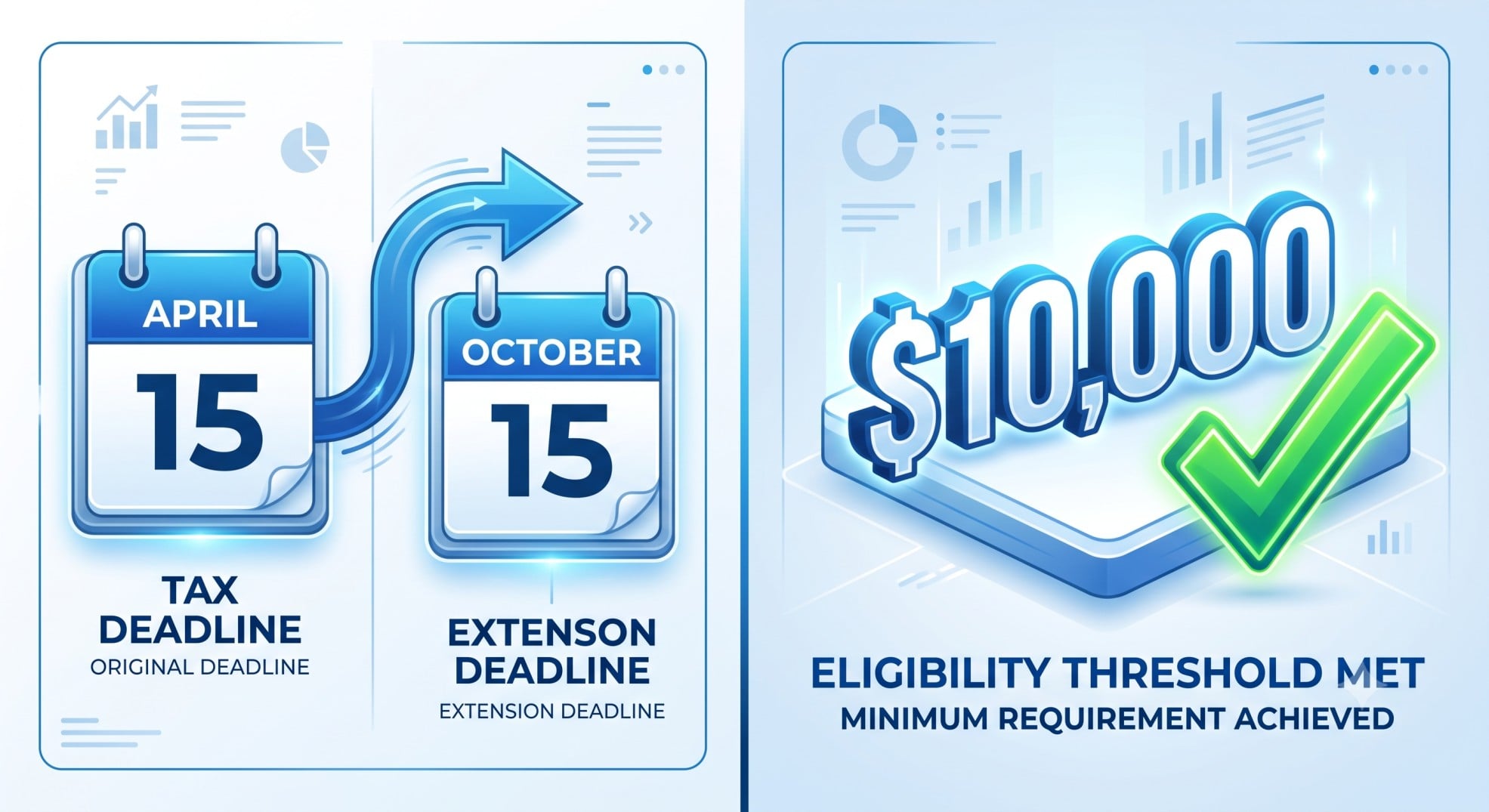
- Filing your FBAR (FinCEN Form 114) is mandatory if the aggregate value of all your foreign financial accounts exceeds $10,000 at any time during the calendar year.
- The standard deadline is April 15, but taxpayers receive an automatic extension to October 15.
- For 2026, the inflation-adjusted penalty for a non-willful failure to file is up to $16,536 per form.
- Pure cryptocurrency accounts are currently exempt under FinCEN Notice 2020-2, but hybrid accounts holding both crypto and fiat currency must be reported.
Table of Contents
The Hook: What is the FBAR and Why Does it Exist?
Holding money outside the United States triggers strict federal disclosure rules. The primary mechanism the government uses to track this offshore wealth is the Report of Foreign Bank and Financial Accounts, officially known as the FBAR (FinCEN Form 114). Congress created this requirement under the Bank Secrecy Act to prevent money laundering, terrorist financing, and tax evasion.
Filing your FBAR (FinCEN Form 114) is purely an informational report. You do not pay taxes on the account balances you report. The Treasury Department simply wants to know where the money is, how much is there, and who controls it. Disclosing these accounts does not increase your tax liability, but hiding them can destroy your finances through massive civil penalties.
The Golden Rule & Who Must File
The reporting requirement hinges on one specific metric: the $10,000 aggregate threshold. You must file an FBAR (FinCEN Form 114) if the combined value of all your foreign financial accounts exceeds $10,000 at any point during the calendar year. This is not a year-end snapshot. If your accounts collectively hit $10,001 on a random Tuesday in March, you must file, even if the balance drops to zero by December 31st.
This rule applies universally to U.S. citizens, green card holders, resident aliens, and domestic entities like corporations, LLCs, and trusts. The government casts a wide net regarding what constitutes an account. You must report foreign bank accounts, brokerage accounts, mutual funds, and foreign-issued life insurance policies that carry a cash surrender value.
The Deadlines & The Stakes
The standard deadline to submit your FBAR (FinCEN Form 114) is April 15th, aligning with the federal income tax deadline. However, the Treasury grants an automatic extension to October 15th. You do not need to file any extension forms to secure this later date. Furthermore, FinCEN frequently grants further extensions for specific individuals, such as corporate executives who have “signature authority but no financial interest” over their employer’s foreign accounts.
The stakes for missing this deadline are severe. The government adjusts penalties annually for inflation. For 2026, the penalties break down into two categories:
- Non-Willful (Accidental): Up to $16,536 per year. Thanks to the 2023 Supreme Court ruling in Bittner v. United States, this penalty applies on a per-form (per-year) basis, not per individual account. This ruling saved taxpayers from facing millions of dollars in fines for simple administrative mistakes.
- Willful (Intentional): Up to the greater of $165,353 or 50% of the account balance at the time of the violation. The IRS assesses willful penalties per account, per year.
Joint Accounts & Spousal Filing
Married couples often share foreign financial accounts, which complicates the FBAR reporting requirements. Fortunately, the Treasury offers a spousal exception. A married couple can designate one spouse to file a single FBAR (FinCEN Form 114) for both of them, but only if they meet strict criteria.
First, there must be 100% overlap. All foreign accounts the non-filing spouse is required to report must be jointly owned with the filing spouse. Second, the filing spouse must submit the report on time. Finally, both spouses must sign FinCEN Form 114a (Record of Authorization to Electronically File FBARs). You do not upload this form to the portal; you must keep it in your personal records for five years.

When is separate filing mandatory? The spousal exception is immediately voided if the non-filing spouse has an individual account (like a pre-marriage account) or holds signature authority over a separate account. In this scenario, both spouses must file their own separate FBAR (FinCEN Form 114).
When calculating thresholds and reporting balances for joint accounts, you must follow the 100% Value Rule. Never split the balance. If a joint account holds $16,000, you report the full $16,000. It counts entirely toward the $10,000 threshold for both owners. When filling out the portal, skip Part II for joint accounts and log them in Part III, listing the “Principal Joint Owner” (your spouse).
The Prep Checklist
Do not start the filing process until you have gathered all necessary documentation. Having the right data on hand prevents portal timeouts and inaccurate submissions. Your prep checklist should include:
- Basic personal details (SSN or ITIN, current address).
- The exact name and address of each foreign financial institution.
- The exact account numbers for every reportable account.
- The maximum value of each account during the calendar year.
You must report all values in U.S. dollars. To do this, you must use the Conversion Rule. Find the maximum balance your account reached during the year in the foreign currency. Then, convert that peak balance to USD using the Treasury Department’s official end-of-year exchange rate for the reporting year. You must use the December 31st rate, regardless of what day the account actually peaked.
Step-by-Step Filing Walkthrough
You cannot file the FBAR (FinCEN Form 114) with your federal tax return. It goes to a completely different agency. You must submit it electronically through the BSA E-Filing System. Read more about navigating the FinCEN portal here.
When you enter the portal, you have a method choice. We recommend using the Web Form if you are an individual with only a few accounts. It is straightforward and works directly in your browser. If you are a tax professional or an individual with dozens of accounts, use the PDF Upload method, which allows you to save your work offline before submitting.
The form is divided into distinct sections:
- Part 1 (Filer Info): Enter your basic identifying information, including your SSN and address.
- Part 2 (Individual Accounts): Log the details and peak balances of accounts you own solely in your name.
- Part 3 (Joint Accounts): Log the details of accounts you share with a spouse or business partner, remembering the 100% Value Rule.
- Part 4 (Signature Authority): This section is for individuals who manage accounts for an employer or trust but do not actually own the funds.
Common Pitfalls & Crypto Rules
The intersection of digital assets and FBAR reporting requirements confuses many taxpayers. Currently, pure cryptocurrency accounts (accounts holding only digital assets like Bitcoin or Ethereum) are exempt from reporting under FinCEN Notice 2020-2. However, this exemption is narrow.
If you have a “hybrid” account on a foreign exchange that holds both fiat currency (like USD or Euros) and cryptocurrency, the entire account becomes reportable. The presence of the fiat currency triggers the FBAR (FinCEN Form 114) requirement, and you must include the value of the crypto when calculating the account’s peak balance.

Another major pitfall is the FATCA mix-up. Taxpayers often confuse the FBAR (FinCEN Form 114) with Form 8938 (FATCA). Form 8938 is filed with the IRS alongside your tax return and has much higher reporting thresholds (starting at $50,000). Filing one does not excuse you from filing the other. Many taxpayers with significant offshore wealth must file both.
Finally, do not neglect your recordkeeping. After you submit your FBAR (FinCEN Form 114) through the BSA E-Filing System, save the confirmation number. Federal law requires you to keep your FBAR records, including account statements and FinCEN Form 114a, for five years.
Conclusion
Filing your FBAR (FinCEN Form 114) is a mandatory annual task for any U.S. person with offshore wealth exceeding the $10,000 aggregate threshold. While the reporting process requires precision—especially regarding joint accounts, currency conversions, and crypto holdings—it is entirely manageable with proper preparation. Stay ahead of the October 15th deadline, maintain flawless records, and you will easily avoid the Treasury’s steep penalties.
Frequently Asked Questions
What is the FBAR (FinCEN Form 114)?
The FBAR (FinCEN Form 114) is an annual report filed with the Treasury Department. It requires U.S. persons to disclose foreign financial accounts if their combined value exceeds $10,000 at any point during the calendar year.
Do I have to pay taxes on the FBAR (FinCEN Form 114)?
No. The FBAR (FinCEN Form 114) is strictly an informational report. You do not owe any taxes on the balances you report. However, the income generated by those accounts must be reported on your IRS Form 1040.
How does the Supreme Court Bittner ruling affect FBAR penalties?
The 2023 Supreme Court ruling in Bittner v. United States established that penalties for non-willful FBAR violations apply on a per-form basis, not a per-account basis. This caps the non-willful penalty at a maximum of $16,536 (for 2026) per unfiled annual report.
Can my spouse and I file a joint FBAR (FinCEN Form 114)?
Yes, but only if all the foreign accounts the non-filing spouse has are jointly owned with the filing spouse. You must also sign and retain FinCEN Form 114a in your personal records.
Do I need to report cryptocurrency on my FBAR (FinCEN Form 114)?
Under FinCEN Notice 2020-2, foreign accounts holding only cryptocurrency are currently exempt. However, if the foreign exchange account holds both crypto and fiat currency, the entire account must be reported.
What exchange rate do I use for the FBAR (FinCEN Form 114)?
You must use the Treasury Department’s official end-of-year exchange rate for the reporting year (December 31st). You apply this single rate to the highest balance the account reached during the year.
Is the FBAR (FinCEN Form 114) filed with my tax return?
No. You do not file the FBAR (FinCEN Form 114) with the IRS. It must be filed electronically through the Financial Crimes Enforcement Network’s BSA E-Filing System.
What happens if I miss the April 15 deadline for the FBAR (FinCEN Form 114)?
You receive an automatic extension to October 15th. You do not need to file any paperwork to request this extension. If you miss the October deadline, you may be subject to severe civil penalties.
Do I split the balance of a joint account on the FBAR (FinCEN Form 114)?
No. You must report the full 100% value of the joint account. If the account holds $15,000, both you and your joint owner must report the full $15,000 on your respective forms.
What is FinCEN Form 114a?
FinCEN Form 114a is the Record of Authorization to Electronically File FBARs. It is used when one spouse files on behalf of both, or when a tax professional files on behalf of a client. It is not uploaded to the portal but must be kept for five years.
Disclaimer: This content provides general information for educational purposes only. Tax laws are complex and change often. It is not professional tax, legal, or financial advice. Always consult a qualified tax professional for personalized guidance regarding your specific situation. Ourtaxpartner.com is not responsible for any actions taken based on the information provided herein.
