
Date: 2/23/2026
URGENT: The Inherited IRA ‘Penalty Waiver’ Ends in 2025
For the past four years, the IRS has offered a rare “free pass” to many heirs who inherited retirement accounts. If you were confused by the complex 10-year rule introduced by the SECURE Act, you weren’t alone. The government issued a series of waivers from 2021 through 2024, essentially telling beneficiaries they wouldn’t be punished for skipping their annual withdrawals. However, IRS Notice 2024-35 and the final regulations in T.D. 10001 have made one thing clear: the grace period is over.
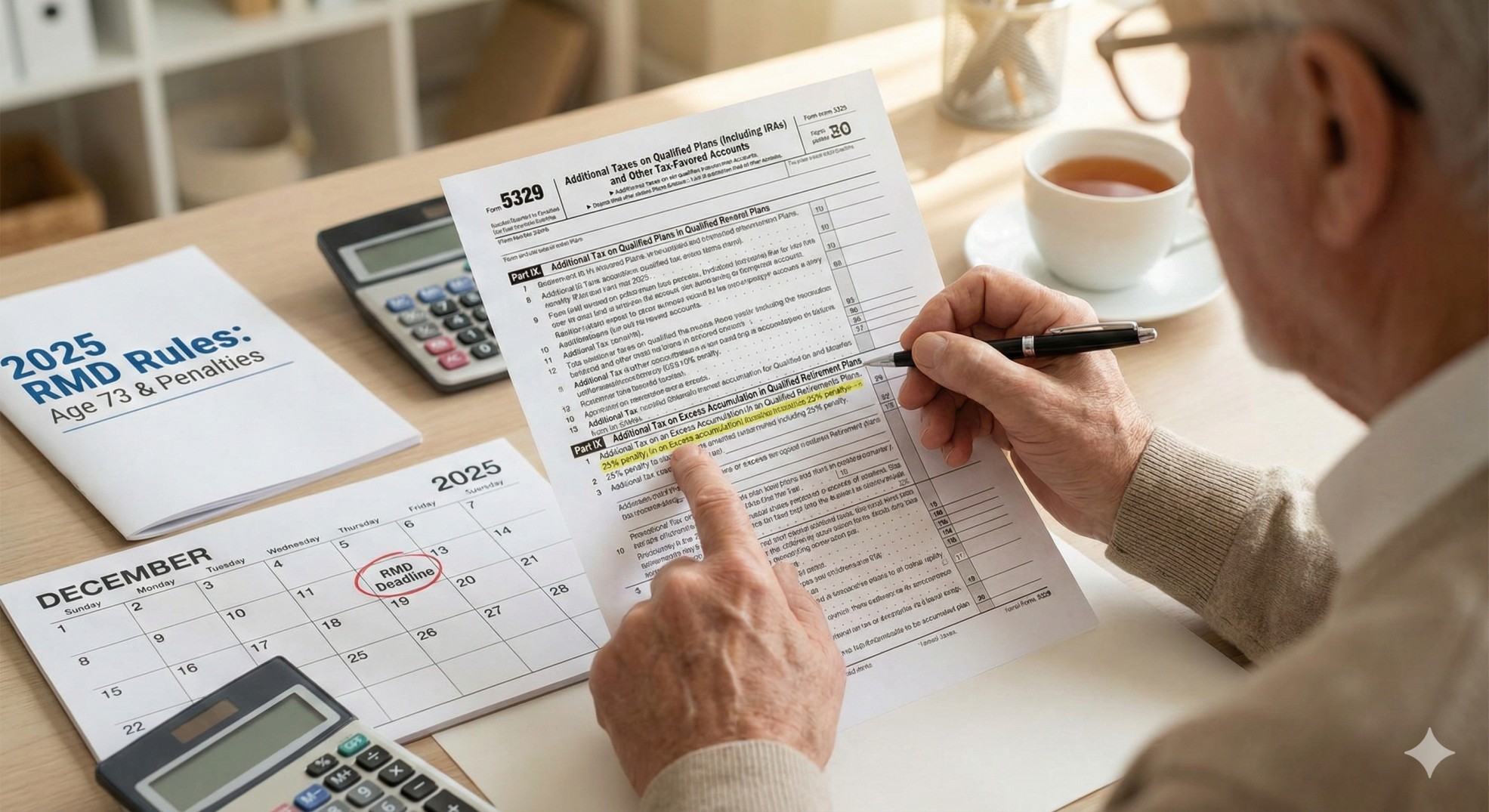
Starting in the 2025 tax year, the IRS will resume enforcing mandatory annual withdrawals for specific heirs. If you fall into this group and fail to take your distribution, you will face a steep excise tax. Learning how to avoid 25 percent rmd penalty is now a critical task for anyone managing an inherited nest egg. This isn’t just a suggestion; it is a firm requirement that could significantly impact your tax bill if ignored.
Who Must Take Action in 2025?
The updated 2025 requirements specifically target “Designated Beneficiaries,” which usually refers to non-spouse heirs like adult children or grandchildren. You are likely affected if you inherited an IRA after 2019 and the original owner had already reached their Required Beginning Date (RBD). Under the inherited ira rmd distribution rules 2025, you must take annual distributions during years one through nine of the 10-year period, then fully empty the account by the end of the 10th year.
For example, if you inherited an IRA from a parent in 2021 who was already 75 years old, you may have skipped withdrawals for the last few years without penalty. In 2025, that streak ends. You must calculate and withdraw your required amount by December 31 to remain compliant with the law.
The High Cost of Missing Your Deadline
The IRS has replaced its previous 50% penalty with a lower, yet still painful, excise tax. If you miss your 2025 deadline, the standard penalty is 25% of the amount you should have withdrawn. While this can be reduced to 10% if you correct the mistake within two years, it remains an unnecessary loss of wealth. The following table breaks down the current penalty structure:
| Penalty Type | Tax Rate | Requirement for Reduction |
|---|---|---|
| Standard RMD Penalty | 25% | Applied to any undistributed RMD amount. |
| Corrected RMD Penalty | 10% | Must be corrected within the “correction window” (usually 2 years). |
| Historical Penalty | 50% | No longer applicable (Pre-SECURE 2.0 Act). |
Critical Deadlines and Professional Support
Timing is everything when dealing with 2025 rmd rules for age 73. While the original owner’s RMD age has moved to 73, heirs must stay focused on the December 31, 2025, deadline for their annual inherited distributions. If you are unsure how to calculate your specific life expectancy factor, seeking irs rmd penalty waiver assistance or consulting a tax advisor for required minimum distributions is highly recommended. These professionals can ensure your math is correct and help you file Form 5329 if a mistake occurs. Engaging in professional tax planning for retirement distributions now will protect your inheritance from being drained by avoidable IRS penalties later.
The Age 73 Rule & The ‘Double Tax’ Trap
The SECURE 2.0 Act shifted the goalposts for retirement withdrawals, creating a new timeline for seniors. If you were born between 1951 and 1959, the 2025 rmd rules for age 73 now dictate when you must begin taking money out of your traditional IRAs and 401(k)s. While Roth IRAs remain exempt from these rules during your lifetime, the new regulations also extend this exemption to Roth 401(k) and 403(b) accounts for the 2025 tax year. This change gives your investments more time to grow tax-deferred, but it also requires a more precise withdrawal strategy to avoid unnecessary costs.
The “Double Tax” Trap: Why Delaying Can Cost You
The IRS offers a one-time grace period that allows you to delay your first RMD until April 1 of the year following the year you turn 73. While skipping a withdrawal in your first year sounds appealing, it often leads to a “Double Tax” trap. If you turn 73 in 2025 and wait until April 2026 to take your first distribution, you are still required to take your second RMD by December 31, 2026. This forces two years’ worth of income into a single tax filing season, which can significantly impact your bottom line.
Doubling your distributions in one year can push you into a much higher marginal tax bracket. This spike in income can also trigger the “Social Security tax torpedo,” where up to 85% of your benefits become taxable. Furthermore, the increase in your Adjusted Gross Income (AGI) may lead to higher Medicare Part B and Part D premiums through Income-Related Monthly Adjustment Amounts (IRMAA). Consulting a tax advisor for required minimum distributions can help you run the numbers to see if taking your first RMD in 2025 is actually the cheaper path.
| RMD Requirement | Deadline Detail | Penalty for Non-Compliance |
|---|---|---|
| First RMD (Age 73) | April 1 of the following year | 25% of the shortfall |
| Annual RMDs | December 31 each year | 25% of the shortfall |
| Corrected Errors | Within 2-year window | Reduced to 10% |
Penalties and Correction Strategies
The IRS strictly enforces these deadlines, but the SECURE 2.0 Act did lower the stakes slightly. Understanding how to avoid 25 percent rmd penalty is simple: you must withdraw the full required amount by the deadline. If you miss the mark, you face a 25% excise tax on the amount that should have been distributed. However, if you realize the mistake and correct it within the “correction window”—typically two years—you can apply for irs rmd penalty waiver assistance by filing IRS Form 5329, which may reduce the penalty to 10%.
Managing your own retirement accounts is only half the battle; you must also account for any assets you have received from others. Staying current on inherited ira rmd distribution rules 2025 is essential, as these accounts often follow a strict 10-year depletion rule that differs from your personal IRA. Because these rules are constantly evolving, professional tax planning for retirement distributions is the most reliable way to protect your savings from aggressive taxation and ensure you meet every IRS milestone on time.
New Penalty Structure: 25% is the New 50%
For decades, the penalty for missing a Required Minimum Distribution (RMD) was one of the most aggressive “gotchas” in the federal tax code. If you failed to withdraw the correct amount from your retirement account, the IRS slapped you with a massive 50% excise tax on the shortfall. Fortunately, the SECURE 2.0 Act has significantly softened this blow, making it much easier to manage your retirement cash flow without the fear of losing half your savings to a simple mistake. Understanding how to avoid 25 percent rmd penalty is now a core component of modern retirement strategy.
The New Penalty Breakdown
The standard excise tax for an RMD failure has been officially reduced from 50% to 25%. While this is a major improvement, the law provides an even greater incentive for those who catch their errors quickly. If you correct the distribution “shortfall” within a specific correction window—generally two years—the penalty drops to just 10%. This window typically closes when the IRS assesses the tax or begins an audit, so speed is your best friend when fixing an oversight.
| Feature | Old Rule (Pre-2023) | New Rule (2025) |
|---|---|---|
| Standard RMD Penalty | 50% of the shortfall | 25% of the shortfall |
| Corrected Penalty Rate | Discretionary waiver only | 10% (Statutory reduction) |
| RMD Starting Age | 70½ or 72 | 73 |
| Reporting Requirement | IRS Form 5329 | IRS Form 5329 |
Navigating the 2025 RMD Rules
For the 2025 tax year, the age trigger for these distributions remains steady. Under the 2025 rmd rules for age 73, you must take your first distribution by April 1 of the year following the year you turn 73. This rule applies to Traditional IRAs, SIMPLE IRAs, and employer-sponsored plans like 401(k)s and 403(b)s. For example, if you turn 73 in 2025, your “Required Beginning Date” is April 1, 2026, though waiting until that deadline means you will have to take two distributions in a single tax year.
Complexity often increases when dealing with non-traditional accounts. If you have inherited an account from a deceased loved one, you must be mindful of the inherited ira rmd distribution rules 2025, which often require annual withdrawals regardless of your age. Because these rules vary based on when the original owner passed away and your relationship to them, many taxpayers seek irs rmd penalty waiver assistance to ensure they aren’t overpaying or missing a deadline.
Reporting and Professional Oversight
If you discover a shortfall, you are required to file IRS Form 5329 to report the “excess accumulation” and calculate the tax owed. Even with the lower 25% rate, the IRS expects transparency. Consulting a tax advisor for required minimum distributions can help you determine if you qualify for a “reasonable cause” waiver, which could potentially eliminate the penalty entirely if the error was due to a bank mistake or serious illness.
Ultimately, the best defense is a proactive offense. Engaging in professional tax planning for retirement distributions allows you to automate your withdrawals and coordinate them with your broader tax bracket. While a 25% penalty is far better than the old 50% rate, keeping that money in your own pocket is always the smarter financial move.
Strategic Action Plan: 3 Steps to Execute Now
The transition into retirement involves more than just picking a date to stop working; it requires mastering the IRS calendar. Under the latest updates, the 2025 rmd rules for age 73 dictate that if you reached age 72 in 2023 or later, your first Required Minimum Distribution (RMD) must be taken by April 1 of the year following your 73rd birthday. For those hitting this milestone in 2025, your absolute deadline for that first distribution is April 1, 2026.
However, many retirees fall into the “Double Distribution” trap. If you wait until the April 1 deadline to take your first withdrawal, you must still take your second RMD (for the 2026 tax year) by December 31, 2026. This effectively doubles your taxable retirement income in a single year, which could push you into a higher tax bracket or increase your Medicare premiums. For most taxpayers, taking the first distribution by December 31 of the year they turn 73 is the smarter move for tax efficiency.
Calculate Your Withdrawal and Aggregate Wisely
To determine your RMD, take your account balance from December 31 of the previous year and divide it by your life expectancy factor found in the IRS Uniform Lifetime Table. While the math seems straightforward, the rules for different account types vary. For example, you can calculate the RMD for each of your traditional IRAs and take the total amount from just one account. This flexibility does not apply to 401(k) or 403(b) plans, which generally require separate distributions from each specific plan you own.
It is also vital to understand the inherited ira rmd distribution rules 2025, as these accounts often have stricter timelines and different calculation methods than your own personal IRAs. Fortunately, as of 2024, Roth accounts within employer-sponsored plans no longer require RMDs, bringing them in line with Roth IRAs. Engaging in professional tax planning for retirement distributions can help you sequence these withdrawals to minimize the long-term tax bite on your estate and ensure you are pulling from the right buckets at the right time.
Correct Errors to Slash Penalties
If you miss a deadline, the IRS used to impose a staggering 50% penalty. Thanks to the SECURE 2.0 Act, you can now learn how to avoid 25 percent rmd penalty by acting quickly. If you correct the shortfall within the “correction window”—typically two years and before the IRS assesses the tax—the penalty drops to just 10%. To do this, you must file IRS Form 5329 to report the “Excess Accumulation” and pay the reduced tax.
In many cases, you can seek irs rmd penalty waiver assistance by showing “reasonable cause” for the mistake, such as a serious illness, a death in the family, or an error by your financial institution. If you find yourself in this position, consulting a tax advisor for required minimum distributions is the best way to draft a waiver request that the IRS is likely to accept. Taking immediate corrective action and withdrawing the missed amount is the first step toward proving to the IRS that you are acting in good faith to remedy the error.
| Requirement | Detail |
|---|---|
| RMD Starting Age | 73 (for those born 1951–1959) |
| Standard Penalty | 25% of the shortfall |
| Reduced Penalty | 10% (if corrected within the window) |
| First RMD Deadline | April 1 of the year after turning 73 |
| Subsequent Deadlines | December 31 annually |
| Form to File | IRS Form 5329 |
FAQ: High-Intent Questions & Answers
When exactly do I need to start taking RMDs in 2025?
Under the SECURE 2.0 Act, the starting age for required minimum distributions has shifted. If you reach age 72 in 2023 or later, your required beginning date is April 1 of the year after you turn 73. Specifically, for the 2025 tax year, taxpayers born in 1952 will hit this milestone. This means your first distribution must be taken no later than April 1, 2026. These updated 2025 rmd rules for age 73 ensure that seniors can keep their retirement savings growing tax-deferred for a bit longer than previous generations.
What is the penalty for missing a distribution, and can it be reduced?
The IRS takes RMD deadlines seriously, but the penalties have become slightly more lenient. The standard excise tax is 25% of the amount you failed to withdraw. However, you can reduce this penalty to 10% if you correct the error within a “correction window,” which usually means fixing the mistake within two years and before the IRS assesses the tax. Learning how to avoid 25 percent rmd penalty starts with setting up automated distributions with your brokerage. If you do miss a deadline, you must file IRS Form 5329 to report the tax or request a waiver.
What is the “Double Distribution” trap for first-timers?
If 2025 is the year you turn 73, you have the option to delay your first RMD until April 1, 2026. While this provides a short-term tax break, it often leads to a “double distribution” year. Because your second RMD is strictly due by December 31, 2026, you would end up reporting two large distributions on a single tax return. This could potentially push you into a higher tax bracket or increase your Medicare premiums. Consulting a tax advisor for required minimum distributions can help you determine if taking your first payment in 2025 is better for your long-term bottom line.
Are any retirement accounts exempt from these rules?
Not all retirement buckets are treated the same by the IRS. Original owners of Roth IRAs are never required to take RMDs during their lifetime. Furthermore, a significant change from the SECURE 2.0 Act now exempts designated Roth accounts in employer plans, like Roth 401(k)s, from RMD requirements starting in 2024. However, you should be aware that inherited ira rmd distribution rules 2025 remain complex; most non-spouse beneficiaries must still empty the account within 10 years, regardless of the account type.
Can I delay RMDs if I am still working at age 73?
If you are still employed when you reach age 73, you may be able to delay distributions from your current employer’s 401(k) or 403(b) until April 1 of the year after you retire. This “still working” exception does not apply if you own more than 5% of the company. Crucially, this exception never applies to Traditional IRAs or plans from former employers. Utilizing professional tax planning for retirement distributions is essential here to ensure you don’t accidentally skip a required payment from an old account while focusing on your current one.
How do I ask the IRS to waive a penalty?
If you missed a distribution due to a “reasonable error,” such as a serious illness or a mistake by your financial institution, the IRS may waive the excise tax. To do this, you should withdraw the missed amount immediately and file Form 5329 with a letter of explanation. Seeking irs rmd penalty waiver assistance from a qualified professional can improve your chances of a successful appeal, as the IRS requires proof that you are taking reasonable steps to remedy the shortfall.
| Requirement | 2025 Detail |
|---|---|
| Starting Age | 73 (for those born 1952) |
| Standard Penalty | 25% of the missed amount |
| Reduced Penalty | 10% (if corrected timely) |
| Roth IRA RMDs | None (for original owners) |
| First RMD Deadline | April 1, 2026 (for age 73 in 2025) |
About the Author
ARUN KP
With over 15 years of extensive experience in the accounting and taxation industry, Arun KP specializes in cross-border India-US taxation. As an Entrepreneur and AI Content Generator, he leverages cutting-edge technology to simplify complex financial landscapes for individuals and businesses.
Entrepreneur | AI Content Generator | India-US Tax Professional | Accountant
Disclaimer: This article is for informational purposes only and does not constitute professional tax advice.
