
Date: 2/8/2026
Executive Alert: The EV Credit is Dead (Here’s What Replaced It)
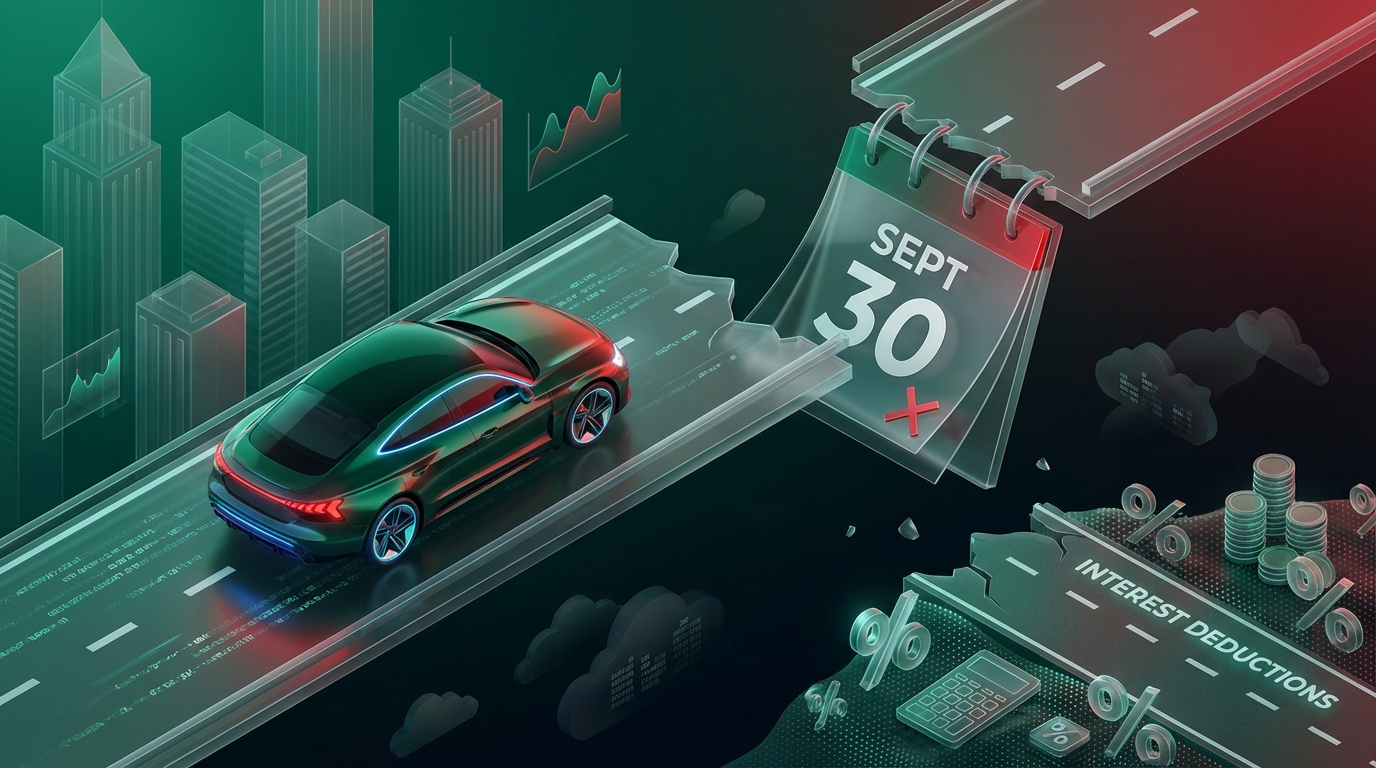
The era of waiting until April to see your electric vehicle savings is officially over. Under the One Big Beautiful Bill Act (OBBBA), the traditional tax credit has a hard expiration date of September 30, 2025. If you acquire a vehicle after this date, the standard $7,500 credit simply vanishes. To secure the benefit, you must have a binding written contract and have made a payment before the autumn deadline. This shift moves the incentive from your tax return directly to the dealership floor, fundamentally changing your car-buying strategy.
The Shift to Instant Savings
The IRS has replaced the year-end filing process with a “Point-of-Sale” (POS) transfer mechanism. This allows you to transfer your credit directly to a registered dealer to lower the purchase price immediately. Understanding how to claim 2025 federal ev tax credit benefits now requires you to verify that the dealer is registered with the IRS Energy Credits Online portal. At the moment of purchase, the dealer must provide a “Time of Sale Report” to confirm the transaction. Without this digital confirmation, you cannot claim the credit later, making point of sale electric vehicle tax credit eligibility a critical part of your pre-purchase checklist.
The New Benefit: Car Loan Interest Deduction
For those who miss the September deadline, the OBBBA introduced a different form of financial relief to keep the market moving. Starting in late 2025, taxpayers can utilize a new Car Loan Interest Tax Deduction for qualifying purchases. This allows you to write off up to $10,000 per year in interest paid on qualifying auto loans. While it doesn’t offer the same immediate “upfront” punch as the $7,500 rebate, it provides significant long-term savings for those financing their vehicles. This serves as the primary federal replacement for the lost EV-specific incentives for the remainder of the 2025 tax year.
2025 Eligibility and Limits
The rules for which vehicles qualify have become significantly stricter due to Foreign Entity of Concern (FEOC) regulations. If a vehicle’s battery contains minerals extracted or processed by entities in China, Russia, or Iran, it is disqualified. Additionally, you must stay within specific income and price brackets to qualify for either the new or qualifying used electric vehicle tax credit 2025. For example, a used EV must have a sale price of $25,000 or less to be eligible for the $4,000 rebate.
| Category | New EV Limit | Used EV Limit |
|---|---|---|
| MSRP / Sale Price Cap | $55,000 ($80,000 for SUVs/Trucks) | $25,000 |
| Joint Income Cap (MAGI) | $300,000 | $150,000 |
| Single Income Cap (MAGI) | $150,000 | $75,000 |
Filing and Small Business Rules
Even with the POS transfer, you still have reporting responsibilities when you file your taxes. You must reconcile the credit on your annual return using irs form 8936 filing requirements for 2025 to ensure your income didn’t exceed the 2025 electric vehicle tax credit income limits. If your income ends up being higher than the allowed threshold, you may be required to pay the credit back to the IRS. For entrepreneurs, the commercial electric vehicle tax credit for small business remains a separate tool. Small businesses can often bypass the strict MSRP and individual income caps, provided the vehicle is used primarily for business operations.
Filing 2025 Taxes: How to Claim the $7,500 ‘Binding Contract’ Loophole
The sudden termination of the federal EV tax credit on September 30, 2025, left many car buyers in a difficult financial position. This change came via the One Big Beautiful Bill Act (OBBBA), which ended years of green energy incentives. However, if you signed paperwork before the deadline but did not take delivery until later, you can still learn how to claim 2025 federal ev tax credit benefits through the “binding contract” loophole. This rule backdates your purchase to the day you committed to the vehicle, rather than the day it arrived. It serves as a safety net for those caught in manufacturing or shipping delays.
To qualify for this exception, the IRS requires that you “acquired” the vehicle on or before the September 30 cutoff. In tax terms, acquisition happens when you enter into a written binding contract and make a payment. While the IRS considers a nominal down payment or a documented trade-in sufficient, many tax experts suggest a non-refundable deposit of at least 5% of the purchase price. This helps confirm the contract is viewed as “binding” under your specific state’s laws. This strategy is also applicable for those looking to secure the qualifying used electric vehicle tax credit 2025, which offers up to $4,000 for pre-owned models.
Income and Price Caps for 2025
Even if you use the binding contract loophole, you must still meet the standard 2025 electric vehicle tax credit income limits and MSRP restrictions. The credit is targeted at middle-income taxpayers and specific vehicle price points. For instance, a luxury electric sedan priced at $60,000 would not qualify because it exceeds the $55,000 cap for “other” vehicles. If your modified adjusted gross income (MAGI) exceeds the thresholds, you cannot claim the credit, regardless of when you signed your contract. Check your most recent tax return to confirm your income falls within the allowable range.
| Requirement Category | 2025 Eligibility Limit |
|---|---|
| Single Filer Income Cap | $150,000 |
| Head of Household Income Cap | $225,000 |
| Joint Filer Income Cap | $300,000 |
| MSRP Cap (Vans, SUVs, and Pickups) | $80,000 |
| MSRP Cap (Other Vehicles) | $55,000 |
| Used EV Credit Maximum | $4,000 (Capped at 30% of sale price) |
Filing Your Claim: Form 8936
When you file your 2025 return in early 2026, you must follow specific irs form 8936 filing requirements for 2025. You will need to provide the vehicle identification number (VIN) and list the “Date Acquired” as the date the binding contract was signed. You must also include Schedule A (Form 8936) to provide the details of the vehicle’s make and model. If you used the point of sale electric vehicle tax credit eligibility to lower your purchase price at the dealership, you still need to report this on your taxes. This allows the IRS to reconcile the advance payment with your actual eligibility for the year.
Small business owners are included in this transition period. If you purchased a van or truck for work, the commercial electric vehicle tax credit for small business remains available, provided the binding contract was in place before the OBBBA deadline. For these claims, confirm your business records show the date the financial obligation became “binding” to avoid an IRS audit. Keeping a copy of the cancelled check or the wire transfer receipt alongside your signed contract is a way to prove your claim. Following these steps helps prevent a late delivery from costing you thousands of dollars in incentives.
The New ‘OBBBA’ Write-Off: Deducting $10,000 in Auto Loan Interest
The One Big Beautiful Bill Act (OBBBA) has introduced a major tax shift that benefits everyday drivers. For the first time in years, you can deduct up to $10,000 per year in interest paid on a qualifying auto loan. This is a “non-itemizer” benefit, meaning you can claim it even if you take the standard deduction. This rule applies to loans originated after December 31, 2024, and is currently scheduled to be available for tax years 2025 through 2028.
To qualify for this write-off, your vehicle must meet strict “Made in America” standards. The car must be new and have undergone final assembly in the United States. You can verify this by checking the Vehicle Identification Number (VIN) or the Automobile Information Disclosure label on the window. The deduction is limited to personal-use vehicles with a Gross Vehicle Weight Rating (GVWR) of less than 14,000 pounds, which includes most standard cars, SUVs, and light-duty pickup trucks.
Income Limits and Phase-Outs
Not every taxpayer will qualify for the full $10,000 deduction. The IRS uses your Modified Adjusted Gross Income (MAGI) to determine eligibility. If your income exceeds certain thresholds, the deduction is subject to a 20% phase-out rate for income exceeding the limit until the benefit is reduced to zero.
| Filing Status | Phase-Out Begins (MAGI) |
|---|---|
| Single Filers | $100,000 |
| Married Filing Jointly | $200,000 |
Strategic Timing for EV Buyers
If you are considering an electric vehicle, you must act quickly to maximize your savings. The OBBBA includes a “sunset clause” that ends existing EV incentives early to fund the new interest deduction. Both the 30D Clean Vehicle Credit (up to $7,500) and the 25E credit for pre-owned EVs (up to $4,000) are scheduled to expire on September 30, 2025. Buyers who purchase a qualifying U.S.-assembled EV before this deadline can potentially claim the upfront credit while also qualifying for the ongoing interest deduction on their loan.
While navigating the electric vehicle tax credit income limits, remember that the point of sale electric vehicle tax credit eligibility allows you to transfer the credit to the dealer for an immediate price reduction. However, after September 30, 2025, these credits vanish. This expiration also applies to the qualifying used electric vehicle tax credit, which will no longer be available for late-year purchases. Small business owners should note that while this OBBBA provision is for personal loans, the commercial electric vehicle tax credit for small business remains a separate tool for fleet upgrades.
Compliance and Documentation
Claiming this deduction requires specific paperwork to substantiating the “Made in America” assembly requirement. Lenders are now required to send you IRS Form 1098-VLI (Vehicle Loan Interest Statement) if you paid more than $600 in interest during the year. Most importantly, you must list the vehicle’s VIN directly on your federal tax return. Keep your purchase contract and the original window sticker as secondary proof of the vehicle’s assembly location.
- New Vehicles Only: Used cars and leased vehicles do not qualify for the interest deduction.
- Personal Use: The loan must be for a vehicle used for personal transportation, not primarily for business.
- Loan Origination: Only interest on loans signed after December 31, 2024, is eligible for the write-off.
Audit-Proofing: The ‘Time of Sale’ Report Trap
Securing your keys is no longer the final step in protecting your tax savings. To understand **how to claim 2025 federal ev tax credit** benefits, you must look past the shiny paint and focus on the IRS Energy Credits Online (ECO) portal. The dealer has exactly three calendar days from the date of sale to submit a Time of Sale (ToS) report. If they fail to submit this or if the IRS rejects it, you are legally ineligible for the credit, even if the car itself qualifies.
You must walk away from the dealership with a printed confirmation showing an “Accepted” status for your seller report. In 2024, the IRS was lenient with “retroactive fixes” for paperwork errors, but that grace period has ended for 2025. If you do not have this proof of submission within the three-day window, you have no recourse during tax season. Think of this receipt as more valuable than the title itself during the first week of ownership.
The Income Recapture Risk
The most dangerous financial trap involves the **2025 electric vehicle tax credit income limits** when choosing a point-of-sale transfer. By taking the $7,500 as an immediate discount, you are essentially attesting that your income falls below the federal thresholds. You can use your Modified Adjusted Gross Income (MAGI) from the year you take delivery or the prior year to qualify. However, if your income exceeds the limit in both years, the IRS will “recapture” the credit.
This means the full $7,500 (or $4,000 for used models) will be added to your total tax liability on your 2025 tax return. For many taxpayers, this results in a surprise four-figure bill instead of the expected refund. To avoid this, verify your MAGI before signing the transfer paperwork. For those with fluctuating income, it may be safer to claim the credit on your tax return rather than taking the immediate discount at the lot.
Deadlines and Eligibility Caps
The 2025 legislative landscape has introduced a hard stop for **point of sale electric vehicle tax credit eligibility** through the “One, Big, Beautiful Bill” (OBBB) update. The credit is only available for vehicles acquired on or before September 30, 2025. To audit-proof a late-year purchase, you must prove “acquisition” by this date via a written binding contract and a payment, such as a down payment or trade-in. Taking delivery in October without a prior binding contract will result in a $0 credit.
The rules are equally strict for those seeking a **qualifying used electric vehicle tax credit 2025**. The sale price must be $25,000 or less, a figure that includes dealer-imposed fees but excludes government taxes and registration. Small business owners should also note that the **commercial electric vehicle tax credit for small business** remains a separate pathway, but it requires distinct documentation to avoid being flagged as a personal purchase. Finally, you must satisfy the **irs form 8936 filing requirements for 2025** to reconcile your advance payment with the IRS, ensuring the VIN and battery capacity match your ToS report exactly.
2025 EV Credit Compliance Summary
| Feature | New EV Credit | Used EV Credit |
|---|---|---|
| Maximum Credit | $7,500 | $4,000 (or 30% of price) |
| MSRP/Price Cap | $55,000 / $80,000 | $25,000 |
| Income Limit (Joint) | $300,000 | $150,000 |
| Acquisition Deadline | Sept. 30, 2025 | Sept. 30, 2025 |
High-Volume FAQ: Eligibility, Loopholes & The 2026 Rules
The clock is ticking for electric vehicle buyers. The most significant update for the coming year is the “2025 Cliff,” which moves the finish line for federal incentives much earlier than originally planned. Under the latest legislative updates, the New Clean Vehicle Credit (Section 30D) is not available for vehicles acquired after September 30, 2025. To qualify, you must have a binding written contract and have made at least a nominal payment or trade-in by that date. If acquired by this deadline, you can still claim the credit even if the vehicle is delivered after September 30.
Income Caps and Price Limits
Understanding how to claim 2025 federal ev tax credit requires following strict financial guardrails. The IRS uses your Modified Adjusted Gross Income (MAGI) to determine if you are eligible. The 2025 electric vehicle tax credit income limits are set at $300,000 for married couples filing jointly, $225,000 for heads of household, and $150,000 for all other filers. You can use your MAGI from either the year you take delivery or the prior year to meet these requirements.
The vehicle’s price also matters. Vans, SUVs, and pickups must have an MSRP of $80,000 or less. For sedans and other smaller vehicles, the cap is $55,000. Keep in mind that MSRP includes manufacturer-installed options but excludes destination fees and dealer-added accessories. If the sticker price exceeds these limits by even one dollar, the entire credit is forfeited.
The Point-of-Sale Advantage
Modern buyers no longer have to wait until tax season to see their savings. Current point of sale electric vehicle tax credit eligibility rules allow you to transfer your credit directly to the dealer. This effectively turns the tax credit into an immediate $7,500 or $3,750 discount on the purchase price. While this is convenient, it comes with a “clawback” risk: if your year-end income exceeds the federal limits, you must repay the IRS the full amount of the credit when you file your return.
Commercial Credits and the Lease Loophole
For vehicles that fail to meet battery or MSRP requirements, the commercial electric vehicle tax credit for small business (Section 45W) remains a primary tool. This “lease loophole” allows leased vehicles to be classified as commercial, which bypasses North American assembly requirements, MSRP price caps, buyer income limits, and battery sourcing restrictions. However, this provision is also scheduled to terminate on September 30, 2025, under the new legislative guidelines.
Filing and the 2026 Outlook
Even if you receive the credit at the dealership, you must adhere to all irs form 8936 filing requirements for 2025. This form reports the vehicle’s VIN and confirms your eligibility. Looking toward 2026, the landscape becomes uncertain. While original plans called for battery sourcing requirements to jump to 70%, current guidance suggests the credit may be replaced entirely by different incentives, such as loan interest deductions, or phased out completely. Additionally, 2026 rules were intended to tighten the traceability of minerals, making it harder for vehicles to qualify.
| Feature | 2025 Rule (Pre-Sept 30) | 2026 Rule (Projected) |
|---|---|---|
| Max Credit | $7,500 | Potentially $0 (or modified) |
| Mineral Sourcing | 60% | 70% |
| Component Sourcing | 60% | 70% |
| Lease Loophole (45W) | Active until Sept 30 | Expired/Closed |
| FEOC Rules | Minerals & Components Ban | Stricter Traceability |
About the Author
ARUN KP
With over 15 years of extensive experience in the accounting and taxation industry, Arun KP specializes in cross-border India-US taxation. As an Entrepreneur and AI Content Generator, he leverages cutting-edge technology to simplify complex financial landscapes for individuals and businesses.
Entrepreneur | AI Content Generator | India-US Tax Professional | Accountant
Disclaimer: This article is for informational purposes only and does not constitute professional tax advice.
