
Maximizing your monthly budget requires ruthless math. You cannot rely on marketing slogans to figure out which piece of plastic deserves a spot in your wallet. The debate of Amex Blue Cash Preferred vs Capital One Savor is the most critical grocery and dining showdown in the cash back market today. These two cards dominate the exact categories where Americans spend the bulk of their disposable income.
On one side, you have American Express offering an industry-leading return on supermarket spending, but it comes with a strict annual cap and a yearly fee. On the other side, Capital One offers a completely fee-free card with uncapped earning potential across a wider variety of lifestyle categories. Deciding which one is the best cash back card for groceries and dining requires looking past the headline numbers and calculating your exact monthly household spend.
⚡ The Quick Verdict: Amex Blue Cash Preferred vs Capital One Savor
- Best For Home Cooks: Amex Blue Cash Preferred (The Blue Cash Preferred 6% cash back rate on U.S. supermarkets is unbeatable if you max out the $6,000 annual cap).
- Best For Foodies & Nightlife: Capital One Savor (The Capital One Savor dining rewards offer an uncapped 3% back at restaurants, plus 3% on entertainment).
- Current Welcome Offers: Amex offers up to $300 back (spend $3,000 in 6 months); Capital One offers $200 back (spend $500 in 3 months).
- Annual Fee: Amex charges $95 (often $0 intro for the first year). Capital One charges $0.
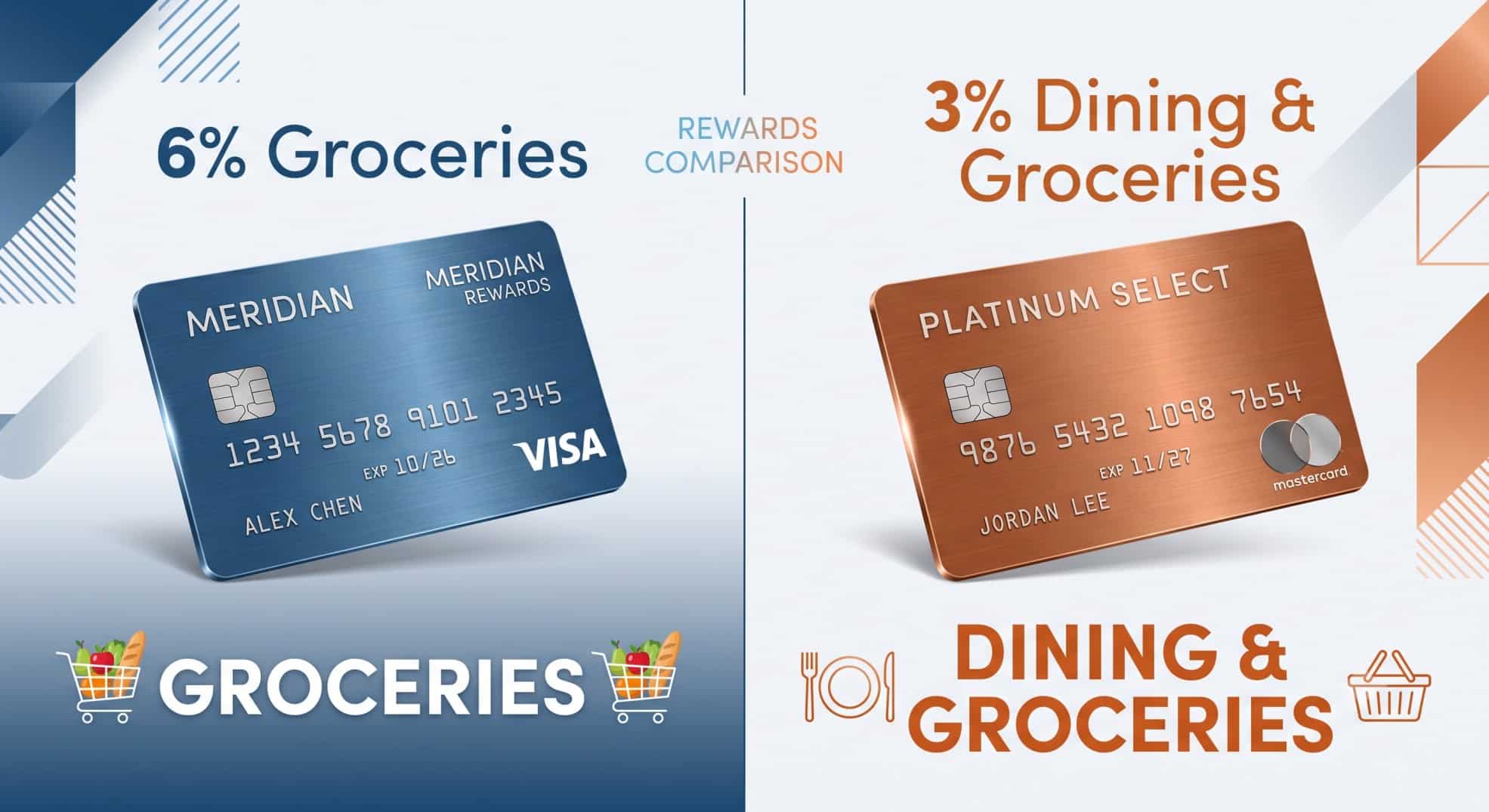
Table of Contents
- The 2026 Landscape: Why This Matchup Matters
- Current Welcome Offer & Bonus Analysis
- Earning Rates & Rewards Breakdown
- Redemption Options & Value
- Cardholder Benefits & Perks
- Rates & Fees (The Fine Print)
- Direct Comparisons: The Math in Action
- Pros and Cons of Each Card
- Final Verdict & Who Should Get This Card
The 2026 Landscape: Why This Matchup Matters
Food is expensive. Whether you are buying organic produce for meal prep or picking up the tab at a downtown steakhouse, food costs represent a massive chunk of the average budget. This reality makes the Amex Blue Cash Preferred vs Capital One Savor comparison incredibly relevant for anyone trying to optimize their finances in 2026.
Historically, consumers had to choose between a dedicated grocery card or a dedicated restaurant card. Today, issuers are blending these categories. Capital One recently streamlined their lineup, cementing the $0 annual fee Savor card as a powerhouse that tackles both supermarkets and restaurants at a flat 3% rate. American Express maintains its premium positioning, charging a $95 annual fee in exchange for a massive 6% return on groceries.
This creates a fascinating grocery and dining showdown. You are essentially betting on your own lifestyle. If you pay a $95 fee, you have to spend enough at the supermarket to out-earn the free Capital One card. We will run those exact break-even numbers later in this guide.
Current Welcome Offer & Bonus Analysis
Sign-up bonuses are the easiest way to inject immediate value into your wallet. Both of these cards offer competitive cash bonuses, but the spending requirements to unlock them are vastly different.
Amex Blue Cash Preferred: You can earn up to a $300 statement credit after you spend $3,000 on eligible purchases within the first 6 months of account opening. (Note: Welcome offers vary, and you may not be eligible for this specific offer; always check the current public offer before applying). Having six months to hit a $3,000 target is quite generous, requiring just $500 in monthly spending.
Capital One Savor: You will earn a one-time $200 cash bonus after spending just $500 on purchases within the first 3 months from account opening. This is one of the lowest spend requirements in the industry. You can easily hit this bonus with a single trip to the grocery store or by paying a couple of utility bills.
Capital One wins on accessibility. Earning $200 for a mere $500 spend is a phenomenal 40% return on investment. However, if you easily spend $500 a month anyway, the Amex offer puts an extra $100 in your pocket.
Read our full guide on how to safely hit credit card minimum spend requirements here.
Earning Rates & Rewards Breakdown
This is the core of the grocery and dining showdown. How these cards reward your daily swipes will dictate which one deserves to be your primary payment method.
The Amex Blue Cash Preferred is widely considered the best cash back card for groceries because of its aggressive multipliers. You earn:
- 6% cash back at U.S. supermarkets on up to $6,000 per year in purchases (then 1%).
- 6% cash back on select U.S. streaming subscriptions (Netflix, Hulu, Disney+, Spotify, etc.).
- 3% cash back at U.S. gas stations.
- 3% cash back on transit (taxis, rideshare, parking, tolls, trains, buses).
- 1% cash back on all other purchases.
The Capital One Savor takes a broader, uncapped approach. You earn:
- 3% cash back on dining (restaurants, cafes, bars, fast food).
- 3% cash back at grocery stores (excluding superstores like Walmart and Target).
- 3% cash back on entertainment (movie theaters, sports arenas, amusement parks).
- 3% cash back on popular streaming services.
- 5% cash back on hotels and rental cars booked through Capital One Travel.
- 8% cash back on Capital One Entertainment purchases.
- 1% cash back on all other purchases.

The Blue Cash Preferred 6% cash back rate is double what Capital One offers, but that $6,000 annual cap is a strict ceiling. If you spend exactly $6,000 a year ($500 a month) at U.S. supermarkets, you max out the category and earn $360. Any grocery spending beyond that earns a measly 1%.
Conversely, the Capital One Savor dining rewards and grocery rewards have absolutely no caps. You could spend $20,000 a year on food and continue earning 3% on every single dollar. Furthermore, Amex completely ignores the dining category, offering just 1% at restaurants, while Capital One heavily rewards it.
Redemption Options & Value
Cash back is inherently simple, but issuers still have different rules for how you can actually access your money.
American Express issues your rewards as “Reward Dollars.” You can redeem these for a statement credit to offset your balance, or you can use them directly at Amazon.com checkout. There is no minimum redemption amount required for statement credits, which is a massive improvement Amex made in recent years. However, you cannot deposit Reward Dollars directly into a third-party checking account.
Capital One offers slightly more flexibility. You can redeem your cash back for a statement credit, request a physical check, or have it applied directly to a Capital One checking account. You can also set up automatic redemptions at a specific time each year or when your rewards hit a certain dollar threshold (e.g., automatically redeem every time you hit $25). Your rewards do not expire for the life of the account.
Cardholder Benefits & Perks
Cash back cards rarely offer the luxury perks found on premium travel cards, but both of these options come with valuable lifestyle benefits that can save you money.
The Amex Blue Cash Preferred shines for commuters and streamers. Beyond the 6% streaming category, the card provides access to Amex Offers, which are targeted discounts you can add to your card (e.g., “Spend $50 at Home Depot, get $10 back”). It also offers secondary rental car insurance and return protection, which can refund you if a merchant refuses to take back an eligible item within 90 days of purchase.

The Capital One Savor leans heavily into experiences. The 8% cash back on Capital One Entertainment is a massive return if you buy concert, sports, or theater tickets through their portal. Cardholders also get exclusive pre-sale access to major events and culinary experiences. For a card with no annual fee, unlocking VIP ticket access is a highly unusual and valuable perk.
Explore our breakdown of the best credit cards for concert tickets and live events.
Rates & Fees (The Fine Print)
We strictly advise paying your statement balance in full every month. Earning 6% on groceries is entirely pointless if you are paying 25% in interest to carry that debt. However, both cards offer introductory APR periods that can be useful for financing a large purchase.
The Amex Blue Cash Preferred currently offers a 0% intro APR on purchases and balance transfers for 12 months from the date of account opening. After that, a variable APR of 19.49% to 28.49% applies. It carries a $95 annual fee (often $0 intro for the first year) and a 2.7% foreign transaction fee. Do not use this card outside of the United States.
The Capital One Savor also offers a 0% intro APR for 12 months on purchases and balance transfers, followed by a variable APR of 18.49% to 28.49%. It has a $0 annual fee and absolutely zero foreign transaction fees. If you travel internationally, the Savor card is a fantastic companion for dining out abroad.
Direct Comparisons: The Math in Action
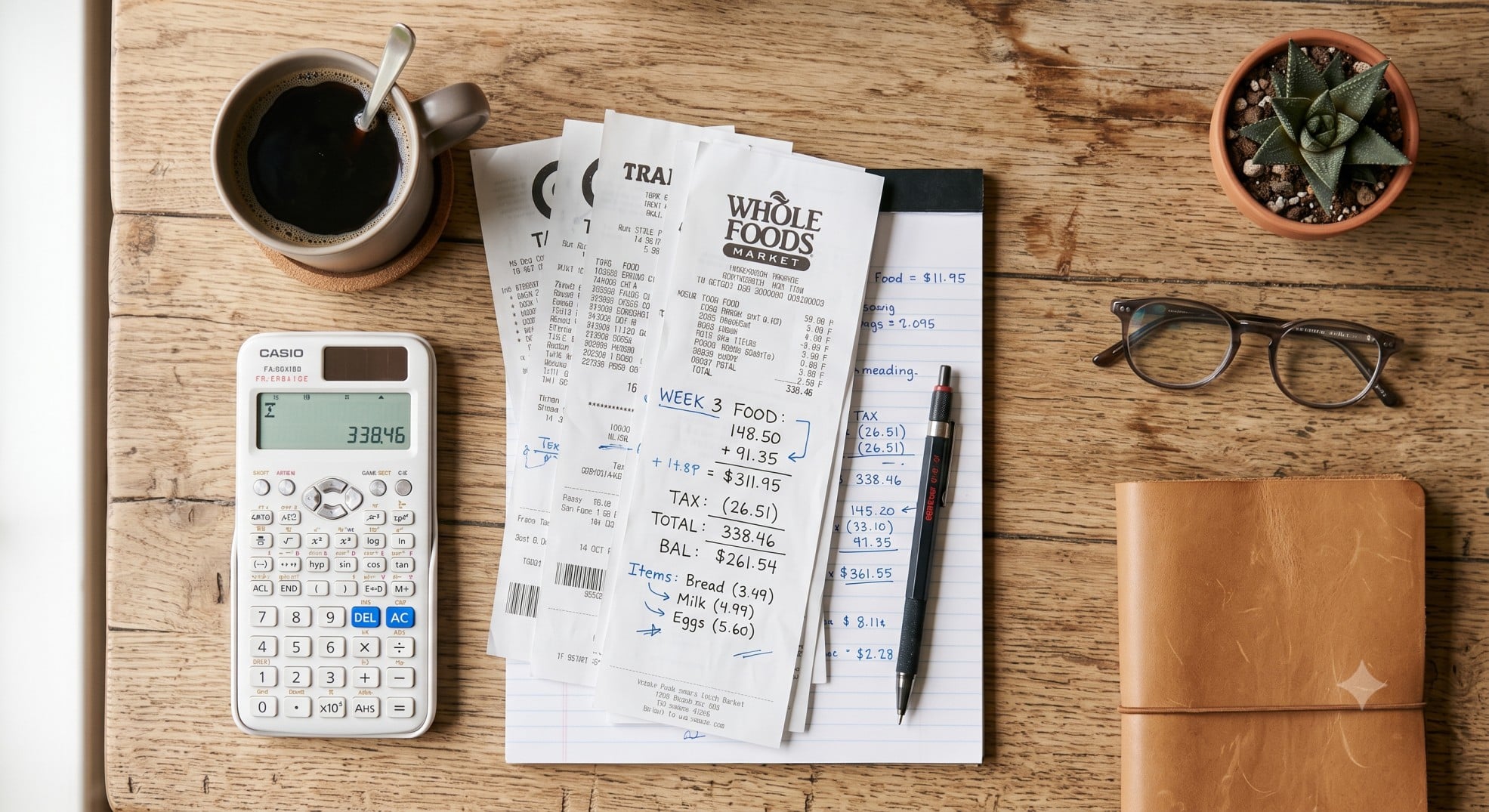
To definitively settle the Amex Blue Cash Preferred vs Capital One Savor debate, we must run the math. We need to see exactly where the $95 Amex fee is justified against the $0 Capital One fee. Let’s look at four distinct spending profiles.
Scenario 1: The Maxed-Out Grocery Shopper
David cooks at home constantly. He spends exactly $500 a month on groceries ($6,000 a year) and rarely eats out.
- With Amex: He earns 6% on $6,000, yielding $360. Subtract the $95 annual fee. Net Return: $265.
- With Capital One: He earns 3% on $6,000, yielding $180. No annual fee. Net Return: $180.
Winner: Amex. If you hit the $6,000 grocery cap, the Blue Cash Preferred 6% cash back easily covers its own fee and beats the Savor by $85.
Scenario 2: The Dining Enthusiast
Sarah loves restaurants. She spends $300 a month on groceries ($3,600 a year) and $500 a month on dining ($6,000 a year).
- With Amex: She earns 6% on $3,600 in groceries ($216) and 1% on $6,000 in dining ($60). Total is $276. Subtract the $95 fee. Net Return: $181.
- With Capital One: She earns 3% on $3,600 in groceries ($108) and 3% on $6,000 in dining ($180). No annual fee. Net Return: $288.
Winner: Capital One. The Capital One Savor dining rewards completely destroy the Amex here. Amex’s 1% return on restaurants is a massive liability for foodies.
Scenario 3: The High-Volume Family
The Miller family spends $1,000 a month on groceries ($12,000 a year) and $200 a month on gas ($2,400 a year).
- With Amex: They earn 6% on the first $6,000 in groceries ($360) and 1% on the remaining $6,000 ($60). They earn 3% on gas ($72). Total is $492. Subtract the $95 fee. Net Return: $397.
- With Capital One: They earn 3% on all $12,000 in groceries ($360) and 1% on gas ($24). No annual fee. Net Return: $384.
Winner: Amex (Barely). Even when blowing past the $6,000 cap, the Amex still wins slightly because of the 3% gas category. However, it is a very tight race.
Scenario 4: The Commuter
Marcus spends $400 a month on groceries ($4,800 a year), $300 on transit/gas ($3,600 a year), and $100 on streaming ($1,200 a year).
- With Amex: He earns 6% on groceries ($288), 3% on transit/gas ($108), and 6% on streaming ($72). Total is $468. Subtract the $95 fee. Net Return: $373.
- With Capital One: He earns 3% on groceries ($144), 1% on transit/gas ($36), and 3% on streaming ($36). No annual fee. Net Return: $216.
Winner: Amex. When you utilize the transit, gas, and streaming categories alongside groceries, the Amex fee becomes entirely negligible.
Use our interactive cash back calculator to plug in your exact monthly budget.
Pros and Cons of Each Card
No financial product is flawless. Identifying the best cash back card for groceries requires understanding the limitations and merchant coding traps of each issuer.
| Feature | Amex Blue Cash Preferred | Capital One Savor |
|---|---|---|
| Pros |
|
|
| Cons |
|
|
A critical warning for both cards: Merchant category codes matter. Neither Amex nor Capital One will count Walmart, Target, Costco, or Sam’s Club as a “supermarket” or “grocery store.” If you buy all your food at a wholesale club or superstore, neither of these cards will earn bonus cash back. You will earn a flat 1%.
Final Verdict & Who Should Get This Card
The Amex Blue Cash Preferred vs Capital One Savor matchup proves that there is no single “best” credit card. There is only the best card for your specific lifestyle.
You should get the Amex Blue Cash Preferred if you are the primary grocery shopper for your household, you commute by car or train, and you rarely eat at restaurants. It is undeniably the best cash back card for groceries, provided you spend close to $500 a month at traditional supermarkets to maximize the 6% return and easily justify the $95 fee.
You should get the Capital One Savor if you want a simple, fee-free setup that rewards a social lifestyle. The Capital One Savor dining rewards are elite, and getting an uncapped 3% on both restaurants and groceries without paying an annual fee makes it one of the most versatile cash back cards on the market. If you hate tracking spending caps and want a card you can take overseas without penalty, the Savor is the clear winner of this grocery and dining showdown.
Disclaimer: The information provided in this article does not constitute financial advice. Credit card offers, rates, and terms are subject to change. Please verify all terms and conditions on the issuer’s official website before applying. We are not responsible for any actions taken based on the information provided herein.
