
⚡ Executive Summary: The 2026 Home Office Deduction
- The 2026 home office deduction is strictly reserved for self-employed individuals, freelancers, and small business owners filing Schedule C.
- W-2 employees who work remotely still cannot claim this deduction on their federal tax returns in 2026 due to permanent legislative changes.
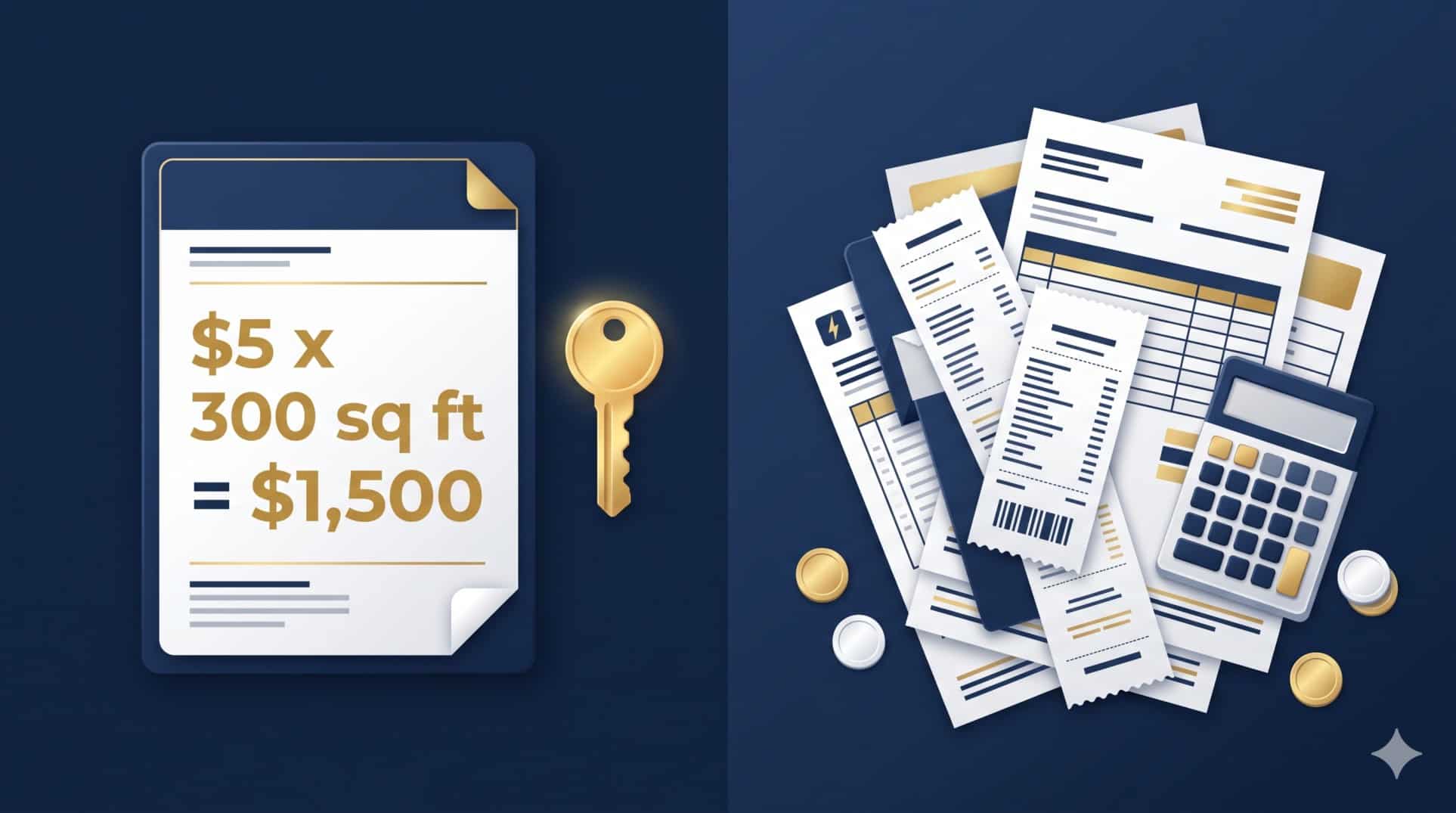
- The simplified method rate remains at $5 per square foot for 2026, capped at a maximum of 300 square feet (a $1,500 maximum deduction).
- Choosing between simplified vs actual expenses requires calculating your exact business-use percentage against your real housing costs, which often yields a higher deduction for renters.
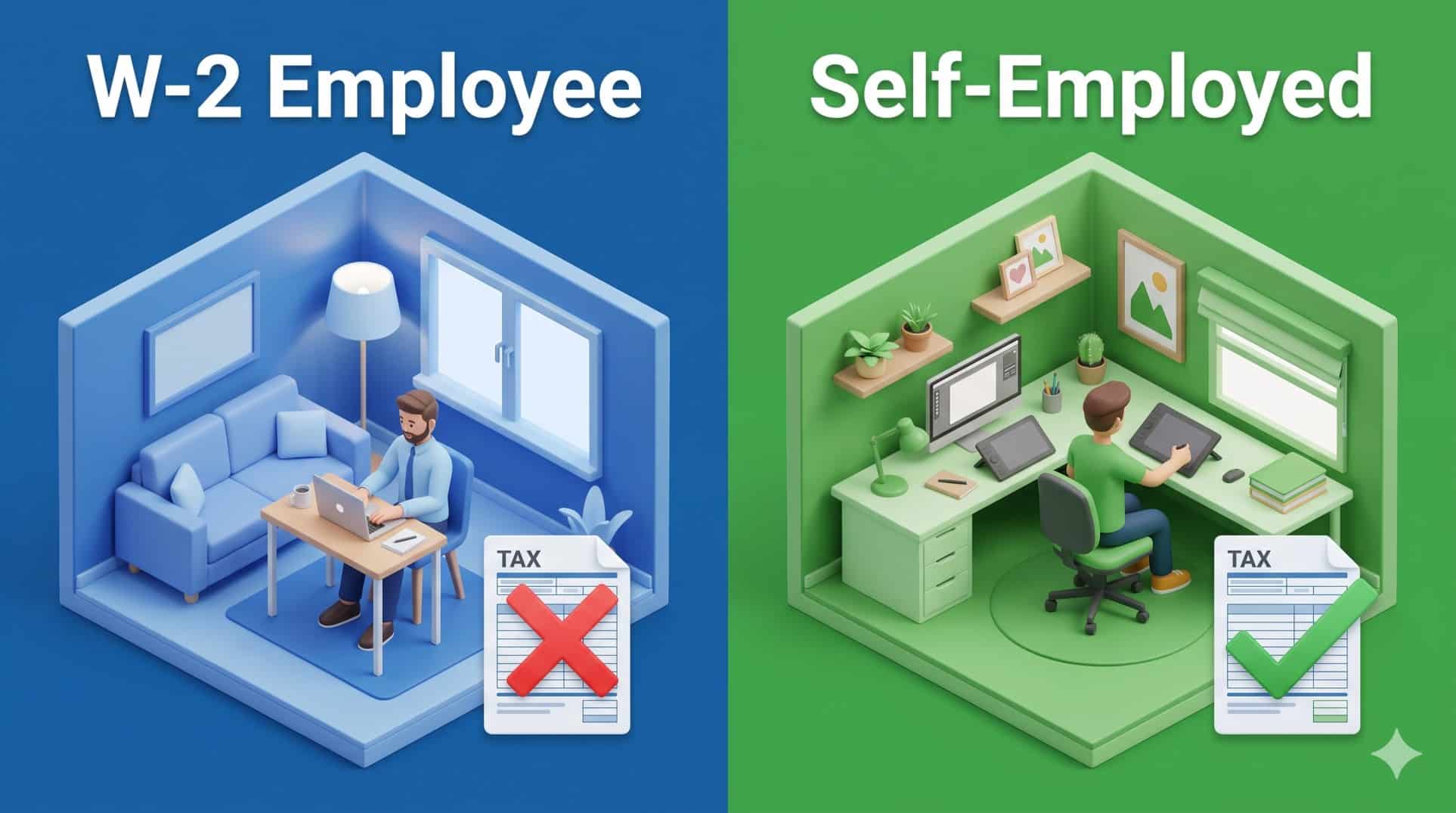
Table of Contents
- Who Qualifies? The W-2 vs. Self-Employed Divide
- IRS Home Office Rules: The Three Core Tests
- Simplified vs Actual Expenses: Which Method is Best?
- The Simplified Method Explained (2026 Limits)
- The Actual Expenses Method Explained
- Real-World Examples and Calculations
- State vs. Federal Remote Worker Tax Deductions
- Frequently Asked Questions About the 2026 Home Office Deduction
Working from home is the permanent reality for millions of Americans. But when tax season rolls around, the rules governing who gets to write off their workspace are incredibly rigid. The 2026 home office deduction remains one of the most valuable tax-saving tools available, yet it is also one of the most misunderstood.
Taxpayers often assume that simply opening a laptop at their kitchen table entitles them to a tax break. The IRS sees it differently. The agency requires strict adherence to space and usage tests, and federal law draws a hard line between traditional employees and independent business owners.
We are going to break down exactly how this deduction works for the current tax year. You will see the exact math behind the two calculation methods, learn how to avoid common audit triggers, and find out how to maximize your write-off legally.
Who Qualifies? The W-2 vs. Self-Employed Divide
The most common mistake taxpayers make is assuming that working remotely automatically qualifies them for a tax break. Federal tax law treats W-2 employees and self-employed individuals entirely differently.
The Rule for W-2 Employees
If you receive a W-2 from an employer, you cannot claim the home office deduction on your federal tax return in 2026. This is a hard rule.
Prior to 2018, employees could deduct unreimbursed business expenses, including home offices, if they exceeded 2% of their adjusted gross income. The Tax Cuts and Jobs Act (TCJA) eliminated this provision. Recent 2025 tax legislation made this elimination permanent under IRC Section 67(h). It does not matter if your employer forces you to work from home, if you live in a different state than your company’s headquarters, or if you bought your own desk and monitors. Federal remote worker tax deductions for W-2 employees simply do not exist right now.
The Rule for the Self-Employed
The home office deduction for self-employed individuals is fully intact. If you are a freelancer, an independent contractor receiving 1099s, a gig worker, or a small business owner filing Schedule C, you are eligible to write off your home workspace.
Partners in a partnership and owners of S-Corporations can also benefit, though the mechanics are different. S-Corp owners typically use an “accountable plan” to reimburse themselves for home office expenses rather than claiming the deduction directly on their personal Schedule A or C.
IRS Home Office Rules: The Three Core Tests
Just because you are self-employed does not mean you automatically get the deduction. According to IRS Publication 587, your workspace must pass three specific tests to qualify. Failing even one of these tests disqualifies the space.
1. The Exclusive Use Test
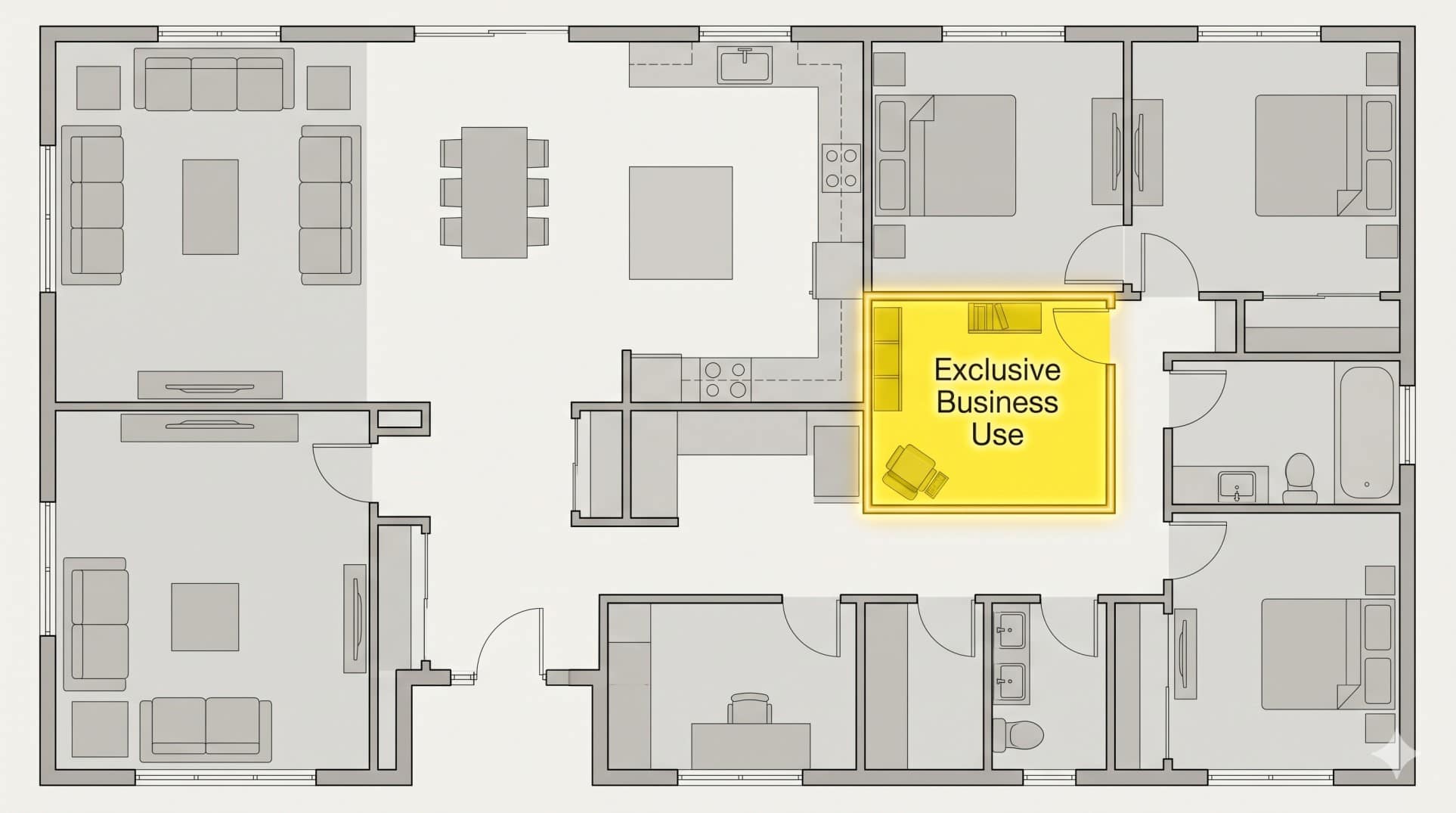
The area you claim must be used only for your business. It cannot double as a personal space. If you work from a desk in your guest bedroom, and your in-laws sleep in that room twice a year, the entire room fails the exclusive use test. If you work at your dining room table, it fails because you also eat meals there.
You do not need a separate room with a door to pass this test. A clearly defined area—like a desk in the corner of your living room—can qualify, provided that specific square footage is never used for personal activities.
2. The Regular Use Test
You must use the space for business on a continuous, ongoing basis. Occasional or incidental use does not count. If you only sit at your dedicated desk once a month to pay business bills, the IRS will likely determine that the use is not “regular” enough to justify the deduction.
3. The Principal Place of Business Test
Your home office must be your principal place of business. This means it is the primary location where you conduct your trade. But what if you are a plumber who spends all day at clients’ houses?
The IRS makes a specific exception here. Your home office qualifies as your principal place of business if you use it exclusively and regularly for administrative or management activities, and you have no other fixed location where you conduct substantial administrative work. So, if the plumber uses a spare bedroom exclusively to send invoices, order supplies, and schedule appointments, that room qualifies.
Simplified vs Actual Expenses: Which Method is Best?
Once you determine that your space qualifies, you have to calculate the deduction. The IRS gives you two choices: the simplified method or the actual expenses method. You can choose whichever method gives you the largest tax benefit, and you are allowed to switch methods from year to year.
The simplified vs actual expenses decision usually comes down to your housing costs and your tolerance for recordkeeping.
| Feature | Simplified Method | Actual Expenses Method |
|---|---|---|
| Calculation | $5 per square foot | Business % of actual housing costs |
| Maximum Limit | 300 square feet ($1,500 max) | No maximum limit |
| Recordkeeping | Minimal (just prove square footage) | Extensive (receipts, utility bills, tax statements) |
| Depreciation | No depreciation calculated | Must calculate and deduct home depreciation |
| Selling Your Home | No depreciation recapture | Subject to depreciation recapture taxes |
The Simplified Method Explained (2026 Limits)
The IRS introduced the simplified method to reduce the paperwork burden on small business owners. It is fast, easy, and requires very little math.
For the 2026 tax year, the rate is $5 per square foot of space used for business. The IRS caps this method at 300 square feet. Therefore, the absolute maximum 2026 home office deduction you can claim using this method is $1,500.
If your home office is 150 square feet, your deduction is $750. You do not need to add up your electricity bills, figure out your mortgage interest, or calculate depreciation. You just multiply your square footage by five and put that number on your Schedule C.
The biggest hidden benefit of the simplified method applies to homeowners. Because you do not claim depreciation on your home when using this method, you do not have to pay depreciation recapture tax when you eventually sell the house. This makes the simplified method highly attractive to homeowners who plan to sell in the near future, even if the actual expenses method would yield a slightly higher deduction today.
The Actual Expenses Method Explained
The actual expenses method is more complex but often results in a significantly larger tax write-off, especially for renters in high-cost cities or homeowners with large mortgage interest payments.
To use this method, you first calculate your business-use percentage. You do this by dividing the square footage of your home office by the total square footage of your home. If your office is 200 square feet and your apartment is 1,000 square feet, your business-use percentage is 20%.
You then apply that 20% to your “indirect” home expenses. These include:
- Rent payments
- Mortgage interest
- Property taxes
- Homeowners or renters insurance
- Utilities (electricity, gas, water, trash)
- Home security systems
- General home maintenance (e.g., HVAC servicing)
If you own your home, you must also calculate depreciation on the structure of the house (not the land) and deduct 20% of that depreciation allowance each year. This is calculated on Form 8829.
You can also deduct 100% of “direct” expenses. A direct expense is something that benefits only the home office. For example, if you pay a contractor to paint your home office and install new flooring in that specific room, that is a direct expense. You deduct the full cost, not just 20%.
Learn more about tracking deductible business expenses here.
Real-World Examples and Calculations
To see how these IRS home office rules play out in practice, let’s look at a few hypothetical scenarios for the 2026 tax year.
Scenario 1: The High-Rent Freelancer
Marcus is a freelance graphic designer living in a 900-square-foot apartment in New York City. His rent is $3,500 per month ($42,000 per year). He uses a 150-square-foot second bedroom exclusively as his design studio.
Simplified Method: 150 sq ft x $5 = $750 deduction.
Actual Expenses Method: His business-use percentage is 16.6% (150 / 900). He applies this to his rent ($42,000), utilities ($1,800), and renters insurance ($300). His total indirect expenses are $44,100. Multiplying that by 16.6% gives him a $7,320 deduction.
Verdict: Marcus should absolutely use the actual expenses method. It saves him thousands of dollars in taxable income.
Scenario 2: The Homeowner Avoiding Recapture
Sarah runs an LLC consulting business from her 2,500-square-foot home in Texas. Her home office is 200 square feet (8% of the home). Her mortgage is nearly paid off, so her interest is low. Her total allowable housing expenses for the year (taxes, insurance, utilities, low interest, and depreciation) equal $15,000.
Simplified Method: 200 sq ft x $5 = $1,000 deduction.
Actual Expenses Method: 8% of $15,000 = $1,200 deduction.
Verdict: While the actual method gives Sarah $200 more this year, she plans to sell her house next year. If she takes the actual method, she will have to pay depreciation recapture tax on the depreciation she claimed. To keep things clean and avoid future tax complications on the sale, Sarah chooses the simplified method.
Scenario 3: The Remote Tech Worker
David is a software engineer who receives a W-2 from a tech company based in California. He lives in Nevada and works from home 100% of the time in a dedicated 300-square-foot office. He spends $2,000 a year on high-speed internet and office utilities.
Verdict: David gets a $0 deduction on his federal tax return. Because he is a W-2 employee, he is entirely locked out of the 2026 home office deduction. His best financial move is to ask his employer for a tax-free reimbursement stipend for his home office costs.
State vs. Federal Remote Worker Tax Deductions
While federal law is strict, state tax laws do not always mirror the IRS. Some states decoupled from the TCJA when it was passed and continue to allow unreimbursed employee business expenses on state tax returns.
For example, states like California, New York, and Pennsylvania have historically allowed W-2 employees to claim remote worker tax deductions against their state income taxes, provided they meet the state’s specific criteria (which often mirror the old federal rules requiring the home office to be for the “convenience of the employer”).
If you are a W-2 employee in a state with income tax, you should consult a local tax professional to see if you qualify for a state-level deduction, even though your federal deduction is zero. For the self-employed, your state deduction will generally follow your federal Schedule C calculation.
Frequently Asked Questions About the 2026 Home Office Deduction
Can W-2 employees claim the 2026 home office deduction?
No, W-2 employees cannot claim the home office deduction on their federal tax returns in 2026. Federal tax legislation permanently eliminated unreimbursed employee business expenses. You can only claim this deduction if you are self-employed or an independent contractor.
What is the simplified method rate for 2026?
The simplified method rate for 2026 is $5 per square foot of qualified business space. The IRS caps this calculation at a maximum of 300 square feet, meaning the largest deduction you can take using this method is $1,500.
Do I need to own my home to claim the deduction?
No, you do not need to own your home. Renters are fully eligible for the home office deduction for self-employed individuals. In fact, renters often get a larger deduction using the actual expenses method because they can deduct a percentage of their monthly rent.
Can I deduct my internet bill?
Yes, but only the business portion. If you use the actual expenses method, you can deduct the percentage of your internet bill that corresponds to your business use. If you use the simplified method, you cannot deduct the internet bill separately as a home utility, but you can deduct it directly as an office expense on Schedule C.
What happens if I use my dining room table for work?
You cannot claim the deduction. IRS home office rules strictly require “exclusive use.” Because a dining room table is also used for personal meals, it fails the exclusive use test. The space must be dedicated solely to business activities.
Can I switch between simplified vs actual expenses each year?
Yes, the IRS allows you to switch between the simplified vs actual expenses methods from year to year. You can calculate both methods at tax time and choose the one that provides the largest financial benefit for that specific tax year.
How does the home office deduction for self-employed impact self-employment tax?
It reduces it. The home office deduction lowers your net business income on Schedule C. Because your self-employment tax (Medicare and Social Security) is calculated based on your net business income, lowering that income directly reduces your self-employment tax liability.
What is depreciation recapture?
If you own your home and use the actual expenses method, you are required to deduct depreciation. When you sell the home, the IRS requires you to pay taxes on that deducted depreciation—a process called depreciation recapture. The simplified method avoids this issue entirely.
Are remote worker tax deductions available at the state level?
Possibly. While the federal government bans W-2 employees from claiming home office expenses, a handful of states (like California and New York) still allow remote worker tax deductions on state income tax returns if the home office is maintained for the convenience of the employer.
Does a home office increase my audit risk?
Historically, the home office deduction was viewed as an audit red flag, but that is largely a myth today. As long as you strictly follow the exclusive and regular use rules, measure your square footage accurately, and keep excellent records, you are legally entitled to claim the space without undue fear of an audit.
Disclaimer: This content provides general information for educational purposes only. Tax laws are complex and change often. It is not professional tax, legal, or financial advice. Always consult a qualified tax professional for personalized guidance regarding your specific situation. Ourtaxpartner.com is not responsible for any actions taken based on the information provided herein.
