
⚡ Executive Summary: 2026 Payroll Tax Updates
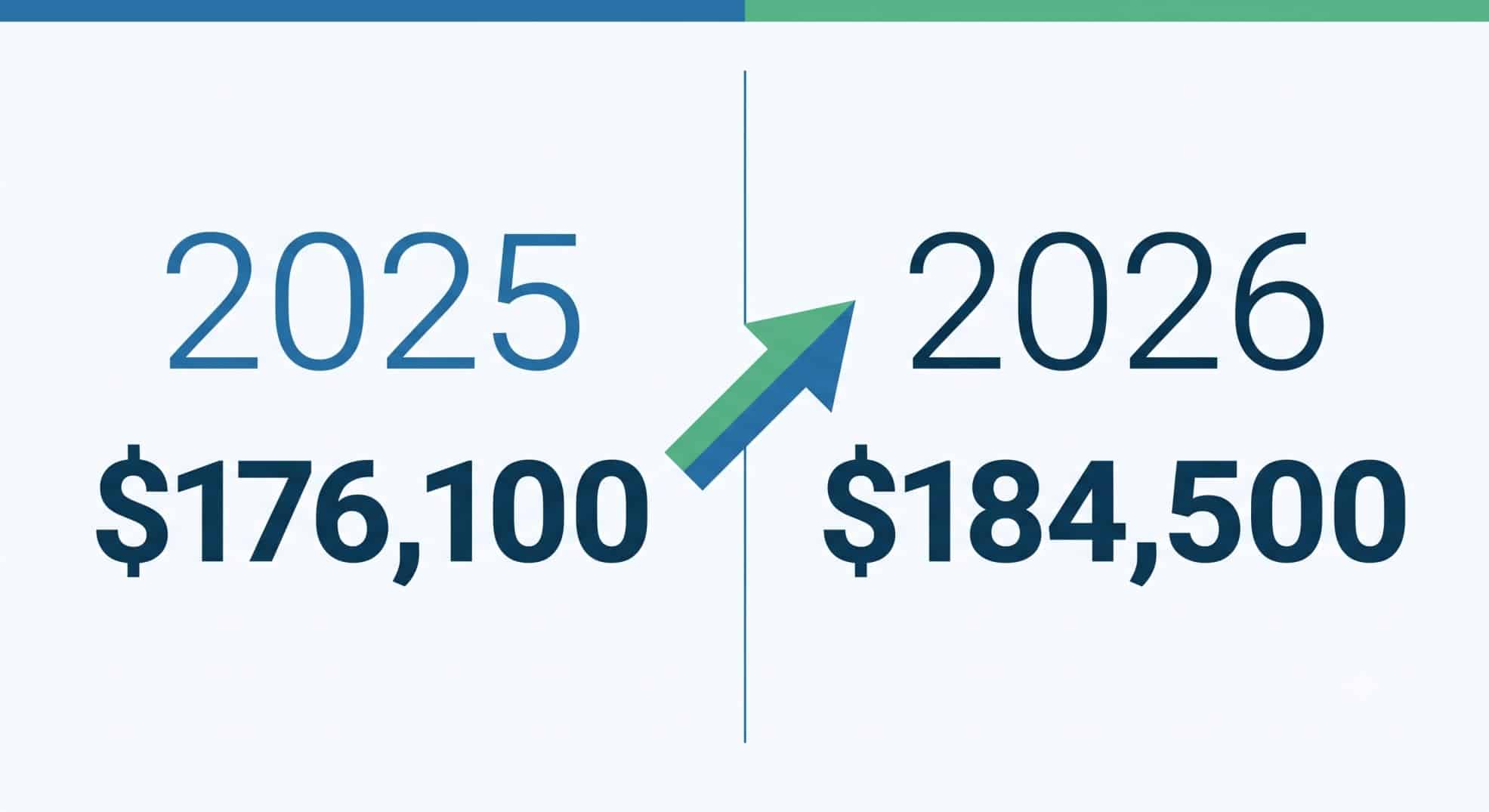
- The official social security wage base 2026 is set at $184,500, up from $176,100 in the previous year.
- This represents an increase of $8,400, or approximately 4.8%, driven by the national average wage index.
- The maximum employee contribution for Social Security is strictly capped at $11,439 for the year.
- High earners must also prepare for the 0.9% Additional Medicare Tax, which kicks in on wages exceeding $200,000 for single filers.
Table of Contents
- Understanding the social security wage base 2026
- The Math Behind the maximum social security tax 2026
- How the social security tax limit 2026 Affects High Earners
- The Multi-Employer Over-Withholding Trap (and Refund)
- Medicare Taxes: The 0.9% Additional Medicare Tax
- Self-Employed Taxpayers and the 12.4% OASDI Rate
- Real-World Scenarios: Calculating the FICA limit 2026
- Step-by-Step Guide: Auditing Your Paycheck
- Frequently Asked Questions About the social security wage base 2026
Understanding the social security wage base 2026
The federal government funds the Old-Age, Survivors, and Disability Insurance (OASDI) program through a dedicated payroll tax. But unlike federal income tax, which scales upward infinitely as you earn more money, the Social Security tax has a hard ceiling. The social security wage base 2026 dictates exactly where that ceiling sits for the current tax year.
For 2026, the Social Security Administration set this cap at $184,500. Any earned income you make up to this exact dollar amount is subject to the 6.2% Social Security tax. The moment your year-to-date gross wages hit $184,500.01, the 6.2% withholding stops completely. You pay zero Social Security tax on the remainder of your earnings for the year.
This adjustment is not arbitrary. The SSA calculates the annual increase based on the national average wage index. Because wages grew steadily throughout the prior measurement period, the cap jumped from $176,100 in 2025 to $184,500 in 2026. This $8,400 increase represents a roughly 4.8% hike, meaning high earners will pay more into the system this year before seeing their paychecks bump up in the fall or winter.
The Math Behind the maximum social security tax 2026
Calculating your exact liability is straightforward once you know the cap. The payroll tax rate for Social Security is 12.4% total. Half of that (6.2%) is paid by the employee through paycheck withholding, and the other half (6.2%) is paid directly by the employer.
Because the wage base is capped at $184,500, we can determine the absolute maximum social security tax 2026 that any W-2 employee will pay. Multiplying $184,500 by 6.2% yields exactly $11,439. That is the maximum amount your employer is legally allowed to withhold from your paychecks for OASDI in 2026.
Your employer is also on the hook for their matching portion. They will pay a maximum social security tax 2026 of $11,439 out of their own corporate accounts to cover your employment. Once you cross the threshold, both you and your employer get a break. Your take-home pay increases, and your employer’s payroll burden decreases.
How the social security tax limit 2026 Affects High Earners
If your salary is $100,000, the social security tax limit 2026 does not impact your day-to-day finances. You will pay the 6.2% tax on every paycheck from January through December because you never hit the $184,500 ceiling.
But if your salary is $250,000, the mechanics change drastically. You will pay 6.2% on your wages for the first several months of the year. Sometime in late September or early October, your year-to-date earnings will cross the $184,500 mark. On your very next pay stub, the 6.2% deduction will vanish. This creates a noticeable, temporary increase in your net take-home pay for the final months of the year.
You must plan for this cash flow shift. Many high earners use this end-of-year net pay bump to max out their 401(k) contributions, fund a backdoor Roth IRA, or cover holiday expenses. Just remember that when January 1 rolls around, the clock resets to zero, and the 6.2% withholding resumes immediately.
The Multi-Employer Over-Withholding Trap (and Refund)
The payroll system works perfectly if you stay with one employer all year. But if you switch jobs, or if you work two high-paying jobs simultaneously, you are highly likely to overpay your Social Security taxes.
Here is the problem: Employers do not share payroll data. If you earn $120,000 at Job A from January to June, Job A will withhold $7,440 for Social Security. If you quit and start Job B in July with a $120,000 salary, Job B starts their withholding counter at zero. They will also withhold $7,440 by the end of the year.
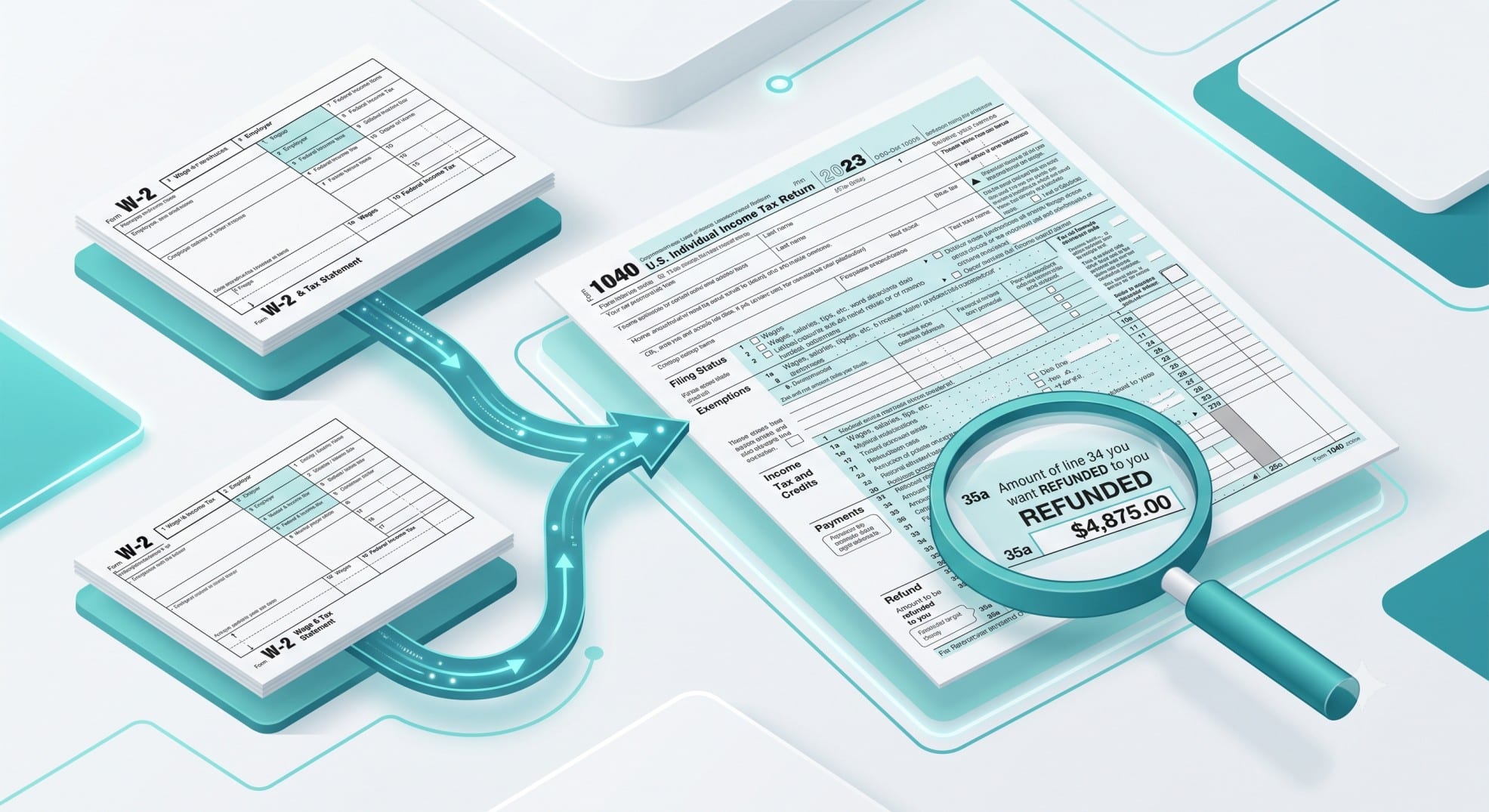
Between the two jobs, you paid $14,880 in Social Security taxes. But the maximum employee contribution for 2026 is only $11,439. You overpaid the federal government by $3,441. You cannot ask Job B to stop withholding; federal law requires them to withhold up to the cap based solely on the wages they pay you.
To get your money back, you must claim a credit for excess Social Security tax withheld on your Form 1040 when you file your tax return the following spring. The IRS will apply the $3,441 overpayment against your federal income tax liability, either reducing what you owe or adding it to your tax refund.
Medicare Taxes: The 0.9% Additional Medicare Tax
Social Security is only one half of the FICA tax equation. The other half is Medicare (Hospital Insurance, or HI). Unlike Social Security, Medicare has no wage base cap. You pay the standard 1.45% Medicare tax on every single dollar you earn, whether you make $50,000 or $50 million.
But for high earners, the tax rate actually goes up. The Affordable Care Act introduced the Additional Medicare Tax, which levies an extra 0.9% on wages that exceed specific statutory thresholds. For 2026, these thresholds remain unchanged:
- Single, Head of Household, Qualifying Widow(er): $200,000
- Married Filing Jointly: $250,000
- Married Filing Separately: $125,000
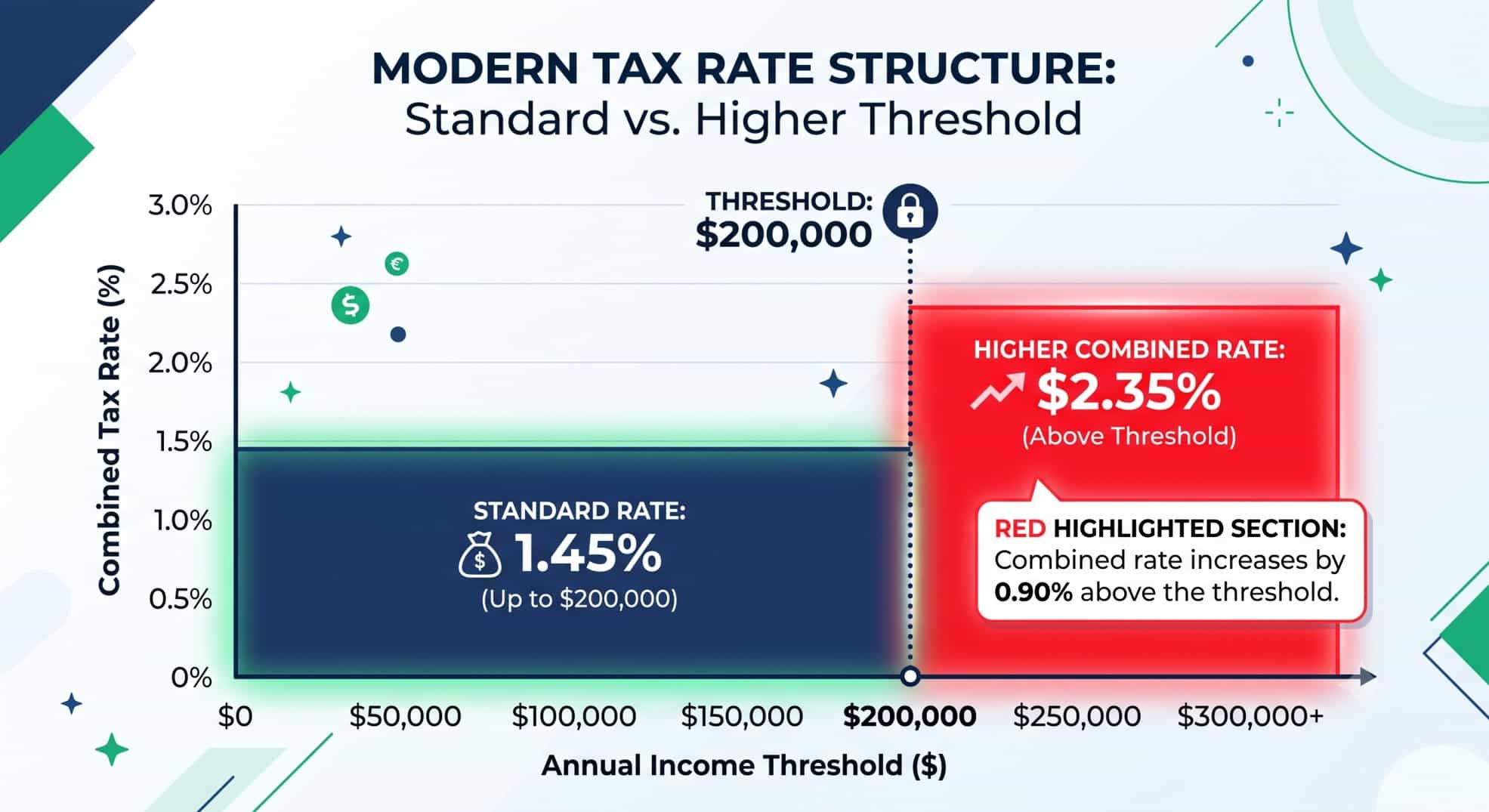
Employers are legally required to begin withholding this extra 0.9% the moment they pay you more than $200,000 in a calendar year, regardless of your actual filing status. Unlike the standard 1.45% Medicare tax, employers do not match this 0.9% surtax. It comes entirely out of the employee’s pocket.
This creates a massive blind spot for married couples. If you earn $160,000 and your spouse earns $150,000, neither of your employers will withhold the 0.9% surtax because neither of you crossed the $200,000 individual threshold. But your combined income is $310,000, which is $60,000 over the Married Filing Jointly threshold of $250,000. You will owe an unexpected 0.9% tax on that $60,000 ($540) when you file your joint return. You must file Form 8959 to calculate and pay this shortfall.
Self-Employed Taxpayers and the 12.4% OASDI Rate
If you run your own business, operate as an independent contractor, or freelance, you are both the employee and the employer. This means you are responsible for both halves of the FICA tax, commonly known as the Self-Employment (SE) tax.
The social security wage base 2026 applies exactly the same way to net self-employment earnings. You will pay the full 12.4% Social Security rate on your net business profit up to $184,500. This makes the maximum Social Security burden for a self-employed individual $22,878 for the year.
You will also pay the full 2.9% standard Medicare tax on all net earnings, plus the 0.9% Additional Medicare Tax if your profits exceed the $200,000 or $250,000 thresholds. To soften this blow, the IRS allows you to deduct half of your calculated self-employment tax as an above-the-line deduction on your Form 1040, which lowers your adjusted gross income. Read our comprehensive guide on optimizing self-employment tax deductions here.
Real-World Scenarios: Calculating the FICA limit 2026
Tax theory is easier to digest when applied to real-world math. Let’s look at three distinct taxpayer situations to see how the FICA limit 2026 operates in practice.
Scenario 1: The Executive Hitting the Cap
Sarah is a single executive with a W-2 salary of $240,000. She gets paid $20,000 per month. From January through September, her employer withholds $1,240 per month for Social Security (6.2%). By the end of September, her year-to-date earnings are $180,000.
In October, she only needs $4,500 more in wages to hit the $184,500 social security wage base 2026. Her employer will withhold 6.2% on that $4,500 ($279) and then stop. Her November and December paychecks will have zero Social Security withheld, increasing her net pay by $1,240 in those months. However, in December, her year-to-date wages will hit $220,000, triggering the 0.9% Additional Medicare Tax on the final $40,000 of her salary.
Scenario 2: The Dual-Income Overpayment
Marcus works two W-2 jobs simultaneously. Job A pays him $100,000. Job B pays him $110,000. His total earned income is $210,000. Because neither job individually exceeds the FICA limit 2026 of $184,500, both employers withhold the full 6.2% all year long.
Job A withholds $6,200. Job B withholds $6,820. Marcus pays a total of $13,020 in Social Security taxes. Because the absolute maximum for an individual is $11,439, Marcus has overpaid by $1,581. He will claim this $1,581 as a credit on Schedule 3 of his Form 1040, which will directly increase his tax refund.
Scenario 3: The High-Earning Consultant
David is a self-employed consultant filing as single. After deducting his ordinary business expenses, his net Schedule C profit is $300,000. He must calculate his SE tax on Schedule SE.
First, he pays the 12.4% Social Security tax on the first $184,500 of his profit, totaling $22,878. Next, he pays the 2.9% standard Medicare tax on the entire $300,000, totaling $8,700. Finally, because his income exceeds the $200,000 single threshold, he pays the 0.9% Additional Medicare Tax on the remaining $100,000, totaling $900. His total self-employment tax bill is $32,478. He can then deduct half of the standard SE tax ($15,789) on his Form 1040.
Step-by-Step Guide: Auditing Your Paycheck
Do not blindly trust your payroll department to get the social security wage base 2026 right. Software glitches and manual entry errors happen constantly. Follow these steps to audit your own pay stubs.
Step 1: Locate Your Year-to-Date Gross Wages
Pull your most recent pay stub and find the “YTD Gross” or “YTD Taxable Wages” line. This is the number the payroll system uses to track your progress toward the cap.
Step 2: Monitor the $184,500 Threshold
As your YTD wages approach $184,500, pay close attention to the OASDI or “Fed Soc Sec” deduction line. Calculate exactly which pay period will push you over the limit.
Step 3: Verify the 6.2% Withholding Stops
On the pay stub where you cross the threshold, the Social Security deduction should only be 6.2% of the wages needed to reach exactly $184,500. On all subsequent pay stubs for the rest of the year, that deduction line must be exactly $0.00.
Step 4: Check for the 0.9% Medicare Surtax Trigger
If your YTD wages cross $200,000, look for a new line item on your pay stub, often labeled “Addl Med Tax” or “Med Surtax.” Verify that your employer is withholding an extra 0.9% on the wages above $200,000.
Step 5: File for the Multi-Employer Refund
If you had multiple employers during the year, collect all your W-2s in January. Add the amounts in Box 4 (Social Security tax withheld) across all forms. If the total exceeds $11,439, you must file for the excess credit on your tax return. See our guide on filing Form 1040 Schedule 3 for exact instructions.
Frequently Asked Questions About the social security wage base 2026
What is the exact social security wage base 2026?
The official social security wage base 2026 is $184,500. Any earned income above this specific dollar amount is exempt from the 6.2% Social Security payroll tax for the remainder of the calendar year.
How much did the social security tax limit 2026 increase from last year?
The social security tax limit 2026 increased by $8,400. It rose from $176,100 in 2025 to $184,500 in 2026, which represents an approximate 4.8% increase based on the national average wage index.
What is the maximum social security tax 2026 for a W-2 employee?
The absolute maximum social security tax 2026 that can be withheld from a W-2 employee’s paychecks is $11,439. This is calculated by multiplying the $184,500 wage base by the 6.2% employee tax rate.
Is there a FICA limit 2026 for Medicare taxes?
No. There is no FICA limit 2026 for the Medicare (Hospital Insurance) portion of the tax. You pay the 1.45% Medicare tax on all earned income, with no cap, plus an additional 0.9% on wages over $200,000 (single) or $250,000 (married filing jointly).
How do I get a refund if I overpaid Social Security taxes?
If you worked multiple jobs and your combined employers withheld more than $11,439, you claim the excess as a credit on Schedule 3 of your Form 1040. The IRS will refund the overpayment or apply it to your income tax bill.
Do employers have to pay the 0.9% Additional Medicare Tax?
No. Employers are required to match the standard 1.45% Medicare tax, but they do not match the 0.9% Additional Medicare Tax. The surtax is paid entirely by the employee.
Does the social security wage base 2026 apply to capital gains?
No. The social security wage base 2026 only applies to earned income, such as W-2 wages, bonuses, commissions, and net self-employment profit. Passive income like capital gains, dividends, and rental income are not subject to Social Security taxes.
What happens if my spouse and I both earn $150,000?
Because neither of you individually crossed the $200,000 withholding threshold, neither employer will withhold the 0.9% Additional Medicare Tax. However, your combined income of $300,000 exceeds the $250,000 joint threshold, meaning you will owe the surtax on $50,000 when you file your return.
How does the social security wage base 2026 affect self-employed workers?
Self-employed individuals must pay both the employee and employer portions of the tax (12.4%). They will pay this 12.4% rate on all net business profits up to the $184,500 social security wage base 2026, capping their maximum liability at $22,878.
Will the social security wage base increase again in 2027?
Yes, it is highly likely. The Social Security Administration adjusts the wage base annually based on the national average wage index. If average wages continue to rise, the cap will increase again for the 2027 tax year.
Disclaimer: This content provides general information for educational purposes only. Tax laws are complex and change often. It is not professional tax, legal, or financial advice. Always consult a qualified tax professional for personalized guidance regarding your specific situation. Ourtaxpartner.com is not responsible for any actions taken based on the information provided herein.
